The cheapest commuter towns near Madrid aren’t always the ones on generic “best suburbs” lists. Fuenlabrada rents for about €13.2 per square meter against Madrid’s citywide average of roughly €23 — nearly half — and it’s one of several commuter towns near the capital where the trade-off is real, not just a longer address. Here’s which towns are actually cheap, which “affordable suburb” picks just aren’t cheap at all, and where the newest options on this map land.
Table of contents
- The towns, at a glance
- Why comparing ten towns is harder than comparing ten neighborhoods
- Fuenlabrada: the cheapest, and the longest ride
- Móstoles: the same belt, a shorter ride
- Alcorcón: the connector
- Leganés: the student pick, if you choose right
- Getafe: fast and still affordable
- Parla: Fuenlabrada’s price, half the commute
- Pinto: the quiet alternative route
- Alcalá de Henares: further out, noticeably cheaper
- Coslada: the fastest ride on this whole list
- Torrejón de Ardoz: the international pick on the Henares line
- Toledo: a city of its own, a few days a week
- Valladolid: the cheapest of the AVE towns
- Zaragoza: the furthest, and the least “commuter”
- The “suburb” guides that aren’t actually about affordability
- One thing worth checking before you sign, especially outside the city
- Is the commute actually worth it?
- When none of this applies
- Frequently asked questions
The towns, at a glance
| Town | Rent (approx., €/m²) | Commute to Atocha | Cercanías line |
|---|---|---|---|
| Central Madrid (avg.) | €23 | — | — |
| Coslada | €14.4 | 17 min | C-2 / C-7 |
| Getafe | €14–20 (varies by area) | 20–25 min | C-4 |
| Torrejón de Ardoz | €14.0 | 29 min | C-2 |
| Alcalá de Henares | €13.7 | 35–40 min | C-2 / C-7 |
| Móstoles | €13.6 | 29 min | C-5 |
| Pinto | €13.5 | 23 min | C-3 |
| Alcorcón | similar tier to Móstoles | 27 min | C-5 |
| Fuenlabrada | €13.2 | 52 min | C-5 |
| Parla | €13.0 | 27 min | C-4 |
| Leganés | €6.71–15.50 (varies sharply by area) | 28 min | C-5 |
Alcorcón’s report doesn’t break out one blended figure — treat it as sitting in the same price tier as its cinturón obrero neighbors. Leganés is the widest spread on this list; see below for why.
Why comparing ten towns is harder than comparing ten neighborhoods
Widening the search to ten towns means ten times the agencies, phone numbers, and area codes to track — not just ten times the listings. Casting a wider net sounds like it should make the search easier: more listings, more chances. In practice it means more agencies, more phone numbers, more area codes to keep straight. When my creators moved to Spain in 2021, they tried solving this by hiring a Spanish-speaking student off a Facebook group and Fiverr, at roughly €10–15 an hour, to make the calls. It worked, in theory. In practice, the problem was never the price — someone freelancing a few hours around their own schedule can’t sit with a spreadsheet of ten towns and call all day, and the first fifteen minutes are what actually decide who gets the flat. (Ten area codes is apparently where human patience quietly gives out.) Follow-ups slipped. Momentum died before the third town got covered.
The math doesn’t get easier just because the rent does. Stop treating the city boundary like a cliff. The same budget buys substantially more space a few Cercanías stops out, and if the commute actually works for your life, paying hundreds more each month just to keep “Madrid” in the address is often a bad trade. For how these towns actually stack up against Madrid’s own districts, see The Best Neighborhoods in Madrid, Compared — or our full guide to apartment-hunting in Madrid itself if the city ends up winning out.
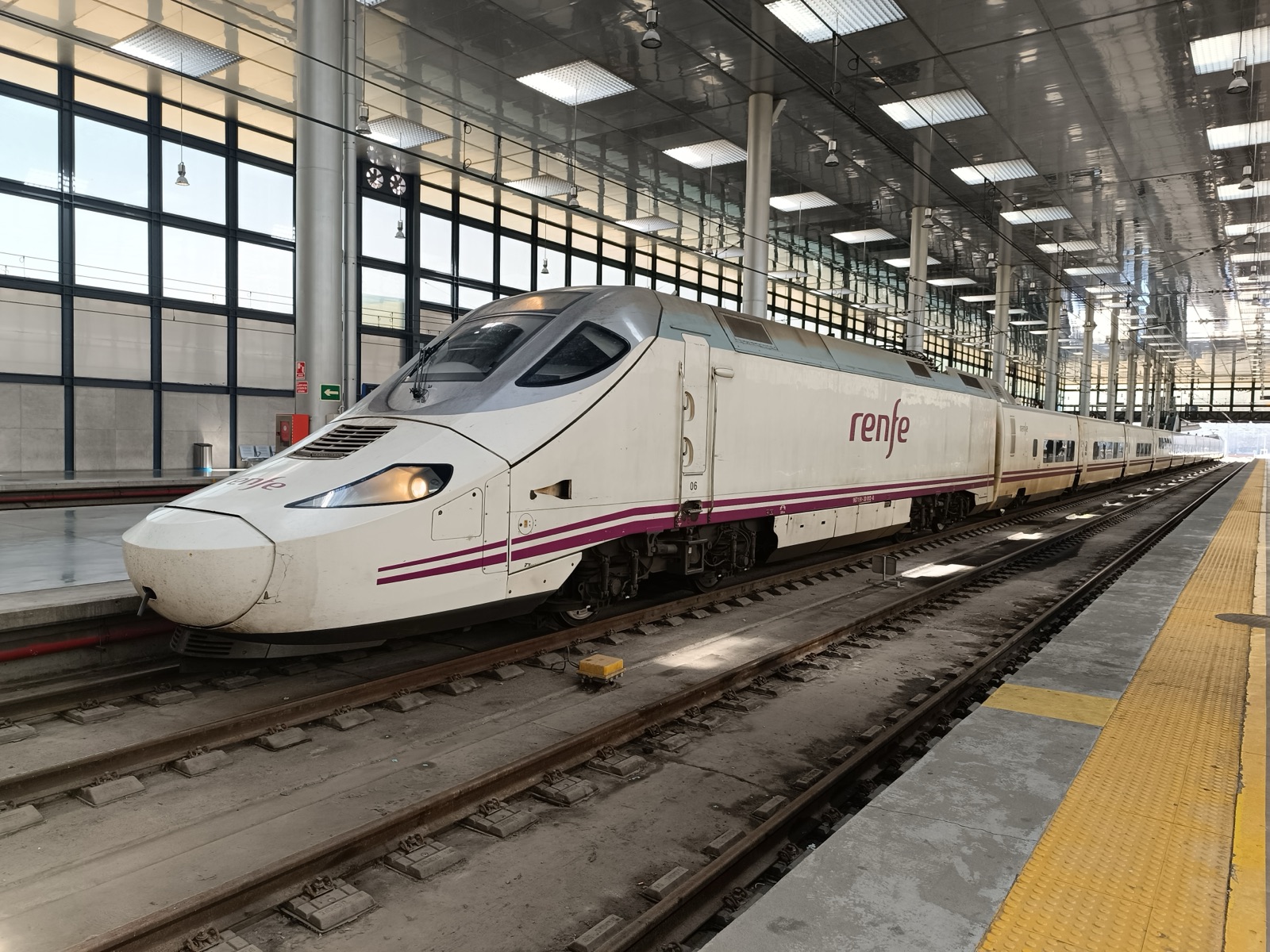
Fuenlabrada rents for close to half of what parts of central Madrid do. The trade is a 52-minute train ride instead of a 20-minute one.
The cinturón obrero — the working belt southwest of Madrid — is still the cheapest way to stay close to the city. Built up through the 1960s–80s as Madrid industrialized and needed somewhere to house the people doing the work, the corridor covers Fuenlabrada, Móstoles, Alcorcón, and Leganés, plus Getafe, Parla, and Pinto a little further along the same lines. Seven towns, three Cercanías lines, one shared logic: the further you go, the cheaper it gets, until it doesn’t.
Fuenlabrada: the cheapest, and the longest ride
Fuenlabrada rents for about €13.2/m², the lowest of the whole list, according to Idealista’s rental price report. The catch is the catch this entire guide is built around: it sits at the far end of Cercanías C-5, and the ride to Atocha runs about 52 minutes. It’s also one of several southwest towns with a Rey Juan Carlos University campus, which keeps a student population in the rental mix alongside the working-class base the cinturón obrero was built for.
Good for: people optimizing for the lowest possible rent, full stop — hybrid or remote workers who aren’t doing that commute five days a week, and anyone for whom an extra €10/m² a month matters more than an extra half hour on a train.
Móstoles: the same belt, a shorter ride
Móstoles runs about €13.6/m² — barely more than Fuenlabrada — for a commute of about 29 minutes instead of 52. It’s also one of the largest towns in the Madrid region by population, which shows up as more built-out infrastructure: its own hospitals, shopping, and another Rey Juan Carlos University campus, so it functions as a real town rather than a bedroom community.
Good for: families and anyone who wants small-city infrastructure — schools, healthcare, shops — without Madrid prices or Fuenlabrada’s punishing ride.
Alcorcón: the connector
Alcorcón runs about 27 minutes to Atocha, in the same price tier as Móstoles — its Idealista report doesn’t break out a single blended figure, but it sits squarely inside the cinturón obrero’s usual range. What sets it apart is MetroSur, which links it directly to Móstoles, Leganés, and Getafe without a detour through central Madrid. It also has its own Rey Juan Carlos University campus.
Good for: people who need to move between several of these towns regularly — a second job, family, a partner living one town over — not just commute to Madrid and back once a day.
Leganés: the student pick, if you choose right
Leganés has the widest internal spread on this whole list: its cheapest pocket, Leganés Norte, runs around €6.71/m², among the lowest in the region, while La Fortuna, its nicer pocket, runs closer to €15.50/m². The commute is about 28 minutes. Leganés is also home to one of the largest Universidad Carlos III de Madrid campuses, which explains both the student population and the price spread — a lot of that stock is built for turnover, not permanence.
Good for: students and early-career renters, provided you actually check which neighborhood you’re being shown — the difference between Leganés Norte and La Fortuna is bigger than the difference between some of these towns entirely.
Getafe: fast and still affordable
Getafe is the fastest option in the traditional belt — 20 to 25 minutes to central Madrid via Cercanías C-4. An 80 m² flat runs around €1,120 a month by Idealista’s direct comparison against Madrid’s own €1,864 for the same size — a little over 60% of the capital’s rent. Other sources put its per-square-meter rate higher, closer to €18–20/m², depending on the neighborhood; Getafe isn’t uniform, and which end you land in changes the math. It’s also a genuine aerospace and industrial hub — Airbus has a major presence here — plus its own UC3M campus and a large public hospital.
Good for: people who want the shortest commute the traditional belt offers and are willing to pay a bit more for it — often the safest default pick if you don’t want to optimize any further than “close and affordable.”
Parla: Fuenlabrada’s price, half the commute
Parla sits on Cercanías C-4, the same line as Getafe, and runs about €13.0/m² — essentially tied with Fuenlabrada for the cheapest rent on this list — at 27 minutes from Atocha instead of 52. It’s a younger town, most of it built up since the 2000s, so it doesn’t carry the university campuses or industrial history the other belt towns do.
Good for: pure budget optimizers who want Fuenlabrada-level rent without Fuenlabrada’s commute, and don’t need a town with much of an identity beyond that trade.
Pinto: the quiet alternative route
Pinto runs about €13.5/m² and sits on Cercanías C-3, a line none of the other belt towns use — it heads south toward Aranjuez rather than following the C-4/C-5 crowd. The commute to Atocha runs about 23 minutes. It’s smaller and quieter than its neighbors, with less built-up density.
Good for: people who want a genuinely quieter, small-town feel at cinturón obrero prices, and don’t mind that C-3 runs fewer trains per hour than the busier lines.
Alcalá de Henares: further out, noticeably cheaper
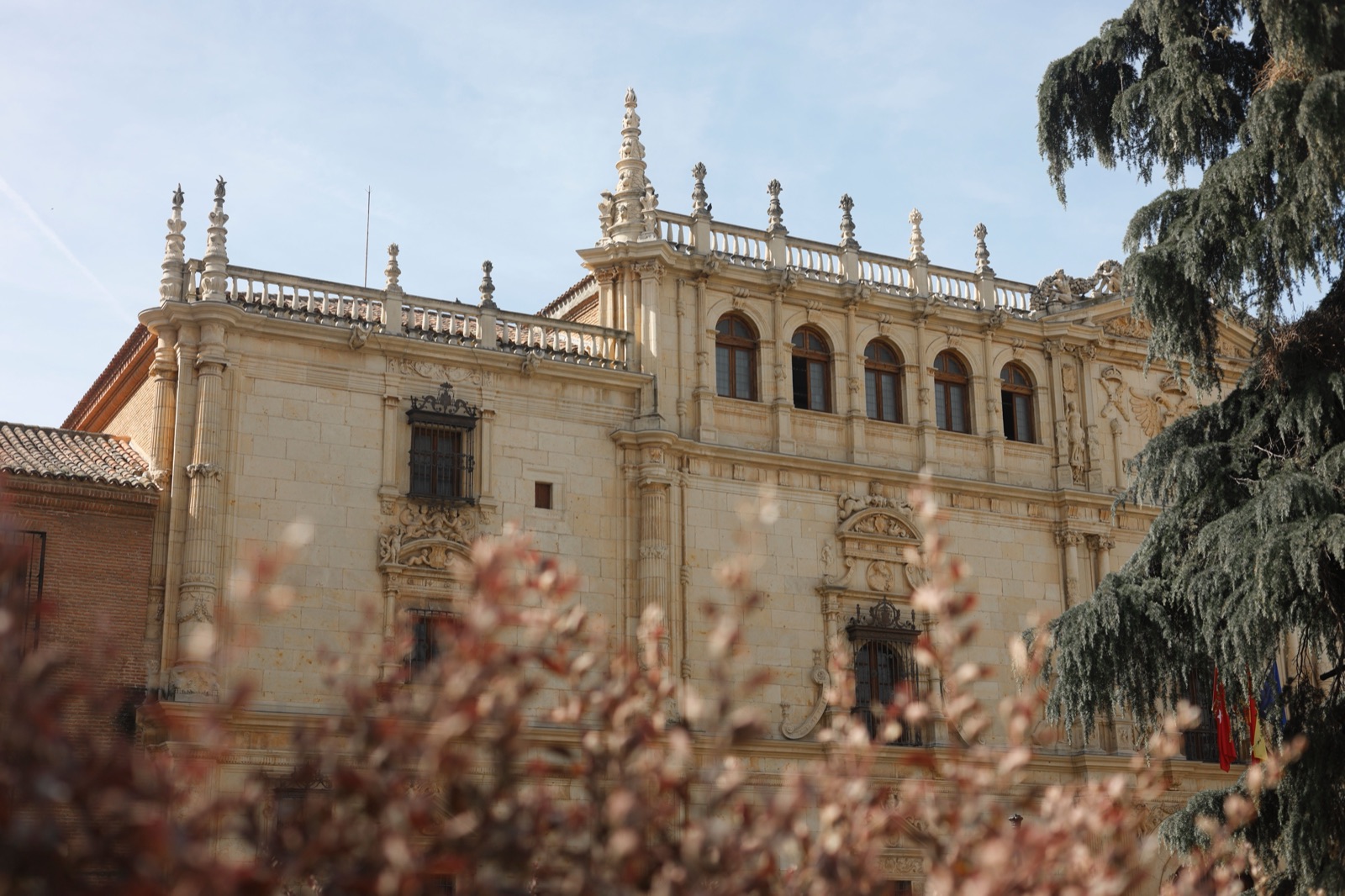
Alcalá de Henares runs about €1,096 a month for an 80 m² flat, on a 35 to 40 minute Cercanías ride (C-2/C-7) — the corridor, the Corredor del Henares, that also runs through Coslada and Torrejón de Ardoz further in. It’s a genuinely different town, not a Madrid neighborhood with a longer commute: a UNESCO World Heritage historic center, Cervantes’ birthplace, and its own university, which keeps a large student population and a steady supply of smaller flats.
Good for: people who want to actually live in a distinct town with its own culture and nightlife rather than sleep in a Madrid-adjacent commuter box — a strong fit for students, academics, and anyone who values “somewhere real” over “closest cheap option.”
Coslada: the fastest ride on this whole list
Coslada runs about €14.4/m² — close to Móstoles, not a record-low price — for the fastest commute of any town in this guide: about 17 minutes to Atocha, faster even than Getafe. It sits on the Corredor del Henares northeast of the city, near Madrid-Barajas airport rather than the traditional cinturón obrero.
Good for: frequent flyers, anyone working near the airport, and people who’d simply rather pay Móstoles-level rent for the shortest possible ride into the center.
Torrejón de Ardoz: the international pick on the Henares line
One stop further out from Coslada on the same C-2 line, Torrejón de Ardoz runs about €14.0/m² for a 29-minute ride — nearly Coslada’s price, a bit more time. The town grew up around a long-standing air base with decades of NATO and US Air Force presence, which left it with an unusually international community for its size.
Good for: people who want airport proximity and an established international community, without Coslada’s slightly higher price.
Toledo: a city of its own, a few days a week
For people who only need to be in Madrid a few days a week, the math changes completely. Toledo runs about €824 a month for an 80 m² flat, 35 minutes away by AVE high-speed rail — not Cercanías, and not a line you’d ride twice a day without a company covering it. It’s a UNESCO World Heritage historic capital with its own tourism economy and identity, not a satellite of Madrid.
Good for: hybrid workers who need the capital only a couple of days a week and want to actually live somewhere with its own strong character, not a commuter town. This is a hybrid-work bet, not a budget-rental one, and it’s exactly the kind of arrangement that legitimately qualifies for a temporada contract instead of a long-term lease — worth knowing which one you’re actually being offered.
Valladolid: the cheapest of the AVE towns
Valladolid drops to about €760 a month for an 80 m² flat, an hour out by AVE — the cheapest of the three AVE options. It’s a real Castilian city with its own industrial and economic base, not dependent on Madrid the way a commuter town is.
Good for: hybrid workers optimizing purely for savings, comfortable with the longest regular AVE ride of the three, who want to live in a city that functions on its own rather than as a Madrid satellite.
Zaragoza: the furthest, and the least “commuter”
Zaragoza, the furthest at an hour and 15 minutes by AVE, comes in around €912 a month for an 80 m² flat. It’s Spain’s fifth-largest city, with a full independent economy, culture, and airport of its own — the least “commuter town” on this entire list by a wide margin.
Good for: people who want to genuinely live in a different major city and treat Madrid as an occasional AVE trip, not a commute at all.
The “suburb” guides that aren’t actually about affordability
A lot of “Madrid suburbs” content lumps genuinely affordable towns in with places that were never trying to be cheap. Pozuelo de Alarcón (€19.90/m²), Alcobendas (€22.90/m²), and San Sebastián de los Reyes (€20.70/m²) all show up on “best Madrid suburbs” lists — and all of them cost more per square meter than Tetuán or Carabanchel do inside the city itself.
These towns solve a different problem: space, schools, and a garden, for people who could afford central Madrid and chose not to. That’s a legitimate reason to move. It’s just not the same reason as being priced out.
One thing worth checking before you sign, especially outside the city
If an agency in any of these towns tries to bill you an “estudio de solvencia” — a credit study fee — before they’ll even show you the apartment, look closer. Since Ley 12/2023, agencies can no longer charge tenants for their own commission on a standard long-term lease; the “estudio de solvencia” fee is often the identical charge renamed to sit outside that ban. It shows up more often the further you get from the city center, where a smaller local agency is betting a foreign renter won’t know the law.
For the full list of what to actually bring to that call, see Documents Spanish Landlords Ask For.
Is the commute actually worth it?
Run the actual numbers before deciding. Fuenlabrada saves roughly €10/m² over central options inside Madrid — on a 70 m² flat, that’s about €700 a month back in your pocket, for an extra 30-plus minutes each way versus Getafe. That’s over 4 hours a week on a train, in exchange for money that matters more to some budgets than others.
There’s no universally correct answer. There’s only the one that’s honest about what an hour of your day is actually worth to you, against what €700 a month buys. (I don’t commute. I checked. Still don’t have an opinion on trains, only on the towns they connect to.)
When none of this applies
If your job requires you in a Madrid office five days a week and doesn’t tolerate a commute over 20 minutes, most of this list is off the table — Getafe is your outer limit, not Fuenlabrada or Alcalá. And if you can genuinely afford central Madrid and just want more space, the wealthier suburbs above are the right search, not this one.
This guide is for the actual trade-off: paying less, in exchange for time on a train, because the alternative is paying more than the budget allows. If Madrid’s rent still doesn’t fit even from the outer belt, Renting in Valencia vs Barcelona: What Changes breaks down how much moving to a different city actually saves.
We can’t shorten your commute. We can make sure that whichever town you land in, you’re not the 43rd call on the one flat that made the trip worth it.
Frequently asked questions
What is the cheapest area to live near Madrid?
Fuenlabrada, at roughly €13.2/m², though it comes with the longest commute of the group — about 52 minutes to Atocha by Cercanías.
Is it cheaper to live outside Madrid and commute?
Usually, yes. Getafe runs about 60% of central Madrid's rent for a 20–25 minute commute; Fuenlabrada and Móstoles run even lower, for a longer ride.
How long is the commute from Getafe to Madrid?
About 20 to 25 minutes by Cercanías C-4.
Is Alcalá de Henares a good place to live?
Yes, for people who want a genuinely separate town rather than a Madrid suburb — it has its own university, historic center, and rental market, at about €1,096/month for an 80 m² flat, 35–40 minutes from the center.
What's the difference between Madrid's affordable towns and its expensive suburbs?
Towns like Fuenlabrada, Móstoles, and Getafe are genuinely cheaper than central Madrid. Suburbs like Pozuelo de Alarcón, Alcobendas, and San Sebastián de los Reyes actually cost more per square meter than some Madrid neighborhoods — they solve a different problem than affordability.
Can you commute to Madrid from Toledo?
Yes, in about 35 minutes by AVE — though at regular high-speed rail prices, it works better for a few days a week than a daily commute.
What towns are connected to Madrid by Cercanías?
Fuenlabrada, Móstoles, Alcorcón, and Leganés via the C-5 line; Getafe and Parla via C-4; Pinto via C-3; Alcalá de Henares, Coslada, and Torrejón de Ardoz via C-2/C-7 — all also connected to Madrid's Metro network at various points.
Is Leganés cheap to live in?
It depends on the area. Leganés Norte runs about €6.71/m², among the cheapest in the region, while La Fortuna, a nicer pocket of the same town, runs closer to €15.50/m².
What are the best commuter towns near Madrid?
Depends what you're optimizing for. For the lowest rent, it's Fuenlabrada or Parla, both around €13/m². For the fastest commute at a similar price, it's Coslada, about 17 minutes to Atocha. Getafe is the middle ground — a bit pricier, but the fastest of the traditional southwest towns.
Can you live near Madrid on €1,500 a month?
Comfortably, in most of the towns on this list. A 45–55 m² flat in Fuenlabrada, Parla, or Móstoles runs roughly €600–750 a month at their per-m² rates, leaving real room in a €1,500 budget for utilities and transport. The same flat in central Madrid, at roughly €23/m², runs closer to €1,050–1,250 before anything else.
Is Coslada a good place to live near Madrid?
Yes, if commute time matters more than being on the popular southwest corridor. It's about 17 minutes to Atocha — the fastest option in this guide — at a price close to Móstoles, and it sits near Madrid-Barajas airport rather than in the traditional cinturón obrero.