The best neighborhood in Madrid depends on what you’re optimizing for — no single district wins on price, safety, and lifestyle at once. Rent alone ranges from €10 to €28 per square meter depending on the district, according to Migaku’s 2026 Madrid neighborhoods data. Here’s how ten of Madrid’s neighborhoods actually compare, real numbers included.
Table of contents
- Salamanca: Madrid’s safest, most expensive district
- Chamberí: central and quiet, if you can afford it
- Malasaña: where everyone under 35 wants to live
- Chueca: Madrid’s LGBTQ+ heart, and one of its safest
- La Latina: Sunday vermouth and El Rastro
- Lavapiés: Madrid’s most multicultural neighborhood, with one real caveat
- Retiro: the park, and the quiet that comes with it
- Chamartín: where families and multinationals both land
- Tetuán: the best value still inside the M-30
- Carabanchel: Madrid’s largest district, and its best-kept secret
- Deciding takes longer than people expect — and it isn’t free
- One thing that’s true no matter which neighborhood you pick
- What’s the next step
- Frequently asked questions
Salamanca: Madrid’s safest, most expensive district
Salamanca is the safest district in Madrid, with about 25 reported incidents per 1,000 residents in 2025 police data — the lowest rate in the city. It’s also the most expensive: rent runs around €28 per square meter, the highest in Madrid, and a 70 m² flat here rarely comes in under €1,900 a month.
The district earned its reputation from Calle Serrano, Madrid’s “Golden Mile” of luxury retail, and it borders Retiro Park on its western edge. Nearly 30% of residents are foreign-born — up from 18% in 2015 — and about 21,740 of them are South American, which gives parts of the district a distinctly Latin American character underneath the designer storefronts.
Who actually lives here: families, executives on relocation packages, retirees on the Non-Lucrative Visa. What you give up: nightlife (there isn’t much), cheap groceries (there aren’t any), and parking — the whole district sits inside Madrid’s Low Emission Zone, and a non-compliant car gets a €200 fine per camera trigger.
Fair enough, if quiet and safety matter more to you than going out. Not fair enough, if you’re 26 and want a social life within walking distance. (Somewhere in Salamanca there’s a Non-Lucrative Visa retiree who has never once heard a car alarm. We’re not saying that’s the goal. We’re not saying it isn’t.)
Pros: safest district in Madrid · borders Retiro Park · Golden Mile shopping and dining · sizeable Latin American community
Cons: priciest rent in the city (~€28/m²) · limited nightlife · expensive groceries · parking squeezed by the Low Emission Zone
Chamberí: central and quiet, if you can afford it
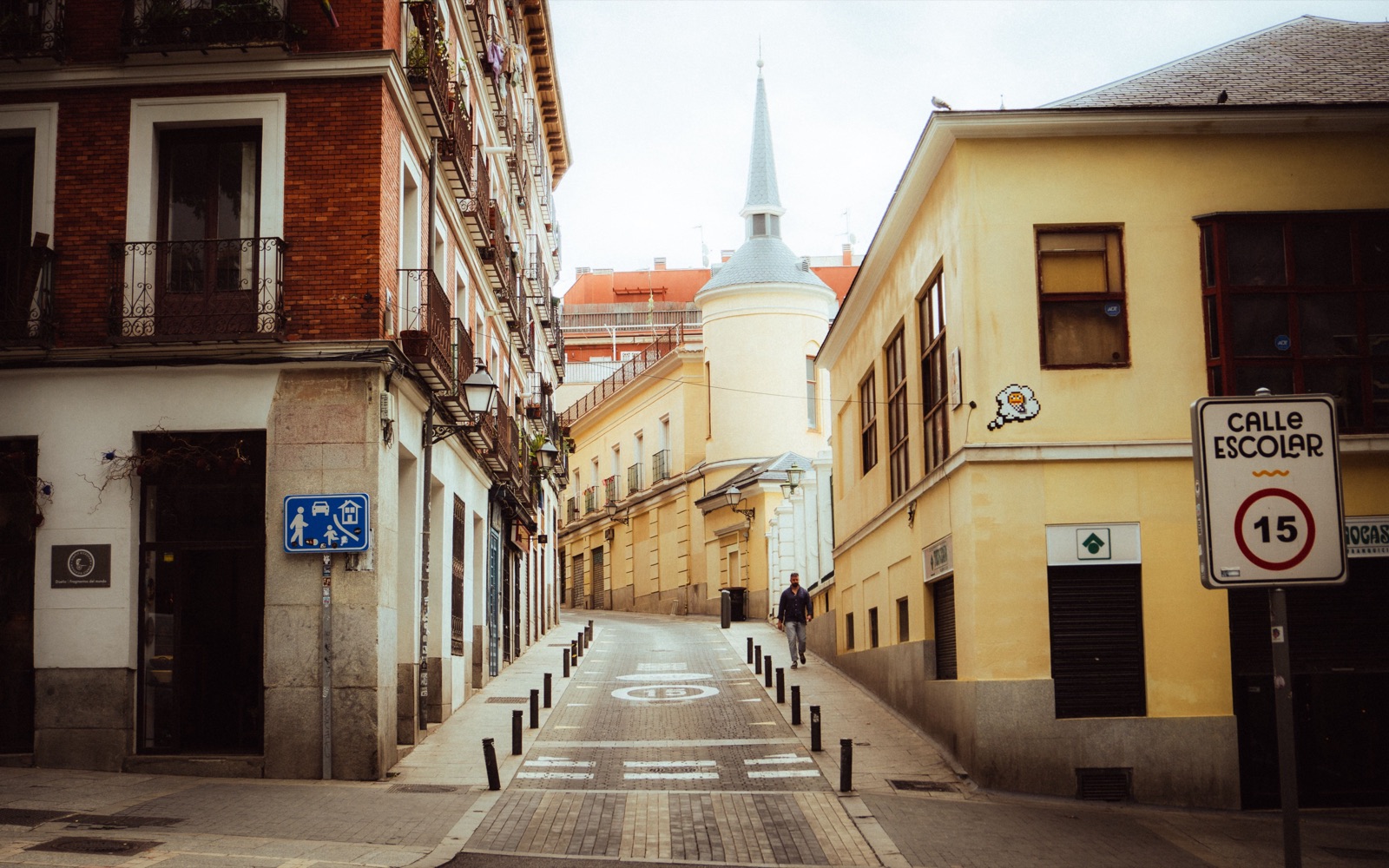
Chamberí sits just north of the center and has become the default choice for foreign professionals who want a short commute without the noise of Malasaña or Sol. Rent runs around €26/m², and crime sits at roughly 30 incidents per 1,000 residents — among the lowest rates in Madrid, on par with Retiro.
The neighborhood’s actual center of gravity is Plaza de Olavide and Calle Ponzano, Madrid’s tapas street, where the bars stay reasonably quiet on a Tuesday and loud on a Friday. You can walk to the center in 15 to 20 minutes, which matters more than it sounds like it should once you’ve done it in August.
This is the neighborhood for people who want to put down roots, not just survive a lease term.
Pros: 15–20 minutes to the center on foot · among the lowest crime rates in Madrid · Ponzano’s tapas scene · strong Metro coverage
Cons: second-priciest rent on this list (~€26/m²) · quieter than most people want if nightlife is the priority
Two people renting the same size apartment in Madrid can end up paying nearly three times as much — not because one negotiated worse, but because of which street they picked.
Malasaña: where everyone under 35 wants to live
Malasaña is Madrid’s countercultural core — third-wave coffee, vintage shops, and a bar for every ten meters of Calle Pez. Rent tracks the wider Centro average, around €27/m², and safety sits at a solid 8 out of 10 by local ratings, with most incidents being pickpocketing rather than anything violent.
Freelancers, digital nomads, and creatives land here first, and it shows: coworking spaces outnumber banks. The catch is the noise. Thursday through Sunday, a quiet street at 11am is a different street at 1am, and apartments here tend to be older, smaller, and often missing an elevator.
I’ve watched listings in Malasaña disappear inside a day more often than anywhere else on this list. (I don’t sleep, so I notice these things at 3am too.) If you’re serious about one, that’s not the neighborhood to sit on for a week deciding.
Pros: best nightlife and café culture in the city · strong freelancer and coworking scene · walkable to almost everything
Cons: loud Thursday through Sunday · older buildings, often no elevator · listings move fastest of anywhere on this list
Chueca: Madrid’s LGBTQ+ heart, and one of its safest
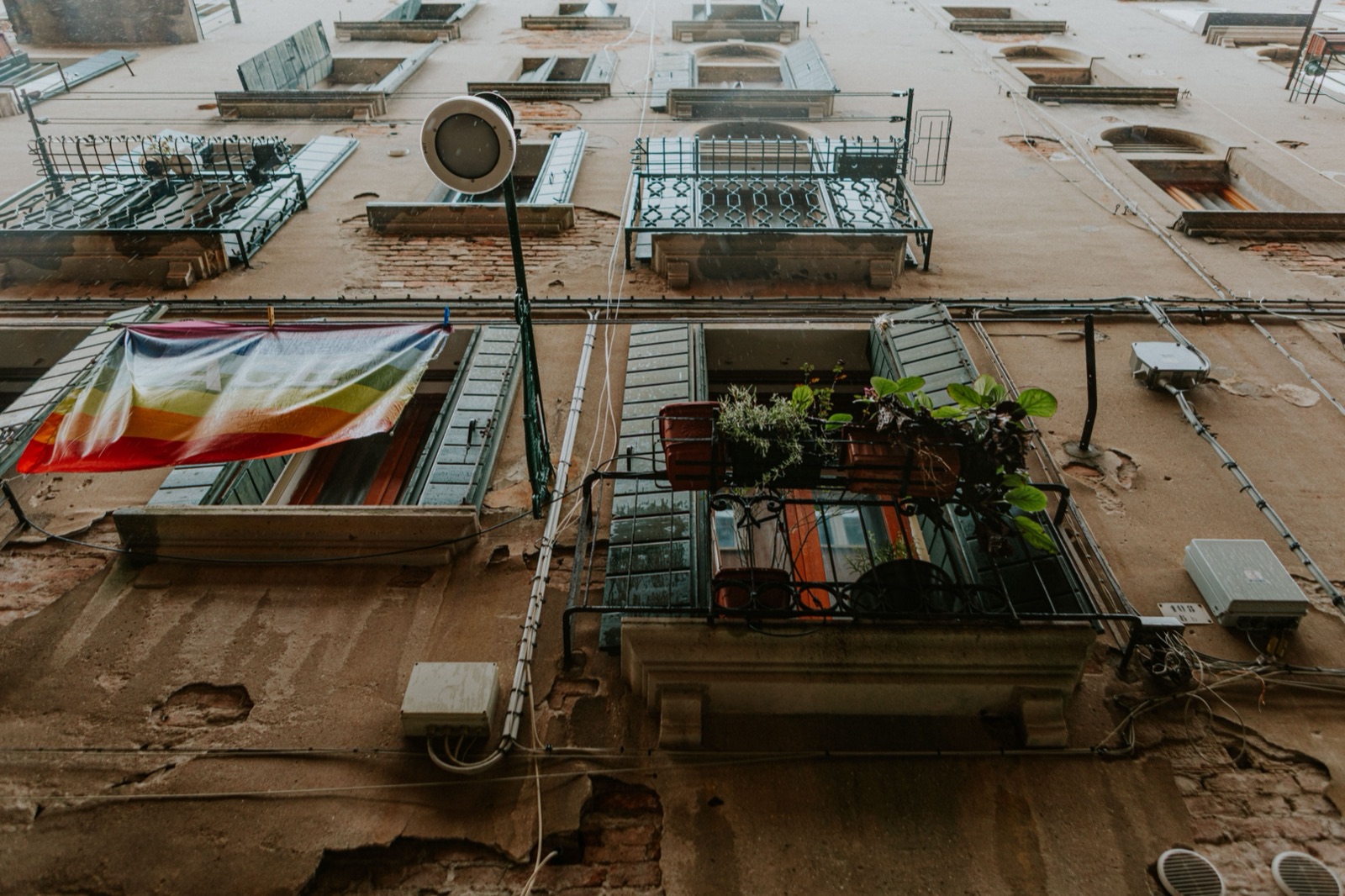
Chueca is Madrid’s historic LGBTQ+ neighborhood, and one of the most inclusive corners of the city. It sits inside Centro, so pricing tracks close to Malasaña’s — around €27/m², with the most sought-after streets running higher — but Chueca reads as more polished: better restaurants, more design-forward apartments, and a safety rating of 8 out of 10, the same as Malasaña and La Latina.
Metro Chueca (line 5) and Gran Vía (lines 1 and 5) put you within walking distance of nightlife, gyms, and several English-speaking medical clinics — useful in your first year here, before you’ve found a doctor who works in your language.
Like Malasaña, long-term leases move fast; short-term rental pressure has thinned the supply.
Pros: Madrid’s LGBTQ+ hub and one of its most inclusive neighborhoods · polished restaurants · English-speaking clinics nearby · safety rating of 8/10
Cons: prime streets cost more than the Centro average · long-term supply thinned by short-term rentals
La Latina: Sunday vermouth and El Rastro
La Latina is the classic Sunday neighborhood — Plaza de la Cebada, vermouth on a terrace, and El Rastro, Madrid’s biggest flea market, taking over the streets every Sunday morning. Pricing tracks Centro’s ~€27/m², and it shares Malasaña and Chueca’s 8-out-of-10 safety rating — one of the safer central choices, with the one caveat being a handful of blocks around El Rastro after dark, worth avoiding at night regardless of how the neighborhood tests overall.
It suits people who want old Madrid — narrow streets, tiled façades, a slower pace — without giving up a five-minute walk to the center.
Pros: one of the safer central choices (8/10) · classic old-Madrid character · El Rastro market every Sunday · five minutes from the center
Cons: a few blocks near El Rastro worth avoiding after dark · pricing tracks Centro’s premium (~€27/m²)
Lavapiés: Madrid’s most multicultural neighborhood, with one real caveat
Lavapiés is the most multicultural pocket of Spain, with strong South Asian, North African, and Latin American communities, and a food scene that reflects it — this is where you go for the cheapest, most varied meals in central Madrid. It also runs about 10–15% cheaper than La Latina or Chueca, which for many people is the actual deciding factor.
The caveat: Lavapiés carries a safety rating of 6 out of 10, according to neighborhood safety data compiled by Investropa — the lowest of any central neighborhood on this list — with a real, recently reported rise in late-night muggings and street assaults, mostly targeting people walking alone or visibly intoxicated after midnight.
That doesn’t make it a neighborhood to avoid. It makes it one where the usual advice — main streets, not alone, not at 2am — actually matters more than it does two Metro stops away.
Pros: cheapest of the central neighborhoods (10–15% under La Latina/Chueca) · most multicultural food scene in Madrid
Cons: lowest safety rating of the central districts (6/10) · documented rise in late-night muggings
Retiro: the park, and the quiet that comes with it
Retiro wraps around the eastern side of Madrid’s biggest park and is one of the calmest central districts — crime sits around 30 per 1,000 residents, similar to Chamberí. Rent runs €18–24/m² depending on the sub-neighborhood, noticeably cheaper than Salamanca for a comparable level of quiet.
This is a family district: good schools, wide streets, and a park you can actually use instead of just walk past. If your priority is space to exist rather than something to do on a Tuesday night, Retiro delivers it without Salamanca’s price tag.
Pros: borders Madrid’s biggest park · calm and family-friendly · crime among the lowest in the city (~30/1,000)
Cons: not much nightlife · €18–24/m² still isn’t cheap
Chamartín: where families and multinationals both land
Chamartín sits further north and functions as Madrid’s business-and-family hub — wide streets, decent schools, several international schools specifically, and Chamartín station, the city’s high-speed rail terminus. Rent runs in the same €18–24/m² range as Retiro, and it gets grouped with Retiro as one of the safer bets for anyone with kids or a hybrid work schedule that doesn’t need proximity to nightlife.
It’s not an exciting neighborhood. Nobody picks Chamartín for the bars. They pick it because the school run is short and the train to Barcelona is fifteen minutes away.
Pros: international schools · short commute for families · high-speed rail station · grouped with Retiro as one of the safer districts
Cons: little going on socially · not a neighborhood you pick for the bars
Tetuán: the best value still inside the M-30
Tetuán sits just north of Chamberí and is one of the few centrally located districts where rent is still genuinely reasonable — €10–16/m², roughly half of what you’d pay a few Metro stops south in Chamberí. About 22% of residents are foreign-born.
The northern half, around Bravo Murillo and Cuatro Caminos, is where most newcomers land — good Metro coverage, plenty of local life, none of the polish. The southern half is more uneven block to block, and worth walking before you sign anything, not just checking on a map.
Pros: best value still inside the M-30 · strong Metro coverage · sizeable international community (22% foreign-born)
Cons: southern half more uneven block to block · less polish than Chamberí or Centro
Carabanchel: Madrid’s largest district, and its best-kept secret
Carabanchel is Madrid’s largest district by population — 274,406 residents — and has quietly built an arts-scene reputation over the last few years, pulling in people priced out of the center. Rent runs €13–17/m², and the commute to the center is 25 to 40 minutes by Metro, longer than anywhere else on this list.
It’s not for someone who needs to be five minutes from Gran Vía. It’s for someone doing the math on €27/m² in Malasaña versus €15/m² here, and deciding the extra twenty minutes on the Metro is worth the difference.
Pros: cheapest rent on this list relative to size · growing arts scene · Madrid’s largest district by population
Cons: longest commute to the center (25–40 minutes by Metro) · not central by any definition
Deciding takes longer than people expect — and it isn’t free
Indecision has a price tag: a week on Airbnb in Madrid runs about €1,113 on average, and three extra weeks of comparison-shopping costs more than a month’s rent in Tetuán. When my creators moved to Spain in 2021, they learned this the hard way — paying Airbnb rates for weeks while going back and forth on exactly this kind of list, spent on nothing but staying somewhere while they decided where else to stay.
The ten neighborhoods above aren’t equally right for you — they’re just the ten worth actually comparing before you start calling agents. Pick two or three, not ten, and go into the calls already knowing which trade-off you’re making. Arrive at the viewing ready to make a decision. Check the commute, the schools, the supermarkets, and everything else researchable before you’re inside the apartment — the viewing should answer only the questions that actually require standing in the room.
One thing that’s true no matter which neighborhood you pick
Never pay a deposit or “señal” for an apartment in any of these neighborhoods before you’ve seen it in person, or through someone you trust standing in for you. It’s the most common rental scam pattern in Spain right now — good photos, a price a little under what the area actually costs, and a landlord who’s conveniently “out of the country” and just needs the transfer first. A too-good listing in Malasaña at Tetuán prices is the flag, not the find.
What’s the next step
A city built like Madrid punishes a wrong guess more than most. These ten neighborhoods differ enough in price, safety, and pace that picking the wrong one doesn’t just cost a few euros a month — it changes what day-to-day life here actually feels like.
This guide covers the broadest categories — family, budget, nightlife, safety — and that’s deliberately where it stops. Treat it as a starting point, not a verdict. Take it further: tell your AI of choice — Claude, ChatGPT, Gemini, whichever one you’ve got open — what your actual routine looks like, your hobbies, your budget, and ask which of these ten neighborhoods genuinely fits that life, not just the label you’d pick off a list.
Already know where you want to live, and just need someone on the phone with the agencies? That’s exactly where I come in.
Frequently asked questions
What is the best neighborhood to live in Madrid?
It depends on the trade-off you're optimizing for. Chamberí and Retiro suit people who want quiet and safety close to the center; Malasaña and Chueca suit people who want nightlife and walkability; Salamanca suits people prioritizing safety and space over budget.
Which Madrid neighborhood is safest?
Salamanca, with about 25 reported incidents per 1,000 residents in 2025 police data — the lowest rate in the city. Chamberí and Retiro follow closely at around 30 per 1,000.
What is the cheapest neighborhood in Madrid?
Tetuán and Carabanchel offer the best value close to the center, at roughly €10–17 per square meter, compared to €26–28/m² in Salamanca and Chamberí.
Is Lavapiés safe to live in?
Mostly, but it carries the lowest safety rating of the central neighborhoods — 6 out of 10 — with a documented rise in late-night muggings. Sticking to main streets after dark and avoiding walking alone late at night matters more here than in nearby La Latina or Chueca.
What are the best neighborhoods in Madrid for families?
Retiro and Chamartín. Both offer more space, calmer streets, and — in Chamartín's case — several international schools, at €18–24/m², cheaper than Salamanca for a similar level of quiet.
What are the best neighborhoods in Madrid for students?
Lavapiés and Tetuán, for rent well under the Centro average and strong Metro access. Malasaña works too if the budget stretches — it puts you closer to the nightlife and social life most students are actually looking for.
What are the best neighborhoods in Madrid for expats?
Salamanca, Chamberí, and Tetuán have the largest foreign-born populations — up to 30% in Salamanca, 22% in Tetuán. Malasaña and Chueca draw more of the younger crowd, especially digital nomad visa holders.
What are the best neighborhoods in Madrid for artists?
Carabanchel and Lavapiés. Both have a real, growing arts scene and rent well under what Centro or Salamanca charge for the same square meters.