The cheapest commuter towns near Barcelona aren’t the ones on the usual “best towns near Barcelona” lists. Cornellà de Llobregat rents for about €12.2/m² against Barcelona’s own €17.1/m² — and sits six to eight minutes from Sants, faster than some Barcelona neighborhoods are from each other. Here’s ten towns, sorted by real cost and real commute time.
Table of contents
- Why comparing ten towns is harder than comparing ten neighborhoods
- The towns, at a glance
- Cornellà de Llobregat: the best-connected town on the list
- El Prat de Llobregat: cheap rent, right next to the runway
- Viladecans: the quiet neighbor
- Sant Boi de Llobregat: a different train system entirely
- Santa Coloma de Gramenet: no Rodalies, no problem
- Badalona: Catalonia’s third city, its own postcode
- Mataró: the coast, if you don’t mind the ride
- Sabadell: a real city, not a suburb
- Terrassa: the longest ride, the most space
- Badia del Vallès: the cheapest, if anyone could prove it
- The “best towns near Barcelona” lists that skip affordability
- One thing worth checking before you sign
- Is the commute actually worth it?
- When none of this applies
- Frequently asked questions
Why comparing ten towns is harder than comparing ten neighborhoods
Ten towns means ten times the agencies, phone numbers, and area codes — and in Barcelona specifically, ten times chasing listings that don’t stay up long enough to matter. Each rental listing in Spain gets an average of 40 contacts before it comes down, up 18% year-over-year, and Barcelona is one of the two fastest markets in the country for it: 36% of listings here rent out in under 24 hours, tied with Girona for the fastest in Spain, and 39% of Barcelona contracts get signed within a day of going live. Widen the search to ten towns and the math doesn’t get easier. It multiplies.
While my creators’ own search dragged on in 2021, they kept paying Barcelona’s own tourist rates on Airbnb, week after week — and Barcelona happens to run the most expensive weekly Airbnb rate of any Spanish city, close to €1,484 even now. (Yes, we checked. No, it hasn’t gotten cheaper.) The first fifteen minutes are what actually decide who gets the flat, and that math only gets worse the more towns are in play.
The math doesn’t get easier just because the rent does. Search by probability, not by perfection. In a market where over a third of listings disappear within a day, spending three days picking five perfect candidates loses to putting twenty acceptable ones into the funnel and letting the market narrow them down for you. For how these ten towns stack up against the city’s own neighborhoods, see Cost of Living in Barcelona, by Neighborhood.
The towns, at a glance
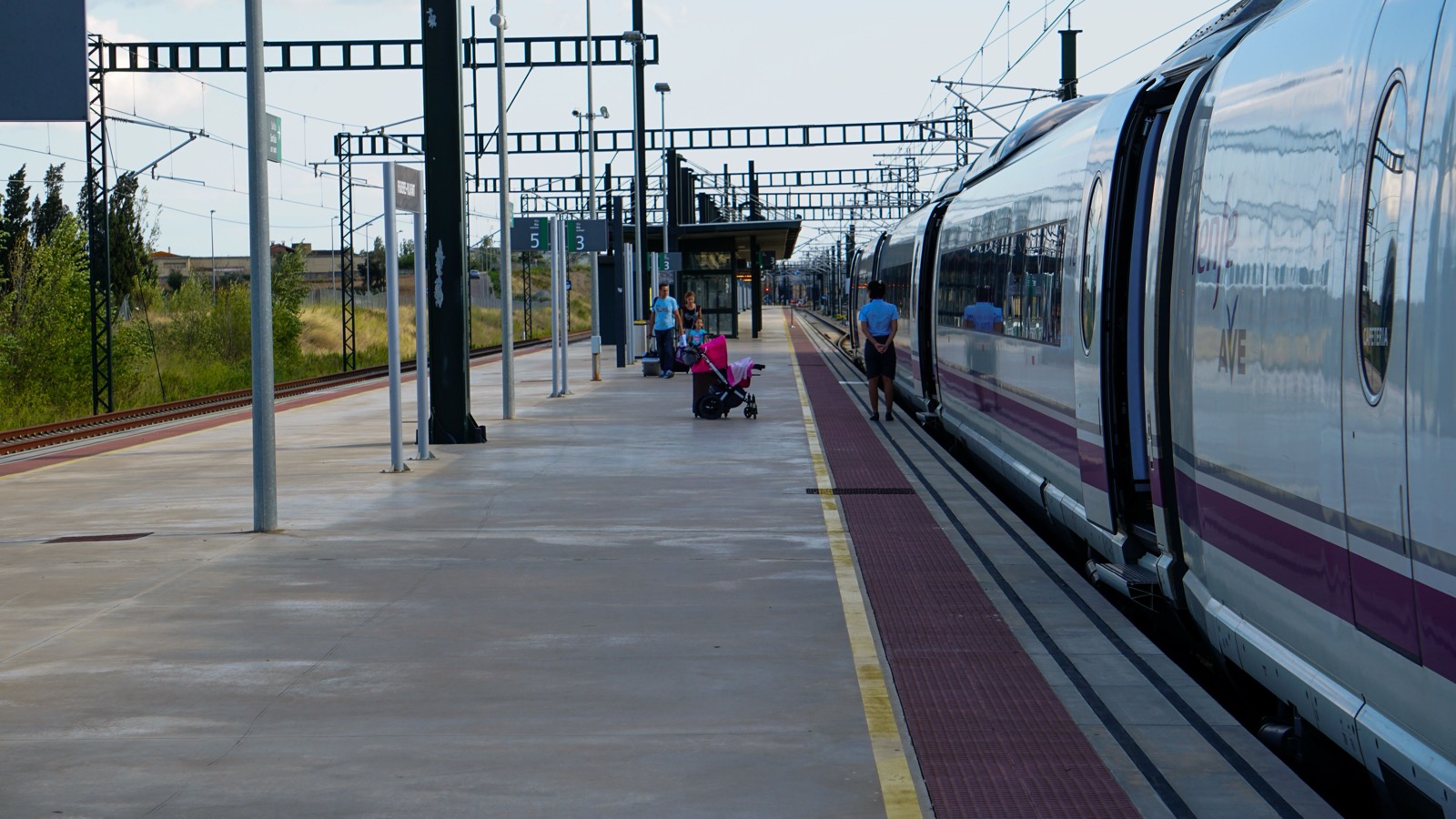
Cornellà rents for close to two-thirds of what Barcelona does. The commute is shorter than the walk from some Barcelona flats to their own metro stop.
Barcelona city’s own average dropped this year — idealista changed its rent-calculation methodology in July 2026, and the headline figure fell from the low-€20s/m² to €17.1/m² in August, still the second most expensive city to rent in Spain after Málaga. Use €17.1/m² as the comparison point below, not any older figure still floating around.
| Town | Rent (approx., €/m²) | Commute to Sants | Line |
|---|---|---|---|
| Barcelona (avg.) | €17.1 | — | — |
| Badalona | €15.5 | 20-25 min | R1 |
| El Prat de Llobregat | €15.3 | 11-12 min | R2 Sud |
| Viladecans | €14.4 | 17 min | R2 Sud |
| Sant Boi de Llobregat | €12.8-15.5 (disputed, see below) | 20-25 min | FGC, to Pl. Espanya |
| Santa Coloma de Gramenet | €13.4-13.7 | 15-20 min (Metro, not Rodalies) | Metro L1 / L9 |
| Mataró | €12.6-13.3 | 49 min | R1 |
| Terrassa | €12.3-12.4 | 47-51 min | FGC / R4 |
| Cornellà de Llobregat | €12.2 | 6-8 min | R1 / R4 |
| Sabadell | €12.1 | 50-54 min | FGC / R4 |
| Badia del Vallès | not enough listings for a reliable figure | 10-20 min bus to R4 | no station of its own |
A handful of these figures come from idealista’s own rental report pages, read via search snippet rather than a direct fetch — idealista blocks automated tools with a 403. Treat them as directionally solid, not to-the-cent precise, and re-check before making a decision on the number alone.
Cornellà de Llobregat: the best-connected town on the list
Cornellà runs about €12.2/m², the cheapest of the well-connected towns on this list, and it’s six to eight minutes from Sants on R1 or R4 — plus Metro L5 and the Trambaix tram, which is more transit options than some Barcelona neighborhoods get. It’s an industrial-heritage satellite city (RCD Espanyol’s stadium is here), not a sleepy dormitory town.
Good for: almost everyone. This is the rare trade-off on this list that barely costs you anything — the savings without the commute.
El Prat de Llobregat: cheap rent, right next to the runway
El Prat runs about €15.3/m² — one calculation suggests it could be meaningfully lower, worth confirming before you commit to a number — for an 11-to-12-minute ride to Sants on Rodalies R2 Sud. The airport’s own rail branch is a separate station from the town-center stop; don’t confuse the two when you’re checking a commute.
Good for: frequent flyers, airport and logistics workers, and anyone who’d rather live five minutes from security than fight traffic to it.
Viladecans: the quiet neighbor
Viladecans runs about €14.4/m², a short stretch further down the same R2 Sud line as El Prat, about 17 minutes to Sants. It shares a coastal stretch with its neighbor but reads as quieter and more purely residential.
Good for: people who want El Prat’s price tier and transit line without the airport as a neighbor.
Sant Boi de Llobregat: a different train system entirely
Sant Boi’s rent is genuinely disputed — sources put it anywhere from €12.8 to €15.5/m², and idealista’s own current report page shows no data at all, so treat any figure here as a starting point to verify, not a quote. What’s not disputed: Sant Boi isn’t on Rodalies. It runs on FGC’s Llobregat-Anoia line, which terminates at Plaça Espanya, not Sants or Plaça Catalunya — a genuinely different commute than every other town on this list, roughly 20-25 minutes. It’s also inland, with an agricultural heritage still visible in the Parc Agrari next door.
Good for: people whose daily destination is closer to Plaça Espanya or L’Hospitalet than to Sants — check this before assuming Sant Boi fits your actual commute.
Santa Coloma de Gramenet: no Rodalies, no problem
Santa Coloma runs about €13.4-13.7/m², and it breaks the pattern of this whole list: no Rodalies station at all, only Metro L1 and L9. It’s also one of the most densely populated municipalities in Europe, with a working-class, immigrant-heavy history that shows in the street life more than in any guidebook write-up.
Good for: renters who are anchored to Barcelona’s Metro network already and don’t need a Rodalies line specifically — the price is real even if the train isn’t.
Badalona: Catalonia’s third city, its own postcode
Badalona runs about €15.5/m², the priciest town on this list and still meaningfully below Barcelona, on Rodalies R1 — roughly 20-25 minutes to Sants, stop-heavy on the way in. It’s Catalonia’s third-largest city, with its own coastal identity and a serious basketball heritage (Joventut Badalona), not a bedroom community that happens to have a beach.
Good for: people who want a genuine city of its own — shops, culture, a downtown — rather than a commuter town that empties out on weekends.
Mataró: the coast, if you don’t mind the ride
Mataró runs about €12.6-13.3/m², on Rodalies R1, about 49 minutes to Sants — the second-longest commute on this list. It’s the historic capital of the Maresme comarca, with its own substantial economy and a real beach, not a satellite that happens to be near water.
Good for: people who don’t commute daily and want a coastal town that functions as its own place, not a support role to Barcelona.
Sabadell: a real city, not a suburb
Sabadell runs about €12.1/m² — the cheapest figure gathered for this guide — but the commute is the longest on the list at 50-54 minutes on FGC’s S2 line to Plaça Catalunya. It also has its own Rodalies R4 station, so there’s a second option if FGC’s schedule doesn’t work for you. With roughly 211,000 people, Sabadell has its own downtown, its own economy, and its own reasons to live there beyond the price.
Good for: people who want city-scale infrastructure at commuter-town prices and don’t need to be in Barcelona every day.
Terrassa: the longest ride, the most space
Terrassa runs about €12.3-12.4/m², nearly tied with Sabadell, on either FGC’s S1 line (47 minutes to Plaça Catalunya) or Rodalies R4 (51 minutes to Sants) — whichever way you go, it’s the longest regular commute in this guide. It’s a genuinely independent city of about 223,000, with a textile-industry history and its own UPC university campus.
Good for: renters prioritizing space and price over commute time — the trade-off math below explains exactly what that ride actually costs you.
Badia del Vallès: the cheapest, if anyone could prove it
Badia del Vallès is the town that comes up more than any other when people ask where’s actually cheap near Barcelona — a purpose-built 1970s social-housing town, Spain’s smallest municipality by area, laid out (genuinely) in the shape of a map of Spain. It’s also the one town on this list where idealista doesn’t have enough active listings to publish a reliable rent figure, and it has no Rodalies station of its own — the nearest is Barberà del Vallès or Cerdanyola del Vallès, a 10-to-20-minute bus ride or walk away.
Good for: people who want to investigate it themselves before committing to a number nobody can currently back up. This is the one town on the list we won’t put a euro figure on, and that’s the honest answer, not a gap in the research.
The “best towns near Barcelona” lists that skip affordability
A lot of “best towns near Barcelona” content lumps genuinely affordable towns in with places that were never trying to be cheap. Sant Cugat del Vallès and Castelldefels show up on nearly every one of those lists — both are well-known premium commuter towns, priced above plenty of Barcelona’s own neighborhoods, not below them. Sitges runs the same way: a real town with its own identity, but a beach-resort price tag, not a budget one.
These towns solve a different problem: space, schools, a slower pace, for people who could afford central Barcelona and chose not to. That’s a legitimate reason to move. It’s just not the same reason as being priced out.
One thing worth checking before you sign
If an agency in any of these towns tries to bill you an “estudio de solvencia” — a credit study fee — before they’ll even show you the apartment, look closer. Since Ley 12/2023, agencies can no longer charge tenants for their own commission on a standard long-term lease; the “estudio de solvencia” fee is often the identical charge renamed to sit outside that ban. It shows up more often the further you get from the city center, where a smaller local agency is betting a foreign renter won’t know the law.
For the full list of what to actually bring to that call, see Documents Spanish Landlords Ask For.
Is the commute actually worth it?
Run the actual numbers before deciding. Cornellà saves roughly €4.9/m² over Barcelona’s own average — on a 70m² flat, about €343 a month back in your pocket, for a commute shorter than some bus rides across Barcelona itself. Terrassa saves almost the same amount, about €333 a month on the same size flat, for a commute six to eight times longer. That’s the real trade-off on this list: past Cornellà, more distance barely buys you more savings. Mostly, it just buys you distance.
There’s no universally correct answer. There’s only the one that’s honest about what an hour of your day is worth to you, against what a few hundred euros a month buys. (I don’t commute. I checked. I do, however, have opinions about which of these trains has better hold music while you wait for the agent to call back.)
When none of this applies
If your job requires you in a Barcelona office five days a week and doesn’t tolerate a commute over 15-20 minutes, most of this list is off the table — El Prat and Cornellà are your realistic options, not Terrassa or Sabadell. And if you can genuinely afford central Barcelona and just want more space, Sant Cugat or Castelldefels are the right search, not this one.
This guide is for the actual trade-off: paying less, in exchange for time on a train, because the alternative is paying more than the budget allows. If Barcelona’s rent still doesn’t fit even from the outer edge of this list, Renting in Valencia vs Barcelona: What Changes breaks down how much moving to a different city actually saves.
We can’t shorten your commute. We can make sure that whichever town you land in, you’re not contact number 41 on the one flat that made the trip worth it.
Frequently asked questions
What is the cheapest commuter town near Barcelona?
Sabadell, at roughly €12.1/m², is the cheapest by the numbers gathered here — though Cornellà de Llobregat, at €12.2/m², is nearly tied and comes with a six-to-eight-minute commute instead of Sabadell's 50-plus minutes.
What's the fastest commute from an affordable town near Barcelona?
Cornellà de Llobregat, six to eight minutes to Sants — faster than some trips between Barcelona's own neighborhoods.
Is it cheaper to live outside Barcelona and commute?
Usually, yes, and often by more than the commute costs you. Cornellà saves about €4.9/m² over Barcelona's own average for a ride under ten minutes — one of the few genuinely one-sided trade-offs on this list.
What towns near Barcelona are connected by Rodalies, Metro, or FGC?
Cornellà, El Prat, Viladecans, Badalona, and Mataró run on Rodalies (R1, R2 Sud, R4). Sant Boi, Sabadell, and Terrassa run on FGC, which terminates at Plaça Espanya or Plaça Catalunya, not Sants. Santa Coloma de Gramenet has no Rodalies station at all — only Metro L1 and L9.
Is Badia del Vallès a good place to live near Barcelona?
It has a real reputation as the cheapest town in the region, but treat that reputation carefully: idealista doesn't have enough active listings there to report a reliable rent figure, and the town has no Rodalies station of its own — the nearest is a bus or a 10-20 minute walk away in Barberà del Vallès or Cerdanyola.
What's the difference between Barcelona's affordable towns and its expensive suburbs?
Towns like Cornellà, Terrassa, and Sabadell are genuinely cheaper than Barcelona. Towns like Sant Cugat del Vallès and Castelldefels show up on the same 'best towns near Barcelona' lists but cost more than plenty of Barcelona's own neighborhoods — they solve a different problem than affordability.
Can you live near Barcelona on €1,200 a month?
Comfortably, in most of the towns on this list. A basic two-bedroom in a budget commuter town near Barcelona runs close to €900 a month — leaving real room in a €1,200 budget for utilities and transport, which a flat inside Barcelona itself rarely does at that price.