Alicante rarely makes the “best cities in Spain” lists the way Barcelona or Madrid do — but it just beat both of them in the most recent InterNations Expat City Ranking, landing 3rd globally against Madrid’s 7th and Barcelona’s 21st. This breaks down what it actually costs to live here month to month, and which of Alicante’s neighborhoods — beach suburb, old town, practical residential grid — fits which kind of budget.
Table of contents
- Monthly budget at a glance: single person vs. family of four
- Groceries, dining, transport, and utilities
- Playa de San Juan: the long-term beach option
- Casco Antiguo and El Barrio: historic by day, loud by night
- Albufereta: the quieter beach pick
- Ensanche-Diputación: central, walkable, upscale
- Benalúa and Carolinas: practical and well-connected
- Which neighborhood fits your budget
- Frequently asked questions
Monthly budget at a glance: single person vs. family of four
Excluding rent, a single person in Alicante spends around €731 a month and a family of four around €2,666, according to Numbeo — a mid-range figure among Spain’s coastal cities, close to Valencia and meaningfully below Barcelona or Madrid. The InterNations context matters here more than in most cities in this series: Alicante is the least internationally famous city on this list, and it just outranked two of Spain’s most famous ones in actual expat satisfaction.
Alicante doesn’t get the headlines Barcelona and Madrid get. The people who’ve actually moved there rank it ahead of both.
Rent citywide averages €12.5/m² — the cheapest of the coastal cities covered in this series so far. A one-bedroom runs roughly €650-750 depending on the neighborhood; a two-bedroom €950-1,100.
Groceries, dining, transport, and utilities
Groceries run €200-300 a month per person. A menu del día lunch costs €10-14, a mid-range dinner for two €35-50, and a caña at a local bar €1.80-2.50. A monthly bus pass runs around €30-35, and the tram connecting the center to Playa de San Juan is part of the same network. Utilities for a standard apartment run €90-140 a month, running higher in summer with air conditioning in regular use.
Playa de San Juan: the long-term beach option
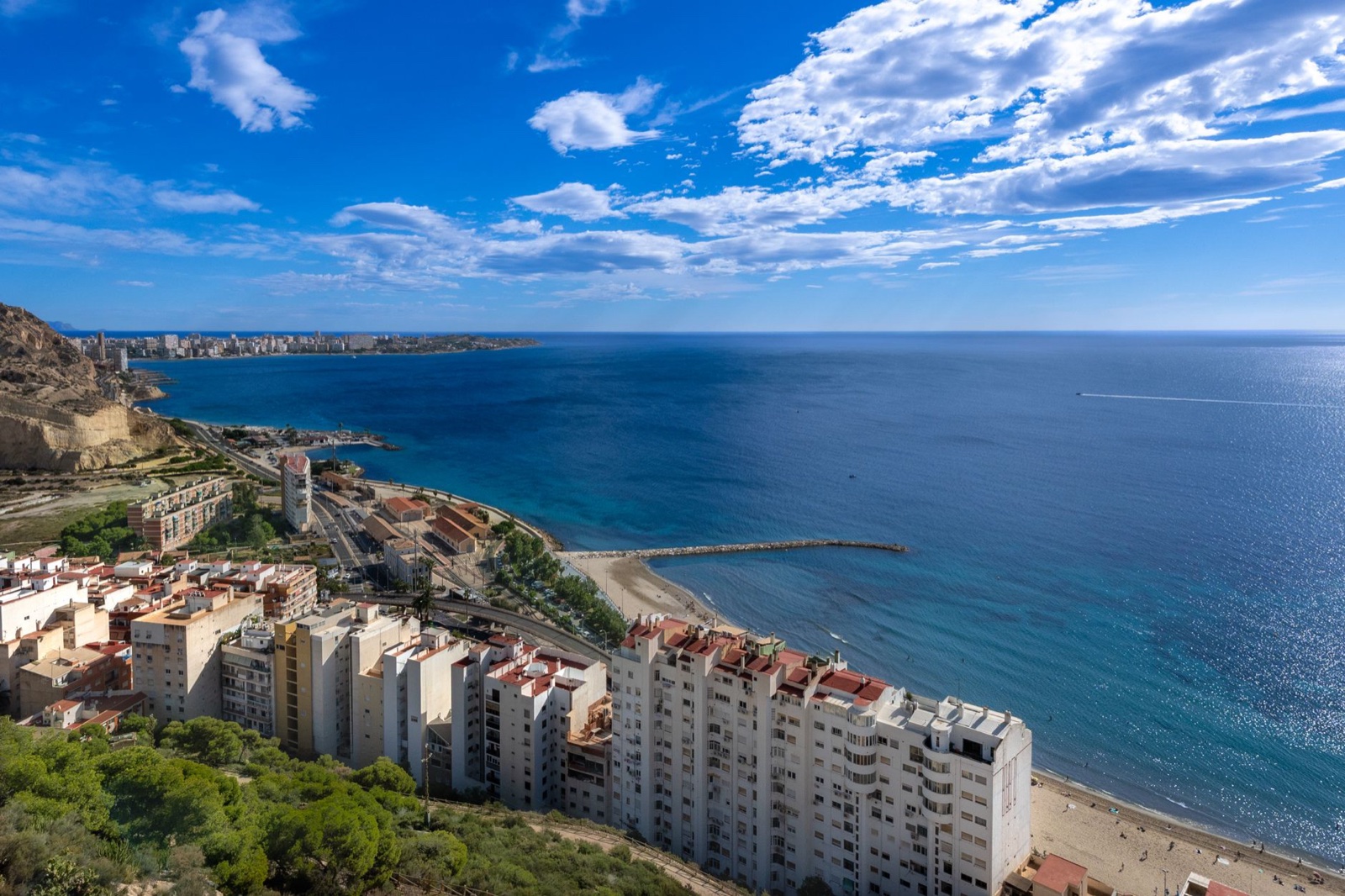
Alicante’s main beach suburb is a long sandy stretch connected to the center by tram, and it’s genuinely popular for long-term living, not just holidays — a real base of retirees and remote workers already lives here. It’s also the priciest rental zone in the city at €13.9/m², a one-bedroom running around €750 and a two-bedroom €1,100.
Casco Antiguo and El Barrio: historic by day, loud by night

The old town climbs the slope of Mount Benacantil below Santa Bárbara Castle — colorful and narrow by day, the city’s main nightlife zone by night, which is why locals call it “El Barrio.” Same honest caveat as the equivalent old-town neighborhoods everywhere else in this series: genuinely charming, genuinely not the quietest place to actually live. Rent here runs €12.0/m², a one-bedroom around €650 and a two-bedroom €950.
Albufereta: the quieter beach pick
A residential beach cove between the center and Playa de San Juan, near the Lucentum Roman ruins, Albufereta is family-friendly and noticeably less nightlife-driven than either of its beach-adjacent neighbors. No independent rental-specific figure is published for Albufereta, but sale prices here run below Playa de San Juan’s, a reasonable signal that rent tracks lower too, even without an exact number to quote.
Ensanche-Diputación: central, walkable, upscale
The 19th- and 20th-century grid near the Explanada promenade and Mercado Central is Alicante’s upscale, walkable, business-and-shopping core — the closest thing the city has to Málaga’s Centro Histórico, minus the historic-quarter density. Sale prices here run among the highest in the city, consistent with its central, polished reputation, though a district-specific rental figure isn’t independently published.
Benalúa and Carolinas: practical and well-connected
Benalúa is residential and well-connected, adjacent to the main train station area — practical and more affordable without being peripheral. Carolinas is a dense residential grid directly by Alicante-Terminal station, historically a working-class arrival neighborhood, now a solid pick for anyone prioritizing transit links over beach proximity. Both sit toward the lower end of the city’s sale-price range, consistent with their practical, non-beachfront positioning.
Which neighborhood fits your budget
Playa de San Juan isn’t a toll you pay to live near the water in Alicante. Albufereta is on the same coastline, quieter, and priced lower — the premium in Playa de San Juan buys an established long-term community and tram-line convenience, not exclusive access to the beach itself.
If the beach and long-term community matter most, Playa de San Juan is the established answer, at the top of the price range. If you want central and walkable without old-town density, Ensanche-Diputación fits. If transit links and a lower budget matter more than proximity to sand, Benalúa or Carolinas do the job for less.
This is a guide for someone still deciding whether and where to move, not calling agencies yet — fair enough, that decision comes first. Once you’ve picked a city and narrowed it to a neighborhood here, the next bottleneck is speed, not information — that’s a problem for a different guide than this one.
Frequently asked questions
What is the cost of living in Alicante, Spain?
Excluding rent, a single person spends around €731 a month and a family of four around €2,666, per Numbeo — in line with Spain's other mid-size coastal cities. Rent runs €12.5/m² citywide, well below Madrid, Barcelona, or Valencia.
Is Alicante a good place for expats?
The InterNations Expat City Ranking puts it 3rd globally, ahead of both Madrid (7th) and Barcelona (21st) — a genuine result, not a rounding error, and Alicante already has an established English-speaking retiree and remote-worker community.
Is Alicante cheaper than Valencia or Barcelona?
Cheaper than Barcelona clearly, and close to Valencia — Alicante's citywide rent average of €12.5/m² sits near the lower end of Valencia's range, with day-to-day costs like groceries and dining landing in a similar bracket to both.
Is Alicante, Spain a good place for Americans to retire?
Yes, on the numbers — lower cost of living than the bigger Spanish cities, an already-established foreign retiree community, a long sandy beach connected to the center by tram, and a genuinely strong showing in expat satisfaction surveys.