Seville’s most-searched neighborhoods — Santa Cruz, Triana, La Macarena — are also its most tourist-saturated, which means most of what’s written about them has nothing to do with actually living there. A single person here spends around €694 a month excluding rent, noticeably less than Madrid or Barcelona, but rent alone swings from under €700 to over €1,600 depending on the district. This breaks down the real monthly budget, then walks through Seville’s main neighborhoods with what a resident, not a tourist, actually needs to know.
Table of contents
- Monthly budget at a glance: single person vs. family of four
- Groceries, dining, transport, and utilities
- Casco Antiguo: Santa Cruz, El Arenal, and the historic core
- Triana: local pride at a price that no longer matches
- Nervión and San Pablo-Santa Justa: practical and well-connected
- Los Remedios: compact, upscale, and Feria-adjacent
- La Macarena: from Seville’s poorest quarter to its most gentrifying one
- Which neighborhood fits your budget
- Frequently asked questions
Monthly budget at a glance: single person vs. family of four
Excluding rent, a single person in Seville spends around €694 a month and a family of four around €2,542, according to Numbeo — noticeably below both Madrid and Barcelona on the same index. One real line item worth budgeting honestly: Seville summers regularly exceed 40°C, and air conditioning during July and August is less a comfort choice than a genuine monthly cost, especially in older Casco Antiguo buildings without modern insulation.
Seville’s headline cost of living looks cheap next to Madrid. Whether it stays that way depends entirely on which district you’re pricing.
Citywide, rent averages €19.1/m² per recent market data — though it’s worth flagging that the official SERPAVI reference index puts it lower, at €9.17/m², using a more conservative methodology. The two numbers aren’t contradictory so much as measuring different things; treat the higher figure as closer to what you’ll actually be quoted. Andalusian pricing runs in a similar range to Málaga, if you’re weighing the two coastal-adjacent cities against each other.
Groceries, dining, transport, and utilities
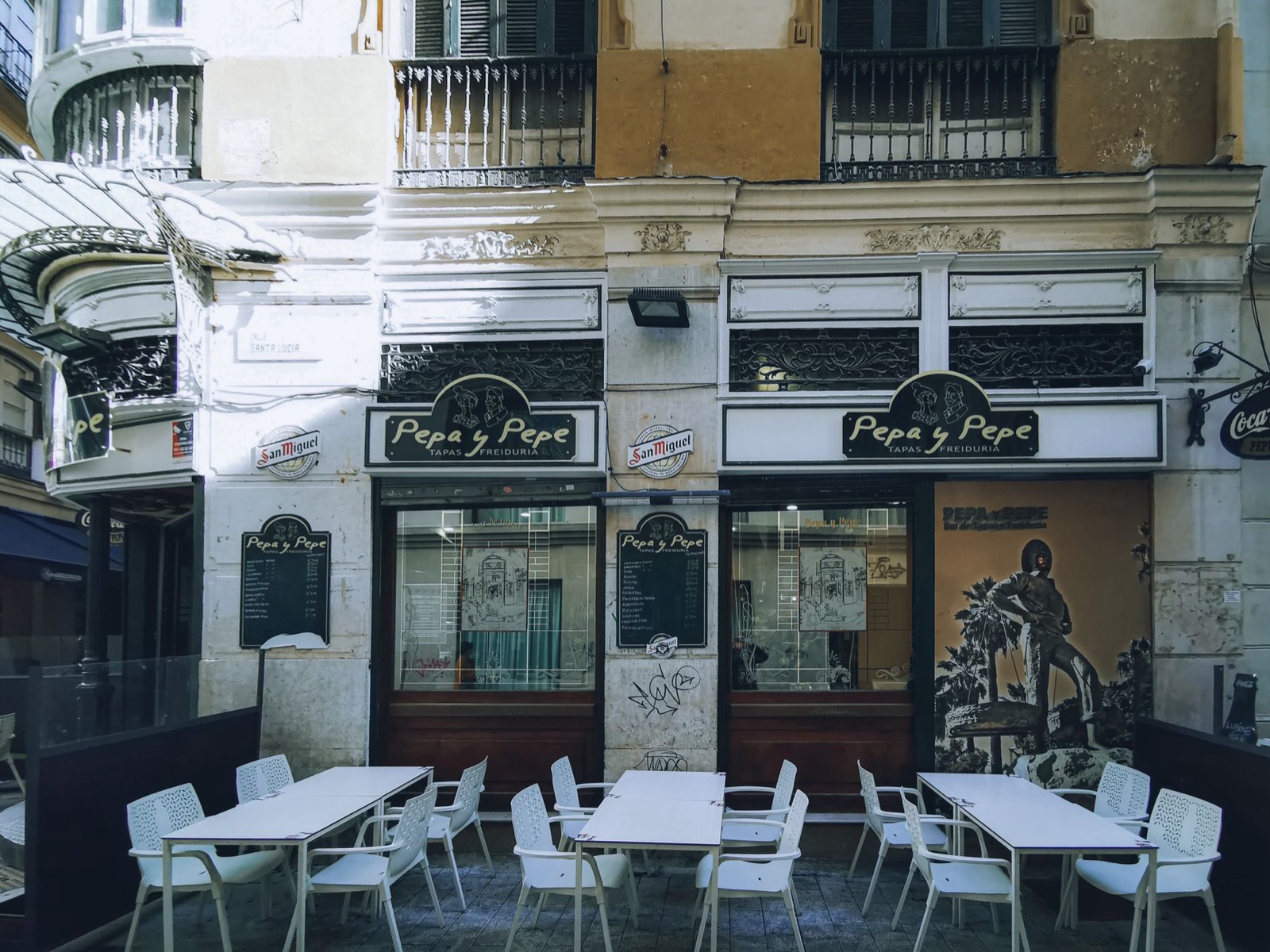
Groceries run €200-300 a month per person, and this barely shifts by district. A menu del día lunch costs €10-15, a mid-range dinner for two €35-55, and a caña at a local bar €2-3. A monthly bus pass runs around €35-40. Utilities for a standard apartment run €100-150 most of the year — but budget higher for July and August specifically, when air conditioning stops being optional.
Casco Antiguo: Santa Cruz, El Arenal, and the historic core
Seville’s walled old town, containing both Santa Cruz (the old Jewish quarter, narrow whitewashed streets around the Cathedral and Real Alcázar) and El Arenal (along the river, near the bullring), is the priciest district in the city at €29.1/m² — a one-bedroom here runs roughly €1,600, a two-bedroom €2,350. It’s also the most atmospheric option and the most tourist-saturated, worth an honest flag: short-term rental density and nightly noise from the bar-crawl crowd are real downsides for someone actually living here, not just visiting for a week.
Triana: local pride at a price that no longer matches
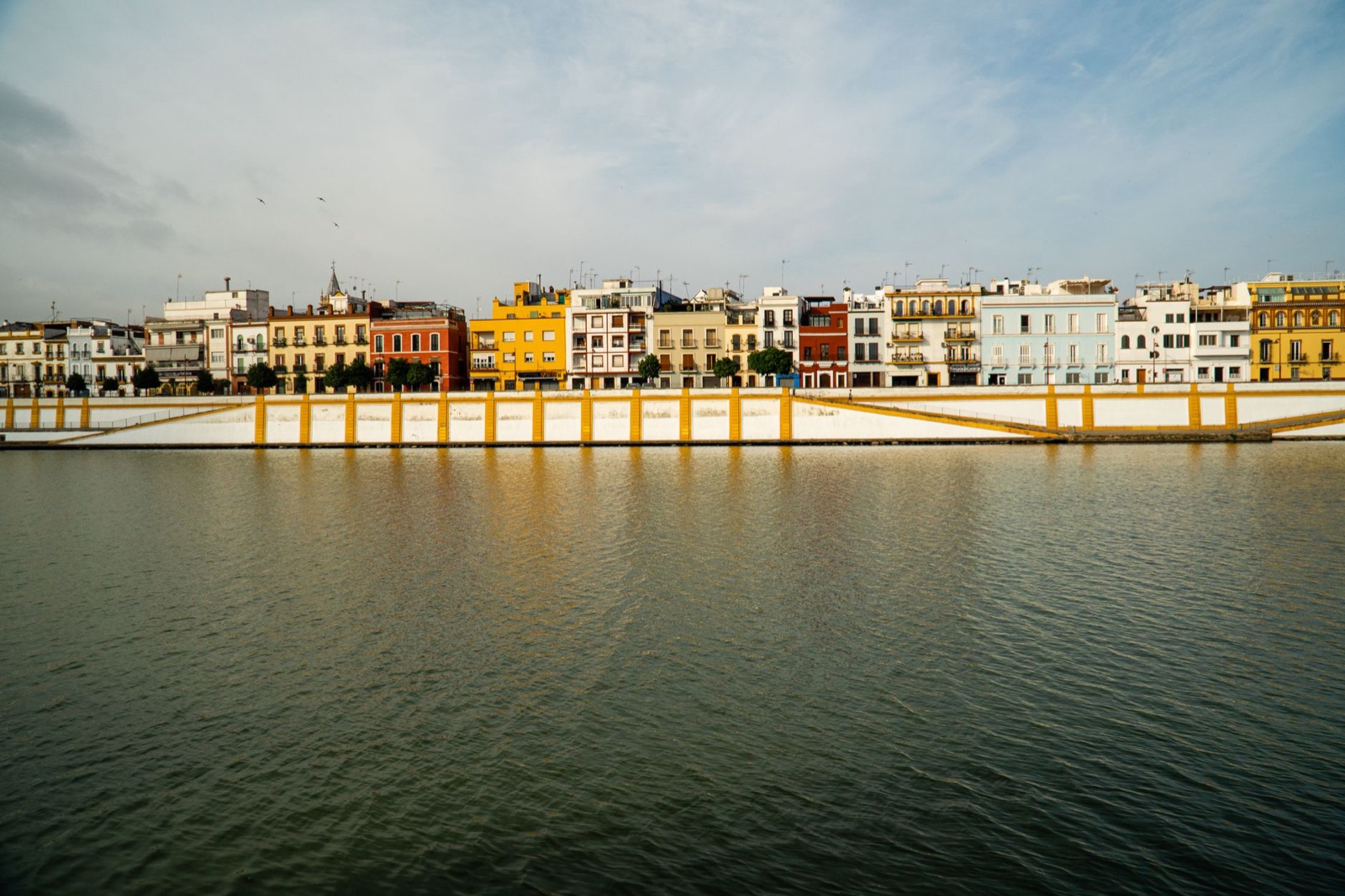
Across the Guadalquivir river, Triana was historically a separate working-class flamenco and ceramics quarter — residents still say they’re “from Triana,” not Seville, fiercely proud of a distinct identity. That reputation as the down-to-earth, authentic alternative to the touristy core hasn’t kept up with the price: at €20.6/m², it’s now the second most expensive district in the city, a one-bedroom running close to €1,150 and a two-bedroom €1,650. Worth knowing before the riverside charm sells you on a number that used to be a bargain and isn’t anymore.
Nervión and San Pablo-Santa Justa: practical and well-connected
Nervión is Seville’s business and shopping district, home to the city’s main mall and Sevilla FC’s stadium — the closest thing the city has to a modern, practical, non-historic option, at €17.5/m² meaningfully cheaper than the two riverside districts while staying central. San Pablo-Santa Justa, named for Seville’s main train station, is even more affordable at €12.3/m² — the pick if good transit links matter more than being near the old town, a one-bedroom running around €700.
Los Remedios: compact, upscale, and Feria-adjacent
Los Remedios is compact, upscale, and mostly residential, at €13.4/m² — a one-bedroom around €750, a two-bedroom €1,050. It hosts the Feria de Abril fairground every spring, a week-long festival that temporarily takes over a large stretch of the neighborhood with tents, music, and traffic disruption worth knowing about if you’re apartment-hunting nearby in April. Outside Feria season, it’s one of the more genuinely residential, non-touristy options this close to the center.
La Macarena: from Seville’s poorest quarter to its most gentrifying one
North of the historic core, La Macarena is named for its basilica and the revered Virgin statue inside it. It was, by more than one account, once the poorest slum in Spain — now it’s routinely described as “characterful” and actively gentrifying, a genuine before-and-after story most guides skip. At €12.0/m², it’s still one of the more affordable districts in the city relative to its increasingly trendy reputation, a one-bedroom running around €650.
Which neighborhood fits your budget
Triana’s riverside charm and Casco Antiguo’s history aren’t tolls you pay to live somewhere with character. La Macarena has real character too, gentrifying fast, for close to half the price — the premium in the expensive districts buys proximity and reputation, not a monopoly on Seville’s identity.
If history and atmosphere matter most, Casco Antiguo puts you in the middle of it, at the top of the price range. If you want practical and well-connected, Nervión or San Pablo-Santa Justa stretch the budget furthest without landing you in the periphery. If you want a neighborhood that’s still becoming what it’s going to be, La Macarena is the one to watch.
This is a guide for someone still deciding where to live, not calling agencies yet — fair enough, that decision comes first. Once you’ve got a neighborhood and a number in mind, the next bottleneck is finding an actual apartment before someone else does. The full process, once you’re ready to start calling, is here.
Frequently asked questions
What is the cost of living in Seville?
Excluding rent, a single person spends around €694 a month and a family of four around €2,542, per Numbeo — noticeably below Madrid or Barcelona. Rent is where the district you pick makes the real difference.
Where should you avoid staying in Seville?
Nowhere is unsafe by Western European standards, but Casco Antiguo's tourist density and Triana's rising prices catch people off guard — worth knowing what you're actually paying for before you commit.
Which neighborhood in Seville is considered the nicest?
It depends what you want. Casco Antiguo for history and atmosphere, Los Remedios for upscale and residential, La Macarena for a gentrifying, still-affordable option with real local character.
Is Triana a good place to live?
Yes, if the price still makes sense for you — it has genuine local identity and riverside charm, but at €20.6/m² it's now the second most expensive district in the city, not the budget-friendly local secret its reputation suggests.
Can you live on $2,000 a month in Spain?
In Seville specifically, yes, comfortably for a single person, including rent in most districts outside Casco Antiguo. That budget would be tighter in Madrid or Barcelona.