Bilbao gets pitched as the practical, less-touristy alternative to San Sebastián — real city, real jobs, the Guggenheim instead of a beach economy — but most cost-of-living content treats it as an afterthought next to Madrid and Barcelona. A single person here spends around €765 a month excluding rent. This breaks down what it actually costs to live here, then walks through the neighborhoods, from the tourist-dense Casco Viejo to the quieter hillside of Uribarri, that change that number.
Table of contents
- Monthly budget at a glance: single person vs. family of four
- Groceries, dining, transport, and the weather factor
- Casco Viejo: historic, lively, and tourist-dense
- Abando and the Ensanche: Bilbao’s central grid
- Indautxu: upscale and polished
- Deusto: riverside and university-adjacent
- Begoña and Uribarri: the hillside, local-first option
- Which neighborhood fits your budget
- Frequently asked questions
Monthly budget at a glance: single person vs. family of four
Excluding rent, a single person in Bilbao spends around €765 a month and a family of four around €2,790, according to Numbeo — comfortably below Madrid or Barcelona, and close to San Sebastián’s numbers despite meaningfully cheaper property. Rent citywide runs roughly €11.50-14.60/m² depending on the source, averaging close to €1,552 a month for a typical apartment.
Bilbao doesn’t have San Sebastián’s beach-town price tag. It has the same Basque quality of life without paying Spain’s highest property prices for it.
One honest line item worth budgeting for: Bilbao gets meaningfully more rain than the Mediterranean and southern cities in this series, which means real heating costs in a wetter, cooler climate rather than the summer air-conditioning bills that dominate in Seville or Málaga.
Groceries, dining, transport, and the weather factor

Groceries run €200-300 a month per person. Pintxos — Bilbao’s version of tapas, eaten standing at a bar counter — run €2-4 each, and a proper pintxos crawl for two comes out closer to €30-50 depending on how many stops. A monthly transport pass for the metro and bus network runs around €40-50. Utilities run higher here than in the south, closer to €120-160 a month, with heating rather than air conditioning driving the winter bill.
Casco Viejo: historic, lively, and tourist-dense
The medieval old quarter, known locally as “Las Siete Calles” (the Seven Streets), is dense with pintxos bars and genuinely charming — and genuinely not the quietest place to actually live, part of the wider Ibaiondo district. Same honest caveat as every old-town neighborhood in this series: worth visiting nightly, worth thinking through before signing a year-long lease directly above it.
Abando and the Ensanche: Bilbao’s central grid
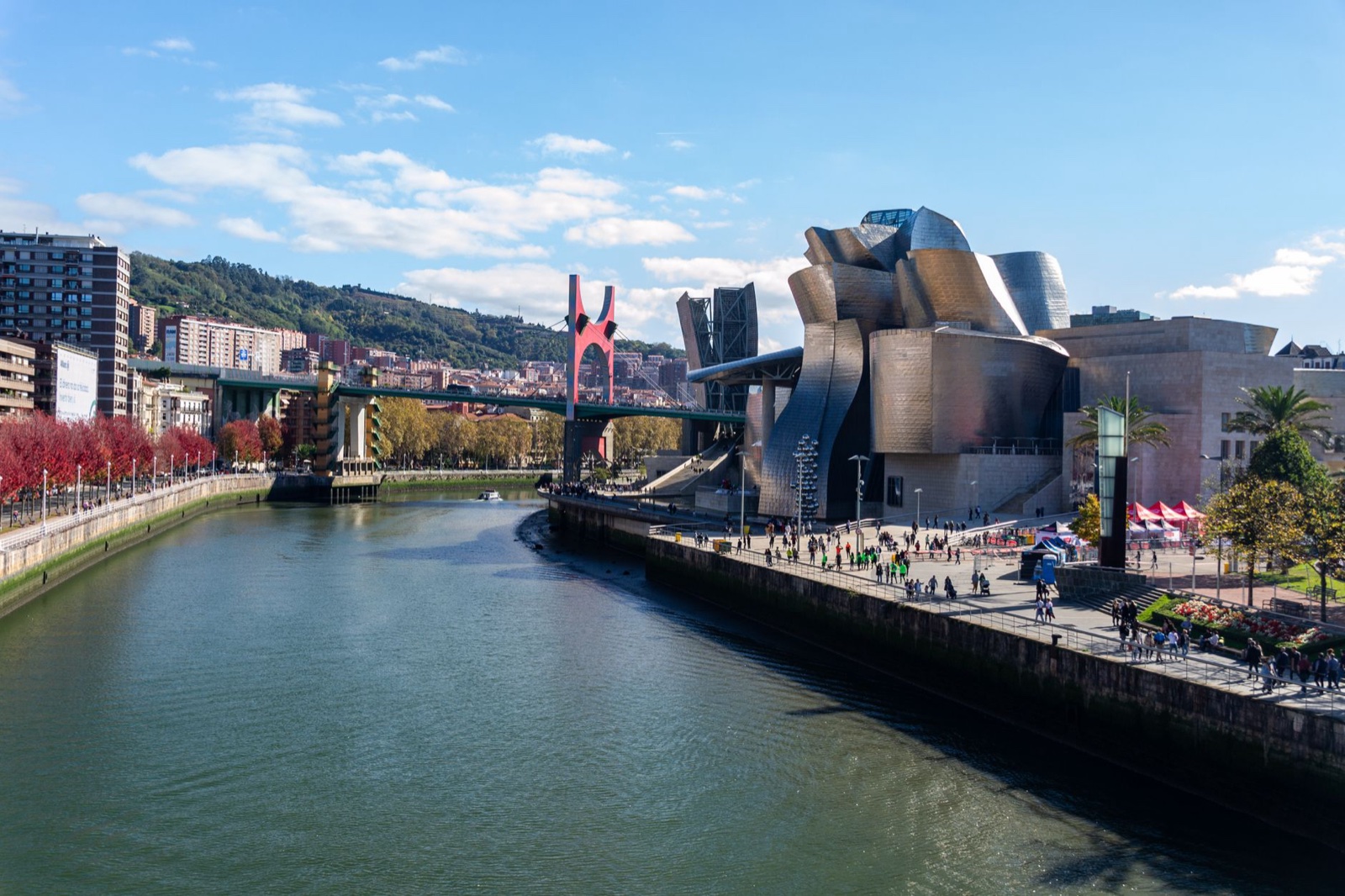
Abando, including the 19th-century Ensanche grid also sometimes called Albia, is the central business district around Gran Vía and the Guggenheim — Bilbao’s most expensive area alongside Indautxu, practical and walkable, the “just live centrally, skip the old town” pick. One naming note worth clearing up: “Ensanche” isn’t a separate official district, it’s the common name for this grid inside Abando — the same kind of naming layer that trips people up with Madrid’s barrio de La Latina.
Indautxu: upscale and polished
Upscale shopping and residential district adjacent to Abando, Indautxu is the single priciest district in the city by sale price (€5,301/m², against a citywide average of €3,830/m²) — family-friendly and polished rather than historic, the district locals point to when they mean “nice part of town.”
Deusto: riverside and university-adjacent
Home to the University of Deusto, connected to the center by the Deusto Bridge and the “Pottoki” pedestrian footbridge, Deusto is a genuine student and young-professional draw — riverside, more affordable than the central cluster, with a real academic-neighborhood feel rather than a generic student-district one.
Begoña and Uribarri: the hillside, local-first option
Begoña, paired here with neighboring Santutxu, is hillside and traditional, home to the Basílica de Begoña, with funicular access down to the center — a real local, less touristy residential option. Uribarri, above Casco Viejo and connected by the Artxanda funicular, is among the more affordable districts in the city while still being genuinely central — worth flagging as underrated precisely because it doesn’t show up in typical “best neighborhoods” content the way Casco Viejo or Indautxu do.
Which neighborhood fits your budget
Indautxu and Abando aren’t a toll you pay to live centrally in Bilbao. Uribarri sits a funicular ride from the same center, at one of the lowest price points in the city — the premium in the central grid buys polish and an address, not a monopoly on being close to everything.
If history and pintxos-bar density matter most, Casco Viejo puts you in the middle of it, with the usual noise trade-off. If you want central without the old-town intensity, Abando or Indautxu do the job at a real premium. If you’d rather have space and a quieter, more local feel, Begoña and Uribarri stretch the budget furthest while staying genuinely connected.
This is a guide for someone still deciding whether and where to move, not calling agencies yet — fair enough, that decision comes first. Once you’ve got a neighborhood and a number in mind, the next bottleneck is finding an actual apartment before someone else does.
Frequently asked questions
What is the cost of living in Bilbao?
Excluding rent, a single person spends around €765 a month and a family of four around €2,790, per Numbeo. Rent averages roughly €11.50-14.60/m² citywide depending on the source, with an average monthly rent close to €1,552.
Is Bilbao expensive to live in?
It sits in the middle of Spain's major cities — pricier than Valencia or Málaga, cheaper than Madrid, Barcelona, or its Basque neighbor San Sebastián. Property sale prices average €3,830/m² citywide, up 2.8% year over year.
Is Bilbao a good place for expats?
Yes — it's one of the three alternative cities that outranks Madrid and Barcelona in real expat-satisfaction data, offering a genuine city with real jobs rather than a beach-economy or tourist-town feel.
Is Bilbao cheaper than San Sebastián?
Yes, meaningfully. San Sebastián has the highest property prices in all of Spain — well above Bilbao's, which is one of the more moderate major cities on cost despite being the bigger of the two.