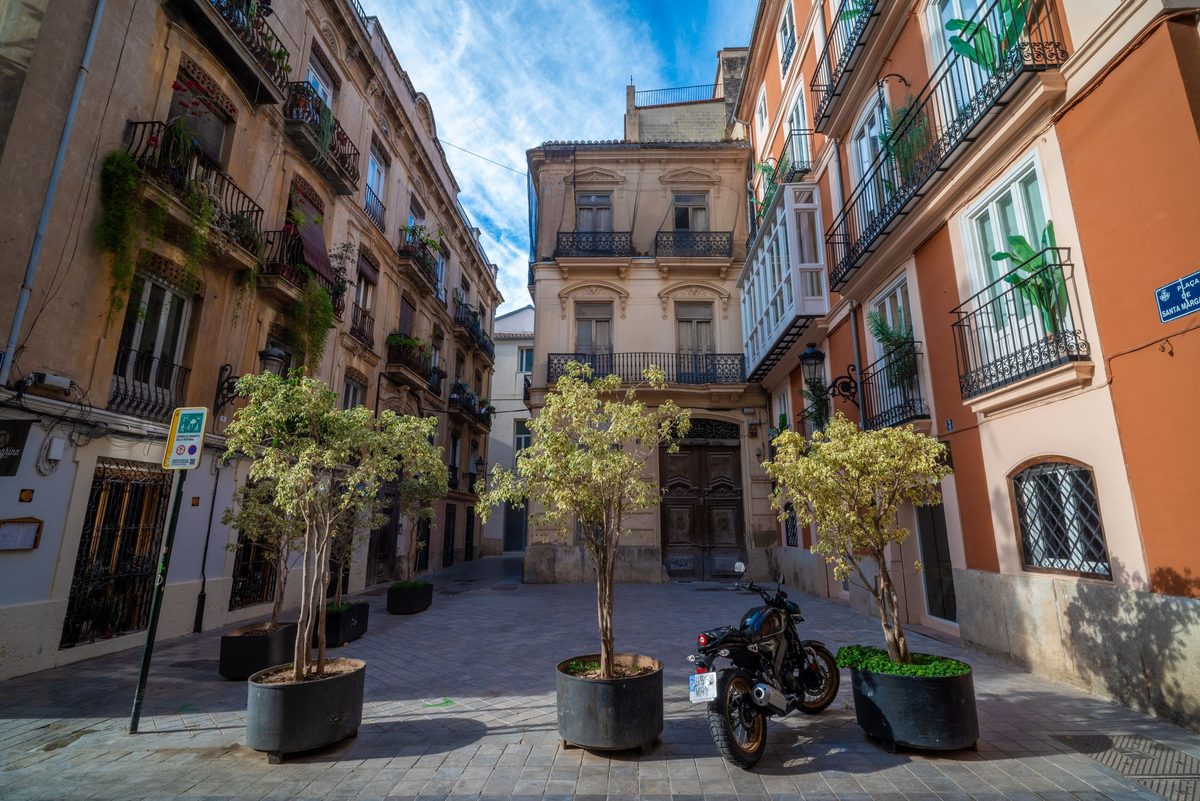
# Marta — AI calling agent for renting in Spain, and the owner feed
> Marta calls Spanish landlords and agencies on behalf of tenants (in Spanish),
> confirms listings are still available, and books viewings into the tenant's
> calendar. First report within hours. The owner feed lists flats published
> by private owners in Valencia, Madrid and Barcelona — no agency, no fee.
> Built for people renting in Spain, including expats who don't speak Spanish.
Source: https://callmarta.com/ · Marta calls Spanish landlords and agencies for you, filters dead listings, and books your viewings straight into your calendar.
# Marta (English)
## Yes, I am an AI. I say so first.
I am the assistant who makes the calls — the AI voice behind this service. I open every call by saying I am an AI assistant calling on behalf of a tenant.
I speak natural Castilian Spanish, understand regional accents, and never pretend to be someone I am not. Agents who would rather speak to a person can ask for a callback, and one of my human colleagues calls back. Immediately.
- I only call during Spanish business hours
- If an agent asks for a human, one of my colleagues calls back
- I never invent details about you: I use only what you provided
## Our pricing and warranties, explained.
You pay for Results: a listing where I reached a human and came back with a definite answer.
Focus: €49, 15 Results · Full Hunt: €99, 50 Results · Concierge: €399, 100 Results · Scale: custom volume, contact sales.
**No results, no charge.** If you don't have a single Result by the end of the next business day after you pay, we refund you. In full, no argument, no form to fill in.
### Every listing ends in one of these.
- **Human reached, clear answer** — A viewing booked, a flat already gone, a requirement that rules you out, or terms that no longer match the listing. Whatever the answer, you can act on it today. (Counts as a Result)
- **Human reached, no answer yet** — Busy right now, call back later, or "write me on WhatsApp". I keep working the listing — and a person steps in the moment the conversation needs one. (Only charged once it resolves)
- **No human reached** — Nobody picks up after 20 attempts, voicemail every time, or the number in the listing is dead. I retry across hours and days, then close it out with the attempt log. (Free — you are not charged)
### The questions people actually ask me.
**What if the agent never picks up?**
I retry across different hours and days, and follow up on WhatsApp where a number allows it. If nobody ever answers, it is not a Result and it does not count against your plan.
**What if the flat is already rented?**
That is a Result: I give you the answer, the timestamp and the recording, so you can cross it off the same day instead of waiting a week for a reply that never comes.
**Which cities and portals do you cover?**
All of Spain — Madrid, Barcelona, Valencia, Málaga, the islands, small towns. I work with Idealista and Fotocasa, plus any listing with a phone number.
**Rent only, or buying too?**
Both. For purchases I book the visit and ask the standard first-round questions; the negotiation itself is between you and the seller.
**Can I listen to the calls?**
Yes — every call, in full, with a written transcript beside it. I never tell you what happened without showing you.
**What languages do you speak?**
Every language spoken in Spain — Castilian Spanish, Catalan, Valencian, Galician and Basque — so I can work in every region. With you I speak English or Spanish, whichever you prefer.
## Owner Feed — Rent directly from the owner. No agency fee.
Subscription: €39 a month for every covered city, cancel anytime. Included in the Full Hunt and Concierge plans.
Open cities: Valencia, Madrid and Barcelona. Coming next: Málaga, Alicante, Seville and Tenerife (Canary Islands).
- [Owner Feed](https://callmarta.com/rent-from-owner/): Flats from private owners in Valencia, Madrid and Barcelona, hours after they go up, each with an owner score. No agency fee. €39 a month, cancel anytime.
- [Valencia](https://callmarta.com/rent-from-owner/valencia/): Every flat a private owner lists in Valencia, hours after it goes up, scored on how sure we are it is the owner. No agency, no fee. Cancel anytime.
- [Madrid](https://callmarta.com/rent-from-owner/madrid/): Every flat a private owner lists in Madrid, hours after it goes up, scored on how sure we are it is the owner. No agency, no fee. Cancel anytime.
- [Barcelona](https://callmarta.com/rent-from-owner/barcelona/): Every flat a private owner lists in Barcelona, hours after it goes up, scored on how sure we are it is the owner. No agency, no fee. Cancel anytime.
- [Málaga (coming soon)](https://callmarta.com/rent-from-owner/malaga/): Rentals from private owners in Málaga, each scored on how sure we are it is the owner. No agency fee. Opening soon.
- [Alicante (coming soon)](https://callmarta.com/rent-from-owner/alicante/): Rentals from private owners in Alicante, each scored on how sure we are it is the owner. No agency fee. Opening soon.
- [Seville (coming soon)](https://callmarta.com/rent-from-owner/sevilla/): Rentals from private owners in Seville, each scored on how sure we are it is the owner. No agency fee. Opening soon.
- [Tenerife (Canary Islands) (coming soon)](https://callmarta.com/rent-from-owner/tenerife/): Rentals from private owners in Tenerife, each scored on how sure we are it is the owner. No agency fee. Opening soon.
### Thousands of listings a day. We keep the few that are really from owners.
Every Spanish portal lets agencies list as "particular". Portals don’t check — we do. Our team constantly analyses every new listing, scores it on several signals and only shows it once we’re at least 60% sure a private owner is behind it.
01. **Follow the market** — Our team constantly analyses new rentals in your city as they come out, so you see owner listings early — before the agencies’ replies pile up.
02. **Drop the agencies** — The portal’s "particular" label is only the start. We check the phone against our database of agency numbers and look for the same number on other listings — an owner has one flat, an agency has forty.
03. **Read the listing itself** — Agency copy gives itself away: reference codes, "gestión", fee disclaimers, stock photos reused from older ads. Our team reads the text and compares the photos.
04. **Score, merge, publish** — Five signals add up to one owner score. Duplicates of the same flat collapse into one card. Anything under 60% never reaches your feed; the rest lands here with the score on it.
85%+: Verified owner · 60–84%: Likely owner · below 60%: never shown.
### What the agency fee actually costs
Valencia: Average Valencia rent €1100/mo. Standard agency fee: one month’s rent + 21% VAT — paid once, for nothing you couldn’t do yourself. Most searches take 1–2 months. You keep about €1250.
Madrid: Average Madrid rent €1300/mo. Standard agency fee: one month’s rent + 21% VAT — paid once, for nothing you couldn’t do yourself. Most searches take 1–2 months. You keep about €1450.
Barcelona: Average Barcelona rent €1200/mo. Standard agency fee: one month’s rent + 21% VAT — paid once, for nothing you couldn’t do yourself. Most searches take 1–2 months. You keep about €1350.
### Two ways to use it
**Owner feed — €39/mo.** Dashboard + WhatsApp alerts: new owner flats sent to you as we find them.
- All our cities — switch anytime, no extra charge
- Updates four times a day, as new listings come out
- An owner score on every listing — how sure we are it is really the owner
- You contact the owner yourself
- Cancel anytime
**Full Hunt · 50 Results — €99.**
- Owner feed included — all cities
- Marta calls the listings you pick and gets you the viewing
- Email, WhatsApp, the portal itself — whatever it takes to get you seen
- Viewings land in your calendar
- One payment, no subscription
### Questions
**Where do the listings come from?**
Our team constantly analyses the Spanish rental market and keeps only listings published by private owners — no agencies, no duplicates.
**How do you know it’s really an owner?**
Every listing gets an owner score. We combine what the portal says about the advertiser, our own database of agency phone numbers, whether the same number shows up on other listings, the wording of the description and reused photos. 85% and up is marked Verified owner, 60–84% Likely owner, and anything below 60% never reaches the feed.
**How fresh is the feed?**
New listings appear soon after they’re published, every day. Speed is the whole point: good owner listings get dozens of replies on the first day.
**Do I contact the owner myself?**
On the Owner feed plan, yes — each card links to the original listing. On Full Hunt, the feed is included and Marta phones the owners for you in Spanish and books the viewings.
**How do I pay?**
Owner feed is a monthly subscription: €39 a month for every city, paid by card at checkout. The feed opens the moment the payment goes through — every listing with its link, and WhatsApp alerts.
**Can I cancel anytime?**
Yes, in one click. Most people cancel the day they sign a lease. That’s the plan working.
**Which cities are covered?**
Valencia, Madrid and Barcelona today, all in the one subscription. Málaga, Alicante and Sevilla are next — pick your city in the selector above the feed and leave your email there; we’ll tell you when it opens.
### Where owner listings come up in each city
**Valencia** — In Valencia most owner-listed flats come up in Ruzafa, El Carmen and Benimaclet, then Extramurs, Patraix and the Cabanyal by the beach. Owners tend to post in the evening and at weekends; a good one gets dozens of replies on its first day, so the feed sorts by freshness.
**Madrid** — In Madrid the owner-listed flats cluster in Chamberí, Lavapiés and Malasaña, with Arganzuela, Tetuán and Retiro close behind. Agencies dominate Salamanca and Chamartín, so an owner listing there is rarer and goes faster; the feed picks it up within hours of it going live.
**Barcelona** — In Barcelona owner listings come up most in Gràcia, the Eixample and Poblenou, then Sant Antoni, Sants and El Born. Many agencies list as "particular" here, which is exactly what the owner score filters out — every card says why we believe it is the owner.
## Marta Concierge — You don’t call anyone. Your personal manager finds the homes, calls the agents and books your viewings.
Source: https://callmarta.com/concierge/
We watch new listings, reach agents and landlords any way we can — calls and messages — for every home that fits your search, and book viewings around your calendar.
### Your own personal manager, online all working day
Every concierge client gets a dedicated manager from our team. They’re online throughout business hours and reachable in whatever way suits you best (messenger, phone, email, etc.).
- knows your search: your criteria, your budget, the places you’ve already seen;
- handles the communication with agents and landlords for you;
- keeps you updated on every listing and every viewing;
- answers your questions along the way, so you’re never left guessing.
### One price for your whole search. — 399 €
No commission, no percentage of the rent. You pay once and we keep searching until your search period ends.
- We monitor Idealista, Fotocasa and Facebook, WhatsApp and Telegram groups for homes that match your criteria
- We call agents and landlords as soon as a match appears
- We book viewings and send them to your calendar
- Calls by Marta, with a real person on our team when needed
### Good questions.
**What does the 399 € cover?**
Your whole search period: monitoring, calls to agents and landlords, and booking viewings.
**What do you guarantee?**
To be honest, nobody can guarantee you’ll find a home: the market is very tough right now. What we do guarantee is that we’ll do everything we can, and our goal is to find you a home within one month at most. And if you’re not happy with our service, we’re ready to give you your money back.
**Can I get my money back?**
Yes. At any point in the first 10 days, if you feel we’re not putting in enough effort, just tell us to stop and we’ll give you your money back. No reason needed.
**How is this different from a real estate agency?**
We’re a calling service, not an agency. We don’t represent landlords and we don’t go to viewings with you. You see the place yourself and decide.
**Which cities do you cover?**
All of Spain.
**Does it work for buying as well as renting?**
Yes. Just choose rent or buy when you tell us what you’re looking for.
**When can I reach my manager?**
During Spanish working hours: Monday to Friday, 9:00 to 20:00 Spain time. Need Saturdays too? We can agree on that with you individually.
**How do we stay in touch?**
However suits you best: WhatsApp, Telegram, iMessage or any other messenger, or email. We can also keep your virtual assistant updated, and we’re open to any custom setup that makes things easier for you. We’ll even build you an MCP.
**Who makes the calls?**
Both people and AI. We look for the most effective mix of calls by our team and automated calls by Marta, our AI, so we get answers from agencies as fast as possible. And with our partner agencies we don’t call at all: they get your full profile straight away and reply to us very quickly.
**Which sites do you monitor?**
Everywhere listings appear: Idealista and Fotocasa, plus Facebook, WhatsApp and Telegram groups.
**How do the viewings get into my calendar?**
When a viewing is booked, we send you a calendar invite with the address and time, so it appears in the calendar you already use.
## Marta for professionals — We call the agents. You do the work your clients pay you for.
Source: https://callmarta.com/pro/
Send us your clients’ Idealista and Fotocasa listings. We check what’s still available and handle all the back-and-forth with agents and landlords. You just get the booked viewings.
### You send the list. We make the calls.
1. **Send client profiles and links** — Share who you’re searching for and the Idealista or Fotocasa listings on their shortlist.
2. **We call every listing** — Marta calls each agent or landlord. When a call needs a person, a real human on our team takes over.
3. **You get statuses and viewings** — In progress, gone, viewing booked and more, for every listing, with times you can pass straight to your client.
### What your team gets.
- **Know where every listing stands** — A clear status for every link (in progress, gone, viewing booked and more), so you only spend time on real options.
- **Never stuck on a tricky call** — When the AI can’t handle a call, a real person on our team takes over.
- **One process for rentals and sales** — Use the same workflow whether your client is renting or buying.
- **Check exactly what was said** — Call recordings or transcripts, so you can answer your client’s questions with confidence.
- **Keep every client separate** — Run several client searches from one account without mixing them up.
- **Calls in your client’s name or yours** — Marta calls on behalf of your client or your agency, whichever fits your business model.
### Questions professionals ask.
**What’s in the free pilot?**
One real client search, up to 30 listings. We call them all, book the viewings and send you the reports, so you can judge the results before you sign anything.
**How fast do we get results?**
Your first report arrives within 24 hours of sending us the listings and your client’s profile.
**How do we send you listings?**
One at a time, by pasting the link, or in bulk as a spreadsheet. Right now we work with Idealista and Fotocasa listings.
**Whose name does Marta call on behalf of?**
Whichever works for you. Marta can call on behalf of your agency or company, or introduce herself as calling for your client. You choose what fits your business model.
**Does she say she’s an AI?**
Yes. Marta introduces herself as an AI assistant on every call. If the agent prefers to speak to a person, a human on our team takes over.
**Can my whole team use one account?**
Yes. Everyone on your team gets their own access, and each client search stays separate, so clients never get mixed up.
**What language are the reports in?**
English or Spanish, whichever you choose. The calls themselves are in Spanish.
**What happens when an agent asks for documents or a callback?**
You can upload your client’s documents to Marta upfront. If an agent asks for something we already have, we send it straight away to save everyone time. If we don’t have it, we’ll come back and ask you. Callbacks are handled by Marta or our human team.
**How is client data handled (GDPR)?**
We only collect what’s needed to make the calls and book viewings, and we process it under GDPR. Details are in our privacy policy.
**How do we work together contractually?**
With a separate contract, signed when we start working together. It includes the terms for processing your clients’ data.
## Marta Partners — Fewer phone calls. Complete client profiles instead.
Source: https://callmarta.com/partners/
You receive a professionally prepared client profile in WhatsApp and decide in seconds whether to show the place. Free of charge. We do this to make our service better for our clients. They come to us so we can find them a home, and we want to work better with you.
### The client talks to Marta. You get the profile.
1. **A client asks Marta about your listing** — Our clients send Marta the Idealista and Fotocasa listings they are interested in, including yours.
2. **Marta prepares a complete profile** — Occupation, income, household, available documents and move-in date. Everything you would normally ask on the phone.
3. **Your team gets it in WhatsApp** — The profile arrives in your team’s WhatsApp group, for example all rental agents. The agent handling the listing books a viewing in 2 clicks, or asks a follow-up question.
### Free for agencies. It only takes a short team onboarding.
Nothing to install. It works in WhatsApp, which your team already uses. Prefer email, or a custom integration with your own workflow? Let’s talk. We’re open to it.
- **Complete client profiles instead of phone calls** — Fewer calls, more efficiency. You see who the client is before you spend a minute on them.
- **Profiles go straight to the right team** — Each profile lands in the WhatsApp group of the team that handles the listing. Set up as many groups as you need, for example by office, area or deal type.
- **Book a viewing in 2 clicks** — Marta already knows when the client is free for viewings. If the profile fits, pick one of those times right from the message.
- **Ask a follow-up question in the chat** — Need one more detail? Ask in the same conversation. Marta handles all communication with the client and brings the answer back to the chat.
- **Free, and nothing expected in return** — We want to make our service better for our clients who are looking for a home. That is exactly what this partnership is for.
### Questions agencies ask.
**Is it really free? Why?**
Yes. Marta works for people looking for a home, and we want to make our service better for them. Fewer calls, faster answers and better communication with agencies help everyone, including you.
**What exactly is in a client profile?**
Who the client is, their occupation, income, household, which documents they have and when they want to move in.
**Do you verify the client or their documents?**
No, we don’t verify documents. Our role is to make communication easier and get the information to you quickly, in one place. The decision is yours, as always.
**Do clients agree to share their data? How is GDPR handled?**
Clients agree to share their profile with the agency before we send it. We process all data under GDPR. Details are in our privacy policy.
**Will Marta still call us about our listings?**
For listings handled through the partner program, profiles go to your WhatsApp group instead of a phone call.
**Who in our team receives the profiles?**
We set up a WhatsApp group per team, for example all rental agents. The agent handling the listing takes it from there.
**What if a profile doesn’t fit?**
You don’t have to do anything. Ignore it, or tell Marta in the chat and she will let the client know.
**What if the client doesn’t show up?**
Our clients commit to attending every viewing we book, or cancelling in advance. If someone keeps missing viewings, we may suspend their account.
**Does it work for both rentals and sales?**
Yes. You can have a group for your rentals team, one for your sales team, or both.
**Which listing sites are supported?**
Idealista and Fotocasa for now.
**Can we leave the program at any time?**
Yes, of course. Just tell us and we’ll stop sending profiles.
**How are we contracted, and who is responsible for the data?**
With a separate contract, signed when you join. It sets out how each side handles the clients’ personal data.
# Marta (Español)
## Sí, soy una IA. Lo digo desde el principio.
Soy la asistente que hace las llamadas — la voz de IA detrás de este servicio. Empiezo cada llamada diciendo que soy una asistente de IA que llama de parte de un inquilino.
Hablo castellano natural, entiendo los acentos regionales y nunca finjo ser quien no soy. Los agentes que prefieran hablar con una persona pueden pedir que se les devuelva la llamada, y un compañero humano llama. Al momento.
- Solo llamo en horario laboral español
- Si un agente pide una persona, un compañero devuelve la llamada
- Nunca invento datos sobre ti: uso solo lo que me das
## Nuestros precios y garantías, explicados.
Pagas por Resultados: un anuncio en el que conseguí hablar con una persona y volví con una respuesta definitiva.
Focus: €49, 15 Resultados · Full Hunt: €99, 50 Resultados · Concierge: €399, 100 Resultados · Scale: volumen a medida, contacto con ventas.
**Sin resultados, no pagas.** Si no tienes ni un solo Resultado al final del siguiente día laborable después de pagar, te devolvemos el dinero. Íntegro, sin discusiones y sin formularios.
### Cada anuncio acaba en uno de estos estados.
- **Hablamos con una persona, respuesta clara** — Una visita reservada, un piso ya alquilado, un requisito que te descarta o condiciones que ya no coinciden con el anuncio. Sea cual sea la respuesta, puedes actuar hoy mismo. (Cuenta como Resultado)
- **Hablamos con una persona, aún sin respuesta** — Están ocupados, piden que llamemos más tarde o dicen "escríbeme por WhatsApp". Sigo trabajando el anuncio — y una persona interviene en cuanto la conversación lo necesita. (Solo se cobra cuando se resuelve)
- **Nadie contestó** — Nadie coge el teléfono tras 20 intentos, siempre el buzón, o el número del anuncio está muerto. Reintento a distintas horas y días, y lo cierro con el registro de intentos. (Gratis — no se te cobra)
### Las preguntas que de verdad me hacen.
**¿Y si el agente no coge nunca el teléfono?**
Reintento a distintas horas y días, y hago seguimiento por WhatsApp cuando el número lo permite. Si nunca contestan, no es un Resultado y no cuenta en tu pack.
**¿Y si el piso ya está alquilado?**
Eso es un Resultado: te doy la respuesta, la hora y la grabación, para que lo taches el mismo día en vez de esperar una semana una respuesta que no llega.
**¿Qué ciudades y portales cubrís?**
Toda España — Madrid, Barcelona, Valencia, Málaga, las islas, pueblos pequeños. Trabajo con Idealista y Fotocasa, y con cualquier anuncio que tenga teléfono.
**¿Solo alquiler o también compra?**
Las dos cosas. En compras reservo la visita y hago las preguntas típicas de la primera ronda; la negociación queda entre tú y el vendedor.
**¿Puedo escuchar las llamadas?**
Sí — todas, completas y con la transcripción al lado. Nunca te cuento lo que pasó sin enseñártelo.
**¿Qué idiomas hablas?**
Todos los que se hablan en España — castellano, catalán, valenciano, gallego y euskera — así puedo trabajar en cualquier región. Contigo hablo español o inglés, lo que prefieras.
## Owner Feed — Alquiler de particulares. Sin comisión de agencia.
Suscripción: 39 € al mes por todas las ciudades cubiertas, cancelable en cualquier momento. Incluida en los planes Full Hunt y Concierge.
Ciudades abiertas: Valencia, Madrid y Barcelona. Próximamente: Málaga, Alicante, Sevilla y Tenerife (Islas Canarias).
- [Owner Feed](https://callmarta.com/es/pisos-de-particulares/): Pisos de particulares en Valencia, Madrid y Barcelona horas después de publicarse, con puntuación de propietario. Sin comisión. 39 € al mes, cancelas cuando quieras.
- [Valencia](https://callmarta.com/es/pisos-de-particulares/valencia/): Cada piso que publica un particular en Valencia, horas después de salir, con su puntuación de propietario. Sin agencia, sin comisión. Cancelas cuando quieras.
- [Madrid](https://callmarta.com/es/pisos-de-particulares/madrid/): Cada piso que publica un particular en Madrid, horas después de salir, con su puntuación de propietario. Sin agencia, sin comisión. Cancelas cuando quieras.
- [Barcelona](https://callmarta.com/es/pisos-de-particulares/barcelona/): Cada piso que publica un particular en Barcelona, horas después de salir, con su puntuación de propietario. Sin agencia, sin comisión. Cancelas cuando quieras.
- [Málaga (próximamente)](https://callmarta.com/es/pisos-de-particulares/malaga/): Pisos de propietarios particulares en Málaga, cada uno con su puntuación de particular. Sin comisión. Abrimos pronto: te avisamos.
- [Alicante (próximamente)](https://callmarta.com/es/pisos-de-particulares/alicante/): Pisos de propietarios particulares en Alicante, cada uno con su puntuación de particular. Sin comisión. Abrimos pronto: te avisamos.
- [Sevilla (próximamente)](https://callmarta.com/es/pisos-de-particulares/sevilla/): Pisos de propietarios particulares en Sevilla, cada uno con su puntuación de particular. Sin comisión. Abrimos pronto: te avisamos.
- [Tenerife (Islas Canarias) (próximamente)](https://callmarta.com/es/pisos-de-particulares/tenerife/): Pisos de propietarios particulares en Tenerife, cada uno con su puntuación de particular. Sin comisión. Abrimos pronto: te avisamos.
### Miles de anuncios al día. Nos quedamos con los pocos que son de verdad de propietarios.
Todos los portales españoles dejan que las agencias se anuncien como "particular". Los portales no lo comprueban — nosotros sí. Nuestro equipo analiza constantemente cada anuncio nuevo, lo puntúa con varias señales y solo lo muestra cuando estamos al menos un 60% seguros de que detrás hay un propietario particular.
01. **Seguimos el mercado** — Nuestro equipo analiza constantemente los alquileres nuevos de tu ciudad en cuanto salen, para que veas los anuncios de particulares pronto — antes de que se acumulen las respuestas de las agencias.
02. **Descartamos las agencias** — La etiqueta "particular" del portal es solo el principio. Comprobamos el teléfono contra nuestra base de números de agencias y buscamos el mismo número en otros anuncios — un propietario tiene un piso, una agencia tiene cuarenta.
03. **Leemos el anuncio** — El texto de agencia se delata solo: códigos de referencia, "gestión", avisos de honorarios, fotos de archivo reutilizadas de anuncios antiguos. Nuestro equipo lee el texto y compara las fotos.
04. **Puntuamos, fusionamos, publicamos** — Cinco señales suman una puntuación de propietario. Los duplicados del mismo piso se funden en una sola tarjeta. Lo que queda por debajo del 60% nunca llega a tu feed; el resto aparece aquí con su puntuación.
85%+: Propietario verificado · 60–84%: Probable propietario · menos de 60%: nunca se muestra.
### Lo que cuesta de verdad la comisión de agencia
Valencia: Alquiler medio en Valencia: 1100 €/mes. Comisión de agencia estándar: un mes de alquiler + 21% de IVA — pagada una vez, por nada que no pudieras hacer tú mismo. La mayoría de búsquedas duran 1–2 meses. Te quedas con unos 1250 €.
Madrid: Alquiler medio en Madrid: 1300 €/mes. Comisión de agencia estándar: un mes de alquiler + 21% de IVA — pagada una vez, por nada que no pudieras hacer tú mismo. La mayoría de búsquedas duran 1–2 meses. Te quedas con unos 1450 €.
Barcelona: Alquiler medio en Barcelona: 1200 €/mes. Comisión de agencia estándar: un mes de alquiler + 21% de IVA — pagada una vez, por nada que no pudieras hacer tú mismo. La mayoría de búsquedas duran 1–2 meses. Te quedas con unos 1350 €.
### Dos formas de usarlo
**Feed de particulares — €39/mes.** Panel + avisos por WhatsApp: los pisos nuevos de particulares, según los encontramos.
- Todas nuestras ciudades — cambia cuando quieras, sin coste extra
- Actualizaciones cuatro veces al día, según van saliendo los anuncios
- Puntuación de propietario en cada anuncio: lo seguros que estamos de que es el dueño
- Contactas tú con el propietario
- Cancela cuando quieras
**Full Hunt · 50 Resultados — €99.**
- Feed de particulares incluido — todas las ciudades
- Marta llama por ti a los anuncios que elijas y te consigue la visita
- Email, WhatsApp y el propio portal: lo que haga falta para conseguir la visita
- Las visitas aparecen en tu calendario
- Un solo pago, sin suscripción
### Preguntas
**¿De dónde salen los anuncios?**
Nuestro equipo analiza constantemente el mercado de alquiler en España y se queda solo con los anuncios publicados por particulares — sin agencias, sin duplicados.
**¿Cómo sabéis que es de verdad el propietario?**
Cada anuncio recibe una puntuación de propietario. Combinamos lo que dice el portal sobre el anunciante, nuestra base de teléfonos de agencias, si el mismo número aparece en otros anuncios, el lenguaje de la descripción y las fotos reutilizadas. A partir de 85% es Propietario verificado, 60–84% Probablemente propietario, y por debajo de 60% no entra en el feed.
**¿Qué tan fresco es el feed?**
Los anuncios nuevos aparecen poco después de publicarse, cada día. La velocidad es la clave: un buen anuncio de particular recibe decenas de respuestas el primer día.
**¿Contacto yo con el propietario?**
Con el plan Feed de particulares, sí — cada tarjeta enlaza al anuncio original. Con Full Hunt, el feed va incluido y Marta llama a los propietarios por ti y concierta las visitas.
**¿Cómo se paga?**
El feed es una suscripción mensual: 39 € al mes por todas las ciudades, con tarjeta en el pago. Se abre en cuanto se confirma el pago: todos los anuncios con su enlace y los avisos por WhatsApp.
**¿Puedo cancelar cuando quiera?**
Sí, con un clic. La mayoría cancela el día que firma el contrato. Es el plan funcionando.
**¿Qué ciudades cubrís?**
Valencia, Madrid y Barcelona hoy, todas en la misma suscripción. Málaga, Alicante y Sevilla son las siguientes — elige tu ciudad en el selector sobre el feed y deja allí tu email; te avisaremos cuando abra.
### Dónde salen los pisos de particulares en cada ciudad
**Valencia** — En Valencia la mayoría de los pisos de particulares salen en Ruzafa, El Carmen y Benimaclet, y después en Extramurs, Patraix y el Cabanyal junto a la playa. Los propietarios suelen publicar por la tarde y los fines de semana; un buen anuncio recibe decenas de respuestas el primer día, por eso el feed ordena por novedad.
**Madrid** — En Madrid los pisos de particulares se concentran en Chamberí, Lavapiés y Malasaña, seguidos de Arganzuela, Tetuán y Retiro. En Salamanca y Chamartín mandan las agencias, así que un anuncio de particular allí es más raro y vuela antes; el feed lo recoge pocas horas después de publicarse.
**Barcelona** — En Barcelona los anuncios de particulares salen sobre todo en Gràcia, el Eixample y el Poblenou, y luego en Sant Antoni, Sants y el Born. Aquí muchas agencias se anuncian como "particular", y eso es justo lo que filtra la puntuación de propietario: cada tarjeta explica por qué creemos que es el dueño.
## Marta Concierge — Tú no llamas a nadie. Tu gestor personal encuentra los pisos, llama a las agencias y te reserva las visitas.
Source: https://callmarta.com/es/concierge/
Vigilamos los anuncios nuevos, contactamos con agentes y propietarios por todas las vías — llamadas y mensajes — por cada piso que encaja con tu búsqueda, y reservamos visitas según tu agenda.
### Tu propio gestor personal, en línea toda la jornada
Cada cliente de concierge tiene un gestor dedicado de nuestro equipo. Está en línea durante todo el horario laboral y puedes contactarle como te resulte más cómodo (mensajería, teléfono, email, etc.).
- conoce tu búsqueda: tus criterios, tu presupuesto, los pisos que ya has visto;
- se encarga de la comunicación con agentes y propietarios por ti;
- te mantiene al día de cada anuncio y cada visita;
- responde a tus dudas en cada paso, para que nunca te quedes sin saber qué pasa.
### Un precio para toda tu búsqueda. — 399 €
Sin comisión ni porcentaje del alquiler. Pagas una vez y seguimos buscando hasta que termine tu periodo de búsqueda.
- Vigilamos Idealista, Fotocasa y grupos de Facebook, WhatsApp y Telegram en busca de pisos que encajen con tus criterios
- Llamamos a agentes y propietarios en cuanto aparece uno
- Reservamos visitas y te las enviamos a tu agenda
- Llamadas de Marta, con una persona de nuestro equipo cuando hace falta
### Buenas preguntas.
**¿Qué incluyen los 399 €?**
Todo tu periodo de búsqueda: vigilancia de anuncios, llamadas a agentes y propietarios, y reserva de visitas.
**¿Qué garantías dais?**
Seamos sinceros: nadie puede garantizar que encuentres piso, el mercado está muy complicado. Lo que sí garantizamos es que haremos todo lo posible, y nuestro objetivo es encontrarte casa en un mes como máximo. Y si no estás contento con nuestro servicio, estamos dispuestos a devolverte el dinero.
**¿Puedo recuperar mi dinero?**
Sí. En cualquier momento durante los primeros 10 días, si crees que no nos estamos esforzando lo suficiente, dinos que paremos y te devolvemos el dinero. Sin dar explicaciones.
**¿En qué se diferencia de una inmobiliaria?**
Somos un servicio de llamadas, no una agencia. No representamos a propietarios ni vamos contigo a las visitas. Ves el piso tú y decides.
**¿En qué ciudades trabajáis?**
En toda España.
**¿Sirve para comprar además de alquilar?**
Sí. Solo elige alquilar o comprar al contarnos qué buscas.
**¿Cuándo puedo contactar con mi gestor?**
En horario laboral de España: de lunes a viernes, de 9:00 a 20:00 (hora de España). ¿Necesitas también los sábados? Lo podemos acordar contigo.
**¿Cómo nos comunicamos?**
Como te resulte más cómodo: WhatsApp, Telegram, iMessage o cualquier otra app de mensajería, o por email. También podemos mantener al día a tu asistente virtual, y estamos abiertos a cualquier solución a medida que te lo ponga más fácil. Hasta te montamos un MCP.
**¿Quién hace las llamadas?**
Personas e IA. Buscamos la combinación más eficaz entre llamadas de nuestro equipo y llamadas automáticas de Marta, nuestra IA, para conseguir respuesta de las agencias lo antes posible. Y con nuestras agencias partner ni siquiera llamamos: reciben tu perfil completo al momento y nos responden muy rápido.
**¿Qué portales vigiláis?**
Donde se publiquen pisos: Idealista y Fotocasa, y también grupos de Facebook, WhatsApp y Telegram.
**¿Cómo llegan las visitas a mi agenda?**
Cuando reservamos una visita, te enviamos una invitación con la dirección y la hora, para que aparezca en el calendario que ya usas.
## Marta para profesionales — Nosotros llamamos a las agencias. Tú haces el trabajo por el que te pagan tus clientes.
Source: https://callmarta.com/es/pro/
Envíanos los anuncios de Idealista y Fotocasa de tus clientes. Comprobamos cuáles siguen disponibles y nos encargamos de toda la comunicación con agencias y propietarios. Tú solo recibes las visitas reservadas.
### Tú envías la lista. Nosotros hacemos las llamadas.
1. **Envía perfiles y enlaces** — Cuéntanos para quién buscas y comparte los anuncios de Idealista o Fotocasa de su lista.
2. **Llamamos a cada anuncio** — Marta llama a cada agencia o propietario. Cuando una llamada necesita a una persona, alguien de nuestro equipo toma el relevo.
3. **Recibes estados y visitas** — En curso, no disponible, visita reservada y más, para cada anuncio, con horarios que puedes pasar directamente a tu cliente.
### Lo que recibe tu equipo.
- **Sabe en qué punto está cada anuncio** — Un estado claro para cada enlace (en curso, no disponible, visita reservada y más), para que solo dediques tiempo a opciones reales.
- **Nunca te atascas en una llamada difícil** — Cuando la IA no puede con una llamada, una persona de nuestro equipo toma el relevo.
- **Un mismo proceso para alquiler y compra** — El mismo flujo de trabajo tanto si tu cliente alquila como si compra.
- **Revisa exactamente qué se dijo** — Grabaciones o transcripciones de las llamadas, para responder a tu cliente con seguridad.
- **Cada cliente, por separado** — Gestiona varias búsquedas desde una sola cuenta sin mezclarlas.
- **Llamadas en nombre de tu cliente o del tuyo** — Marta llama en nombre de tu cliente o de tu agencia, lo que mejor encaje con tu modelo de negocio.
### Lo que preguntan los profesionales.
**¿Qué incluye el piloto gratis?**
Una búsqueda real de un cliente, hasta 30 anuncios. Los llamamos todos, reservamos las visitas y te enviamos los informes, para que valores los resultados antes de firmar nada.
**¿Cuándo tenemos los primeros resultados?**
El primer informe llega en 24 horas desde que nos envías los anuncios y el perfil de tu cliente.
**¿Cómo os enviamos los anuncios?**
Uno a uno, pegando el enlace, o en bloque en una hoja de cálculo. Por ahora trabajamos con anuncios de Idealista y Fotocasa.
**¿En nombre de quién llama Marta?**
Como prefieras. Marta puede llamar en nombre de tu agencia o empresa, o presentarse como si llamara por tu cliente. Tú eliges lo que encaja con tu modelo de negocio.
**¿Dice que es una IA?**
Sí. Marta se presenta como asistente con IA en cada llamada. Si la agencia prefiere hablar con una persona, alguien de nuestro equipo toma el relevo.
**¿Puede usar la cuenta todo el equipo?**
Sí. Cada persona del equipo tiene su propio acceso, y cada búsqueda de cliente va por separado, así que los clientes nunca se mezclan.
**¿En qué idioma son los informes?**
En inglés o en español, como prefieras. Las llamadas se hacen en español.
**¿Qué pasa si una agencia pide documentos o que la llamemos más tarde?**
Puedes subir los documentos de tu cliente a Marta desde el principio. Si una agencia pide algo que ya tenemos, lo enviamos al momento para ahorrar tiempo a todos. Si no lo tenemos, te lo pedimos. Las rellamadas las gestiona Marta o nuestro equipo.
**¿Cómo se tratan los datos de los clientes (RGPD)?**
Solo recogemos lo necesario para hacer las llamadas y reservar visitas, y lo tratamos conforme al RGPD. Tienes los detalles en nuestra política de privacidad.
**¿Cómo se formaliza la colaboración?**
Con un contrato propio que firmamos al empezar a trabajar juntos. Incluye las condiciones para tratar los datos de tus clientes.
## Marta Partners — Menos llamadas. Perfiles completos de clientes.
Source: https://callmarta.com/es/partners/
Recibes en WhatsApp un perfil del cliente preparado de forma profesional y decides en segundos si enseñas el piso. Sin coste. Lo hacemos para mejorar nuestro servicio para nuestros clientes. Vienen a nosotros para que les encontremos casa, y queremos trabajar mejor contigo.
### El cliente habla con Marta. Tú recibes el perfil.
1. **Un cliente pregunta a Marta por tu anuncio** — Nuestros clientes envían a Marta los anuncios de Idealista y Fotocasa que les interesan, también los tuyos.
2. **Marta prepara un perfil completo** — Profesión, ingresos, quién vivirá en la vivienda, documentos disponibles y fecha de entrada. Todo lo que normalmente preguntarías por teléfono.
3. **Tu equipo lo recibe en WhatsApp** — El perfil llega al grupo de WhatsApp de tu equipo, por ejemplo todos los agentes de alquiler. El agente que lleva el anuncio reserva una visita en 2 clics o hace una pregunta.
### Gratis para agencias. Solo hace falta una breve puesta en marcha con tu equipo.
No hay nada que instalar. Funciona en WhatsApp, que tu equipo ya usa. ¿Prefieres email o una integración a medida con tu forma de trabajar? Hablemos. Estamos abiertos a ello.
- **Perfiles completos en lugar de llamadas** — Menos llamadas, más eficiencia. Sabes quién es el cliente antes de dedicarle un solo minuto.
- **Los perfiles llegan directamente al equipo adecuado** — Cada perfil llega al grupo de WhatsApp del equipo que lleva el anuncio. Crea todos los grupos que necesites, por ejemplo por oficina, zona o tipo de operación.
- **Reserva una visita en 2 clics** — Marta ya sabe cuándo puede el cliente hacer visitas. Si el perfil encaja, elige una de esas horas desde el propio mensaje.
- **Haz preguntas en el mismo chat** — ¿Te falta un dato? Pregunta en la misma conversación. Marta se encarga de toda la comunicación con el cliente y te trae la respuesta al chat.
- **Gratis y sin nada a cambio** — Queremos mejorar nuestro servicio para los clientes que buscan casa. Para eso existe esta colaboración.
### Preguntas de las agencias.
**¿De verdad es gratis? ¿Por qué?**
Sí. Marta trabaja para personas que buscan casa y queremos mejorar nuestro servicio para ellas. Menos llamadas, respuestas más rápidas y mejor comunicación con las agencias nos ayudan a todos, también a ti.
**¿Qué incluye exactamente un perfil de cliente?**
Quién es el cliente, su profesión, ingresos, quién vivirá en la vivienda, qué documentos tiene y cuándo quiere entrar.
**¿Verificáis al cliente o sus documentos?**
No, no verificamos los documentos. Nuestro papel es facilitar la comunicación y hacerte llegar la información rápido y en un solo sitio. La decisión es tuya, como siempre.
**¿Los clientes aceptan compartir sus datos? ¿Cómo se cumple el RGPD?**
Los clientes aceptan compartir su perfil con la agencia antes de que lo enviemos. Tratamos todos los datos conforme al RGPD. Tienes los detalles en nuestra política de privacidad.
**¿Marta seguirá llamándonos por nuestros anuncios?**
Para los anuncios que gestionamos a través del programa de partners, los perfiles llegan a tu grupo de WhatsApp en lugar de una llamada.
**¿Quién de nuestro equipo recibe los perfiles?**
Creamos un grupo de WhatsApp por equipo, por ejemplo todos los agentes de alquiler. El agente que lleva el anuncio se encarga a partir de ahí.
**¿Y si un perfil no encaja?**
No tienes que hacer nada. Ignóralo o díselo a Marta en el chat y ella avisará al cliente.
**¿Y si el cliente no se presenta a la visita?**
Nuestros clientes se comprometen a ir a cada visita que reservamos o a cancelarla con antelación. Si alguien falta de forma reiterada, podemos suspender su cuenta.
**¿Funciona para alquiler y para venta?**
Sí. Puedes tener un grupo para tu equipo de alquiler, otro para el de venta, o ambos.
**¿Con qué portales funciona?**
De momento, con Idealista y Fotocasa.
**¿Podemos salir del programa cuando queramos?**
Sí, claro. Avísanos y dejamos de enviarte perfiles.
**¿Cómo se formaliza y quién responde de los datos?**
Con un contrato propio que firmamos cuando os unís. Recoge cómo trata cada parte los datos personales de los clientes.
# Free guides
# Your First 30 Days in Spain: NIE, TIE and Padrón in the Order That Works (2026)
Source: https://callmarta.com/resources/first-30-days-spain-checklist/ · Paperwork · 2026-11-10
NIE, TIE or padrón? What each costs in 2026 (€9.84, €16.08, free), the one-month TIE deadline and a week-by-week checklist for your first month.
Everyone tells you to get your NIE first. It's the paper people talk about — but it's not the one that unlocks your life here. That's the padrón, and it's free. The catch is that it depends on something most newcomers don't have in week one: an address.
## The three papers, in one minute
**NIE — a number.** Your *número de identidad de extranjero*: the number Spain uses for you in taxes, contracts, bank accounts and anything big you buy. The certificate costs **€9.84** ([tasa 790-012](https://espanaabogados.com/tasa-790-012/), 2026). EU citizens get theirs on the green registration certificate (**€12**).
**TIE — the card.** The *tarjeta de identidad de extranjero* is the residence card for non-EU residents — Americans, Canadians, and Brits arriving now. If you came on a national visa for more than 180 days, you apply **within one month of entering Spain** ([Ministerio de Asuntos Exteriores](https://www.exteriores.gob.es/Embajadas/ottawa/es/ServiciosConsulares/Paginas/Tarjeta-de-Identidad-de-Extranjero-%28TIE%29.aspx)). A first card costs **€16.08**; a renewal €19.30. Appointments can take weeks: book the day you land.
**Padrón — your address.** Registering on the *padrón municipal* at your town hall. It's **free**, and by law ([Ley 7/1985, art. 15](https://www.boe.es/buscar/act.php?id=BOE-A-1985-5392)) everyone who lives in Spain must register in the municipality where they usually live. It's what you'll be asked for when you get a regional health card (the SIP card in the Valencian Community), enrol your children in school, and prove how long you've lived here — public healthcare through the *convenio especial* (€60 a month under 65, €157 from 65; [details](https://www.healthplanspain.com/blog/health-news/2284-convenio-especial-spain-expats-2026.html)) needs a year of it.
## Why the order matters
The padrón needs an address: usually a rental contract, or a signed authorisation from the owner. No address, no padrón. No padrón, and the health card, school place and the year that counts towards healthcare all wait. That's why the order that works is:
1. **A flat** (or at least a written authorisation from the owner of where you stay) — see [how to rent an apartment in Spain as an expat](/blog/how-to-rent-an-apartment-in-spain-as-an-expat/)
2. **Padrón**
3. **Everything else** — TIE appointment, health card, school, bank
## Week by week
### Before you fly
- Book your **TIE appointment** (*cita previa*, "toma de huellas / expedición de TIE") as soon as the system lets you — slots can be weeks away and the clock is one month from entry.
- Bring your passport with the visa, the visa approval, and a few passport-size photos.
- Start the flat search. Many listings go in days; plan viewings for your first week.
### Week 1
- **Temporary address** — if you're in a short let, ask the owner now whether they'll sign an authorisation for the padrón (*autorización de empadronamiento*), with a copy of their ID.
- **Phone number** — a Spanish SIM helps with every appointment system and every agency call.
- **Viewings** — ask every agency the same three questions: Is it *vivienda habitual* or *temporada*? Can I register on the padrón? What do you need from me?
### Week 2
- **Sign for the flat** (check our [temporada checklist](/resources/temporada-contract-checklist/) first).
- **Padrón** — book at your town hall, bring passport or TIE/NIE, and the rental contract or owner's authorisation. Ask for a *volante* or *certificado de empadronamiento* — you'll need copies.
### Weeks 3–4
- **TIE appointment** — bring form EX-17, the paid **tasa 790-012 (€16.08)**, passport, photo and, where asked, your padrón certificate. You'll give fingerprints; the card is ready to collect a few weeks later.
- **Health** — if you work in Spain, you're covered through Social Security; register at your local health centre with your padrón certificate. On a non-lucrative or digital-nomad visa, keep your private insurance; the convenio especial opens after a year of residence.
- **School** — enrol with the padrón certificate; ask the town hall or the regional education office about the next admission window.
## What to ask the owner if you don't have a long-term contract
*"¿Me podría firmar una autorización para empadronarme en el piso?"* — Could you sign an authorisation so I can register on the padrón at the flat? Most town halls accept it with a copy of the owner's ID and a proof of ownership or the rental contract.
## The hardest step is the first one
Every step after the flat is a queue you can book. The flat itself is a race: good listings go in days, and agencies answer the phone, not messages. Marta calls them for you, in Spanish, within minutes of a listing going up, asks whether you can register on the padrón, and books the viewing. You can [see how it works](/how-it-works/).
## FAQ
**What is the difference between the NIE and the TIE?**
The NIE is your foreigner identification number — for taxes, contracts, bank accounts and buying property. The TIE is the physical residence card for non-EU residents; it shows your NIE and your residence status.
**How soon do I need to apply for the TIE?**
If you enter Spain with a national visa for a stay longer than 180 days, you must apply for the TIE within one month of entering Spain, at the immigration office or police station of your province. Appointments can take weeks, so book early.
**Is the padrón free?**
Yes. Registering on the padrón at your town hall is free. Spanish law (Ley 7/1985, art. 15) requires everyone who lives in Spain to register in the municipality where they usually live.
**What do I need the padrón for?**
It's asked for when you get a regional public health card, enrol children in school, and as proof of how long you've lived in Spain — for example, public healthcare through the convenio especial (€60 a month under 65) requires a year of residence.
---
# Is Your Temporada Contract Really Temporary? The 8-Point Checklist (Spain, 2026)
Source: https://callmarta.com/resources/temporada-contract-checklist/ · Contracts · 2026-11-10
56% of Spain's rental ads are rooms or temporary lets. How to spot a disguised temporada contract, what changed in October 2026, and the 8-point checklist.
If you've spent a week on idealista and found nothing but rooms and "11-month" lets, it isn't bad luck. In November 2026 Spain's Ministry of Consumer Affairs [published a count](https://www.infobae.com/espana/2026/11/09/el-alquiler-tradicional-pierde-la-batalla-en-espana-ya-hay-mas-anuncios-de-habitaciones-y-de-pisos-de-temporada-que-de-vivienda-habitual/) of every rental ad on idealista in the country's 53 provincial capitals between March and September: **381,997 ads**. Fewer than half were what most people mean by "a flat to rent".
## What the ads actually were
| Type of ad | Share |
|---|---|
| Single rooms | 47.7 % |
| Temporada (temporary lets) | 8.1 % |
| Whole homes for habitual residence | **44.2 %** |
Rooms and temporada together are **55.8 %** of the market. In some cities temporada is the normal: San Sebastián has 147 temporada ads for every 100 normal ones, Cádiz 107, Santander 80 and Barcelona 67. By sheer number, Madrid (7,397), Barcelona (6,708) and **Valencia (2,043)** have the most. Temporada flats also ask about 2.2 % more per square metre than normal ones.
## Why it matters: what a temporada contract takes away
A lease for your *vivienda habitual* — the home you actually live in — comes with the protections of Spain's tenancy law ([LAU](https://www.boe.es/buscar/act.php?id=BOE-A-1994-26003)): you can stay up to five years (seven if the landlord is a company), the legal deposit is one month, and in "tensioned" areas the rent is capped. A temporada contract is for a temporary need, so most of that doesn't apply. Outside Catalonia, the rent caps of tensioned areas haven't covered temporada lets at all.
That gap is why some landlords label a long-term home as "temporada": the tenant lives there as their main home, without the rights that come with it. Our [temporada vs long-term lease explainer](/blog/temporary-rental-vs-long-term-lease-spain/) goes through each protection one by one.
## What changed in October 2026
[Royal Decree-law 29/2026](https://www.fabregat-perulles-sales.com/reales-decretos-leyes-28-2026-y-29-2026/) has been in force since **8 October 2026**. For temporary leases it says:
- the temporary reason must be **real, written into the contract and provable**;
- the term must be **over 31 days and, as a rule, no more than 12 months**;
- going past that, or chaining more than two contracts, turns it into a normal lease for your home;
- any extra guarantee on top of the deposit is limited to one month.
Parliament's standing committee (the Diputación Permanente) [votes on keeping the decree](https://www.idealista.com/news/inmobiliario/vivienda/2026/11/05/922768-la-diputacion-permantente-votara-el-12-de-noviembre-los-decretos-de-vivienda-del) on **12 November 2026**. We'll update this page with the result.
## The 8-point checklist
Run these before you sign anything labelled *temporada*, *alquiler de temporada* or *por temporada*.
1. **Is a specific temporary reason written in the contract — and is it yours?** "Work posting at X until June", "Master's course at Y". A blank or generic reason ("por motivos personales") is a warning sign.
2. **Can you prove that reason?** Since October 2026 it has to be provable. If you're moving to Spain to live, it usually isn't temporary.
3. **Is the term 12 months or less?** Longer than that, or "11 months, renewable", is the classic disguise.
4. **Is this the third contract in a row for the same flat?** Chaining more than two turns it into a normal lease under the decree.
5. **Will this be your main home?** Will you register on the padrón here, move your family, work from here? The law looks at what the home is used for, not the label on the contract.
6. **How much are they asking up front?** Count deposit, extra guarantees and the first month separately. Extra guarantees on a temporary lease are now capped at one month.
7. **Is anyone charging you an agency fee?** On a lease for your main home, the landlord pays the agency. Ask what the fee is for and who pays it — in writing.
8. **Did the ad say "temporada" while describing a long-term home?** Screenshot the listing before you sign. "Minimum 11 months", "ideal for long stays" or "no padrón" in a temporada ad are worth saving.
## What to ask, word for word
- *"¿Cuál es la causa de temporalidad del contrato?"* — What is the temporary reason for this contract?
- *"Busco vivienda habitual. ¿Se puede hacer el contrato como vivienda habitual?"* — I'm looking for my main home. Can the contract be for habitual residence?
- *"¿Me puedo empadronar en el piso?"* — Can I register on the padrón at this address?
If the answer to the last one is no, think twice: without the padrón you'll struggle with your health card, school places and almost every other step of moving here.
## If you think your contract is a disguise
- Keep everything: the listing screenshot, messages, the contract and payment receipts.
- Ask your town hall's consumer office (OMIC) or a tenants' union for a free first opinion.
- For the legal side, a lawyer can tell you whether the contract would be treated as a normal lease; the October decree requires a real, provable reason, so a contract without one can be challenged.
## Why nobody calls you back
Normal flats are the minority, so each one gets dozens of messages in hours — and agencies answer the phone first. That's what Marta does: she calls the landlord or agency for you, in Spanish, within minutes of a listing going up, and asks the right questions — including whether it's *vivienda habitual*. You can [see how it works](/how-it-works/).
## FAQ
**What is a temporada contract in Spain?**
A lease for a temporary need — a work posting, a course, medical treatment — rather than your main home. It doesn't carry the tenant protections of a lease for your vivienda habitual, such as the right to stay up to five years.
**How many rental ads in Spain are temporada?**
In a Ministry of Consumer Affairs study of 381,997 idealista ads in Spain's 53 provincial capitals (March–September 2026), 8.1% were temporada and 47.7% were single rooms; only 44.2% were whole homes for habitual residence.
**What changed for temporada contracts in October 2026?**
Royal Decree-law 29/2026, in force since 8 October 2026, requires a real temporary reason stated and proven in the contract, a term of more than 31 days and generally no more than 12 months, and turns chained contracts into a normal lease. Parliament's standing committee votes on keeping it on 12 November 2026.
---
# Where to Live in Valencia as an Expat — 2026 Neighbourhood Guide with Prices
Source: https://callmarta.com/resources/valencia-neighbourhoods-expats/ · Neighbourhoods · 2026-11-09
Asking rents for all 16 Valencia districts (idealista, Oct 2026), who each barrio suits, the red flags before you sign, and the 7 questions to ask at a viewing.
Most people moving to Valencia pick a neighbourhood from Instagram. Six months later, a lot of them move again — because the barrio that photographs best is rarely the one that fits a Tuesday. This guide is for people actually moving here, not visiting: what each area costs this month, who it suits, and what to check before you sign.
## Valencia rents in numbers (October 2026 data)
Asking rents in the city are around **€16.5 per m² per month**, up 4.2 % in a year ([idealista, October 2026](https://www.idealista.com/sala-de-prensa/informes-precio-vivienda/alquiler/comunitat-valenciana/valencia-provincia/valencia/)). The average advertised flat is about **€1,593 a month** ([Brains RE, Q3 2026](https://brainsre.news/alquiler-piso-valencia/)). For comparison, Madrid asks €23.4/m² and Barcelona €20.5/m² ([idealista, 3 November 2026](https://www.idealista.com/sala-de-prensa/notas-de-prensa/2026/11/03/275251-el-precio-del-alquiler-en-espana-sube-un-5-6-interanual-durante-el-mes-de)): Valencia is still the cheapest of the big three, but the gap is closing.
Two things to know before you read any number in this guide:
- These are **asking** prices from listings, not signed contracts. The flat you actually rent can come in lower — or higher, if three people want it the same morning.
- The "two-bedroom" figure is the district's €/m² times 75 m², a typical two-bed. It is an estimate to compare barrios, not a quote.
For the rest of a monthly budget — bills, food, transport — see our [cost of living in Valencia, by district](/blog/cost-of-living-in-valencia/).
The City of Arts and Sciences, in Quatre Carreres. Photo: Diego F. Parra / Pexels
## Ruzafa — the Instagram barrio
Independent cafés, coworking, the best brunch in the city and the loudest Saturday nights. Ruzafa sits in the L'Eixample district, where asking rents are **€18.6/m²** — a two-bedroom asks around **€1,400**. It's a ten-minute walk to Estación del Norte and the Xàtiva metro.
Who it suits: remote workers and young professionals who want everything downstairs. Who it doesn't: light sleepers. Listings here go in days, and many flats are **interior** — windows onto a light well, not the street. The first question to ask any agency: *¿Es exterior?*
## El Carmen — beautiful, old, most expensive
Medieval streets, the Central Market, bars under your window. Ciutat Vella, the old town, is the most expensive district in the city at **€19.3/m²**, so a two-bed asks about **€1,450**.
What the photos don't show: many buildings have no lift, there is no parking, old stone walls hold damp, and during Fallas in March you live inside a festival. Check whether the building has tourist flats: since April 2026 the city caps tourist flats at 2 % of homes and new ones can only go on the ground or first floor with their own entrance — but existing licences stay ([El Debate, 13 April 2026](https://www.eldebate.com/espana/comunidad-valenciana/20260413/valencia-primera-ciudad-espana-pone-techo-todas-plazas-turisticas-mediante-regulacion-plan-urbanistico_406089.html)).
Old-town flats by the Miguelete tower. Photo: larry penaloza / Pexels
## El Cabanyal — by the beach
El Cabanyal is the old fishermen's quarter, five minutes from Malvarrosa beach. Tiled façades, a café scene that didn't exist five years ago, and a tram or metro that reaches the centre in about twenty minutes. The Poblats Marítims district asks **€16.5/m²** — exactly the city average — so a two-bed is about **€1,240**.
The catch: half the streets are still being renovated, summer brings tourist pressure, and households here spend **44 % of their income on rent** ([Brains RE](https://brainsre.news/alquiler-piso-valencia/)) — which tells you how fast the area is changing. If you want the beach and a real neighbourhood, this is it. Visit the exact street at night before you sign.
## Six barrios side by side
| Barrio (district) | Asking rent €/m² | ≈ 2-bed, 75 m² | Change in a year |
|---|---|---|---|
| El Carmen (Ciutat Vella) | 19.3 | €1,450 | +2.0 % |
| Ruzafa (L'Eixample) | 18.6 | €1,400 | +3.5 % |
| El Cabanyal (Poblats Marítims) | 16.5 | €1,240 | +1.9 % |
| Extramurs | 16.5 | €1,240 | +9.2 % |
| Benimaclet | 14.6 | €1,100 | +9.1 % |
| Patraix | 13.6 | €1,020 | −1.3 % |
Source: [idealista rental price report for València, October 2026](https://www.idealista.com/sala-de-prensa/informes-precio-vivienda/alquiler/comunitat-valenciana/valencia-provincia/valencia/). Same flat, €430 a month between the top and the bottom of this table — over €5,000 a year for a postcode.
## Benimaclet — a village inside the city
Benimaclet was a separate village until the city grew around it, and it still feels like one: a square with a church, two universities next door, language exchanges every night of the week. Asking rents are **€14.6/m²** (≈ €1,100 for a two-bed), but they're up **9.1 % in a year** — one of the fastest rises in the city. Metro lines 3 and 9 reach the centre in 10–15 minutes.
Who it suits: budget-minded movers, people who like a student buzz, quiet families on the streets away from the square. Watch out for: student turnover in September and February, when the market floods and then empties, and fewer restaurants than Ruzafa.
## Extramurs and Arrancapins — where locals live
Wide streets, the Botanic Garden, schools, markets and very little English spoken — which is exactly why some people choose it. Extramurs asks **€16.5/m²** (≈ €1,240 for a two-bed), up **9.2 %** in a year. It's walkable to the old town and the train station.
Who it suits: families, and anyone who wants Spanish neighbours rather than other expats.
## Patraix — the value pick
The cheapest district in Valencia at **€13.6/m²** (≈ €1,020 for a two-bed) — and one of only three districts where asking rents **fell** over the last year: La Saïdia −3.2 %, Patraix −1.3 %, L'Olivereta −0.8 %. It's residential and unglamorous, with metro lines 1, 2 and 7, and expats in local groups name it unprompted as the place they'd move to second time round.
A residential street in Valencia. Photo: Osviel Rodriguez Valdés / Pexels
## Jesús and Campanar — where prices are moving fastest
**Jesús** still asks only €14.7/m², but it rose **12.5 %** in a year — it is catching up fast. **Campanar**, on the north-west side near the Bioparc, with newer blocks and lifts, rose **14.1 %** to €17.9/m², the steepest rise in the city. If you're renting for several years, a cheap Jesús lease today may be worth more than a slightly bigger flat elsewhere; if you're buying, these are the two districts people are watching.
## Pla del Real and Quatre Carreres — for families
**El Pla del Real** sits along the Turia gardens and the Viveros park, near the universities: quiet, green, polished. Asking rents are €16.1/m², but the average advertised flat is large and asks about **€1,768 a month** (Brains RE). It's also the district where rent takes the smallest share of local income, about 27 %.
**Quatre Carreres** runs south from Ruzafa to the City of Arts and Sciences: newer buildings, lifts, parking, parks and schools, at €16.3/m² (+8.0 % in a year). Many families end up here after a first year in the centre.
Looking further out? Commuter towns with a train or metro line are covered in our guide to [affordable housing near Valencia](/blog/affordable-housing-near-valencia/).
## All 16 districts — October 2026
| District | Asking rent €/m² | ≈ 2-bed, 75 m² | Change in a year |
|---|---|---|---|
| Ciutat Vella (El Carmen) | 19.3 | €1,450 | +2.0 % |
| L'Eixample (Ruzafa) | 18.6 | €1,400 | +3.5 % |
| Campanar | 17.9 | €1,340 | +14.1 % |
| Extramurs | 16.5 | €1,240 | +9.2 % |
| Poblats Marítims (El Cabanyal) | 16.5 | €1,240 | +1.9 % |
| Camins al Grau | 16.5 | €1,240 | +4.4 % |
| Quatre Carreres | 16.3 | €1,220 | +8.0 % |
| Benicalap | 16.3 | €1,220 | +6.8 % |
| El Pla del Real | 16.1 | €1,210 | +7.1 % |
| Algirós | 14.8 | €1,110 | +6.7 % |
| Rascanya | 14.8 | €1,110 | +2.8 % |
| Jesús | 14.7 | €1,100 | +12.5 % |
| Benimaclet | 14.6 | €1,100 | +9.1 % |
| La Saïdia | 14.4 | €1,080 | −3.2 % |
| L'Olivereta | 14.3 | €1,070 | −0.8 % |
| Patraix | 13.6 | €1,020 | −1.3 % |
| **València city** | **16.5** | **€1,240** | **+4.2 %** |
Source: [idealista rental price report, València, October 2026](https://www.idealista.com/sala-de-prensa/informes-precio-vivienda/alquiler/comunitat-valenciana/valencia-provincia/valencia/). Asking prices; the two-bed column is €/m² × 75, rounded to €10. Idealista changed its methodology in July 2026, so year-on-year figures are indicative.
## Red flags before you sign
Whatever the barrio, these are the five things that cost newcomers money:
1. **A "temporada" contract for a long stay.** A seasonal or temporary contract doesn't carry the protections of a lease for your main home (*vivienda habitual*): no five-year right to stay, fewer limits on what you can be charged. If you're moving here to live, the contract should say *vivienda habitual*.
2. **An agency fee for you.** Since the 2023 housing law, on a lease for your main home the agency fee is paid by the landlord. A clause that passes it to you is void — don't pay "honorarios".
3. **A deposit above one month.** The legal deposit (*fianza*) for a home is one month's rent. On top of that a landlord can ask for an extra guarantee of up to two months — and it must be written into the contract as such, not called a second deposit.
4. **An interior flat sold as "luminoso".** Ask whether it's *exterior* (windows onto the street) and which way it faces. A north-facing interior flat is cold and dark in winter, and many Valencia flats have no central heating.
5. **Tourist flats in the building.** Look for "VUT" in the listing and ask whether any flats in the building are let to tourists. Noise, wear on the lift and a revolving door of strangers are the usual complaints.
## The 7 questions to ask at a viewing
1. **¿Es exterior?** — Do the windows face the street?
2. **Which way does it face, and how is it heated and cooled?** Look for the AC units and ask what last winter's bills were.
3. **What is included in the rent?** Community fees (*gastos de comunidad*) and property tax (*IBI*) are normally the landlord's; ask which bills come to you.
4. **Is the contract for *vivienda habitual*, and for how long?** By law a lease for your main home runs up to 5 years with an individual landlord and 7 with a company, if you want to stay.
5. **How many months up front, in total?** One month of *fianza*, at most two of extra guarantee, plus the first month's rent.
6. **Are there tourist flats in the building?**
7. **Is there any fee for me?** The right answer on a lease for your main home is no.
## Why nobody answers your messages
In Valencia, good listings go in days, and the agency that posted one is answering the phone, not its inbox — locals call the minute a flat appears. That's the gap Marta was built for: she calls the landlord or agency for you, in Spanish, within minutes of a listing going up, asks these questions and books your viewing. You can [try Marta here](/how-it-works/).
## FAQ
**How much is rent in Valencia in 2026?**
City-wide asking rents are about €16.5 per m² per month (idealista, October 2026), up 4.2 % in a year. That is roughly €1,400 for a 75 m² two-bedroom in Ruzafa and just over €1,000 in Patraix.
**What is the cheapest district in Valencia?**
Patraix, at €13.6 per m² — and it is one of only three districts where asking rents fell over the last year (La Saïdia −3.2 %, Patraix −1.3 %, L'Olivereta −0.8 %).
**Where do most expats live in Valencia?**
Ruzafa, El Carmen and El Cabanyal get the most attention; Benimaclet, Extramurs and Patraix are where many expats end up once they want a normal, quieter week at a lower rent.
**Who pays the agency fee when renting in Valencia?**
The landlord. Since the 2023 housing law, agency fees on a lease for your main home are paid by the landlord, and a clause that passes them to the tenant is void.
# Blog (English)
# The Cheapest Commuter Towns Near Barcelona: Affordable Housing
Source: https://callmarta.com/blog/affordable-housing-near-barcelona/ · Neighborhoods · 2026-09-14
Cornellà rents for close to half of Barcelona's average and sits six minutes from Sants — here's ten towns, sorted by what they actually cost.
The cheapest commuter towns near Barcelona aren't the ones on the usual "best towns near Barcelona" lists. Cornellà de Llobregat rents for about €12.2/m² against Barcelona's own €17.1/m² — and sits six to eight minutes from Sants, faster than some Barcelona neighborhoods are from each other. Here's ten towns, sorted by real cost and real commute time.
## Table of contents
- [Why comparing ten towns is harder than comparing ten neighborhoods](#why-comparing-ten-towns-is-harder-than-comparing-ten-neighborhoods)
- [The towns, at a glance](#the-towns-at-a-glance)
- [Cornellà de Llobregat: the best-connected town on the list](#cornellà-de-llobregat-the-best-connected-town-on-the-list)
- [El Prat de Llobregat: cheap rent, right next to the runway](#el-prat-de-llobregat-cheap-rent-right-next-to-the-runway)
- [Viladecans: the quiet neighbor](#viladecans-the-quiet-neighbor)
- [Sant Boi de Llobregat: a different train system entirely](#sant-boi-de-llobregat-a-different-train-system-entirely)
- [Santa Coloma de Gramenet: no Rodalies, no problem](#santa-coloma-de-gramenet-no-rodalies-no-problem)
- [Badalona: Catalonia's third city, its own postcode](#badalona-catalonias-third-city-its-own-postcode)
- [Mataró: the coast, if you don't mind the ride](#mataró-the-coast-if-you-dont-mind-the-ride)
- [Sabadell: a real city, not a suburb](#sabadell-a-real-city-not-a-suburb)
- [Terrassa: the longest ride, the most space](#terrassa-the-longest-ride-the-most-space)
- [Badia del Vallès: the cheapest, if anyone could prove it](#badia-del-vallès-the-cheapest-if-anyone-could-prove-it)
- [The "best towns near Barcelona" lists that skip affordability](#the-best-towns-near-barcelona-lists-that-skip-affordability)
- [One thing worth checking before you sign](#one-thing-worth-checking-before-you-sign)
- [Is the commute actually worth it?](#is-the-commute-actually-worth-it)
- [When none of this applies](#when-none-of-this-applies)
- [Frequently asked questions](#frequently-asked-questions)
## Why comparing ten towns is harder than comparing ten neighborhoods
Ten towns means ten times the agencies, phone numbers, and area codes — and in Barcelona specifically, ten times chasing listings that don't stay up long enough to matter. Each rental listing in Spain gets an average of 40 contacts before it comes down, up 18% year-over-year, and Barcelona is one of the two fastest markets in the country for it: 36% of listings here rent out in under 24 hours, tied with Girona for the fastest in Spain, and 39% of Barcelona contracts get signed within a day of going live. Widen the search to ten towns and the math doesn't get easier. It multiplies.
While my creators' own search dragged on in 2021, they kept paying Barcelona's own tourist rates on Airbnb, week after week — and Barcelona happens to run the most expensive weekly Airbnb rate of any Spanish city, close to €1,484 even now. (Yes, we checked. No, it hasn't gotten cheaper.) [The first fifteen minutes are what actually decide who gets the flat](/blog/first-15-minutes-why-speed-wins-flats/), and that math only gets worse the more towns are in play.
The math doesn't get easier just because the rent does. **Search by probability, not by perfection.** In a market where over a third of listings disappear within a day, spending three days picking five perfect candidates loses to putting twenty acceptable ones into the funnel and letting the market narrow them down for you. For how these ten towns stack up against the city's own neighborhoods, see [Cost of Living in Barcelona, by Neighborhood](/blog/cost-of-living-in-barcelona/).
## The towns, at a glance
::img[Llobregat river commuter platform]
> Cornellà rents for close to two-thirds of what Barcelona does. The commute is shorter than the walk from some Barcelona flats to their own metro stop.
**Barcelona city's own average dropped this year** — idealista changed its rent-calculation methodology in July 2026, and the headline figure fell from the low-€20s/m² to €17.1/m² in August, still the second most expensive city to rent in Spain after Málaga. Use €17.1/m² as the comparison point below, not any older figure still floating around.
| Town | Rent (approx., €/m²) | Commute to Sants | Line |
|---|---|---|---|
| Barcelona (avg.) | €17.1 | — | — |
| Badalona | €15.5 | 20-25 min | R1 |
| El Prat de Llobregat | €15.3 | 11-12 min | R2 Sud |
| Viladecans | €14.4 | 17 min | R2 Sud |
| Sant Boi de Llobregat | €12.8-15.5 (disputed, see below) | 20-25 min | FGC, to Pl. Espanya |
| Santa Coloma de Gramenet | €13.4-13.7 | 15-20 min (Metro, not Rodalies) | Metro L1 / L9 |
| Mataró | €12.6-13.3 | 49 min | R1 |
| Terrassa | €12.3-12.4 | 47-51 min | FGC / R4 |
| Cornellà de Llobregat | €12.2 | 6-8 min | R1 / R4 |
| Sabadell | €12.1 | 50-54 min | FGC / R4 |
| Badia del Vallès | not enough listings for a reliable figure | 10-20 min bus to R4 | no station of its own |
A handful of these figures come from idealista's own rental report pages, read via search snippet rather than a direct fetch — idealista blocks automated tools with a 403. Treat them as directionally solid, not to-the-cent precise, and re-check before making a decision on the number alone.
## Cornellà de Llobregat: the best-connected town on the list
Cornellà runs about €12.2/m², the cheapest of the well-connected towns on this list, and it's six to eight minutes from Sants on R1 or R4 — plus Metro L5 and the Trambaix tram, which is more transit options than some Barcelona neighborhoods get. It's an industrial-heritage satellite city (RCD Espanyol's stadium is here), not a sleepy dormitory town.
**Good for:** almost everyone. This is the rare trade-off on this list that barely costs you anything — the savings without the commute.
## El Prat de Llobregat: cheap rent, right next to the runway
El Prat runs about €15.3/m² — one calculation suggests it could be meaningfully lower, worth confirming before you commit to a number — for an 11-to-12-minute ride to Sants on Rodalies R2 Sud. The airport's own rail branch is a separate station from the town-center stop; don't confuse the two when you're checking a commute.
**Good for:** frequent flyers, airport and logistics workers, and anyone who'd rather live five minutes from security than fight traffic to it.
## Viladecans: the quiet neighbor
Viladecans runs about €14.4/m², a short stretch further down the same R2 Sud line as El Prat, about 17 minutes to Sants. It shares a coastal stretch with its neighbor but reads as quieter and more purely residential.
**Good for:** people who want El Prat's price tier and transit line without the airport as a neighbor.
## Sant Boi de Llobregat: a different train system entirely
Sant Boi's rent is genuinely disputed — sources put it anywhere from €12.8 to €15.5/m², and idealista's own current report page shows no data at all, so treat any figure here as a starting point to verify, not a quote. What's not disputed: Sant Boi isn't on Rodalies. It runs on FGC's Llobregat-Anoia line, which terminates at Plaça Espanya, not Sants or Plaça Catalunya — a genuinely different commute than every other town on this list, roughly 20-25 minutes. It's also inland, with an agricultural heritage still visible in the Parc Agrari next door.
**Good for:** people whose daily destination is closer to Plaça Espanya or L'Hospitalet than to Sants — check this before assuming Sant Boi fits your actual commute.
## Santa Coloma de Gramenet: no Rodalies, no problem
Santa Coloma runs about €13.4-13.7/m², and it breaks the pattern of this whole list: no Rodalies station at all, only Metro L1 and L9. It's also one of the most densely populated municipalities in Europe, with a working-class, immigrant-heavy history that shows in the street life more than in any guidebook write-up.
**Good for:** renters who are anchored to Barcelona's Metro network already and don't need a Rodalies line specifically — the price is real even if the train isn't.
## Badalona: Catalonia's third city, its own postcode
Badalona runs about €15.5/m², the priciest town on this list and still meaningfully below Barcelona, on Rodalies R1 — roughly 20-25 minutes to Sants, stop-heavy on the way in. It's Catalonia's third-largest city, with its own coastal identity and a serious basketball heritage (Joventut Badalona), not a bedroom community that happens to have a beach.
**Good for:** people who want a genuine city of its own — shops, culture, a downtown — rather than a commuter town that empties out on weekends.
## Mataró: the coast, if you don't mind the ride
Mataró runs about €12.6-13.3/m², on Rodalies R1, about 49 minutes to Sants — the second-longest commute on this list. It's the historic capital of the Maresme comarca, with its own substantial economy and a real beach, not a satellite that happens to be near water.
**Good for:** people who don't commute daily and want a coastal town that functions as its own place, not a support role to Barcelona.
## Sabadell: a real city, not a suburb
Sabadell runs about €12.1/m² — the cheapest figure gathered for this guide — but the commute is the longest on the list at 50-54 minutes on FGC's S2 line to Plaça Catalunya. It also has its own Rodalies R4 station, so there's a second option if FGC's schedule doesn't work for you. With roughly 211,000 people, Sabadell has its own downtown, its own economy, and its own reasons to live there beyond the price.
**Good for:** people who want city-scale infrastructure at commuter-town prices and don't need to be in Barcelona every day.
## Terrassa: the longest ride, the most space
Terrassa runs about €12.3-12.4/m², nearly tied with Sabadell, on either FGC's S1 line (47 minutes to Plaça Catalunya) or Rodalies R4 (51 minutes to Sants) — whichever way you go, it's the longest regular commute in this guide. It's a genuinely independent city of about 223,000, with a textile-industry history and its own UPC university campus.
**Good for:** renters prioritizing space and price over commute time — the trade-off math below explains exactly what that ride actually costs you.
## Badia del Vallès: the cheapest, if anyone could prove it
Badia del Vallès is the town that comes up more than any other when people ask where's actually cheap near Barcelona — a purpose-built 1970s social-housing town, Spain's smallest municipality by area, laid out (genuinely) in the shape of a map of Spain. It's also the one town on this list where idealista doesn't have enough active listings to publish a reliable rent figure, and it has no Rodalies station of its own — the nearest is Barberà del Vallès or Cerdanyola del Vallès, a 10-to-20-minute bus ride or walk away.
**Good for:** people who want to investigate it themselves before committing to a number nobody can currently back up. This is the one town on the list we won't put a euro figure on, and that's the honest answer, not a gap in the research.
## The "best towns near Barcelona" lists that skip affordability
A lot of "best towns near Barcelona" content lumps genuinely affordable towns in with places that were never trying to be cheap. Sant Cugat del Vallès and Castelldefels show up on nearly every one of those lists — both are well-known premium commuter towns, priced above plenty of Barcelona's own neighborhoods, not below them. Sitges runs the same way: a real town with its own identity, but a beach-resort price tag, not a budget one.
These towns solve a different problem: space, schools, a slower pace, for people who could afford central Barcelona and chose not to. That's a legitimate reason to move. It's just not the same reason as being priced out.
## One thing worth checking before you sign
:::highlight
If an agency in any of these towns tries to bill you an "estudio de solvencia" — a credit study fee — before they'll even show you the apartment, look closer. Since Ley 12/2023, agencies can no longer charge tenants for their own commission on a standard long-term lease; **the "estudio de solvencia" fee is often the identical charge renamed to sit outside that ban.** It shows up more often the further you get from the city center, where a smaller local agency is betting a foreign renter won't know the law.
:::
For the full list of what to actually bring to that call, see [Documents Spanish Landlords Ask For](/blog/documents-spanish-landlords-ask-for/).
## Is the commute actually worth it?
::img[Vallès Occidental rooftops from the train]
Run the actual numbers before deciding. Cornellà saves roughly €4.9/m² over Barcelona's own average — on a 70m² flat, about €343 a month back in your pocket, for a commute shorter than some bus rides across Barcelona itself. Terrassa saves almost the same amount, about €333 a month on the same size flat, for a commute six to eight times longer. That's the real trade-off on this list: past Cornellà, more distance barely buys you more savings. Mostly, it just buys you distance.
There's no universally correct answer. There's only the one that's honest about what an hour of your day is worth to you, against what a few hundred euros a month buys. (I don't commute. I checked. I do, however, have opinions about which of these trains has better hold music while you wait for the agent to call back.)
## When none of this applies
If your job requires you in a Barcelona office five days a week and doesn't tolerate a commute over 15-20 minutes, most of this list is off the table — El Prat and Cornellà are your realistic options, not Terrassa or Sabadell. And if you can genuinely afford central Barcelona and just want more space, Sant Cugat or Castelldefels are the right search, not this one.
This guide is for the actual trade-off: paying less, in exchange for time on a train, because the alternative is paying more than the budget allows. If Barcelona's rent still doesn't fit even from the outer edge of this list, [Renting in Valencia vs Barcelona: What Changes](/blog/renting-in-valencia-vs-barcelona/) breaks down how much moving to a different city actually saves.
We can't shorten your commute. We can make sure that whichever town you land in, you're not contact number 41 on the one flat that made the trip worth it.
## FAQ
**What is the cheapest commuter town near Barcelona?**
Sabadell, at roughly €12.1/m², is the cheapest by the numbers gathered here — though Cornellà de Llobregat, at €12.2/m², is nearly tied and comes with a six-to-eight-minute commute instead of Sabadell's 50-plus minutes.
**What's the fastest commute from an affordable town near Barcelona?**
Cornellà de Llobregat, six to eight minutes to Sants — faster than some trips between Barcelona's own neighborhoods.
**Is it cheaper to live outside Barcelona and commute?**
Usually, yes, and often by more than the commute costs you. Cornellà saves about €4.9/m² over Barcelona's own average for a ride under ten minutes — one of the few genuinely one-sided trade-offs on this list.
**What towns near Barcelona are connected by Rodalies, Metro, or FGC?**
Cornellà, El Prat, Viladecans, Badalona, and Mataró run on Rodalies (R1, R2 Sud, R4). Sant Boi, Sabadell, and Terrassa run on FGC, which terminates at Plaça Espanya or Plaça Catalunya, not Sants. Santa Coloma de Gramenet has no Rodalies station at all — only Metro L1 and L9.
**Is Badia del Vallès a good place to live near Barcelona?**
It has a real reputation as the cheapest town in the region, but treat that reputation carefully: idealista doesn't have enough active listings there to report a reliable rent figure, and the town has no Rodalies station of its own — the nearest is a bus or a 10-20 minute walk away in Barberà del Vallès or Cerdanyola.
**What's the difference between Barcelona's affordable towns and its expensive suburbs?**
Towns like Cornellà, Terrassa, and Sabadell are genuinely cheaper than Barcelona. Towns like Sant Cugat del Vallès and Castelldefels show up on the same 'best towns near Barcelona' lists but cost more than plenty of Barcelona's own neighborhoods — they solve a different problem than affordability.
**Can you live near Barcelona on €1,200 a month?**
Comfortably, in most of the towns on this list. A basic two-bedroom in a budget commuter town near Barcelona runs close to €900 a month — leaving real room in a €1,200 budget for utilities and transport, which a flat inside Barcelona itself rarely does at that price.
---
# Gastos de Comunidad (Community Fees) in Spain
Source: https://callmarta.com/blog/gastos-de-comunidad-community-fees-spain/ · Documents · 2026-09-09
Gastos de comunidad — community fees — are legal to pass to a tenant, but only with a written clause stating an exact annual figure. What it covers.
Gastos de comunidad — community fees, in the English shorthand most listings use — are legal for a landlord to pass to a tenant in Spain, but only with a written clause stating a specific annual figure, and plenty of clauses skip that. Spain's Supreme Court confirmed the rule in May 2025. Here's what the charge actually covers, when the clause doesn't bind you, and what to do if you want the flat without folding the full cost into a rent that already updates itself every year.
## Table of contents
- [What community fees (gastos de comunidad) cover, and what they don't](#what-community-fees-gastos-de-comunidad-cover-and-what-they-dont)
- [Is it legal for a tenant to pay community fees?](#is-it-legal-for-a-tenant-to-pay-community-fees)
- [When that clause doesn't actually bind you](#when-that-clause-doesnt-actually-bind-you)
- [If you want the flat anyway, don't just accept the full amount](#if-you-want-the-flat-anyway-dont-just-accept-the-full-amount)
- [What to ask before you sign](#what-to-ask-before-you-sign)
- [Frequently asked questions](#frequently-asked-questions)
## What Community Fees (Gastos de Comunidad) Cover, and What They Don't
Gastos de comunidad come in two forms that rarely get explained separately. The **cuota** is the fixed monthly charge the owners' meeting approves each year — cleaning, the elevator, the administrator, building insurance, sometimes a doorman — known in advance. A **derrama** is different: a one-off special assessment for a major repair — a new facade, a roof, a replacement elevator — approved when the need comes up, not every month.
What it isn't, worth stating plainly up front: **utilities are a completely separate cost.** Electricity, water, gas, internet, trash collection — Spaniards call these *suministros* — are billed by each provider directly, usually in the tenant's own name once you set up an account. Gastos de comunidad don't include a euro of that; it's exclusively the shared building's upkeep, not anything you use inside your own flat. Coming from a country where "the building fee" and "the utility bill" are sometimes the same line item makes this an easy thing to assume wrong.
That distinction matters more than it looks for a tenant, too. If your contract fixes "you pay €55/month in community fees," that normally covers the cuota only — not a derrama the building approves halfway through your lease, unless the contract says so explicitly. A few thousand euros split among the owners doesn't automatically mean it's yours to cover.
## Is it legal for a tenant to pay community fees?
::img[contract signing pen]
Yes, with a condition most people don't know about: [LAU art. 20](https://www.idealista.com/news/inmobiliario/vivienda/2026/03/02/885515-gastos-de-comunidad-cuando-puede-el-propietario-repercutirlos-al-inquilino) lets a landlord pass gastos de comunidad to a tenant, but only if the clause is **in writing** and states the **specific annual amount** — "the tenant pays community fees" with no figure doesn't count. [Spain's Supreme Court confirmed this in May 2025](https://www.infobae.com/espana/2025/05/29/los-inquilinos-tendran-que-pagar-los-gastos-de-comunidad-si-aparece-en-el-contrato-el-tribunal-supremo-lo-avala/): if the contract doesn't fix that amount, the clause isn't enforceable against the tenant, signed or not.
> A clause with no figure isn't an agreement. It's an intention nobody can hold you to.
By default, under Spain's Ley de Propiedad Horizontal, the owner covers the building's general expenses — a tenant only takes that on if it's explicitly agreed, not because it's the standard.
## When that clause doesn't actually bind you
Three specific situations leave the clause without real effect, even if it's sitting in the contract:
- **No figure stated.** "Tenant pays community fees," with no number, doesn't meet the art. 20 requirement — it isn't enforceable.
- **Agreed verbally only.** If the landlord mentioned it at the viewing but never put it in the contract, you have no legal obligation to pay it.
- **Covers a derrama that wasn't separately agreed.** A clause fixing a monthly amount doesn't automatically extend to extraordinary costs approved later, unless the contract specifically says it does.
:::highlight
If your contract says you pay community fees but **doesn't state an exact figure, that clause doesn't bind you** — signed or not. Don't take it at face value just because it's in writing; ask for the number before assuming you owe whatever the owners' meeting decides that year.
:::
## If you want the flat anyway, don't just accept the full amount
::img[calculator euro banknotes]
There's a real negotiating angle here that almost nobody uses. If the landlord wants to pass on, say, €60/month in gastos de comunidad, agreeing to fold that full €60 into a rent that already updates itself every year, by law, costs more over time than paying the fee separately.
The reason is simple: rent gets reviewed automatically once a year, by law, against a published index. The community fee itself has **no automatic increase at all** — it only rises when the owners' meeting approves a bigger budget, and that doesn't happen every single year. Fold €60 into the rent and it compounds with the rest of the rent every year going forward, even in a year the actual fee didn't move a euro. Paid separately, it sits still until the meeting votes otherwise. [We cover the wider rent-negotiation picture here](/blog/negotiate-rent-and-fees-in-spain/) — the exact annual indexation math is its own topic, worth a dedicated read rather than a repeat here.
If the flat is worth it and the landlord insists on passing the fee through, a reasonable middle ground is offering a smaller rent increase that absorbs only part of it, leaving the rest as a separate, fixed, non-indexed line. Not every landlord takes that deal, but it's a real negotiating point, not a stretch.
## What to ask before you sign
Five minutes of questions before signing catches most of this:
- **Does the clause state an exact figure, or just "tenant pays community fees"?** No figure, no enforceability.
- **Does that amount cover the regular fee only, or extraordinary assessments too?** Get it in writing either way.
- **Is there a derrama already approved or in progress in the building?** Ask directly — it doesn't always show up in the listing.
- **How much has the fee risen in recent years?** A stable history is a good sign; frequent increases, less so.
None of these questions bother a landlord acting in good faith — and all of them bother the ones who aren't.
We don't negotiate the clause for you. We do make sure you get to the call with enough time to actually read it, instead of signing fast because the flat won't wait.
## FAQ
**What are gastos de comunidad, in plain English?**
Gastos de comunidad — literally "community expenses" — is the Spanish term for the building's shared maintenance costs: cleaning, the elevator, the administrator, building insurance. In English-language listings and guides it's usually translated as "community fees" or "HOA-style fees," though Spain has no direct HOA equivalent.
**Is it legal for a tenant to pay community fees (gastos de comunidad) in Spain?**
Yes, if the clause is in writing and states the specific annual amount. Spain's Supreme Court confirmed this in May 2025. Without that figure, the clause isn't enforceable against the tenant, even if signed.
**Who pays community fees by default, if the contract says nothing?**
The landlord. Under Spain's Ley de Propiedad Horizontal, general building expenses are the owner's responsibility — a tenant only takes them on if it's explicitly agreed in the contract, not by default.
**Do gastos de comunidad include electricity, water, or internet?**
No. Utilities — electricity, water, gas, internet, trash collection — are a completely separate cost, billed by each provider directly and usually in the tenant's own name. Gastos de comunidad cover only the shared building's upkeep, not anything used inside your own flat.
**What's the difference between the regular community fee and a derrama?**
The cuota is the fixed monthly charge approved annually, covering recurring costs like cleaning or the elevator. A derrama is a one-off special assessment for a major repair — a facade, a roof — that isn't covered by a clause fixing only the monthly fee, unless separately agreed.
**Is it better to have community fees included in the rent, or paid separately?**
Paying separately is usually cheaper over time. Rent updates automatically every year by law against an index, so any amount folded into rent compounds annually — while the community fee itself has no automatic increase, only rising when the owners' meeting approves a bigger budget.
**What should I check before signing a community-fees clause?**
That it states a specific figure, that it's clear whether it covers the regular fee only or also extraordinary assessments, and whether there's already a derrama approved or in progress in the building.
---
# The Best Places to Live on the Costa Blanca
Source: https://callmarta.com/blog/best-places-to-live-costa-blanca/ · Neighborhoods · 2026-09-07
Dénia to Torrevieja and the villages behind them, the schools on offer — international and Spanish — and what healthcare looks like once you're registered.
The Costa Blanca isn't one town — it's Dénia to Torrevieja plus the inland valleys, and each stretch suits a different resident. More than a quarter of Alicante province is foreign-born, the third-highest share of any Spanish province. Here's where people actually live, which schools exist beyond the international ones, and what healthcare looks like once you're registered.
## Table of contents
- [Why so many people end up here](#why-so-many-people-end-up-here)
- [The main hubs, north to south](#the-main-hubs-north-to-south)
- [The hidden gems behind the coast](#the-hidden-gems-behind-the-coast)
- [International schools on the coast](#international-schools-on-the-coast)
- [The Spanish state system, if you'd rather not pay school fees](#the-spanish-state-system-if-youd-rather-not-pay-school-fees)
- [Hospitals: the public system by sub-region](#hospitals-the-public-system-by-sub-region)
- [Private insurance, S1, and the Brexit wrinkle](#private-insurance-s1-and-the-brexit-wrinkle)
- [When this isn't the right read](#when-this-isnt-the-right-read)
- [Frequently asked questions](#frequently-asked-questions)
## Why so many people end up here
Alicante province passed 2,075,000 residents by the end of 2025, and [foreign nationals now make up more than a quarter of that](https://www.todoalicante.es/sociedad/provincia-alicante-rebasa-2075000-habitantes-2025-aupada-20260212144207-nt.html) — over 530,000 people, the third-highest foreign population of any Spanish province, behind only Madrid and Barcelona. That number has grown 92% in just five years, which is a strange thing to type calmly given I don't have a pulse to raise.
The coast splits into three real characters, not two: a premium north (Dénia down to Altea — mountainous, lower density, sale prices commonly €2,800-5,000/m²), a built-up center (Alicante city, the only actual job market and university on this list), and a flatter, more affordable south (Torrevieja and Orihuela Costa, sale prices closer to €1,700-2,500/m²). None of that tells you where to live. It just tells you which conversation you're about to have.
## The main hubs, north to south
::img[coastal town skyline]
Group the coast by what each town is actually for, not by how close the dots sit on a map, and the choice gets easier fast.
**Dénia**, at the northern end, pairs a working port and ferry connections to the Balearics with a UNESCO Creative City of Gastronomy label — a genuinely low-crime, service-complete town rather than a strip that empties out every October. **Jávea (Xàbia)**, just south, holds its population year-round instead of shrinking each winter, which is the real test for whether a coastal town works as a home rather than a holiday base.
**Calpe** is the value play of the northern cluster — same coastline, same access to Jávea and Altea's schools and shops, at a lower price than either. **Altea** is the postcard version: a whitewashed old town, a genuinely large Norwegian community (5,000-plus residents), and the least tourist-built feel on this stretch of coast. **Benidorm** breaks the price pattern entirely — its rental market runs €16.3/m², up 12% year-over-year, the highest figure on this list — because what it actually sells is amenities and a British-run, English-spoken-everywhere infrastructure that runs twelve months a year, not a bargain.
Then the two towns most generic lists flatten into "retiree destinations," which undersells both. **Alicante city** has an actual airport, university, and job market — the University of Alicante alone keeps roughly a quarter of the city's population under 30, and it's quietly become a genuine remote-work base rather than purely a place people retire to. We've already broken down [exactly what it costs to live there by neighborhood](/blog/cost-of-living-in-alicante/), so no need to repeat the numbers here. **Torrevieja**, the largest expat town in Spain by headcount, tells a similar story once you check the actual age pyramid instead of the reputation: [over 31,800 residents are under 30](https://bridgingthegap.ink/from-holiday-town-to-global-city-torreviejas-population-boom/), and the single largest age bracket in the city is 40-49, not retirees. It's still the most affordable, most flatly built-up option on the list — just not for the reason its stereotype suggests. (Somewhere there's a stock photo of a lawn-bowls tournament doing a lot of unpaid reputational damage.)
> There's no single correct Costa Blanca town, the same way there's no single correct Madrid suburb — several genuinely work. Searching for "the perfect one" usually costs more time than it saves.
## The hidden gems behind the coast
Twenty minutes inland from Jávea or Dénia buys a different version of the same coast — same sea access, a fraction of the summer traffic, and none of the beachfront premium.
The **Jalón Valley (Vall de Pop)** covers eight small municipalities — Jalón/Xaló, Orba, Llíber, Parcent, Murla, Benigembla, Senija, and Alcalalí — built around vineyards and Xaló's Saturday flea market, one of the region's largest. Orba specifically has become a quiet favourite with people who want the valley over the coast without giving up the school run to Jávea.
**Benissa** is really two towns sharing one name: Benissa Costa, a strip of coves and villas that gets priced with the coastal bracket, and the actual historic center — one of the oldest on the Costa Blanca, sitting at 275 meters, cobbled streets, a cathedral most coastal visitors never see because they never drive the extra ten minutes inland. **Polop**, closer to Benidorm, earns its "Village of Springs" nickname from a genuine cluster of natural fountains, and stays quiet enough that it rarely shows up on the same lists as its noisier coastal neighbor.
## International schools on the coast
::img[school playground buildings]
The Costa Blanca has one of the densest clusters of British and international schools in Spain, concentrated around Jávea, Altea, and La Nucía rather than spread evenly along the coast.
| School | Town | Curriculum | Annual fees |
|---|---|---|---|
| Xàbia International College | Jávea | British National Curriculum, ages 2-18 | roughly €6,000-10,000 |
| Laude Lady Elizabeth School | south of Jávea | British | roughly €7,000-11,000 |
| Elian's British School | La Nucía | British | roughly €7,000-12,000 |
| King's College Alicante | Alicante | British + IB, ages 2-18 | check current fees directly |
| Lope de Vega International School | Benidorm | International | check current fees directly |
Fees across the coast run roughly €4,000-14,000 a year before one-off enrolment deposits, transport, meals, and trips — primary consistently cheaper than secondary. (I don't have a school run, a uniform budget, or an opinion on IB versus GCSE. Checked. Still don't.) Every figure above is worth confirming directly with the school before budgeting around it; these move year to year.
That range buys real optionality, but it also means checking curriculum — British GCSE/A-Level versus IB — against wherever the family expects to end up next, not just picking whichever gate is closest.
## The Spanish state system, if you'd rather not pay school fees
Spain runs three types of school, and only one of them is genuinely free: **colegio público** (fully state-funded), **colegio concertado** (part state, part privately funded, but bound by the same free-admission rules as public schools for its state-funded seats), and **colegio privado** (fully tuition-funded, no state money involved).
The detail most international-school guides skip entirely: enrolling a child doesn't require legal residency. It requires being registered on the local **padrón** (empadronamiento) in the town you actually live in — a municipal registration, not an immigration status. Compulsory schooling runs ages 6 to 16. Applications typically open February to April, with enrollment confirmed May through July, though exact dates vary by autonomous community — worth a direct check with the Valencian Conselleria d'Educació rather than assuming another region's calendar applies here.
No tuition at público, and none at the state-funded seats of concertado — families still budget for books, materials, and uniforms at some schools, but the €4,000-14,000-a-year number from the international-school table simply doesn't apply.
## Hospitals: the public system by sub-region
Three public hospitals cover the coast, roughly matching the north/center/south split from earlier. **Hospital de Dénia** and **Hospital Marina Baixa** in Villajoyosa cover the north — Dénia down through Altea, Benidorm, and Calpe. **Hospital General Universitario de Alicante** is the province's main referral and specialist center. **Hospital General Universitario de Elche** and **Hospital de Torrevieja** cover the south. All run 24-hour emergency admission.
Access runs through the **TSI** (tarjeta sanitaria individual) — free, but not automatic just for living there. It requires empadronamiento plus registration with Social Security, whether through employment, a dependent's cover, or the S1 route below. Getting the TSI itself is usually a same-day appointment at the local health center once the paperwork is in order. Getting the paperwork in order is the part that actually takes time.
## Private insurance, S1, and the Brexit wrinkle
UK state pensioners kept access to the [S1 form](https://movingtospain.com/s1-form-spain-register/) after Brexit — it survived the withdrawal deal intact. An S1 registers a UK pensioner, plus dependents (spouse, common-law partner, children under 26), into the Spanish public system with the UK covering the cost, first through NHS Overseas Healthcare Services, then activated with Spain's INSS.
Worth stating plainly, because it's the detail that actually surprises people: an S1 gets you the Spanish public system as it exists, not an NHS-equivalent service transplanted abroad. Same hospitals as everyone else on the TSI, same waiting patterns, same everything.
Anyone not covered by an S1, an employer, or another Social Security route — an early retiree, a remote worker without local employment — generally needs private health insurance to get residency approved in the first place.
:::highlight
**Private health insurance isn't optional if you're not covered another way — it's part of the residency application itself**, not an upgrade to arrange after the move. Get this step wrong and the paperwork stalls before the healthcare question is even the issue.
:::
## When this isn't the right read
If you're buying — a retirement home, a second property — most of this is useful background, not a service Marta actually provides. We call agencies fast for renters; nobody's racing a purchase against 40 other contacts on the same listing. If you're renting, especially short notice or before a purchase closes, the same pressure applies here as anywhere else in Spain — agencies fielding Costa Blanca inquiries are just as overwhelmed as the ones in Madrid or Valencia, and [the documents worth having ready before that first call](/blog/documents-spanish-landlords-ask-for/) don't change just because you're further south.
We can't get your child into a Spanish state school faster, and we're not the ones filing your S1 form. If renting is actually the plan, we can make sure you're the call that gets answered, not the fourteenth voicemail of the day.
## FAQ
**What are the best places to live on the Costa Blanca?**
It depends what you want. Dénia and Jávea for a year-round town with full services, Calpe for the same coast at a lower price, Altea for the prettiest old town, Alicante city for an actual job market and university, and Torrevieja for the most affordable, most built-up option with the largest expat community in Spain.
**Is Torrevieja or Alicante just for retirees?**
No. Torrevieja's own population data shows over 31,800 residents under 30, with the single largest age bracket being 40-49, not retirees. Alicante city's university keeps roughly a quarter of its population under 30, and the city has become a genuine remote-work base, not just a retirement destination.
**What are some hidden gem towns near the Costa Blanca?**
The Jalón Valley (Vall de Pop), a cluster of eight inland villages built around vineyards and a large Saturday market; Benissa's historic old town, distinct from the coastal strip that shares its name; and Polop, known locally as the Village of Springs.
**What international schools are on the Costa Blanca?**
The coast has one of Spain's densest clusters, concentrated around Jávea, Altea, and La Nucía — Xàbia International College, Laude Lady Elizabeth School, Elian's British School, and King's College Alicante among them. Fees typically run €4,000-14,000 a year depending on age and school.
**Do I need to be a legal resident to enroll my child in a Spanish school?**
No. Enrollment requires being registered on the local padrón (empadronamiento) in the town where you live, not a residency permit. Compulsory schooling runs ages 6 to 16, with applications typically open February to April.
**What hospitals serve the Costa Blanca?**
Hospital de Dénia and Hospital Marina Baixa (Villajoyosa) cover the north, Hospital General Universitario de Alicante is the province's main referral center, and Hospital General Universitario de Elche plus Hospital de Torrevieja cover the south. All run 24-hour emergency admission.
**Do UK pensioners still get free healthcare in Spain after Brexit?**
Yes, through the S1 form, which survived the withdrawal deal. It registers a UK state pensioner and their dependents into the Spanish public system with the UK covering the cost — but it gets you the Spanish system as it exists, not an NHS-equivalent service.
---
# Empadronamiento: What Landlords Can Actually Do
Source: https://callmarta.com/blog/empadronamiento-landlord-rules/ · Documents · 2026-09-07
A landlord can't legally stop you registering at your own rental — the law, why owners resist anyway, and what eight cities' town halls actually require.
A landlord cannot legally stop a tenant with a contract in their own name from registering (empadronarse) at that address — a lease clause banning it is void, full stop. Ley 7/1985 makes registration both a right and an obligation for anyone habitually resident in a municipality. Here's why landlords resist anyway, the three ways that resistance actually shows up, and what eight major cities' town halls actually require.
## Table of contents
- [What empadronamiento actually unlocks](#what-empadronamiento-actually-unlocks)
- [The legal baseline: your landlord can't actually stop you](#the-legal-baseline-your-landlord-cant-actually-stop-you)
- [Why landlords resist anyway](#why-landlords-resist-anyway)
- [The three ways landlords actually behave](#the-three-ways-landlords-actually-behave)
- [What your town hall actually requires, city by city](#what-your-town-hall-actually-requires-city-by-city)
- [If your landlord is blocking you](#if-your-landlord-is-blocking-you)
- [When this doesn't apply to you](#when-this-doesnt-apply-to-you)
- [Frequently asked questions](#frequently-asked-questions)
## What empadronamiento actually unlocks
Empadronamiento is simply registering your address with your town hall's padrón municipal — not an immigration status, not proof you're legally entitled to be there, just an administrative record of where you actually live. It's also the quiet gatekeeper behind a surprising number of things: [enrolling a child in a Spanish school only requires the padrón, not legal residency](/blog/best-places-to-live-costa-blanca/); getting the TSI health card requires it; voting locally requires it; plenty of banks and utility providers ask for it too.
For anyone here on a visa, this is the one with real teeth: a current empadronamiento certificate is a standard supporting document for most **TIE** appointment requests and renewals. A landlord standoff over registration doesn't just leave your address unfiled somewhere — it can stall the residency paperwork you're actually counting down the clock on.
There's also a real, if modest, cost to skipping it even without a visa deadline pushing you: [fines for living somewhere other than where you're registered run from roughly €3 to €150](https://www.xataka.com/magnet/no-estar-empadronado-ayuntamiento-que-resides-tiene-coste-multa-que-llega-a-150-euros), scaled to the municipality's size — the €150 ceiling applies in cities over 500,000 people, which covers Madrid and Barcelona. How often that fine actually lands on someone is genuinely unclear — none of the sources checked here cite enforcement statistics — but recent coverage (2025-2026) reports town halls increasing checks through data-matching with other public bodies, home visits, and third-party reports, so treat "nobody actually enforces this" as an assumption, not a fact you can rely on. The more concrete risk, documented rather than just threatened: when your registered address doesn't match where you actually live, an unrelated procedure you need urgently — the TIE renewal above, for instance — is what surfaces the mismatch and gets held up, not a fine notice landing in the mail out of nowhere.
This piece is about the part that actually trips people up — getting registered in the first place when a landlord doesn't want you to. (I don't have an address, a padrón, or a town hall appointment. Checked. Still don't.)
## The legal baseline: your landlord can't actually stop you
::img[town hall registration counter]
[Ley 7/1985](https://www.boe.es/buscar/act.php?id=BOE-A-1985-5392), the Ley Reguladora de las Bases del Régimen Local, is direct about it in articles 15 to 17: anyone habitually resident in a municipality has both the right and the obligation to register on its padrón. If the rental contract is in your own name, that contract is normally all the proof a town hall needs — no landlord sign-off required.
> A clause banning you from registering doesn't bind you. Sign it if you have to get the flat. It still won't hold.
[A lease clause forbidding empadronamiento is void](https://www.enalquiler.com/comunidad-alquiler/legislacion-alquiler/clausula-de-no-empadronamiento_78874.html) — legal commentary ties this to Article 18 of the Constitution, the right to a registered domicile, which a private contract can't override. Breaching a void clause isn't grounds for eviction either. None of which means confrontation is free: knowing a clause is unenforceable and getting a landlord to actually cooperate are two different problems, which is most of what the rest of this piece is about.
## Why landlords resist anyway
Two reasons come up constantly, and only one of them is real.
The myth: registering a tenant supposedly creates squatting risk, or hands them some claim on the property. It doesn't — padrón is purely an administrative residence record, granting no right to occupy or stay if the actual rental relationship ends. The misconception gets repeated often enough that plenty of landlords genuinely believe it, not just claim to. Somewhere out there a landlord is still bracing for a squatter who was never coming, over a piece of paper that grants nothing.
The real reason, less often said out loud: a landlord who isn't declaring the rental income to Hacienda doesn't want an official record — a registered tenant at that address — contradicting an undeclared rental. That's the actual motive behind most silent refusals, not fear of squatters.
There's a third, more specific version for anyone on a **temporada** (seasonal) contract rather than a standard habitual-residence lease: [courts weigh a tenant's empadronamiento as a real signal](https://delvy.es/fraude-de-ley-arrendamiento-de-temporada/) — not conclusive alone, but taken seriously — that a property is functioning as someone's actual home, which can support reclassifying a temporada contract as a full habitual-residence lease with a much longer minimum term. Some landlords using temporada contracts specifically to dodge that protection resist registration for exactly this reason — a more sophisticated, more legally grounded motive than the other two.
## The three ways landlords actually behave
::img[bureaucratic paperwork stack]
Not every landlord who resists behaves the same way, and the difference matters for what you actually do about it.
**An explicit ban clause in the contract.** Common, and tenants often don't push back because they don't know it's unenforceable. Sign it if the flat is worth it — it doesn't bind you either way.
**Silence, and real cooperation when asked.** The good-faith default: the contract in your name is enough, and if the town hall's process happens to ask for an extra signature anyway, the landlord provides it without drama.
**Silence, and quiet stonewalling.** No clause to point to, just an unanswered message, a "let me check," a delay that never resolves. Functionally identical to an outright ban, harder to escalate because there's nothing written down — and, in practice, probably the most common version of this problem. (Marta redials real estate agencies for a living. A landlord who "forgets" to answer one message is amateur hour by comparison.)
## What your town hall actually requires, city by city
Every city runs on the same national law and the same legal ceiling — three months for a final resolution, with silencio positivo meaning an unanswered application is deemed approved after that. What actually differs, city to city, is procedure: which documents get accepted, whether you need an appointment, and how fast a certificate lands in practice.
| City | If you're not on the contract | Appointment / channel | Practical turnaround |
|---|---|---|---|
| [Madrid](https://sede.madrid.es/portal/site/tramites/menuitem.62876cb64654a55e2dbd7003a8a409a0/?vgnextoid=3e3debb41f6e2410VgnVCM2000000c205a0aRCRD&vgnextchannel=775ba38813180210VgnVCM100000c90da8c0RCRD&vgnextfmt=default) | Signed authorization + ID/NIE copy from the contract holder | Online (sede electrónica) or in-person | Justificante same day; full resolution within the legal ceiling |
| [Barcelona](https://ajuntament.barcelona.cat/novaciutadania/es/empadronamiento) | Signed authorization + ID copy from contract holder/owner | Cita previa; some online options with digital certificate or Cl@ve | Online with complete docs, about a week; in-person, certificate same day |
| [Valencia](https://sede.valencia.es/sede/registro/procedimiento/PA.GP.11?lang=1) | Authorization form + ID copies; multi-owner properties need majority-owner sign-off | Sede electrónica or in-person | Online certificate instant; in-person about a week — a marked improvement from the roughly five months this reportedly used to take |
| [Sevilla](https://www.sevilla.org/servicios/empadronamiento/informacion-cambio-en-el-padron-de-habitantes-de-sevilla) | Declaration from owner/tenant, plus ownership documentation | In-person or telemático | Online instant; in-person about a week; postal around 15 business days |
| [Bilbao](https://www.bilbao.eus/cs/Satellite?c=BIO_Tramite_FA&cid=1279197837078) | Signed authorization from an owner/tenant who is themselves already registered there | Sede electrónica (Bilbao.eus) or in-person | Digital-certificate volante instant; without one, roughly 10 days; formal certificate 1-2 weeks |
| [Málaga](https://sede.malaga.eu/es/tramitacion/detalle-del-tramite/index.html?id=119) | Same authorization pattern as above | The registration itself is in-person only — cita previa via the web or 010 / 951 926 010 | Certificate requests afterward can go online, delivered instantly; postal around 15 business days |
| [Alicante](https://www.alicante.es/es/tramites/altas-y-cambios-domicilio-padron-municipal-habitantes) | Authorization + ID copy from the owner(s), even alongside a contract in some cases | Cita previa required (010 / 966 900 886) | Volante typically 1-3 business days |
| [Zaragoza](https://www.zaragoza.es/sede/servicio/tramite/3317) | M005 authorization form, signed by both parties, plus both IDs | No appointment needed for new registrations — walk in at the Plaza del Pilar office, weekday mornings | 10-15 business days; online certificate requests, up to 5 days |
One question that comes up constantly: does the landlord actually have to show up? No — nowhere in this research does an owner need to be physically present at the appointment. What varies is the format of the authorization itself: some town halls' sede electrónica accept a scanned signature submitted online, others still want an original signed sheet physically handed in (by the tenant, not the landlord). Worth confirming with the specific office before assuming a WhatsApp photo of a signature will be accepted — this is genuinely one of the details that differs office to office, not just city to city.
One persistent claim worth killing directly: nothing in this research turned up an official rule anywhere that a lease has to run a minimum length — six months, a year, whatever — before a town hall will register you. The "six months" figure that circulates online is about something else entirely: it's the general threshold Spanish law uses to define habitual residence — stay somewhere more than six months and you're supposed to be registered there — not a minimum contract term a landlord or town hall can hold over you.
## If your landlord is blocking you
Check whether you're actually named on the contract first — if your name is on the lease, most of this problem disappears, since the contract itself is normally sufficient proof and no landlord signature is required.
If you're not on the contract — a room in someone else's name, a partner who signed alone — the town hall will generally want a signed authorization from whoever is, plus a copy of that person's ID. That's where a landlord, or a lease-holding flatmate, has real practical leverage, even without any legal right to withhold it.
If a landlord who should cooperate simply won't, put the request in writing — a message thread is enough — so there's a paper trail if you need to escalate to the town hall directly. Local authorities can act against a landlord obstructing registration, though nothing found here cites a specific fine amount, so don't overstate the threat.
:::highlight
If the real obstacle is a landlord not declaring the rental income, opening with **"that clause is illegal" reads as a threat, not a request** — and an already-nervous landlord is more likely to dig in than cooperate. Lead with the practical ask, the ID copy, the signature, before you lead with the law.
:::
## When this doesn't apply to you
Short stays under the general habitual-residence threshold, or a genuine temporada contract for an actual limited period, don't carry the same registration expectations — this piece is about a habitual, primary-residence rental, not a two-month sublet while your own flat gets renovated. And if your landlord has already agreed and just needs the paperwork, none of the friction above applies — most landlords, per everything checked here, aren't the ones blocking this on purpose.
We can't file your empadronamiento for you, and we're not the ones who show up at the town hall appointment. What we can do is get you to a signed lease with your own name on it fast enough that this fight never has to happen — [see what to have ready before that first call](/blog/documents-spanish-landlords-ask-for/).
## FAQ
**Can my landlord legally stop me from registering (empadronarme) at my rental?**
No, not if you're on the rental contract in your own name. Ley 7/1985 makes registration both a right and an obligation for anyone habitually resident in a municipality, and a lease clause banning it is void — a landlord can't enforce it and can't evict you for breaking it.
**Why do landlords refuse to let tenants register?**
Usually because they aren't declaring the rental income and don't want an official record of a tenant at that address — not, as many assume, fear of squatters. Registering someone grants no right to occupy the property, so the squatting fear is a myth, but the tax motive is real.
**Does empadronamiento give me any legal rights to the property?**
No. It's purely an administrative record of where you live, with no bearing on tenancy, ownership, or the right to stay if the actual rental relationship ends.
**Do I need my landlord's permission to register if I'm on the rental contract?**
No. The contract itself is normally sufficient proof at the town hall. Authorization from the landlord (or another registered occupant) is only required when the person registering isn't the one named on the lease.
**How long does empadronamiento take?**
Nationally, town halls have a three-month legal ceiling to resolve an application, with silencio positivo meaning it's deemed approved if they miss that deadline. In practice, most cities issue a certificate same-day in person or instantly online, with a full week or two only for slower postal or incomplete-documentation cases.
**What do I do if my landlord won't cooperate?**
Check whether you're actually named on the contract first — that alone usually solves it. If you're not, put the request for their authorization and ID copy in writing so there's a paper trail, and lead with the practical ask before citing the law, since naming the illegal clause outright can make an already-nervous landlord dig in.
**Can registering turn a temporada (seasonal) contract into a habitual-residence lease?**
Not automatically, but courts weigh a tenant's empadronamiento as a serious signal — not conclusive on its own — that a property is functioning as someone's real home, which can support reclassifying a temporada contract as a full habitual-residence lease with a much longer minimum term.
**Does empadronamiento affect my TIE application or renewal?**
Yes — a current empadronamiento certificate is a standard supporting document for most TIE appointment requests and renewals. A landlord blocking registration can stall your residency paperwork, not just your address on file, which is what makes this more urgent for visa holders than it looks at first.
---
# Affordable Housing Near Valencia: The Real Split
Source: https://callmarta.com/blog/affordable-housing-near-valencia/ · Neighborhoods · 2026-08-14
Alboraya's beach premium has nearly vanished — the town center and its Patacona beachfront now rent within about €50 of each other.
Affordable housing near Valencia exists on both sides of the city — inland along the metro lines, and down the coast toward Sagunto, Cullera, and Gandía — but the standard "Valencia suburbs" lists mix genuinely cheap towns in with places that were never trying to be cheap, and lean on property prices that don't actually describe what renting there costs. Here's the real split, in rental terms.
## Table of contents
- [Why comparing eight towns is harder than comparing neighborhoods](#why-comparing-eight-towns-is-harder-than-comparing-neighborhoods)
- [The coast: Alboraya, Puerto de Sagunto, Cullera, and Gandía](#the-coast-alboraya-puerto-de-sagunto-cullera-and-gandía)
- [The metro-connected inland belt: Mislata, Burjassot, Aldaia, Quart de Poblet, Xirivella, and Alaquàs](#the-metro-connected-inland-belt-mislata-burjassot-aldaia-quart-de-poblet-xirivella-and-alaquàs)
- [Torrent: the self-sufficient option](#torrent-the-self-sufficient-option)
- [Paterna and Manises: two towns with their own identity](#paterna-and-manises-two-towns-with-their-own-identity)
- [Before you consider Alfafar, Catarroja, Massanassa, or Silla: the 2024 floods](#before-you-consider-alfafar-catarroja-massanassa-or-silla-the-2024-floods)
- [One thing worth checking before you sign, especially outside the city](#one-thing-worth-checking-before-you-sign-especially-outside-the-city)
- [Is the commute actually worth it?](#is-the-commute-actually-worth-it)
- [When none of this applies](#when-none-of-this-applies)
- [Frequently asked questions](#frequently-asked-questions)
## Why comparing eight towns is harder than comparing neighborhoods
Widening the search to eight towns means eight times the agencies, phone numbers, and area codes to track — not just eight times the listings. Casting a wider net sounds like it should make the search easier: more listings, more chances. In practice it means more agencies, more phone numbers, more names to keep straight. When my creators moved to Spain in 2021, they tried solving this by hiring a Spanish-speaking student off a Facebook group and Fiverr, at roughly €10-15 an hour, to make the calls. It worked, in theory. In practice, the problem was never the price — someone freelancing a few hours around their own schedule can't sit with a spreadsheet of eight towns and call all day, and [the first fifteen minutes are what actually decide who gets the flat](/blog/first-15-minutes-why-speed-wins-flats/). Follow-ups slipped. Momentum died before the fourth town got covered.
The right instinct here isn't picking the one perfect town and waiting for the perfect listing in it. **Search by probability, not by perfection** — put several genuinely acceptable towns into the funnel at once, and let the market narrow them down for you, the same way you would inside a single city. Eight towns sounds like more work than [comparing Valencia's own neighborhoods](/blog/cost-of-living-in-valencia/). It's actually the same problem at a slightly larger scale, solved the same way.
Before the town-by-town detail, here's what these markets actually cost to rent, side by side — Alboraya split into its town center and its Patacona beachfront, which now cost almost exactly the same:
| Town | 1BR | 2BR | 3-4BR |
|---|---:|---:|---:|
| Playa de Patacona (Alboraya) | €1,050 | €1,500 | €2,100 |
| Alboraya (town) | €1,000 | €1,450 | €2,000 |
| Massanassa | €900 | €1,300 | €1,750 |
| Quart de Poblet | €900 | €1,300 | €1,750 |
| Puerto de Sagunto | €800 | €1,200 | €1,650 |
| Aldaia | €800 | €1,200 | €1,650 |
| Mislata | €750 | €1,100 | €1,550 |
| Cullera | €750 | €1,100 | €1,550 |
| Paterna | €750 | €1,100 | €1,550 |
| Manises | €700 | €1,050 | €1,450 |
| Xirivella | €700 | €1,050 | €1,450 |
| Torrent | €700 | €1,050 | €1,450 |
| Burjassot | €700 | €1,050 | €1,450 |
| Alaquàs | €650 | €950 | €1,300 |
| Alfafar | €650 | €950 | €1,300 |
| Catarroja | €650 | €950 | €1,300 |
| Sagunto (town) | €600 | €900 | €1,200 |
| Silla | €550 | €800 | €1,100 |
| Gandía | €500 | €700 | €1,000 |
These are estimates built from each town's current rental €/m² (Fotocasa's index, September 2026 — 55m² for a 1BR, 80m² for a 2BR, 110m² for a 3-4BR), not sale prices and not a fixed index average — a starting point for budgeting, not a quote. Several of these towns are moving fast in one direction or another right now (see the l'Horta Sud section below); re-check before treating any single figure as current for more than a few months.
You'll also always be able to find something under these numbers — that's normal, not a sign the table is wrong. In towns this size, the rental market at any given moment is a handful of active listings, not hundreds, and the cheapest one is usually the most basic unit going: no lift, the block nobody photographs well, the pocket of town a local wouldn't point you to. A listing well below the table is a reason to go look at it in person, not proof the whole town rents for less than shown here.
## The coast: Alboraya, Puerto de Sagunto, Cullera, and Gandía
::img[Valencia coastal train tracks]
> Alboraya's sale-price gap to its own beach is close to 3x. Rent there instead, and the gap almost disappears — about €50 a month, not thousands per square meter to buy.
**Alboraya** is the town most "Valencia suburbs" lists point to as the pricey coastal option, usually citing sale prices — where a real gap exists between the town center and **Playa de Patacona**, its strip of newer beachfront towers within the same municipality. For rent, that gap has nearly closed: one-bedrooms in Alboraya Centro run about €18/m² (roughly €1,000), Playa de Patacona about €19/m² (roughly €1,050) — a difference of about €50 a month, nowhere near the near-3x jump you'd see comparing what it costs to buy in each. The commute is identical either way: about 3km, 10-15 minutes by metro (lines 3 and 9) plus tram. What Alboraya doesn't offer, town or beach, is a discount versus the city — even the town center's €1,000 floor runs above several genuinely cheaper inland options covered below.
Further up the coast, **Puerto de Sagunto** rents for about €15/m² (around €1,200 for an 80m² flat) and is rising fast, up close to 40% year over year — while **Sagunto** itself — the inland town center, a separate rental market from its own beach — runs meaningfully lower at €11/m² (€900). Both connect by the same Cercanías C-6 line, roughly 35-40 minutes out, with Sagunto town slightly closer. **Cullera** (€14/m², about €1,100) is a real beach resort town on the C-1 line, about 55-60 minutes out — a genuine lifestyle move, not a daily-commute suburb for most jobs, and also climbing fast (up around 30% year over year). **Gandía** (€9/m², around €700) is the cheapest town on this entire list, coastal or inland, sitting furthest out at around an hour by C-1, and reads more like its own city than a Valencia suburb once you're actually living there.
## The metro-connected inland belt: Mislata, Burjassot, Aldaia, Quart de Poblet, Xirivella, and Alaquàs
::img[metro station platform sign]
This is where the real discount versus Valencia actually lives — though not evenly, and not always where you'd expect it. **Mislata**, the densest municipality in Spain, just 1.5km out and 5-10 minutes by metro line 9, still runs a genuine discount at about €14/m² (one-bedrooms from roughly €750) against Valencia's own €16.5/m² — closer to the center than most of this list, and cheaper too. **Burjassot**, a university town 5km out, runs cheaper again, an 80m² flat around €1,050, for 10-12 minutes on lines 1 or 2. **Quart de Poblet** sits 10km out on metro line 9, 18-22 minutes, and runs noticeably pricier than Mislata despite being further from the city — proof that distance alone doesn't guarantee a discount.
**Aldaia**, also 10km out on line 9 and 15-20 minutes, sits next to the Bonaire shopping center and now runs about €15/m² (around €1,200 for an 80m² flat) — still a discount against the city, but a smaller one than it used to be, and the fastest-rising town in this belt at close to 20% year over year. **Xirivella**, next door on metro line 1, is the actual bargain of this group — one-bedrooms from about €700, the cheapest realistic option this close to the center. **Alaquàs**, right beside Xirivella with its own historic core and castle, is priced almost exactly alongside it now: one-bedrooms from about €650, a touch below Xirivella rather than a tier above it — the two towns no longer split the way generic lists assume.
## Torrent: the self-sufficient option
Torrent (€13/m², about €1,050 for an 80m² flat) is the biggest town in this group by far — around 91,000 people (INE, 2025), more than several of the others on this list combined — 12km out and 22-28 minutes from the center. It has two metro stations of its own, not one: **Torrent**, served by lines 1, 2, and 7, and **Torrent Avinguda**, the busier of the pair, served by lines 2 and 7 only — which station is actually closer depends on which part of town a listing is in, so it's worth checking rather than assuming every address in Torrent means the same ride. The old quarter, built around a 12th-century Andalusí defensive tower still standing in Plaza Colón, gives the town a real identity of its own rather than the feel of a place built purely to feed commuters into Valencia every morning — it has its own hospitals, shopping, and local economy, genuinely self-sufficient rather than a dormitory.
One pocket worth knowing about separately: **El Vedat**, a low-density, pine-forested zone on a hillside at Torrent's southern edge, is mostly detached houses and chalets, not the flats this guide is pricing — quieter, greener, and a different kind of listing entirely if it turns up in a search. It doesn't move the €13/m² figure above, which is built from the apartment market, but it's worth knowing it's there before assuming every listing in Torrent looks the same.
If the goal is affordable without feeling like you moved to a suburb of a suburb, this is the one on the list that clears that bar.
## Paterna and Manises: two towns with their own identity
**Paterna**, northwest of the city on metro line 1, is home to the Parc Tecnològic and its tech-sector jobs — and it shows in the rent, up close to 20% year over year, the fastest-moving town in this belt after Aldaia. It's also internally split between a denser older core and noticeably more affluent newer zones, so a single town-wide figure (around €1,100 for an 80m² flat) can hide real swings depending on which part of Paterna a listing is actually in. Treat it the way you'd treat a large, uneven suburb elsewhere: check the specific zone, not just the town name, before assuming a price. **Manises**, on metro lines 3 and 5, is home to Valencia's airport and a centuries-old ceramics-making tradition — a genuinely distinct local identity, not a pure commuter dormitory. It also turns out to be one of the cheaper picks in this belt rather than a pricier one: one-bedrooms run closer to €700, below Mislata and well below what a small airport town's reputation might suggest.
## Before you consider Alfafar, Catarroja, Massanassa, or Silla: the 2024 floods
**Alfafar** and **Catarroja** (both around €650 now) connect by metro line 1; **Silla**, cheaper still at €550, runs on Cercanías C-1. **Massanassa** rents noticeably higher, around €900 — worth confirming against current listings before assuming it fits the "cheap l'Horta Sud town" pattern the other three do. All four sit in l'Horta Sud, historically one of the most affordable zones near Valencia — the whole zone averaged €1,067 a month to rent as of the last zone-wide read, the cheapest of the city's three metro-connected zones, against €1,223 for l'Horta Oest and €1,403 for l'Horta Nord, per [valenciaplaza.com's zone data](https://valenciaplaza.com), drawn from the UPV Housing Observatory.
That older zone average is worth treating carefully now. Catarroja specifically has stopped being the bargain it once was — its rent is up around 10% in the past year alone, driven by exactly the mechanism the next two paragraphs explain: destroyed housing stock and a shrunken supply pushing up what's left. Alfafar and Massanassa are moving in the same direction. This isn't a coincidence, and it isn't a generic "prices always rise" story — it has a specific, named cause.
The October 29, 2024 DANA flash floods killed over 200 people, and the damage was catastrophic specifically in Paiporta, Catarroja, Alfafar, Massanassa, Sedaví, and Picanya. People live in all of these towns safely today, and rebuilding has been extensive — this isn't a reason for blanket avoidance. But recommending them purely on an old price, with no mention of what happened here less than two years ago or how it's still moving rents today, would be a real omission, not a minor one.
If you're seriously considering any of these four, check the flood-zone maps published by the Confederación Hidrográfica del Júcar for the specific street, not just the town name. Ask directly whether the building had documented flood damage, whether it's a ground-floor or upper-floor unit, and what the community's building insurance actually covers. None of this means don't move here. It means going in with the same information a local would already have.
## One thing worth checking before you sign, especially outside the city
:::highlight
If an agency in any of these towns tries to bill you an "estudio de solvencia" — a credit study fee — before they'll even show you the apartment, look closer. Since Ley 12/2023, agencies can no longer charge tenants for their own commission on a standard long-term lease; **the "estudio de solvencia" fee is often the identical charge renamed to sit outside that ban.** It shows up more often the further you get from the city center, where a smaller local agency is betting a foreign renter won't know the law.
:::
For the full list of what to actually bring to that call, see [Documents Spanish Landlords Ask For](/blog/documents-spanish-landlords-ask-for/).
## Is the commute actually worth it?
Run the actual numbers before deciding. Xirivella saves close to €450 a month on an 80m² flat versus Playa de Patacona, and almost as much — about €400 — against Alboraya's own town center. The beach premium that used to set Patacona apart from the rest of Alboraya has mostly evaporated, so the real comparison now is inland versus coastal, not beach versus town within Alboraya itself. Either way, that's a metro ride only a few minutes longer for a meaningful price difference. The coastal cluster is a different bet entirely: Cullera or Gandía trade an hour-plus commute for beach living, which only pays off if the job genuinely allows it.
There's no universally correct answer. There's only the one that's honest about what an hour of your day is actually worth to you, against what a few hundred euros a month buys. (I don't commute. I checked. Still don't have an opinion on trains, only on the towns they connect to.)
## When none of this applies
If your job requires you in a Valencia office five days a week and doesn't tolerate a commute over 15 minutes, most of the coastal cluster is off the table — Mislata or Alboraya's town center are your realistic limits, not Cullera or Gandía. And if the beach itself is the point and budget genuinely allows it, Playa de Patacona is a legitimate choice, whether renting at its premium or buying outright — it's just a different question than the affordability one this guide answers.
This guide is for the actual trade-off: paying less to rent, in exchange for a metro ride or a real commute, because the alternative is paying more than the budget allows. If even the outer belt doesn't fit, [Renting in Valencia vs Barcelona: What Changes](/blog/renting-in-valencia-vs-barcelona/) breaks down how much moving to a different city entirely actually saves.
We can't shorten your commute. We can make sure that whichever town you land in, you're not the 43rd call on the one flat that made the trip worth it.
## FAQ
**What is the cheapest area to rent near Valencia?**
Gandía, at €9/m², is the cheapest town on this list, with Silla close behind at €10/m². Catarroja no longer belongs in that group — it's now €12/m² and rising fast as rebuilding after the 2024 floods squeezes supply. The inland l'Horta Sud zone's older average of €1,067/month (valenciaplaza.com) still holds directionally, but individual towns inside it have moved since.
**Is it cheaper to rent outside Valencia and commute?**
Usually, yes. Silla is the cheapest at €550 for a one-bedroom, with Sagunto, Catarroja, Alfafar, and Alaquàs close behind at €600-650; Manises, Xirivella, Torrent, and Burjassot sit just above at €700 — a real discount versus Valencia's pricier districts, for a 5-40 minute ride depending on the town. Mislata, Paterna, and Cullera run a bit higher, around €750.
**Is Alboraya a good place to rent?**
Yes, and the town-versus-beach choice matters less than it used to. Alboraya Centro now runs about €18/m² (roughly €1,000 for a one-bedroom), and Playa de Patacona, its beachfront pocket, about €19/m² (roughly €1,050) — a gap of around €50 a month, not the roughly 3x gap you'd see comparing sale prices, and not much of a gap at all anymore.
**What's the difference between Valencia's affordable towns and its expensive suburbs?**
Inland towns like Gandía, Silla, Alaquàs, and Alfafar rent for meaningfully less than the city. Alboraya, town center and Playa de Patacona alike, now rents close to or above Valencia's own pricier districts — it's not solving affordability, in either of its two zones.
**Can you rent in Gandía or Cullera and commute to Valencia?**
Yes, by Cercanías C-1 — about an hour from Gandía, 55-60 minutes from Cullera. Both work better as a lifestyle choice for remote or hybrid work than as a daily five-day commute.
**What towns are connected to Valencia by metro?**
Mislata, Burjassot, Aldaia, Quart de Poblet, Xirivella, Alaquàs, Torrent, Paterna, and Manises all sit on the metro network. Alboraya connects by metro and tram; the coastal and l'Horta Sud towns run on Cercanías lines instead.
**Is it safe to rent in Alfafar, Catarroja, or Massanassa after the 2024 floods?**
People live in all three safely today, but the October 2024 DANA floods hit this specific area of l'Horta Sud hard, and it's worth checking flood-zone maps and a building's documented flood history before signing — not a reason for blanket avoidance, but not a detail to skip either.
**Is Torrent a good place to rent near Valencia?**
Yes, especially if you want a genuinely self-sufficient town rather than a commuter dormitory — Torrent has its own hospitals, shopping, historic old quarter, and local economy, renting around €13/m², 22-28 minutes from the center. It has two metro stations (Torrent, on lines 1, 2, and 7; Torrent Avinguda, the busier one, on lines 2 and 7), so which is closer depends on the listing. Its El Vedat pocket is a separate, pine-forested zone of mostly houses rather than flats, worth knowing about if it comes up in a search.
---
# Best Cities in Spain for Expats: What Data Says
Source: https://callmarta.com/blog/best-cities-in-spain-for-expats/ · Guides · 2026-08-13
The InterNations Expat Ranking puts Valencia first and Barcelona 21st worldwide — what actually works city by city, for career, cost, climate, community.
Every list of the best cities in Spain for expats leads with Madrid and Barcelona. The most recent InterNations Expat City Ranking says otherwise: Valencia first, Málaga second, Alicante third — with Barcelona all the way down at 21st globally. This looks at what actually makes each major Spanish city work, and not work, for different situations: career, cost, climate, and community, rather than just repeating the two most famous names.
## Table of contents
- [What the data actually says](#what-the-data-actually-says)
- [Madrid: the career move](#madrid-the-career-move)
- [Barcelona: beach and startups, at a price](#barcelona-beach-and-startups-at-a-price)
- [Valencia: the balance](#valencia-the-balance)
- [Málaga: sun and a soft landing](#málaga-sun-and-a-soft-landing)
- [The alternatives: Alicante, Seville, Bilbao, and San Sebastián](#the-alternatives-alicante-seville-bilbao-and-san-sebastián)
- [Which city actually fits you](#which-city-actually-fits-you)
- [Frequently asked questions](#frequently-asked-questions)
## What the data actually says
The InterNations Expat City Ranking 2024 puts Valencia 1st in the world, Málaga 2nd, and Alicante 3rd. Madrid comes in 7th. Barcelona — the name most people say first when asked to name a Spanish city — ranks 21st, the weakest of the five by a wide margin.
> Barcelona is the most famous name on this list and the worst-reviewed by the people actually living there.
That gap between reputation and lived experience is the whole reason this piece exists. Most "best cities" lists just repeat the familiar order — Madrid, Barcelona, then whatever's left — because that's the order everyone already has in their head before they start typing. The people who've actually moved and stayed rank it differently, and their answer is worth more than a listicle's.
## Madrid: the career move
::img[Madrid city skyline]
Madrid wins on the thing the ranking doesn't fully capture: career. It has Spain's largest job market, the highest salaries, the biggest and most established global expat network, and a genuinely fast-paced urban rhythm if that's what you're looking for. If the reason you're moving to Spain is professional — a transfer, a promotion, a specific industry that clusters here — Madrid is very often still the right answer regardless of where it lands on a satisfaction ranking.
The honest drawbacks: rent price runs among the highest in the country, and Madrid sits inland, which means summer heat with no coastal relief — no sea breeze coming to save you in August, just the heat and the (excellent) air conditioning bill. [The full district-by-district budget is here](/blog/cost-of-living-in-madrid/) if the career case is enough to move past the drawbacks.
## Barcelona: beach and startups, at a price
The appeal is real and easy to see: beach access inside city limits, modern architecture and design, a genuinely active startup and tech scene that's pulled in a lot of the same crowd Madrid attracts for very different reasons. It's the city most people picture when they picture "moving to Spain," and for good reason.
It's also the most expensive of the five, and InterNations' 21st-place ranking isn't a rounding error — it's the weakest score of any major Spanish city on the list, driven by cost pressure and some genuine friction expats report around local politics and language (Catalan alongside Spanish, which catches some newcomers off guard). None of that means don't move here. It means the postcard and the day-to-day aren't quite the same city. [The real rent numbers by neighborhood are here](/blog/cost-of-living-in-barcelona/) if the appeal survives the caveat.
## Valencia: the balance
::img[Valencia beach bikes]
Valencia takes the top spot for a reason that shows up in almost every source, not just InterNations: it's the best cost-to-quality balance of any major Spanish city. Relaxed Mediterranean pace, genuinely strong parks and bike infrastructure, a beach that doesn't require a metro transfer to reach, all at a price that hasn't (yet) caught up to Madrid or Barcelona.
The caveat worth knowing before you assume "cheap": rent has risen meaningfully here, driven largely by remote-worker demand discovering the same thing this ranking just told you. [The real numbers, district by district, are here](/blog/cost-of-living-in-valencia/) — "cheaper than Barcelona" is still true, "cheap" on its own is starting to be a stretch. [The towns just outside the city](/blog/affordable-housing-near-valencia/) are where that stretch snaps back.
## Málaga: sun and a soft landing
Málaga functions as the main soft landing on the Costa del Sol — warm weather essentially year-round, a growing cultural and museum scene that's outgrown its old reputation as purely a beach town, and a relaxed Andalusian pace that a lot of people moving from colder, faster places are specifically looking for. InterNations ranks it 2nd globally, just behind Valencia. [The full cost breakdown is here](/blog/cost-of-living-in-malaga/) if the climate case is already closing the deal.
## The alternatives: Alicante, Seville, Bilbao, and San Sebastián
**Alicante** ranks 3rd on InterNations — ahead of both Madrid and Barcelona, which surprises almost everyone who hasn't looked at the actual data. It's the cheaper coastal alternative to Barcelona or Málaga, with a large, already-established English-speaking retiree and remote-worker community, so the first few months feel less like starting from zero. [The full budget, neighborhood by neighborhood, is here](/blog/cost-of-living-in-alicante/).
**Seville** is the pick for someone who wants an authentic, traditional Spanish cultural experience rather than an expat-bubble city — fewer other foreigners, more of the country as it actually is outside the tourist-facing coastal cities. The real trade-off: summer heat here gets genuinely extreme, not "pack a fan" extreme. [The real numbers, including that heat as a line item, are here](/blog/cost-of-living-in-seville/).
**Bilbao** trades warmth for quality of life — cooler, greener, and wetter than everywhere else on this list, with a distinct Basque culture and food scene that's its own draw rather than a substitute for the south. Significantly more rain than the rest of this list is the honest cost of that green. [The full breakdown is here](/blog/cost-of-living-in-bilbao/).
**San Sebastián** is the one city on this list where "cost of living" means something different entirely — it has the highest property prices in all of Spain, above even Madrid or Barcelona. The trade-off is real quality of life: food culture, beaches, and a genuinely walkable city, for a price. [What that actually costs, district by district, is here](/blog/cost-of-living-in-san-sebastian/).
## Which city actually fits you
:::highlight
None of these cities is objectively "the best" — the InterNations ranking measures satisfaction across everyone surveyed, not your specific situation. **A 7th-place city can still be the right answer for one reader and the wrong one for another; the ranking is a starting point for questioning your assumptions, not a substitute for your own priorities.**
:::
If career and salary are the priority, Madrid still wins despite the ranking. If you want the best overall balance of cost, climate, and lifestyle, Valencia's top spot holds up under scrutiny. If sun is non-negotiable, Málaga or Alicante. If you want Spain without the expat bubble, Seville. If you want cooler and greener over warmer and drier, Bilbao. If quality of life matters more than the price tag, San Sebastián delivers it, at Spain's highest cost. Barcelona still makes sense for plenty of people — just go in knowing the postcard and the InterNations score are telling two different stories.
Picking the city is the easy part of this whole process, oddly enough — the harder part starts the moment you've decided and need an actual apartment in it, in a market where the average listing gets 40 contacts before it comes down. [Here's the real process once you've picked](/blog/how-to-rent-an-apartment-in-spain-as-an-expat/), city aside.
## FAQ
**What is the best place for US expats to live in Spain?**
It depends what you're optimizing for, not one universal answer — Madrid for career and salary, Valencia for the best overall balance, Málaga for warm weather and an established expat community, all three with the largest English-speaking networks.
**Is $2,000 a month enough to live in Spain?**
In Valencia or Málaga, yes, comfortably for a single person including rent in most neighborhoods. In Madrid or Barcelona, that budget covers rent alone in the more central districts, with little room left over.
**What part of Spain is best for expats?**
The Mediterranean coast — Valencia, Málaga, and Alicante — consistently outranks Madrid and Barcelona in actual expat satisfaction surveys, largely on cost, climate, and pace of life rather than career opportunity.
**What are the best towns to live in Spain for expats?**
Beyond the big five, smaller coastal towns near Alicante and Málaga (the Costa Blanca and Costa del Sol) have established English-speaking retiree and remote-worker communities, though with a smaller job market than any of the major cities.
**What is the best place to live in Spain for retirees?**
Alicante and Málaga lead for retirees specifically — warm year-round climate, lower cost of living than Madrid or Barcelona, and an already-large community of foreign retirees, which makes the first year noticeably less isolating.
**Which Spanish city has the best quality of life?**
By the InterNations Expat City Ranking, Valencia — first globally, ahead of Málaga and Alicante. Bilbao ranks well too on quality-of-life measures specifically, though it's a smaller, less internationally known market.
---
# Cost of Living in Alicante, by Neighborhood
Source: https://callmarta.com/blog/cost-of-living-in-alicante/ · Neighborhoods · 2026-08-13
Alicante just beat Madrid and Barcelona in the InterNations Expat Ranking. A single person spends €731 a month excluding rent — here is the real budget.
Alicante rarely makes the "best cities in Spain" lists the way Barcelona or Madrid do — but it just beat both of them in the most recent InterNations Expat City Ranking, landing 3rd globally against Madrid's 7th and Barcelona's 21st. This breaks down what it actually costs to live here month to month, and which of Alicante's neighborhoods — beach suburb, old town, practical residential grid — fits which kind of budget.
## Table of contents
- [Monthly budget at a glance: single person vs. family of four](#monthly-budget-at-a-glance-single-person-vs-family-of-four)
- [Groceries, dining, transport, and utilities](#groceries-dining-transport-and-utilities)
- [Playa de San Juan: the long-term beach option](#playa-de-san-juan-the-long-term-beach-option)
- [Casco Antiguo and El Barrio: historic by day, loud by night](#casco-antiguo-and-el-barrio-historic-by-day-loud-by-night)
- [Albufereta: the quieter beach pick](#albufereta-the-quieter-beach-pick)
- [Ensanche-Diputación: central, walkable, upscale](#ensanche-diputación-central-walkable-upscale)
- [Benalúa and Carolinas: practical and well-connected](#benalúa-and-carolinas-practical-and-well-connected)
- [Which neighborhood fits your budget](#which-neighborhood-fits-your-budget)
- [Frequently asked questions](#frequently-asked-questions)
## Monthly budget at a glance: single person vs. family of four
Excluding rent, a single person in Alicante spends around €731 a month and a family of four around €2,666, according to Numbeo — a mid-range figure among Spain's coastal cities, [close to Valencia and meaningfully below Barcelona or Madrid](/blog/best-cities-in-spain-for-expats/). The InterNations context matters here more than in most cities in this series: Alicante is the least internationally famous city on this list, and it just outranked two of Spain's most famous ones in actual expat satisfaction.
> Alicante doesn't get the headlines Barcelona and Madrid get. The people who've actually moved there rank it ahead of both.
Rent citywide averages €12.5/m² — the cheapest of the coastal cities covered in this series so far. A one-bedroom runs roughly €650-750 depending on the neighborhood; a two-bedroom €950-1,100.
## Groceries, dining, transport, and utilities
::img[Alicante seafront promenade]
Groceries run €200-300 a month per person. A menu del día lunch costs €10-14, a mid-range dinner for two €35-50, and a caña at a local bar €1.80-2.50. A monthly bus pass runs around €30-35, and the tram connecting the center to Playa de San Juan is part of the same network. Utilities for a standard apartment run €90-140 a month, running higher in summer with air conditioning in regular use.
## Playa de San Juan: the long-term beach option
Alicante's main beach suburb is a long sandy stretch connected to the center by tram, and it's genuinely popular for long-term living, not just holidays — a real base of retirees and remote workers already lives here. It's also the priciest rental zone in the city at €13.9/m², a one-bedroom running around €750 and a two-bedroom €1,100.
## Casco Antiguo and El Barrio: historic by day, loud by night
::img[Alicante old town castle]
The old town climbs the slope of Mount Benacantil below Santa Bárbara Castle — colorful and narrow by day, the city's main nightlife zone by night, which is why locals call it "El Barrio." Same honest caveat as the equivalent old-town neighborhoods everywhere else in this series: genuinely charming, genuinely not the quietest place to actually live. Rent here runs €12.0/m², a one-bedroom around €650 and a two-bedroom €950.
## Albufereta: the quieter beach pick
A residential beach cove between the center and Playa de San Juan, near the Lucentum Roman ruins, Albufereta is family-friendly and noticeably less nightlife-driven than either of its beach-adjacent neighbors. No independent rental-specific figure is published for Albufereta, but sale prices here run below Playa de San Juan's, a reasonable signal that rent tracks lower too, even without an exact number to quote.
## Ensanche-Diputación: central, walkable, upscale
The 19th- and 20th-century grid near the Explanada promenade and Mercado Central is Alicante's upscale, walkable, business-and-shopping core — the closest thing the city has to Málaga's Centro Histórico, minus the historic-quarter density. Sale prices here run among the highest in the city, consistent with its central, polished reputation, though a district-specific rental figure isn't independently published.
## Benalúa and Carolinas: practical and well-connected
**Benalúa** is residential and well-connected, adjacent to the main train station area — practical and more affordable without being peripheral. **Carolinas** is a dense residential grid directly by Alicante-Terminal station, historically a working-class arrival neighborhood, now a solid pick for anyone prioritizing transit links over beach proximity. Both sit toward the lower end of the city's sale-price range, consistent with their practical, non-beachfront positioning.
## Which neighborhood fits your budget
:::highlight
Playa de San Juan isn't a toll you pay to live near the water in Alicante. Albufereta is on the same coastline, quieter, and priced lower — the premium in Playa de San Juan buys an established long-term community and tram-line convenience, not exclusive access to the beach itself.
:::
If the beach and long-term community matter most, Playa de San Juan is the established answer, at the top of the price range. If you want central and walkable without old-town density, Ensanche-Diputación fits. If transit links and a lower budget matter more than proximity to sand, Benalúa or Carolinas do the job for less.
This is a guide for someone still deciding whether and where to move, not calling agencies yet — fair enough, that decision comes first. [Once you've picked a city](/blog/best-cities-in-spain-for-expats/) and narrowed it to a neighborhood here, [the next bottleneck is speed](/blog/how-to-rent-an-apartment-in-spain-as-an-expat/), not information — that's a problem for a different guide than this one.
## FAQ
**What is the cost of living in Alicante, Spain?**
Excluding rent, a single person spends around €731 a month and a family of four around €2,666, per Numbeo — in line with Spain's other mid-size coastal cities. Rent runs €12.5/m² citywide, well below Madrid, Barcelona, or Valencia.
**Is Alicante a good place for expats?**
The InterNations Expat City Ranking puts it 3rd globally, ahead of both Madrid (7th) and Barcelona (21st) — a genuine result, not a rounding error, and Alicante already has an established English-speaking retiree and remote-worker community.
**Is Alicante cheaper than Valencia or Barcelona?**
Cheaper than Barcelona clearly, and close to Valencia — Alicante's citywide rent average of €12.5/m² sits near the lower end of Valencia's range, with day-to-day costs like groceries and dining landing in a similar bracket to both.
**Is Alicante, Spain a good place for Americans to retire?**
Yes, on the numbers — lower cost of living than the bigger Spanish cities, an already-established foreign retiree community, a long sandy beach connected to the center by tram, and a genuinely strong showing in expat satisfaction surveys.
---
# Cost of Living in Bilbao, by Neighborhood
Source: https://callmarta.com/blog/cost-of-living-in-bilbao/ · Neighborhoods · 2026-08-13
A single person spends €765 a month excluding rent in Bilbao, the practical alternative to San Sebastian — here is the real budget, by neighborhood.
Bilbao gets pitched as the practical, less-touristy alternative to San Sebastián — real city, real jobs, the Guggenheim instead of a beach economy — but most cost-of-living content treats it as an afterthought next to Madrid and Barcelona. A single person here spends around €765 a month excluding rent. This breaks down what it actually costs to live here, then walks through the neighborhoods, from the tourist-dense Casco Viejo to the quieter hillside of Uribarri, that change that number.
## Table of contents
- [Monthly budget at a glance: single person vs. family of four](#monthly-budget-at-a-glance-single-person-vs-family-of-four)
- [Groceries, dining, transport, and the weather factor](#groceries-dining-transport-and-the-weather-factor)
- [Casco Viejo: historic, lively, and tourist-dense](#casco-viejo-historic-lively-and-tourist-dense)
- [Abando and the Ensanche: Bilbao's central grid](#abando-and-the-ensanche-bilbaos-central-grid)
- [Indautxu: upscale and polished](#indautxu-upscale-and-polished)
- [Deusto: riverside and university-adjacent](#deusto-riverside-and-university-adjacent)
- [Begoña and Uribarri: the hillside, local-first option](#begoña-and-uribarri-the-hillside-local-first-option)
- [Which neighborhood fits your budget](#which-neighborhood-fits-your-budget)
- [Frequently asked questions](#frequently-asked-questions)
## Monthly budget at a glance: single person vs. family of four
Excluding rent, a single person in Bilbao spends around €765 a month and a family of four around €2,790, according to Numbeo — comfortably below Madrid or Barcelona, and [close to San Sebastián's numbers](/blog/cost-of-living-in-san-sebastian/) despite meaningfully cheaper property. Rent citywide runs roughly €11.50-14.60/m² depending on the source, averaging close to €1,552 a month for a typical apartment.
> Bilbao doesn't have San Sebastián's beach-town price tag. It has the same Basque quality of life without paying Spain's highest property prices for it.
One honest line item worth budgeting for: Bilbao gets meaningfully more rain than the Mediterranean and southern cities in this series, which means real heating costs in a wetter, cooler climate rather than the summer air-conditioning bills that dominate in Seville or Málaga.
## Groceries, dining, transport, and the weather factor
::img[pintxos bar counter Bilbao]
Groceries run €200-300 a month per person. Pintxos — Bilbao's version of tapas, eaten standing at a bar counter — run €2-4 each, and a proper pintxos crawl for two comes out closer to €30-50 depending on how many stops. A monthly transport pass for the metro and bus network runs around €40-50. Utilities run higher here than in the south, closer to €120-160 a month, with heating rather than air conditioning driving the winter bill.
## Casco Viejo: historic, lively, and tourist-dense
The medieval old quarter, known locally as "Las Siete Calles" (the Seven Streets), is dense with pintxos bars and genuinely charming — and genuinely not the quietest place to actually live, part of the wider Ibaiondo district. Same honest caveat as every old-town neighborhood in this series: worth visiting nightly, worth thinking through before signing a year-long lease directly above it.
## Abando and the Ensanche: Bilbao's central grid
::img[Bilbao Guggenheim riverside]
Abando, including the 19th-century Ensanche grid also sometimes called Albia, is the central business district around Gran Vía and the Guggenheim — Bilbao's most expensive area alongside Indautxu, practical and walkable, the "just live centrally, skip the old town" pick. One naming note worth clearing up: "Ensanche" isn't a separate official district, it's the common name for this grid inside Abando — the same kind of naming layer that trips people up with Madrid's barrio de La Latina.
## Indautxu: upscale and polished
Upscale shopping and residential district adjacent to Abando, Indautxu is the single priciest district in the city by sale price (€5,301/m², against a citywide average of €3,830/m²) — family-friendly and polished rather than historic, the district locals point to when they mean "nice part of town."
## Deusto: riverside and university-adjacent
Home to the University of Deusto, connected to the center by the Deusto Bridge and the "Pottoki" pedestrian footbridge, Deusto is a genuine student and young-professional draw — riverside, more affordable than the central cluster, with a real academic-neighborhood feel rather than a generic student-district one.
## Begoña and Uribarri: the hillside, local-first option
**Begoña**, paired here with neighboring Santutxu, is hillside and traditional, home to the Basílica de Begoña, with funicular access down to the center — a real local, less touristy residential option. **Uribarri**, above Casco Viejo and connected by the Artxanda funicular, is among the more affordable districts in the city while still being genuinely central — worth flagging as underrated precisely because it doesn't show up in typical "best neighborhoods" content the way Casco Viejo or Indautxu do.
## Which neighborhood fits your budget
:::highlight
Indautxu and Abando aren't a toll you pay to live centrally in Bilbao. Uribarri sits a funicular ride from the same center, at one of the lowest price points in the city — the premium in the central grid buys polish and an address, not a monopoly on being close to everything.
:::
If history and pintxos-bar density matter most, Casco Viejo puts you in the middle of it, with the usual noise trade-off. If you want central without the old-town intensity, Abando or Indautxu do the job at a real premium. If you'd rather have space and a quieter, more local feel, Begoña and Uribarri stretch the budget furthest while staying genuinely connected.
This is a guide for someone still deciding whether and where to move, not calling agencies yet — fair enough, that decision comes first. [Once you've got a neighborhood and a number in mind, the next bottleneck is finding an actual apartment before someone else does](/blog/how-to-rent-an-apartment-in-spain-as-an-expat/).
## FAQ
**What is the cost of living in Bilbao?**
Excluding rent, a single person spends around €765 a month and a family of four around €2,790, per Numbeo. Rent averages roughly €11.50-14.60/m² citywide depending on the source, with an average monthly rent close to €1,552.
**Is Bilbao expensive to live in?**
It sits in the middle of Spain's major cities — pricier than Valencia or Málaga, cheaper than Madrid, Barcelona, or its Basque neighbor San Sebastián. Property sale prices average €3,830/m² citywide, up 2.8% year over year.
**Is Bilbao a good place for expats?**
Yes — it's one of the three alternative cities that outranks Madrid and Barcelona in real expat-satisfaction data, offering a genuine city with real jobs rather than a beach-economy or tourist-town feel.
**Is Bilbao cheaper than San Sebastián?**
Yes, meaningfully. San Sebastián has the highest property prices in all of Spain — well above Bilbao's, which is one of the more moderate major cities on cost despite being the bigger of the two.
---
# Cost of Living in Madrid, by District
Source: https://callmarta.com/blog/cost-of-living-in-madrid/ · Neighborhoods · 2026-08-13
A single person spends €798-1,368 a month excluding-including rent, but Salamanca runs almost double Vicálvaro — this covers all 21 of Madrid's districts.
Madrid's cost of living usually gets reported as one citywide number, but the gap between its most and least expensive districts is nearly double — Salamanca and Centro rent for close to €30/m², while Vicálvaro and Moratalaz sit under €17. This breaks down what a single person or a family actually spends per month, then tours all 21 of Madrid's official districts so the number means something for the specific part of the city you're considering.
## Table of contents
- [How much does it cost to live in Madrid?](#how-much-does-it-cost-to-live-in-madrid)
- [The historic core: Centro, Arganzuela, and Retiro](#the-historic-core-centro-arganzuela-and-retiro)
- [The Salamanca-Chamberí-Chamartín-Tetuán belt](#the-salamanca-chamberí-chamartín-tetuán-belt)
- [The green northwest: Fuencarral-El Pardo and Moncloa-Aravaca](#the-green-northwest-fuencarral-el-pardo-and-moncloa-aravaca)
- [West and south-central: Latina, Carabanchel, and Usera](#west-and-south-central-latina-carabanchel-and-usera)
- [The affordable south: five districts on the rise](#the-affordable-south-five-districts-on-the-rise)
- [The east: Ciudad Lineal, Hortaleza, San Blas-Canillejas, and Barajas](#the-east-ciudad-lineal-hortaleza-san-blas-canillejas-and-barajas)
- [Groceries, transport, and going out](#groceries-transport-and-going-out)
- [Frequently asked questions](#frequently-asked-questions)
## How much does it cost to live in Madrid?
Excluding rent, a single person in Madrid spends around €798 a month and a family of four around €2,821, according to Numbeo. Including a typical rent (€1,368 for a single person's setup), that puts an all-in single budget around €2,166 a month, and a family's around €5,110. [Barcelona runs close to the same range](/blog/cost-of-living-in-barcelona/), and both sit meaningfully above [Valencia](/blog/cost-of-living-in-valencia/) or [Málaga](/blog/cost-of-living-in-malaga/) — Madrid's citywide rent average is €24.10/m², against Valencia's low-to-mid teens.
> Madrid doesn't have Barcelona's beach or Málaga's coastline pushing prices up. It has Salamanca and Centro doing that job just as effectively on their own.
A one-bedroom in Madrid runs €900-1,650 depending on the district; a three- or four-bedroom €1,750-3,250. Here's the estimated monthly rent by district and apartment size:
| District | 1BR | 2BR | 3-4BR |
|---|---:|---:|---:|
| Salamanca | €1,650 | €2,350 | €3,250 |
| Centro | €1,650 | €2,350 | €3,250 |
| Chamberí | €1,450 | €2,100 | €2,900 |
| Retiro | €1,400 | €2,050 | €2,800 |
| Chamartín | €1,350 | €1,950 | €2,650 |
| Tetuán | €1,250 | €1,850 | €2,550 |
| Arganzuela | €1,250 | €1,850 | €2,550 |
| Usera | €1,100 | €1,600 | €2,200 |
| Moncloa-Aravaca | €1,100 | €1,600 | €2,200 |
| Puente de Vallecas | €1,100 | €1,600 | €2,150 |
| Ciudad Lineal | €1,050 | €1,550 | €2,150 |
| Latina | €1,050 | €1,500 | €2,100 |
| Carabanchel | €1,000 | €1,500 | €2,050 |
| Hortaleza | €1,000 | €1,450 | €2,000 |
| Fuencarral-El Pardo | €1,000 | €1,450 | €1,950 |
| Barajas | €950 | €1,400 | €1,950 |
| Villaverde | €950 | €1,400 | €1,900 |
| Villa de Vallecas | €900 | €1,350 | €1,850 |
| San Blas-Canillejas | €900 | €1,350 | €1,850 |
| Moratalaz | €900 | €1,350 | €1,850 |
| Vicálvaro | €900 | €1,300 | €1,750 |
These are estimates built from each district's average €/m² asking price (55m² for a 1BR, 80m² for a 2BR, 110m² for a 3-4BR), not listings-based averages — a starting point for budgeting, not a quote. Worth watching if you're budgeting ahead: Usera (+18.8% year over year), Puente de Vallecas (+14.1%), and Vicálvaro (+13.3%) are rising fastest — the "affordable south" is closing the gap with the expensive core faster than the core itself is moving.
## The historic core: Centro, Arganzuela, and Retiro
::img[Madrid historic plaza]
**Centro**, tied with Salamanca for the priciest district in the city (€29.58/m²), is the tourist and nightlife heart — Malasaña and Chueca for bars and shopping, Universidad and Justicia for slightly quieter residential streets. One naming trap worth getting right before you search: the touristy **barrio de La Latina** — tapas bars, the Sunday El Rastro market — actually sits inside Centro's Palacio neighborhood. It is not the same as the separate Latina district, which is further west and covered below. Confusing the two sends you looking in the wrong part of the city entirely.
**Arganzuela**, home to the Madrid Río park along the old riverbed, is quieter and slightly cheaper than Centro (€23.07/m²) while staying genuinely central. **Retiro**, named for its park, is green and upscale-residential — popular with families who want central without Centro's tourist density, priced accordingly at €25.37/m².
## The Salamanca-Chamberí-Chamartín-Tetuán belt
Madrid's other expensive cluster is upscale and business-oriented rather than tourist-historic. **Salamanca** is the single most expensive district in the city (€29.59/m²) — high-end shopping, the Recoletos and Goya neighborhoods, old money. **Chamberí** (€26.51/m²) is residential-upscale, popular with young professionals and families, and consistently ranks among the most livable central districts in local surveys. **Chamartín** (€24.29/m²) is Madrid's business district, home to the Bernabéu stadium, quieter and more residential than its price tag suggests. **Tetuán** (€23.12/m²) is more mixed and multicultural than its three neighbors, historically more affordable, and rising fast.
## The green northwest: Fuencarral-El Pardo and Moncloa-Aravaca
::img[university campus green park]
**Fuencarral-El Pardo** is Madrid's largest district by area, mostly suburban and low-density, home to the El Pardo royal estate — and meaningfully cheaper than the central belt at €17.94/m². **Moncloa-Aravaca** (€19.86/m²) is the university district: Ciudad Universitaria draws students and academics, Casa de Campo park is the city's biggest green space, and Aravaca itself skews upscale-suburban within the same district.
## West and south-central: Latina, Carabanchel, and Usera
**Latina** — the district, not the barrio inside Centro covered above — is residential and family-oriented, running €19.04/m². **Carabanchel** (€18.54/m²) is large, traditionally working-class, and gentrifying fast in pockets. **Usera** (€20.15/m²) is home to Madrid's Chinatown, a genuinely distinctive part of the city that rarely makes it into general guides — and it's the single fastest-rising district in Madrid, up 18.8% year over year.
## The affordable south: five districts on the rise
**Puente de Vallecas** (€19.73/m², +14.1% YoY) is large, working-class, and has more local character than its price suggests. **Villaverde** (€17.39/m²) is furthest south, the most affordable of the group, an industrial-residential mix. **Villa de Vallecas** (€16.72/m²) includes the newer Ensanche de Vallecas development, a genuine new-construction option in a city where that's rare. **Vicálvaro** (€16.02/m²) is the cheapest district in Madrid by this data, up 13.3% year over year, and includes the new El Cañaveral development. **Moratalaz** (€16.60/m²) is quiet, residential, and unglamorous — consistently the least-discussed district in any Madrid guide, which is exactly why it's worth including here.
## The east: Ciudad Lineal, Hortaleza, San Blas-Canillejas, and Barajas
**Ciudad Lineal** (€19.35/m²) is large, laid out along a historic tram line, home to the Ventas bullring. **Hortaleza** (€18.03/m²) is family-residential and includes some of Madrid's newer office development. **San Blas-Canillejas** (€16.68/m²) has the Metropolitano stadium, Atlético Madrid's home, plus a mix of old core and new development. **Barajas** (€17.67/m²) is the airport district, home to the IFEMA convention center — practical rather than picturesque, and worth being honest about who it actually suits: frequent flyers and airport-adjacent work, not everyone.
## Groceries, transport, and going out
Groceries run €200-300 a month per person, and this barely shifts by district — a supermarket in Vicálvaro and one in Salamanca charge close to the same prices. A monthly metro pass runs €54.60 (unlimited, zone A), and Madrid's network is dense enough that district choice rarely means a genuinely bad commute, just a longer one. A beer at a local bar runs €2.50-3.50, a menu del día lunch €12-15, and a mid-range dinner for two €45-65.
:::highlight
**Salamanca and Centro aren't a toll you pay to live in "real" Madrid.** Tetuán, Latina, and Chamberí are all genuinely central and run 15-25% below them. The premium in the priciest districts buys polish and an address, not access to the city itself — the same lesson that applies in [Barcelona](/blog/cost-of-living-in-barcelona/) and [Valencia](/blog/cost-of-living-in-valencia/).
:::
Once you've got a district in mind, the district-to-district price swing here — nearly double, top to bottom — means picking the wrong one off a generic "top 5" list costs real money. [Here's the full process once you're ready to start calling](/blog/how-to-rent-an-apartment-in-spain-as-an-expat/), including what to have ready before the first agent picks up — even the "affordable" districts here are moving fast, up double digits year over year in three of them. [Our Madrid-specific apartment-hunting guide covers the documents and timeline in more detail](/blog/apartments-for-rent-in-madrid/) if you want the city-specific version.
## FAQ
**What is the cost of living in Madrid?**
Excluding rent, a single person spends around €798 a month and a family of four around €2,821, per Numbeo. Including a typical rent, that's roughly €2,166 for a single person and €5,110 for a family of four — though which district you're in changes that second number a lot.
**Is Madrid more expensive than Barcelona?**
They run close, with Madrid usually slightly ahead on rent specifically — €24.10/m² citywide versus Barcelona's €22.8/m². Day-to-day costs like groceries and dining land in a similar range in both cities.
**Can you live on $2,000 a month in Madrid?**
In one of the cheaper districts, sharing a flat or renting a modest one-bedroom, yes. In Salamanca or Centro, that budget would go almost entirely to rent alone, leaving little for anything else.
**Which Madrid district is most expensive? Which is cheapest?**
Salamanca and Centro are the most expensive, both around €29.6/m². Vicálvaro is the cheapest at €16.02/m² — nearly half the price for the same size apartment.
**What is "La Latina" and is it the same as the Latina district?**
No, and mixing them up is an easy mistake. The barrio de La Latina — tapas bars, the Sunday El Rastro market — sits inside the Palacio neighborhood of the Centro district. The separate Latina district is further west and includes Los Cármenes and Aluche.
---
# Cost of Living in San Sebastián, by District
Source: https://callmarta.com/blog/cost-of-living-in-san-sebastian/ · Neighborhoods · 2026-08-13
San Sebastian has the highest property prices in all of Spain, above Madrid and Barcelona. Here is what that actually means month to month, by district.
San Sebastián has the highest property prices in all of Spain — more expensive than Madrid, more expensive than Barcelona — which makes "cost of living" here a genuinely different conversation than the rest of this series. This breaks down what that actually means month to month, and which of the city's districts, from the surf-culture energy of Gros to the quiet, practical normalcy of Amara, changes that math.
## Table of contents
- [Monthly budget at a glance: the most expensive city in this series](#monthly-budget-at-a-glance-the-most-expensive-city-in-this-series)
- [Groceries, dining, pintxos culture, and transport](#groceries-dining-pintxos-culture-and-transport)
- [Amara: where people actually live](#amara-where-people-actually-live)
- [Gros: surf, beach, and a younger crowd](#gros-surf-beach-and-a-younger-crowd)
- [Parte Vieja: the historic core, at tourist-district prices](#parte-vieja-the-historic-core-at-tourist-district-prices)
- [Centro and Antiguo: upscale and central](#centro-and-antiguo-upscale-and-central)
- [Egia: the up-and-coming, more reasonable pick](#egia-the-up-and-coming-more-reasonable-pick)
- [Which neighborhood fits your budget](#which-neighborhood-fits-your-budget)
- [Frequently asked questions](#frequently-asked-questions)
## Monthly budget at a glance: the most expensive city in this series
Excluding rent, a single person in San Sebastián spends around €803.5 a month and a family of four around €2,947.4, according to Numbeo — the highest day-to-day figures of any city covered in this series, and that's before rent enters the picture. San Sebastián is the most expensive city to buy property in all of Spain, averaging €6,426/m² per Idealista's 2026 report — meaningfully above both Madrid and Barcelona. Don't undersell this: it's the honest headline here, not a footnote.
> Every other city in this series gets pitched as an affordable coastal alternative. San Sebastián is the one where that pitch simply doesn't apply.
Rent citywide averages €18.58/m², working out to roughly €1,943 a month for a typical flat, though the median for smaller flats runs closer to €1,202. At the extremes: Miraconcha, a luxury seafront pocket, rents for around €22.14/m², while Añorga-Zubieta, the cheapest district by a wide margin, runs closer to €14.20/m².
## Groceries, dining, pintxos culture, and transport
::img[pintxos bar San Sebastian]
Groceries run €250-350 a month per person, toward the higher end for this series. Pintxos-bar-hopping is a real category of spending here, distinct from a simple bar tab — a proper crawl across two or three bars in Parte Vieja or Gros runs €25-45 per person once you're ordering a pintxo and a drink at each stop. A sit-down dinner for two at a mid-range restaurant runs €50-80, and a coffee around €2. A monthly bus pass runs around €40, and utilities for a standard flat run close to €120.
## Amara: where people actually live
Amara Berri is the city's largest and most populous district — modern, practical, well-connected, home to the train station and the convention center. It's the "if you actually live here rather than visit" pick, and worth framing that way explicitly, since it barely registers in tourist guides at all despite being where most of the city's population actually lives day to day.
## Gros: surf, beach, and a younger crowd
::img[surfer beach San Sebastian]
Facing Zurriola beach, San Sebastián's surf spot, Gros is younger and trendier than the rest of the city — a real lifestyle draw independent of tourism, since surfers and remote workers both gravitate here for reasons that have nothing to do with sightseeing. It's also one of the priciest districts in the city by sale price, a premium for a genuinely distinct identity rather than just proximity to the old town.
## Parte Vieja: the historic core, at tourist-district prices
The pintxos-bar-crawl core of the city — dense, historic, tiny apartments — Parte Vieja is the most tourist-saturated part of San Sebastián. Same honest caveat as every old-town district in this series: it's the most atmospheric option and also the loudest, worth weighing carefully before signing a lease directly above the bar you'll be drinking at three nights a week.
## Centro and Antiguo: upscale and central
**Centro**, the 19th-century Ensanche grid around Calle San Martín and Avenida de la Libertad, is the single priciest district in the city by sale price — upscale, central, and walkable, closer to Gros's everyday practicality than Parte Vieja's tourist intensity. **Antiguo**, home to Ondarreta beach and the Peine del Viento sculpture, is quieter and more family-oriented, priced just as high for a calmer version of the same upscale positioning.
## Egia: the up-and-coming, more reasonable pick
A former industrial riverside district now gentrifying, home to the Tabakalera cultural center, Egia is the "up-and-coming, still relatively reasonable" pick in a city that doesn't have many of those left — a similar narrative shape to Málaga's Soho or Seville's Macarena, worth flagging for anyone whose budget doesn't stretch to Centro or Gros.
## Which neighborhood fits your budget
:::highlight
In a city this expensive, the district-to-district gap still matters as much as the citywide number. **Añorga-Zubieta rents for roughly a third of Miraconcha's price on the same coastline** — San Sebastián being the most expensive city in Spain doesn't mean every neighborhood in it is out of reach.
:::
If you want the surf-town energy, Gros delivers it at a real premium. If history and pintxos-bar density matter most, Parte Vieja puts you in the middle of it, with the usual noise trade-off. If you want practical and central without either extreme, Amara or Egia stretch the budget furthest while staying genuinely connected.
Given how tight and expensive this market runs, the speed argument matters more here than almost anywhere else in this series. This is a guide for someone still deciding where to live, not calling agencies yet — but once you've got a district and a number in mind, [the next bottleneck is getting to the phone before someone else does](/blog/how-to-rent-an-apartment-in-spain-as-an-expat/).
## FAQ
**What is the cost of living in San Sebastián?**
Excluding rent, a single person spends around €803.5 a month and a family of four around €2,947.4, per Numbeo — the highest of any city in this series. Rent runs €18.58/m² citywide on average, close to €1,943 a month for a typical flat.
**Why is San Sebastián so expensive?**
It's the most expensive city to buy property in all of Spain, at €6,426/m² on average per Idealista's 2026 report — above Madrid and Barcelona. Limited land between the mountains and the sea, plus strong tourism and second-home demand, keep both sale and rental prices high.
**Is San Sebastián a good place for expats?**
It offers an exceptional quality of life — food culture, beaches, a genuinely walkable city — but the cost is the real trade-off, and it's worth going in with that expectation clear rather than discovering it after you've committed.
**Is San Sebastián more expensive than Barcelona?**
Yes, on property specifically — San Sebastián's average sale price outpaces Barcelona's. Day-to-day costs like groceries and dining land in a broadly similar range, but the housing gap is real and worth budgeting for.
---
# Cost of Living in Seville, by Neighborhood
Source: https://callmarta.com/blog/cost-of-living-in-seville/ · Neighborhoods · 2026-08-13
A single person spends €694 a month excluding rent, less than Madrid or Barcelona — but Santa Cruz rents for more than double what La Macarena does.
Seville's most-searched neighborhoods — Santa Cruz, Triana, La Macarena — are also its most tourist-saturated, which means most of what's written about them has nothing to do with actually living there. A single person here spends around €694 a month excluding rent, noticeably less than Madrid or Barcelona, but rent alone swings from under €700 to over €1,600 depending on the district. This breaks down the real monthly budget, then walks through Seville's main neighborhoods with what a resident, not a tourist, actually needs to know.
## Table of contents
- [Monthly budget at a glance: single person vs. family of four](#monthly-budget-at-a-glance-single-person-vs-family-of-four)
- [Groceries, dining, transport, and utilities](#groceries-dining-transport-and-utilities)
- [Casco Antiguo: Santa Cruz, El Arenal, and the historic core](#casco-antiguo-santa-cruz-el-arenal-and-the-historic-core)
- [Triana: local pride at a price that no longer matches](#triana-local-pride-at-a-price-that-no-longer-matches)
- [Nervión and San Pablo-Santa Justa: practical and well-connected](#nervión-and-san-pablo-santa-justa-practical-and-well-connected)
- [Los Remedios: compact, upscale, and Feria-adjacent](#los-remedios-compact-upscale-and-feria-adjacent)
- [La Macarena: from Seville's poorest quarter to its most gentrifying one](#la-macarena-from-sevilles-poorest-quarter-to-its-most-gentrifying-one)
- [Which neighborhood fits your budget](#which-neighborhood-fits-your-budget)
- [Frequently asked questions](#frequently-asked-questions)
## Monthly budget at a glance: single person vs. family of four
Excluding rent, a single person in Seville spends around €694 a month and a family of four around €2,542, according to Numbeo — noticeably below both Madrid and Barcelona on the same index. One real line item worth budgeting honestly: Seville summers regularly exceed 40°C, and air conditioning during July and August is less a comfort choice than a genuine monthly cost, especially in older Casco Antiguo buildings without modern insulation.
> Seville's headline cost of living looks cheap next to Madrid. Whether it stays that way depends entirely on which district you're pricing.
Citywide, rent averages €19.1/m² per recent market data — though it's worth flagging that the official SERPAVI reference index puts it lower, at €9.17/m², using a more conservative methodology. The two numbers aren't contradictory so much as measuring different things; treat the higher figure as closer to what you'll actually be quoted. [Andalusian pricing runs in a similar range to Málaga](/blog/cost-of-living-in-malaga/), if you're weighing the two coastal-adjacent cities against each other.
## Groceries, dining, transport, and utilities
::img[Seville tapas bar terrace]
Groceries run €200-300 a month per person, and this barely shifts by district. A menu del día lunch costs €10-15, a mid-range dinner for two €35-55, and a caña at a local bar €2-3. A monthly bus pass runs around €35-40. Utilities for a standard apartment run €100-150 most of the year — but budget higher for July and August specifically, when air conditioning stops being optional.
## Casco Antiguo: Santa Cruz, El Arenal, and the historic core
Seville's walled old town, containing both Santa Cruz (the old Jewish quarter, narrow whitewashed streets around the Cathedral and Real Alcázar) and El Arenal (along the river, near the bullring), is the priciest district in the city at €29.1/m² — a one-bedroom here runs roughly €1,600, a two-bedroom €2,350. It's also the most atmospheric option and the most tourist-saturated, worth an honest flag: short-term rental density and nightly noise from the bar-crawl crowd are real downsides for someone actually living here, not just visiting for a week.
## Triana: local pride at a price that no longer matches
::img[Triana riverside colorful houses]
Across the Guadalquivir river, Triana was historically a separate working-class flamenco and ceramics quarter — residents still say they're "from Triana," not Seville, fiercely proud of a distinct identity. That reputation as the down-to-earth, authentic alternative to the touristy core hasn't kept up with the price: at €20.6/m², it's now the second most expensive district in the city, a one-bedroom running close to €1,150 and a two-bedroom €1,650. Worth knowing before the riverside charm sells you on a number that used to be a bargain and isn't anymore.
## Nervión and San Pablo-Santa Justa: practical and well-connected
**Nervión** is Seville's business and shopping district, home to the city's main mall and Sevilla FC's stadium — the closest thing the city has to a modern, practical, non-historic option, at €17.5/m² meaningfully cheaper than the two riverside districts while staying central. **San Pablo-Santa Justa**, named for Seville's main train station, is even more affordable at €12.3/m² — the pick if good transit links matter more than being near the old town, a one-bedroom running around €700.
## Los Remedios: compact, upscale, and Feria-adjacent
Los Remedios is compact, upscale, and mostly residential, at €13.4/m² — a one-bedroom around €750, a two-bedroom €1,050. It hosts the Feria de Abril fairground every spring, a week-long festival that temporarily takes over a large stretch of the neighborhood with tents, music, and traffic disruption worth knowing about if you're apartment-hunting nearby in April. Outside Feria season, it's one of the more genuinely residential, non-touristy options this close to the center.
## La Macarena: from Seville's poorest quarter to its most gentrifying one
North of the historic core, La Macarena is named for its basilica and the revered Virgin statue inside it. It was, by more than one account, once the poorest slum in Spain — now it's routinely described as "characterful" and actively gentrifying, a genuine before-and-after story most guides skip. At €12.0/m², it's still one of the more affordable districts in the city relative to its increasingly trendy reputation, a one-bedroom running around €650.
## Which neighborhood fits your budget
:::highlight
Triana's riverside charm and Casco Antiguo's history aren't tolls you pay to live somewhere with character. La Macarena has real character too, gentrifying fast, for close to half the price — the premium in the expensive districts buys proximity and reputation, not a monopoly on Seville's identity.
:::
If history and atmosphere matter most, Casco Antiguo puts you in the middle of it, at the top of the price range. If you want practical and well-connected, Nervión or San Pablo-Santa Justa stretch the budget furthest without landing you in the periphery. If you want a neighborhood that's still becoming what it's going to be, La Macarena is the one to watch.
This is a guide for someone still deciding where to live, not calling agencies yet — fair enough, that decision comes first. Once you've got a neighborhood and a number in mind, the next bottleneck is finding an actual apartment before someone else does. [The full process, once you're ready to start calling, is here](/blog/how-to-rent-an-apartment-in-spain-as-an-expat/).
## FAQ
**What is the cost of living in Seville?**
Excluding rent, a single person spends around €694 a month and a family of four around €2,542, per Numbeo — noticeably below Madrid or Barcelona. Rent is where the district you pick makes the real difference.
**Where should you avoid staying in Seville?**
Nowhere is unsafe by Western European standards, but Casco Antiguo's tourist density and Triana's rising prices catch people off guard — worth knowing what you're actually paying for before you commit.
**Which neighborhood in Seville is considered the nicest?**
It depends what you want. Casco Antiguo for history and atmosphere, Los Remedios for upscale and residential, La Macarena for a gentrifying, still-affordable option with real local character.
**Is Triana a good place to live?**
Yes, if the price still makes sense for you — it has genuine local identity and riverside charm, but at €20.6/m² it's now the second most expensive district in the city, not the budget-friendly local secret its reputation suggests.
**Can you live on $2,000 a month in Spain?**
In Seville specifically, yes, comfortably for a single person, including rent in most districts outside Casco Antiguo. That budget would be tighter in Madrid or Barcelona.
---
# How Much Money You Need to Rent in Spain
Source: https://callmarta.com/blog/how-much-money-do-you-need-to-rent-in-spain/ · Guides · 2026-08-13
On a €1,000/month apartment, the real walk-in-the-door total runs €2,000-4,000 — deposit, first month, and one fee most tenants shouldn't pay.
Renting in Spain costs more upfront than the monthly rent alone, and almost nothing explains what that total actually looks like. On a realistic €1,000-a-month apartment, the honest range is €2,000 to €4,000 just to get the keys — the deposit, the first month, and one fee that a lot of tenants pay by mistake because it doesn't legally apply to them. Here's the full math, plus the separate bar you need to clear before any of it matters.
## Table of contents
- [The first month's rent](#the-first-months-rent)
- [The deposit: one month mandatory, up to three total](#the-deposit-one-month-mandatory-up-to-three-total)
- [The fee you probably don't owe](#the-fee-you-probably-dont-owe)
- [If your profile needs a guarantee](#if-your-profile-needs-a-guarantee)
- [The full picture: a worked example](#the-full-picture-a-worked-example)
- [The income rule, separate from the cash](#the-income-rule-separate-from-the-cash)
- [Frequently asked questions](#frequently-asked-questions)
## The first month's rent
This is the one nobody needs a guide for, and it's still worth stating plainly, because a total that skips a line item isn't a total. The first month's rent is paid at signing, alongside the deposit — not after you've moved your boxes in, not on a grace period. Two payments land on the same day, and the second one is where most people's mental math falls apart.
> Knowing the real number doesn't make it smaller. It just means nothing on moving day is a surprise.
## The deposit: one month mandatory, up to three total
::img[cash envelope keys]
The legal deposit — fianza — for a primary residence is one month's rent, and it's mandatory, not negotiable downward. On top of that, a landlord can ask for up to two additional months as extra guarantee (garantía adicional), which means three months total is the legal ceiling. Not four, not "whatever the landlord decides feels safer" — three, full stop, contract or no contract.
When my creators moved to Spain in 2021, paying a full year of rent upfront wasn't treated as a red flag or a negotiating tactic — it was just how it worked if you actually wanted the apartment. A three-month deposit sounds steep until you remember what it used to take to compete for a listing at all.
The deposit comes back within one month of handing over the keys, minus real damage only — normal wear doesn't count, whatever the outgoing inventory list tries to claim.
## The fee you probably don't owe
Since Ley 12/2023, agency and contract-management fees for a primary residence are the landlord's cost, not yours. This is the single line item most likely to trip up an expat's budget, because it's exactly what's normal to pay in a lot of other countries — so when an agency asks for it, it doesn't sound wrong, it sounds routine. It isn't. If it's charged for a standard residential lease, it's illegal, whatever it's called on the invoice — some agencies rename it "solvency study" or "legal advisory" specifically so it doesn't sound like the fee the law banned. [We cover the full version of this, including what to say when an agency pushes back, here](/blog/negotiate-rent-and-fees-in-spain/).
The one exception: temporada (seasonal) rentals aren't covered by this protection, so if that's the kind of contract on the table, the fee conversation is genuinely different.
## If your profile needs a guarantee
::img[bank paperwork signing]
Not everyone pays for this. A salaried tenant with stable income and enough tenure is often approved on payslips alone — no guarantee needed, no extra cost. If your profile doesn't clear the standard checks, budget for one: an aval bancario has a real, recurring cost to you (an opening fee, then an annual fee — commonly 0.5-2% of the guaranteed sum — for every year the guarantee stays active, and with some banks, your own money frozen for the length of the lease on top of that — still yours, just not spendable). A seguro de impago costs you nothing directly, since the landlord pays the annual premium, but you still have to pass the insurer's solvency check before it exists at all. [The full comparison, including which one actually favors you, is here](/blog/spain-rental-guarantees-explained/).
## The full picture: a worked example
On a €1,000-a-month apartment, here's what walking in the door can actually cost:
| Line item | Cost |
|---|---:|
| First month's rent | €1,000 |
| Deposit (mandatory minimum) | €1,000 |
| Deposit (if landlord requests the full legal maximum) | up to €2,000 more |
| Agency fee, primary residence | €0 |
| Guarantee, if your profile needs one | varies — see above |
:::highlight
**The legal ceiling on a security deposit for a primary residence is three months, total** — one month fianza plus up to two months garantía adicional, and nothing above that is legal on a standard housing contract (LAU art. 36). Knowing the ceiling won't make a landlord ask for less. It does mean you'll recognize the moment someone's asking for more than the law allows.
:::
Add it up and the realistic range is €2,000 at the low end — one month's rent, one month's deposit, no fee, no guarantee cost — to €4,000 if the landlord requests the maximum deposit and your profile needs a paid guarantee on top. That's not a typo-proof single number, because there isn't one. It's a range with the variables labeled, which is more useful than a figure that turns out to be wrong the moment your situation doesn't match whoever quoted it.
## The income rule, separate from the cash
Having the cash on day one doesn't automatically clear you — there's a second bar, and it's about income, not savings. The near-universal unofficial rule is net annual income around 40 times the monthly rent, which works out to a little over three times the rent per month. Nobody writes this into the contract, but almost every agent checks for it before booking a viewing, so it's worth knowing before you start calling rather than after the third agency asks the same question in a slightly different order.
Both bars matter. Plenty of applicants clear the cash total and still get passed over because the income math doesn't work, and the reverse happens too — a strong salary attached to someone who hasn't actually worked out what signing day costs.
Having the number is the easy part. The apartments worth having it for don't wait — the average listing gets 40 contacts before it comes down, and the deposit math means nothing if someone else is already signing while you're still doing it. [Here's the full process, start to finish](/blog/how-to-rent-an-apartment-in-spain-as-an-expat/), including what to have ready before you dial the first number. I don't get to skip the arithmetic either — I just get through it faster than you would on hold.
## FAQ
**How much money do I need to rent an apartment in Spain?**
On a €1,000/month apartment, realistically €2,000-4,000 to get the keys — first month's rent, a one-month deposit at minimum, and up to two more months if the landlord asks for the full legal maximum. Agency fees usually aren't part of that total.
**How much deposit is required to rent in Spain?**
One month's rent is the mandatory legal minimum (fianza), and a landlord can ask for up to two additional months as extra guarantee — three months total is the ceiling, and nothing above that is legal on a standard residential contract.
**Do tenants pay agency fees in Spain?**
Not for a primary residence, since Ley 12/2023 — those fees are legally the landlord's to pay. Seasonal (temporada) rentals aren't covered by this rule, so the answer changes if that's the kind of contract you're signing.
**Do I need a bank guarantee to rent in Spain?**
Not always. A salaried tenant with stable income and enough tenure often gets approved on payslips alone. An aval bancario or seguro de impago tends to come up for freelancers, recent arrivals, or anyone without a standard Spanish employment history.
**What income do you need to rent in Spain?**
The near-universal unofficial rule is net annual income around 40 times the monthly rent — a little over three times the rent, per month. It's a separate bar from the cash you need on day one, and most tenants need to clear both.
---
# How to Prepare for a Rental Viewing in Spain
Source: https://callmarta.com/blog/how-to-prepare-for-a-rental-viewing-in-spain/ · Guides · 2026-08-13
With roughly 40 people contacting every listing, the renter who's already done the homework can say yes on the spot — everyone else goes home to think.
The viewing should only answer what genuinely requires being there in person. Everything else — the commute, the neighborhood, the schools, the noise levels a review site already mentions — should be settled before you walk in. With roughly 40 people contacting every listing, the renter who's done the homework can say yes on the spot; the one who wants to think about it goes home to research what should have been researched already.
## Table of contents
- [Research the neighborhood before you go, not after](#research-the-neighborhood-before-you-go-not-after)
- [What you can only find out in person](#what-you-can-only-find-out-in-person)
- [Questions about the contract and the money](#questions-about-the-contract-and-the-money)
- [If you have a pet, ask now](#if-you-have-a-pet-ask-now)
- [How to actually decide on the spot](#how-to-actually-decide-on-the-spot)
- [Frequently asked questions](#frequently-asked-questions)
## Research the neighborhood before you go, not after
Commute time is the one people get wrong most often, because they check it at the wrong hour. Google Maps' default estimate is quietly optimistic — it's not lying, it's just showing you the version of your commute that only exists at 11am on a Tuesday. Check it at the actual time you'd be traveling, both directions, before you decide the flat is well-connected.
Everything else on this list takes about ten minutes on your phone before you leave the house: schools if that matters to you, the nearest supermarket, a gym or sports facility if you use one, whether the surrounding streets have any nightlife worth knowing about (or avoiding), and a running or walking route if that's part of your routine. None of it needs an in-person visit. Do it from the sofa, not standing in the stairwell while the agent waits.
There's one piece of neighborhood research that does need you there, and it's worth doing before the viewing itself starts: arrive 30 to 60 minutes early and walk a few blocks in every direction. See the street at the hour you'd actually be living in it, not the hour the listing photos were staged for — which shops are open, whether the corner bar looks like a Tuesday-night problem, what the walk to the metro actually feels like once you're on it instead of on a map. Ten minutes on your phone narrows the shortlist. Half an hour on foot tells you whether you still want the apartment before the agent's even opened the door.
## What you can only find out in person
::img[window natural light]
This is the actual job of the viewing — the questions a phone can't answer for you. Natural light is the big one, and it has to be checked at the time of day you'd actually be home, not from the staged midday photos every listing uses. Ask directly about real noise: nearby bars, planned construction, a neighbor the agent might mention if you ask instead of assume. Notice the smells. Test the mobile signal yourself, standing in the room you'd actually use it in.
Then get physical about it — turn on the taps, flush the toilet, switch on the lights in every room, open a window. It feels faintly ridiculous doing this in front of an agent who's clearly done this tour forty times today. It's far less ridiculous than discovering a dead tap or a stuck window alone in week one, with the agent long gone and the number in your phone suddenly less responsive than it was before you signed.
> The viewing is where you find out what the apartment is actually like. It's also where you find out whether the agent already knows you know the rules.
## Questions about the contract and the money
Ask for the total monthly cost, not just the rent — whether community fees (comunidad) and the property-tax equivalent are included or separate, and whether utilities are already set up or something you'll need to arrange yourself. Ask the exact deposit terms directly; [the legal range and what's actually normal is covered here](/blog/how-much-money-do-you-need-to-rent-in-spain/), so you'll know if what's being asked for is standard or a stretch.
And ask, plainly, whether any agency fee is involved. Since 2023, Spanish law puts that cost on the landlord for a primary residence, not the tenant — a fact most expats don't know walking in, and [worth understanding in full before you agree to anything](/blog/negotiate-rent-and-fees-in-spain/).
## If you have a pet, ask now
::img[dog apartment viewing]
Ask about pets at the viewing, out loud, not saved for the signing table. An agent who hears about the dog after they've already mentally filed you as the tenant is a different conversation than one who never got to weigh in. [How to actually present a pet so the answer is yes, not a scramble, is covered here](/blog/renting-in-spain-with-a-pet/) — but the short version is: bring it up now.
## How to actually decide on the spot
:::highlight
**Search by probability, not by perfection.** Renting in a tight market is a funnel: many listings contacted, fewer available, fewer agents who reply, fewer viewings, and eventually one apartment you can actually take. Put several genuinely acceptable apartments through that funnel instead of holding out for the one that's flawless on paper — waiting for perfect just means you funnel yourself out of the process entirely.
:::
"Let me talk to my partner and get back to you" is a reasonable thing to say when it's genuinely true. It becomes the reason you lose the apartment when it's actually cover for not having prepared — for not knowing the commute, not knowing the deposit norm, not having decided in advance what you're willing to accept. (I've sat through enough calls where the honest answer was "we hadn't actually talked about it yet" to know which one this usually is.) If you've done the research above, the only thing left to decide in the room is whether you liked what you saw — and that part doesn't take a phone call to your partner, it takes a look around.
None of this preparation matters if you never get invited to the viewing in the first place. [I call the listing while you're still deciding whether to](/blog/how-to-rent-an-apartment-in-spain-as-an-expat/) — the homework in this guide only pays off if you're one of the first people through the door, not the fortieth person who finally got a callback.
## FAQ
**What should I check before a rental viewing in Spain?**
Commute time at the actual hour you'd travel, not an off-peak Google Maps estimate, plus schools, supermarkets, gyms, and anything else that matters to your routine. All of it is a ten-minute phone check before you leave the house — none of it needs the viewing itself.
**What questions should I ask during an apartment viewing in Spain?**
Total monthly cost including community fees and whether utilities are set up, exact deposit terms, and whether any agency fee applies — since 2023 that's usually the landlord's cost, not yours. Test the taps, lights, and mobile signal yourself while you're there.
**How do I know if an apartment has good natural light?**
Ask to see it, or at least a video, at the time of day you'd actually be home — staged midday photos are the default in every listing and tell you almost nothing about the evening.
**Should I make a decision at the apartment viewing?**
If you've already researched the neighborhood and the only open questions are ones a viewing can actually answer, yes — decide in the room. "Let me think about it" is reasonable when something genuinely needs more thought, but it's often just a symptom of not having prepared.
**How fast do rental listings get taken in Spain?**
Fast enough that preparation matters — each listing gets contacted by roughly 40 people before it's taken down. Whoever shows up ready to say yes has a real edge over whoever wants to sleep on it.
---
# How to Negotiate Rent and Fees in Spain
Source: https://callmarta.com/blog/negotiate-rent-and-fees-in-spain/ · Guides · 2026-08-13
What actually gets a landlord to move on price, and which fees a landlord or agency legally can't charge you — one of them almost certainly doesn't apply.
Most advice about renting in Spain either skips the money conversation or assumes you already know the rules. Two separate questions are worth answering before you sign anything: when there's real room to negotiate the rent, and which fees a landlord or agency simply isn't allowed to charge you. Since a 2023 law most newcomers have never heard of, one of those fees almost certainly doesn't apply to you.
## Table of contents
- [When there's real room to negotiate the rent](#when-theres-real-room-to-negotiate-the-rent)
- [How to ask without it sounding like haggling](#how-to-ask-without-it-sounding-like-haggling)
- [When negotiating backfires](#when-negotiating-backfires)
- [The fee most expats pay by mistake](#the-fee-most-expats-pay-by-mistake)
- [The renaming trick agencies use](#the-renaming-trick-agencies-use)
- [The real exceptions](#the-real-exceptions)
- [What to do if an agency pushes back](#what-to-do-if-an-agency-pushes-back)
- [Frequently asked questions](#frequently-asked-questions)
## When there's real room to negotiate the rent
A listing that's been live more than two or three weeks almost always has margin. If it hasn't rented at the asking price by then, the landlord already knows the number is above market — they just haven't said so out loud yet. Low season helps too: October to December, and summer outside the tourist-heavy areas, both slow demand enough to open a conversation. So does a visibly unrenovated apartment — old paint, dated appliances, a hint of damp nobody's mentioning in the listing photos.
One caveat worth sitting with: a price that looks too good to be true isn't always negotiation room. Sometimes it's the first sign of something else entirely, and no amount of clever framing turns a scam into a deal.
## How to ask without it sounding like haggling
::img[handshake apartment keys]
The ask that actually works is almost never "can you lower it?" It's closer to "I can sign today, no conditions, if we adjust this slightly" — paired with something real: a full year instead of a short-term lease, every payment on direct debit, the first month transferred the day you sign. The discount gets traded for something the landlord actually wants, not requested as a favor on its own.
> Nobody negotiates rent by asking nicely. They negotiate it by making themselves the easiest tenant to say yes to.
That's also the part most negotiation advice skips — a landlord isn't weighing your number against their number in a vacuum. They're weighing you against whoever else called this week.
## When negotiating backfires
A listing posted in the last 48 hours that's already getting calls is the wrong moment to try. Asking for a lower price on the first conversation signals you're not actually committed, and the agency will simply prioritize whoever isn't attaching conditions to a "yes" — there's rarely a shortage of other callers. (There's almost never a shortage of other callers. That's the whole premise of this market.) Negotiate something else in that situation instead — move-in date, furniture included, the deposit reduced to one month instead of two.
## The fee most expats pay by mistake
::img[phone call negotiation]
This is the section worth reading twice if you've never rented in Spain before. Since Ley 12/2023 (26 May 2023), real estate management and contract-formalization fees for a primary residence are paid by the landlord, not the tenant. It isn't a guideline or an industry norm — it's law, explicitly confirmed by Spain's Ministry of Social Rights, Consumer Affairs, and 2030 Agenda. Most expats have never heard of it, and pay the fee when asked, because it matches what's normal back home.
:::highlight
**Agencies charging tenants a "gestión" fee for a primary-residence contract are either breaking the law or betting you don't know it.** What they actually charge is real money — commonly around 10% of annual rent, sometimes a full month's rent, occasionally two — which is exactly why some keep asking anyway.
:::
## The renaming trick agencies use
Some agencies keep charging the same fee under a different name: "estudio de solvencia" (solvency study), "asesoría legal" (legal advisory), "servicio de búsqueda" (search support). Same charge, different label, designed specifically not to sound like the thing the 2023 law banned. It doesn't matter what it's called on the invoice — if it's billed to the tenant for a primary-residence lease, it's still illegal.
## The real exceptions
Three situations where a tenant genuinely can be charged, legally: temporada (seasonal) rentals, which aren't classified as a primary residence under this law; commercial premises and offices, outside residential housing rules entirely; and cases where the tenant directly and explicitly hires an agent themselves — a "personal shopper" for housing, a real, separate service relationship, not the standard contract-management the landlord is supposed to cover.
## What to do if an agency pushes back
Decline, and cite Ley 12/2023 by name — most agencies back off once they realize the caller actually knows the law, because arguing costs them more than one fee. Ask for a written breakdown of any charges before signing anything; a fee nobody's willing to put on paper is usually the clearest sign they already know they shouldn't be charging it. If an agency persists anyway, a complaint can be filed with the regional consumer affairs office (oficina de consumo) — a last resort, but a real one.
Knowing what's negotiable and what's illegal to charge protects the money side of this. It doesn't get you to the front of the line for a listing worth negotiating over in the first place — that's a speed problem, not a knowledge one, and it's the one [I actually solve by getting an agent on the phone](/blog/how-to-rent-an-apartment-in-spain-as-an-expat/) before someone else does. Once you know the number you're working with, [here's what the rest of that number should actually cover](/blog/how-much-money-do-you-need-to-rent-in-spain/) — and [what to check before you say yes at a viewing](/blog/how-to-prepare-for-a-rental-viewing-in-spain/).
## FAQ
**Can you negotiate rent in Spain?**
Sometimes — a listing that's been up more than two or three weeks almost always has margin, since the landlord already knows it hasn't rented at the asking price. A fresh, high-demand listing is the wrong moment to try.
**Who pays agency fees in Spain, the landlord or the tenant?**
The landlord, for a primary residence, since Ley 12/2023. Real estate management and contract-formalization fees can't legally be charged to the tenant on a standard residential lease — only temporada (seasonal) and commercial contracts fall outside this rule.
**What is the solvency study fee in Spain?**
A renamed version of the agency fee the 2023 law banned — same charge, different label, sometimes called 'estudio de solvencia' or 'legal advisory.' It's still illegal to charge a tenant on a primary-residence contract, whatever it's called on the invoice.
**How do I ask a landlord to lower the rent?**
Trade a real commitment for it instead of just asking — offering a full year instead of a short lease, all payments on direct debit, or the first month transferred at signing. "Can you lower it?" rarely works on its own; a concrete reason to say yes usually does.
**What should I do if an agency tries to charge me a fee?**
Decline and name the law directly — Ley 12/2023. Ask for a written breakdown of any charges before signing anything. If the agency insists, a complaint can be filed with the regional consumer affairs office (oficina de consumo).
---
# Renting in Spain With a Pet: Getting a Yes
Source: https://callmarta.com/blog/renting-in-spain-with-a-pet/ · Guides · 2026-08-13
A landlord can legally refuse your pet in Spain, but only if it's written into the contract — and only if you let the pet be a surprise instead of a plan.
A landlord in Spain can legally refuse to rent to you because of your pet — but only if that refusal is written into the contract, and only if you let the pet become a surprise instead of presenting it upfront. Pets are a negotiation problem before they're a housing problem. This covers the actual legal rule, what happens if you already have one in a silent or restrictive contract, and how to present it so the landlord says yes on the first call instead of the last resort.
## Table of contents
- [Can a landlord in Spain say no to your pet?](#can-a-landlord-in-spain-say-no-to-your-pet)
- [What happens if you already have a pet](#what-happens-if-you-already-have-a-pet)
- [Building rules vs. your landlord's rules](#building-rules-vs-your-landlords-rules)
- [How to present your pet so the answer is yes](#how-to-present-your-pet-so-the-answer-is-yes)
- [Being honest: some pets are just harder to place](#being-honest-some-pets-are-just-harder-to-place)
- [Where to search if you want a head start](#where-to-search-if-you-want-a-head-start)
- [Frequently asked questions](#frequently-asked-questions)
## Can a landlord in Spain say no to your pet?
Yes, but only under one specific condition: the refusal has to be written into the contract. Spain's LAU (Ley de Arrendamientos Urbanos) gives landlords and tenants real freedom to agree on their own terms, which means an explicit "no pets" clause is fully legal — as long as it's actually there in black and white, not implied, not assumed, not something an agent mentions verbally and never puts on paper.
> A landlord who never writes down "no pets" has, legally speaking, said nothing at all.
That distinction matters more than most tenants realize going in — and it's worth checking alongside [what kind of contract you're actually signing](/blog/temporary-rental-vs-long-term-lease-spain/), since a temporada lease and a standard long-term one don't offer identical protection on this either.
## What happens if you already have a pet
::img[dog cat apartment]
If the contract is silent on pets, you're protected — a landlord can't add a pet ban after you've already signed, and can't use the pet as grounds for non-renewal unless there's another legitimate reason behind it. It's one of the few places in Spanish rental law where silence actually works in the tenant's favor, instead of being the thing that gets argued over later.
If the contract explicitly bans pets and you get one anyway, that's a real breach — not a gray area, not something a friendly landlord waves off. Same consequences as any other contract violation: the landlord can demand the pet be removed, and if you refuse, legal proceedings to terminate the lease can follow. No damage needs to have happened. Having the pet at all is the breach, regardless of how well-behaved it turns out to be.
## Building rules vs. your landlord's rules
Easy to conflate these two, worth separating clearly. A building's community statutes can restrict shared spaces — mandatory leashes in the stairwell, muzzles for certain breeds in common areas — but they cannot force an individual landlord to ban a tenant's pet inside their own apartment. One layer governs the hallway. The other governs the lease. A restrictive building doesn't automatically mean a restrictive landlord, and vice versa.
## How to present your pet so the answer is yes
::img[dog leash doorway]
Pets are a negotiation problem before they're a housing problem. Present the animal as part of your renter profile from the first call, not as an aside once you're already interested — species, size, age, temperament, whether it's typically home alone during the day, and any extra assurance you can reasonably offer, like a slightly larger deposit if the landlord raises it themselves. Hiding a pet until move-in isn't a strategy. It's the fastest way to lose a landlord's trust at exactly the moment you need it most. (I've watched this exact call go sideways in real time — the pet comes up on move-in day and the whole conversation resets, except now it's adversarial.)
## Being honest: some pets are just harder to place
The law doesn't distinguish between species or sizes. Landlords, in practice, absolutely do. A small, calm cat or dog raises far fewer concerns than a large dog, and certain breeds with a reputation — deserved or not — for being difficult noticeably take longer to place, even when the owner does everything right and the dog has never so much as chewed a slipper.
:::highlight
If your pet falls into the harder-to-place category, the upfront-profile presentation matters twice as much, not half as much. **Hiding a difficult-to-place pet doesn't make the conversation easier — it just moves the hard conversation to move-in day, when you have far less room to negotiate than you did on the first call.**
:::
## Where to search if you want a head start
Idealista, Fotocasa, Zazume, and Rentola all have a "pets allowed" filter, which narrows the search to landlords who've already said yes in principle — nobody left to convince from zero. It doesn't solve everything; it meaningfully shrinks the available inventory, especially in high-demand cities, but it saves real time for a harder-to-place pet. Pet-specific rental insurance also exists — some insurers, Generali among them, cover pet-caused damage — not a substitute for a good profile presentation, but sometimes the extra argument that tips a borderline negotiation.
When I call a listing on a reader's behalf, the pet is part of the profile from the first conversation — not something that surfaces mid-process and costs trust right when it matters most. [Bring it up at the viewing too, not just the first call](/blog/how-to-prepare-for-a-rental-viewing-in-spain/) — one more moment where a surprise costs more than a plan.
## FAQ
**Can landlords ban pets in Spain?**
Yes, but only if it's written explicitly into the contract. Spain's LAU gives landlords and tenants freedom to agree on terms, so an express no-pets clause is fully legal — but it has to be in writing, not assumed.
**What if my rental contract in Spain doesn't mention pets?**
Silence protects you. A landlord can't add a pet ban after you've signed, and can't use a pet as grounds for non-renewal unless another legitimate reason exists — one of the few places a contract's silence works in the tenant's favor.
**What happens if I get a pet when my contract bans them?**
It's a real breach, not a gray area — the same consequences as any other contract violation. The landlord can demand the pet be removed, and if you refuse, start legal proceedings to terminate the lease. No damage has to occur; having the pet is the breach.
**Can a building ban my pet even if my landlord allows it?**
A building's community statutes can restrict shared spaces — mandatory leashes, muzzles for certain breeds in common areas — but they can't force your individual landlord to ban your pet. The two are separate layers of rules.
**Where can I search for pet-friendly rentals in Spain?**
Idealista, Fotocasa, Zazume, and Rentola all have a pets-allowed filter, which narrows the search to places where nobody needs convincing. It reduces the available inventory, especially in high-demand cities, but saves time for a harder-to-place pet.
---
# Cost of Living in Malaga, by Neighborhood
Source: https://callmarta.com/blog/cost-of-living-in-malaga/ · Neighborhoods · 2026-08-12
A single person spends €700-850 a month excluding rent — less than Barcelona or Madrid — but rent alone runs from €650 to €1,400 depending on the area.
A single person in Málaga can expect to spend €700-850 a month excluding rent — noticeably less than Barcelona or Madrid — but where that money goes changes a lot by neighborhood: a one-bedroom runs €900-1,400 in the city center versus €650-900 outside it. This guide breaks down the full monthly budget, then walks through Málaga's main neighborhoods so the number isn't just a city average.
## Table of contents
- [Monthly budget at a glance: single person vs. family of four](#monthly-budget-at-a-glance-single-person-vs-family-of-four)
- [Groceries, dining, transport, and utilities](#groceries-dining-transport-and-utilities)
- [Centro Histórico: the walkable, historic core](#centro-histórico-the-walkable-historic-core)
- [Soho: the trendy, artsy central option](#soho-the-trendy-artsy-central-option)
- [La Malagueta and El Limonar: upscale and beachside](#la-malagueta-and-el-limonar-upscale-and-beachside)
- [Pedregalejo: the local favorite by the sea](#pedregalejo-the-local-favorite-by-the-sea)
- [El Palo and Teatinos: where locals actually live](#el-palo-and-teatinos-where-locals-actually-live)
- [Which neighborhood fits your budget](#which-neighborhood-fits-your-budget)
- [Frequently asked questions](#frequently-asked-questions)
## Monthly budget at a glance: single person vs. family of four
Excluding rent, a single person in Málaga spends €700-850 a month, per Numbeo (€723.8) and other trackers clustering in the same range. A "comfortable" single-person budget that includes a central one-bedroom runs €1,700-2,000 a month all-in. A family of four spends €2,616.4 a month excluding rent by Numbeo's count — noticeably lower than Barcelona's €2,946.6 on the same index, though other sources put the range closer to €2,900-3,020.
> Málaga's headline number looks cheap next to Barcelona. It's the neighborhood, not the city average, that decides whether it actually is.
One couple documenting their move in 2026 reported €1,700-1,900 a month total, rent included, with €950 going to a one-bedroom — a real anchor for what "comfortable but not extravagant" looks like here. [We ran the same breakdown for Barcelona](/blog/cost-of-living-in-barcelona/) if you're weighing the two against each other.
## Groceries, dining, transport, and utilities
::img[Malaga market produce stall]
Groceries run €250-350 a person a month. Dining out costs €12-18 a person for something inexpensive, €45-60 for a mid-range dinner for two, and €1.80-2.50 for a cappuccino if you're the type to track that. A single bus or metro ticket is €1.40, a monthly pass €25-40, and the city's bike-share runs about €30 a year — cheap enough that it's worth it even if you only use it occasionally. Utilities for a standard apartment run €100-150 a month, and a gym membership €35-50.
None of this shifts much by neighborhood. A supermarket in Teatinos and one in La Malagueta charge close to the same prices — which is exactly why rent is where the real budget decision happens.
## Centro Histórico: the walkable, historic core
Málaga's old town, home to the Alcazaba, is the densest and most historic part of the city — everything is walkable, which is both the appeal and the catch, since it's also the most tourist-heavy neighborhood on this list. Rent here sits toward the higher end of the €900-1,400 city-center range, and you're paying partly for the address, partly for never needing a bus.
The rent figures throughout this guide assume a standard long-term lease. [Short stays and seasonal contracts run under different rules entirely](/blog/temporary-rental-vs-long-term-lease-spain/), often at a markup that makes these numbers look conservative.
The residents are a mix of longtime locals who never left, a growing number of remote workers and retirees, and, during the day, a heavy flow of tourists — the streets are clean, well-maintained, and busy enough late into the evening that it reads as safe, with the usual city-center caution once the crowds thin out.
It's not a sports neighborhood — there's no gym or field inside the old town itself — but the seafront Parque de Málaga and Muelle Uno promenade are a five-to-ten-minute walk for running or cycling.
What it does have is the city's real concentration of culture and fine dining in one place: Museo Picasso Málaga, Centre Pompidou Málaga, Museo Carmen Thyssen, and the free contemporary-art CAC Málaga are all within walking distance of each other. José Carlos García — Málaga's Michelin-starred restaurant — sits right by Muelle Uno, part of an old-town food scene that's expanded well past tapas into vegan, sushi, and Peruvian in the past few years.
## Soho: the trendy, artsy central option
::img[street art mural wall]
Soho sits between the port, the river, and the historic center, and it's known for street art and a nightlife scene that draws a younger crowd than Centro Histórico. It's central without being the old town — a reasonable middle ground if walkability matters but you'd rather not live inside a postcard.
The residents skew younger and more creative — artists, remote workers, some expats — and the neighborhood consistently comes up as one of the safer parts of the city, with visible police presence, well-lit streets, and enough foot traffic from bar and restaurant terraces that it stays busy well after dark rather than emptying out.
There's no dedicated sports complex here, but the port promenade is a five-minute walk for running, and boutique gyms and fitness studios are common in a district this dense.
What genuinely sets Soho apart is culture: the MAUS project has covered the district in more than 40 large-scale murals by internationally known street artists like Obey and D*Face, making it the largest open-air gallery in southern Spain, and Antonio Banderas brought Broadway-style musical theatre to his hometown with Teatro del Soho CaixaBank. The restaurant scene runs from €3 tapas to Michelin-guide dining, with Tercer Acto — part-owned by Banderas — sitting at the fancier end.
## La Malagueta and El Limonar: upscale and beachside
La Malagueta and El Limonar get grouped together in most local guides, and for good reason: both are upscale, both sit near the water, and both trade mostly in modern buildings rather than historic ones. La Malagueta is beachside and compact, right next to the Playa de la Malagueta; El Limonar is the quieter, more residential version a short walk further out, known for villas, gardens, and tree-lined streets between the bullring and La Caleta beach. This pair also has the highest search-ad competition of any neighborhood in Málaga, which usually means real estate agents are paying real money to be seen here — a decent proxy for demand.
Both are consistently ranked among the safer, more family-friendly parts of the city — La Malagueta's beach is specifically noted for calm water that's safe for kids, and El Limonar's quiet streets and strong sense of community come up in nearly every local guide.
For sport, the beach itself covers swimming and beach volleyball, and the area has a genuinely dense cluster of gyms within walking distance — Alhamar Fitness, Viva Gym, GO-fit Huelin, and several others.
The seafront promenade is lined with cafés and restaurants with sea views, running from casual to properly upscale, in keeping with the neighborhood's overall polish. What it doesn't have is a cultural calendar of its own — no museums or theatres here — but Centro Histórico's are a short walk or bus ride away, which is part of the trade-off you're paying the premium for.
## Pedregalejo: the local favorite by the sea
Pedregalejo is the eastern beach neighborhood locals actually recommend, not just tourists — seafront chiringuitos, a slower pace, and prices that run 15-25% below the pricier beach areas according to at least one local comparison. That gap is worth checking before you commit to it, though: more than one recent account describes Pedregalejo changing fast, with prices climbing as the secret gets out.
It started as a fishing village, and that's still visible in the small coves and old fishermen's houses that shape the streets — the resident mix is longtime local families alongside a growing number of younger residents and expats drawn by the seafront, and it's described as safe enough for evening strolls along the promenade.
The promenade itself is the neighborhood's real sports facility — running, cycling, and swimming off the small coves, with no need for a gym membership if the sea will do.
The restaurant scene isn't fancy in the white-tablecloth sense, but it's genuinely good: a strip of chiringuitos serving espeto — sardines grilled over open fires right at the water's edge — along with fresh fish and pescaíto frito, some well-regarded enough to draw people in from across the city. Culturally, it's built around the sea rather than museums: the Virgen del Carmen festival every July 16th, honoring the patron saint of fishermen, is the neighborhood's biggest date on the calendar.
## El Palo and Teatinos: where locals actually live
El Palo is Málaga's most traditional fishing neighborhood, and the one that comes up again and again on local forums as the most authentic of the beach options — less polished than Pedregalejo, more lived-in. Teatinos, inland and next to the university, gets recommended for the same reason from a different angle: residential, practical, and far enough from the tourist center that prices reflect it. Ask a local for a "where do people actually live" answer and these two names come up together more often than not.
El Palo is still home to working fishing families, and it's the neighborhood locals point to as the version of seafront life Pedregalejo is gentrifying away from — quiet, safe, and unbothered by tourism. The beach and promenade cover the sport side of things, and the jábegas — traditional fishing boats whose design traces back roughly 3,000 years to Phoenician techniques — are still in active use, more heritage than gym equipment.
The chiringuitos here (Los Marineros, El Cenacho, and Gaby among them) serve espeto for a couple of euros, which is the point of El Palo: cheap and excellent rather than fancy. Culturally it shares Pedregalejo's Virgen del Carmen procession, plus a fishing identity that runs deeper.
Teatinos is a different kind of neighborhood entirely — it's built around the University of Málaga's main campus, so the residents are mostly students, faculty, and families who want space without needing to be central. Campus security runs 24/7, and the wider area reads as quiet and safe rather than lively.
It's also the one neighborhood on this list actually built for sport: the university's sports complex covers 76,000m², with an indoor pool, an outdoor athletics track, tennis and squash courts, and football and rugby fields, on top of the usual gyms and studios scattered through the district.
Restaurants here are casual and student-budget-friendly rather than fancy, and the cultural calendar runs on the university's own rhythm — talks, student events, an internationally mixed crowd — rather than Málaga's traditional festivals.
## Which neighborhood fits your budget
:::highlight
The same idea that applies to choosing a city applies inside Málaga too. La Malagueta isn't a toll you pay to live near the sea — El Palo and Pedregalejo are on the water too, for less. The premium in the expensive neighborhoods buys polish and proximity to the center, not the beach itself.
:::
If walkability and history matter most, Centro Histórico or Soho put you in the middle of it, at a real premium. If the beach is the point, El Palo and Pedregalejo get you there for meaningfully less than La Malagueta. If you'd rather have space and don't need to be central, Teatinos stretches the budget furthest.
This is a guide for someone still deciding whether and where to move, not calling agencies yet — fair enough, that decision comes first. Once you've got a neighborhood and a number in mind, the next bottleneck is finding an actual apartment before someone else does — and [knowing the red flags of a fake listing](/blog/red-flags-fake-listings/) matters as much as budget once you start calling. That's a problem for a different guide than this one.
## FAQ
**What are the best areas to live in Málaga?**
It depends on what you want. La Malagueta and El Limonar for upscale and beachside, Soho for central and artsy, Pedregalejo or El Palo for a more local seafront feel, Teatinos for practical and residential.
**What are the main neighborhoods in Málaga?**
Centro Histórico (the old town), Soho, La Malagueta, El Limonar, Pedregalejo, El Palo, and Teatinos are the ones that come up most in relocation guides and local recommendations alike.
**Which part of Málaga is best to stay in?**
For walkability and history, Centro Histórico. For nightlife and art, Soho. For beach life without the tourist crowd, El Palo. There isn't one right answer — it depends on what your daily routine actually needs nearby.
**What salary do you need to live in Málaga?**
A net salary of around €1,700-2,000 a month covers a comfortable single-person budget with a central apartment. Outside the center, or sharing a flat, that floor drops considerably.
**Can I live in Spain on $4,000 a month?**
In Málaga specifically, yes, comfortably — that's well above what even a family of four typically spends here, rent included.
**Is Spain cheaper to live than the US?**
Generally, yes, especially on rent and dining out. Málaga runs cheaper than Spain's bigger cities too — a family of four spends noticeably less here than the same household would in Barcelona.
**Is Málaga, Spain a good place for Americans to retire?**
The cost of living supports it well — lower rent and dining costs than most of Western Europe, plus a genuine choice between lively central neighborhoods and quieter beachside ones.
---
# Cost of Living in Valencia, by District
Source: https://callmarta.com/blog/cost-of-living-in-valencia/ · Neighborhoods · 2026-08-12
A single person spends €720-850 a month excluding rent, less than Barcelona. Covers all 19 of Valencia's official districts, not just the famous five.
Valencia gets pitched as the "cheaper Barcelona" — beach city, same Mediterranean lifestyle, lower price tag — but most guides to where to live stop at the same four or five Instagram-famous names and never mention the other fifteen districts where most of the city actually lives. This breaks down what a single person or a family actually spends, then walks through Valencia's full district map.
## Table of contents
- [How much does it cost to live in Valencia?](#how-much-does-it-cost-to-live-in-valencia)
- [The historic core: Ciutat Vella and Eixample](#the-historic-core-ciutat-vella-and-eixample)
- [Just outside the walls: Extramurs and El Pla del Real](#just-outside-the-walls-extramurs-and-el-pla-del-real)
- [The university belt: Benimaclet and Algirós](#the-university-belt-benimaclet-and-algirós)
- [Southwest, working city: L'Olivereta, Patraix, and Jesús](#southwest-working-city-lolivereta-patraix-and-jesús)
- [East to the sea: Quatre Carreres, Camins al Grau, and Poblats Marítims](#east-to-the-sea-quatre-carreres-camins-al-grau-and-poblats-marítims)
- [North and the outer edges](#north-and-the-outer-edges)
- [If you just want a shortlist](#if-you-just-want-a-shortlist)
- [Groceries, dining, transport, and going out](#groceries-dining-transport-and-going-out)
- [Frequently asked questions](#frequently-asked-questions)
## How much does it cost to live in Valencia?
Excluding rent, a single person spends €720-850 a month in Valencia, and a family of four €2,600-3,000 — Numbeo, Wise, and Expatistan all converge in that range. Including rent, that's €1,600-1,800 for a single person and €3,700-4,100 for a family of four. [Barcelona's equivalent numbers run noticeably higher across the board](/blog/cost-of-living-in-barcelona/), and even [Málaga](/blog/cost-of-living-in-malaga/) — usually the budget pick of the three — runs close to Valencia rather than clearly below it. Valencia's real pitch as the "cheaper coastal alternative" holds up in the data, not just the marketing.
> The same four neighborhood names show up in every Valencia guide. The other fifteen districts are where most of the city actually lives — and rents for meaningfully less.
A one-bedroom in the city center runs €1,100-1,450 a month; outside the center, €850-900. A three-bedroom in the center runs €1,750-2,250. Which end of any of these ranges you land on depends almost entirely on which of Valencia's 19 official districts you're in — here's the estimated monthly rent by district and apartment size:
| District | 1BR | 2BR | 3-4BR |
|---|---:|---:|---:|
| Ciutat Vella | €1,050 | €1,550 | €2,100 |
| Eixample | €1,000 | €1,450 | €2,000 |
| El Pla del Real | €900 | €1,350 | €1,850 |
| Benicalap | €900 | €1,300 | €1,800 |
| L'Olivereta | €900 | €1,300 | €1,800 |
| Poblats Marítims | €900 | €1,300 | €1,800 |
| Algirós | €850 | €1,250 | €1,700 |
| Extramurs | €850 | €1,250 | €1,700 |
| Rascanya | €850 | €1,250 | €1,700 |
| Quatre Carreres | €850 | €1,200 | €1,700 |
| Benimaclet | €850 | €1,200 | €1,650 |
| Jesús | €850 | €1,200 | €1,650 |
| Patraix | €850 | €1,200 | €1,650 |
These are estimates built from each district's average €/m² asking price (55m² for a 1BR, 80m² for a 2BR, 110m² for a 3-4BR), not listings-based averages — treat them as a starting point for budgeting, not a quote. Campanar, La Zaidía, Camins al Grau, and the three Poblados groups aren't in this table because there isn't enough formal rental-market data to estimate them reliably — itself a signal about how thin the rental market is out there.
## The historic core: Ciutat Vella and Eixample
::img[Valencia old town street]
**Ciutat Vella** and **Eixample** are the two priciest, most central districts, both running €18-19/m². Ciutat Vella is the walled old town: **La Seu** and **La Xerea** cluster around the cathedral, **El Carmen** is the district's street-art and nightlife anchor (genuinely noisy at night, worth knowing before you sign), and **El Pilar** and **El Mercat** sit around the Mercado Central.
Eixample is the 19th-century grid, and its best-known name is **Ruzafa** — every source from Uniplaces to US News independently calls it Valencia's main expat and young-professional neighborhood. What most of that coverage skips: Ruzafa is also the most expensive rental zone in the city, not the affordable hipster pick people assume from the write-ups. **El Pla del Remei**, in the same district, is upscale and quiet, built around Colón Market's high-end shopping. **Gran Vía** is wide, elegant boulevards, more residential and institutional than Ruzafa's bar-and-café density.
A popular district like Ruzafa also means competition for listings, and a common frustration once you start calling: [here's why so many messages on Idealista never get a reply](/blog/why-nobody-replies-to-idealista-messages/), and what to do differently.
## Just outside the walls: Extramurs and El Pla del Real
**Extramurs** (€15.6/m²) and **El Pla del Real** (€16.7/m²) sit just beyond the old center — quieter, still walkable in, and meaningfully cheaper than either historic district. Extramurs centers on **El Botànic**, next to the university's botanical garden, with **La Roqueta**, **La Petxina**, and **Arrancapins** as underrated, largely residential value plays.
El Pla del Real is leafy and upper-middle-class: **Mestalla** (the football stadium's namesake neighborhood), the Jardines del Real park, and a population skewed toward academics and families near the Blasco Ibáñez university campus.
## The university belt: Benimaclet and Algirós
::img[bicycle quiet residential street]
**Benimaclet**, at €15.1/m², is the cheapest of Valencia's well-known district names — a former standalone village that kept its small-town feel, a large student population, and a reputation that comes up repeatedly as one of the safest parts of the city. **Algirós** (€15.5/m²) borders the university on the other side, laid out as a genuine garden city (Ciutat Jardí literally means exactly that) — quiet and family-oriented rather than a nightlife destination.
## Southwest, working city: L'Olivereta, Patraix, and Jesús
This is the most affordable cluster with real urban infrastructure, €15.1-16.2/m², and it's where a lot of ordinary renting happens with essentially zero guidebook presence. **L'Olivereta** mixes industrial and residential around Nou Moles and Tres Forques. **Patraix**, a former village like Benimaclet, connects to the new Parque Central extension and is quietly gentrifying without the attention that's driven up Ruzafa's prices. **Jesús** is well-connected to the southern access roads — practical rather than picturesque, and priced accordingly.
## East to the sea: Quatre Carreres, Camins al Grau, and Poblats Marítims
**Quatre Carreres** (€15.3/m²) is home to the Ciudad de las Artes y las Ciencias landmark, a mix of older residential blocks and newer development. **Camins al Grau** is the connective tissue between the center and the port — mostly residential, rarely mentioned anywhere.
**Poblats Marítims** (€16.5/m², the priciest of this group) is where the beach lives: **El Cabanyal**, a former fishermen's quarter with colorful tiled façades often compared to Havana, still gentrifying and still priced below Ruzafa or El Carmen despite the beachfront location. **Malvarrosa** is the main beach promenade itself. **El Grao** is the old port area, and **Nazaret**, at the southern end, is quieter and more working-class than any of them.
## North and the outer edges
**La Zaidía**, **Rascanya**, **Benicalap**, and **Campanar** sit north of the center — practical, local, largely off the expat map, and noticeably cheaper to buy: Rascanya's €2,190/m² purchase price is the lowest in the city. La Zaidía is working- and middle-class residential along the old riverbed's north bank. Rascanya (Orriols, Torrefiel, Sant Llorenç) is affordable and unpretentious. Benicalap centers on a large municipal park and isn't really on anyone's radar. Campanar has the Bioparc and the western stretch of the Turia gardens — a mix of old village core and new development, a reasonable pick for families who want green space without beach prices.
Beyond those, **Poblados del Norte**, **del Oeste**, and **del Sur** are former independent villages annexed to the city between 1877 and 1900 — and they're conspicuously missing from every rental price tracker checked for this guide, which is itself the signal: the formal apartment rental market barely exists out here. Poblados del Norte (Benifaraig, Carpesa, Masarrochos, Borbotó) keeps a huerta, market-garden landscape. Poblados del Oeste (Benimámet, Beniferri) is suburban infill near the ring road. Poblados del Sur runs along the coastal-rural fringe toward the Albufera natural park — **El Palmar**, the paella-village on the lake, is the best-known name — but this is overwhelmingly houses and seasonal or vacation stock, not a realistic pick if you're actually apartment-hunting. For a genuinely cheaper option that still has a real rental market, [the towns just outside Valencia are worth a look](/blog/affordable-housing-near-valencia/) — Aldaia and Quart de Poblet in particular.
## If you just want a shortlist
Five barrios cover most of what an expat actually wants out of everything above, if the full nineteen-district tour was more than you needed:
| Barrio | District | Rent | Vibe | Good for |
|---|---|---|---|---|
| Ruzafa | Eixample | highest in the city | bars, cafés, young-professional energy | wanting to be in the middle of it and willing to pay for that |
| Benimaclet | Benimaclet | €15.1/m² — cheapest of the well-known names | ex-village feel, students, quiet streets | budget and safety without landing somewhere anonymous |
| El Cabanyal | Poblats Marítims | below Ruzafa despite the beachfront (district average €16.5/m²) | colorful façades, still gentrifying | beach life without El Carmen's noise or Ruzafa's price |
| El Pla del Real | El Pla del Real | €16.7/m² | leafy, upper-middle-class, academic | families and a quieter pace, still close to the center |
| Campanar | Campanar | too thin a rental market for a reliable figure — but cheap | Bioparc, the western Turia gardens, old village core | families who want green space and don't need the beach |
None of these five are wrong picks. They're just not the only right ones — which is the whole point of everything above that doesn't make anyone's top-five list.
## Groceries, dining, transport, and going out
Groceries run €200-300 a person a month, depending on whether you're shopping at Mercadona or the local mercado. A menu del día lunch costs €10-15, a mid-range dinner for two €40-60, a coffee €1.50-2, and a beer or glass of wine out €2.50-3. A monthly transport pass runs €30-40, and a gym membership €30-40. If you're on a visa that requires private health insurance, budget €80-100 per person a month for that separately.
:::highlight
Ruzafa isn't a toll you pay to have a social life in Valencia. Benimaclet and Patraix are a fifteen-minute bike ride from the same bars and restaurants, for noticeably less rent — the premium buys proximity and reputation, not access to the city itself.
:::
None of this changes much district to district — which is exactly why, once you've picked a few districts within budget, the real bottleneck becomes finding an available apartment before someone else does, not shaving euros off groceries. [The full process — documents, guarantees, and how to move fast once you've narrowed it down — is covered here](/blog/how-to-rent-an-apartment-in-spain-as-an-expat/), and it's worth knowing [the red flags of a fake listing](/blog/red-flags-fake-listings/) before you start calling, not after you've paid something you shouldn't have.
## FAQ
**How much do I need to live comfortably in Valencia, Spain?**
A single person can live comfortably on €1,600-1,800 a month including rent. A family of four should budget €3,700-4,100 a month all-in — noticeably less than the same household would need in Barcelona.
**Is Valencia, Spain a good place for Americans to live?**
The cost of living supports it well — rent and dining out run meaningfully below Barcelona or Madrid, and the city has a real beach, a walkable center, and a large enough expat community that you're not starting from zero.
**Can you live in Spain with $2,000 a month?**
In Valencia specifically, yes, comfortably for a single person, even renting a full one-bedroom in most districts. That budget would be tighter in the priciest parts of Ciutat Vella or Eixample.
**Is Spain cheaper to live than the US?**
Generally, yes — especially on rent, healthcare, and eating out. Valencia is cheaper again than Spain's bigger cities: a family of four spends noticeably less here than the same household would in Barcelona.
**Which neighborhood in Valencia is considered the best? Where do most expats live?**
Ruzafa is the most commonly cited expat and young-professional anchor, though it's also the most expensive rental zone in the city, not the budget option people assume. Benimaclet and El Carmen come up almost as often.
**Where should I avoid staying in Valencia?**
Nowhere is unsafe by Western European standards, but the outer villages (Poblados del Norte, del Oeste, and del Sur) barely have a formal rental market — most housing there is owner-occupied or seasonal, so apartment-hunting there specifically is likely to be a dead end.
**What's the cheapest district to live in Valencia?**
Among districts with an active rental market, Patraix, Benimaclet, and Jesús consistently come in lowest, around €15/m² — well below Ciutat Vella or Eixample's €18-19/m².
---
# How to Rent an Apartment in Spain as an Expat
Source: https://callmarta.com/blog/how-to-rent-an-apartment-in-spain-as-an-expat/ · Guides · 2026-08-12
Every guide either buries renting under general moving-to-Spain advice or sends you to a listings portal. Here's the actual process, documents to scams.
Renting in Spain as a foreigner isn't complicated once you know the shape of it — but almost every guide online either buries the real process under general "moving to Spain" advice, or skips straight to a portal full of listings. This guide walks through the actual steps: documents, guarantees, budget, neighborhood, contract, and the scams to watch for.
## Table of contents
- [What you need before you start looking](#what-you-need-before-you-start-looking)
- [Aval bancario vs seguro de impago: the guarantee question](#aval-bancario-vs-seguro-de-impago-the-guarantee-question)
- [Budgeting: what rent actually costs by city](#budgeting-what-rent-actually-costs-by-city)
- [Choosing a neighborhood](#choosing-a-neighborhood)
- [The contract and the red flags](#the-contract-and-the-red-flags)
- [How to actually move fast in a competitive market](#how-to-actually-move-fast-in-a-competitive-market)
- [Frequently asked questions](#frequently-asked-questions)
## What you need before you start looking
Renting in Spain is a landlord's market before it's anything else — with far more applicants than available apartments in every major city, a landlord isn't picking the first acceptable tenant, they're choosing between several who all showed up the same week. That changes what this section actually is: not a bureaucratic checklist, but the case you're making for yourself before anyone's met you.
Once you see it that way, the actual list is short. A passport gets you through a short lease, and a NIE — Spain's foreigner tax ID, not tied to any visa type — covers you for anything longer, since landlords need it to register a proper contract. Alongside that, bring proof you can actually pay: the informal rule most agencies use is annual income at least 40 times the monthly rent, roughly 3.3 times the rent per month. For an expat specifically, that usually means a work contract plus a bank statement showing the money actually landing each month, not just a job title on paper — landlords and agencies want to see the pattern, not take your word for it. If that's not something you can show yet — a new job, income in a foreign currency, self-employed without much of a track record yet — that's when a guarantee enters the conversation instead of proof of income alone.
> Almost none of this paperwork is legally required to rent in Spain. Almost all of it is practically required to get a callback.
[We cover the full document list — nómina, NIE, what substitutes for a payslip if you're self-employed — in detail here](/blog/documents-spanish-landlords-ask-for/), since it's worth getting right before your first call, not after.
## Aval bancario vs seguro de impago: the guarantee question
::img[bank guarantee paperwork]
If your income doesn't clear that 40-times convention, or you don't have Spanish payslips yet, landlords typically ask for one of two guarantees: an aval bancario (a bank guarantee you arrange and effectively pay for) or a seguro de impago (default-payment insurance the landlord pays for, but you still have to pass its screening). They solve the same problem in different ways, and which one fits depends on whether you'd rather freeze savings or clear an income-ratio check.
[The full breakdown — cost, who pays what, and which one to pick — is here](/blog/spain-rental-guarantees-explained/); it's a genuinely confusing part of the process and worth reading before an agent asks you to choose on the spot.
## Budgeting: what rent actually costs by city
Rent is the single biggest swing factor in any Spain relocation budget, and it varies more by city than almost anything else on this list. Here's the current asking-rent benchmark across the country's biggest rental markets:
| City | 1BR | 2BR | 3-4BR |
|---|---:|---:|---:|
| Madrid | €1,300 | €1,900 | €2,600 |
| Barcelona | €1,250 | €1,850 | €2,500 |
| Valencia | €900 | €1,300 | €1,800 |
| Málaga | €900 | €1,300 | €1,750 |
| Alicante | €750 | €1,100 | €1,500 |
| Sevilla | €750 | €1,100 | €1,500 |
These are budgeting benchmarks built from each city's average asking rent per m² (55m² for a 1BR, 80m² for a 2BR, 110m² for a 3-4BR), not an official average for a specific apartment — a starting point for planning, not a quote.
The listed rent isn't always final, either. [There's often real room to negotiate the price, plus fees a landlord or agency simply isn't allowed to charge you in the first place](/blog/negotiate-rent-and-fees-in-spain/) — worth knowing before you accept a number as fixed.
## Choosing a neighborhood
Picking a city isn't the end of this decision — it's the start of a second one. Spain's major cities can look small on a map next to London, New York, or Toronto, which makes it tempting to assume any neighborhood is close enough to any other. It isn't: the city average is close to useless once you're actually choosing where to live. In Barcelona, rent runs from around €14-16/m² in Nou Barris to €21-24/m² in Sarrià-Sant Gervasi — more than a 40% swing inside the same city. Málaga has the same pattern between La Malagueta and Teatinos. The neighborhood decision usually matters more than the city decision, once you've picked the city.
## The contract and the red flags
::img[lease contract signing]
A standard long-term lease in Spain runs up to five years by default if your landlord is an individual, seven if it's a company — you're not locked in for that whole stretch, though: you can leave after six months with 30 days' notice. The deposit is capped at three months total, one month legal plus up to two more as guarantee. Anyone asking for more than that, upfront, in cash, is outside the law.
Read the contract itself before you sign anything, clause by clause, not just the price and the dates. A lawyer or a gestor is the real answer if the lease is unusual or the numbers are large enough to justify it — but if that's not in the budget, at minimum paste the whole document into ChatGPT, Gemini, or Claude and ask it to flag anything unusual against standard Spanish tenancy terms. It won't replace a professional reading Spanish contract law for a living, but it catches far more than skimming a legal document once in a language that isn't your first.
:::highlight
**Never send money to anyone before you've seen the apartment in person, or by a live video call where you can ask them to walk the space.** A price that looks too good, a landlord who's conveniently "out of the country" right when payment comes up, and pressure to pay today or lose the flat — that combination is the single most common rental scam pattern in Spain, and it works because the market is tight enough that hesitating feels like the risk. [More red flags, and how to check a listing before you commit to anything, are here](/blog/red-flags-fake-listings/).
:::
## How to actually move fast in a competitive market
Every one of the sections above solves a real problem — but none of them get you the apartment if you're slow. Each rental listing in Spain gets a median of 40 contacts before it comes down, up 18% year over year. Agencies work through interested callers roughly in the order they called, not the order they liked best. [We wrote a full breakdown of why the first fifteen minutes decide who gets the viewing](/blog/first-15-minutes-why-speed-wins-flats/) — it's the one part of this process that has nothing to do with paperwork and everything to do with timing.
This is where Marta actually helps: documents, guarantee, budget, and neighborhood are things you sort out once. Being first to call on a listing that fits all four is something you have to do again every single time a new one appears — and that's the part worth automating once the rest of this guide is checked off.
If you don't have the time to look for the listings in the first place — a job, a move from another country, both — [Marta Concierge](/concierge/) runs the search for you, from the first new listing to the booked viewing, for one price for your whole search.
## FAQ
**Can a US citizen rent an apartment in Spain?**
Yes. There's no citizenship requirement to sign a lease — a passport is enough for a short stay, and most landlords will ask for a NIE for anything longer than a few months, which any foreigner can apply for regardless of visa status.
**Can a UK citizen rent an apartment in Spain?**
Yes — renting itself works exactly the same as for any other foreigner. Brexit changed the 90/180-day Schengen rule for how long you can stay without a visa, not the rental process; a NIE and proof of income get you a lease regardless of that status.
**How much is the average rent for an apartment in Spain?**
It varies enormously by city — Madrid and Barcelona run €22-24/m², while Málaga and Valencia sit closer to €16/m². There's no single national number worth budgeting around; check the city-specific figure instead.
**Can you live on $1,000 a month in Spain?**
Outside the most expensive cities, and sharing a flat, it's tight but possible. In Barcelona or Madrid specifically, that budget would barely cover rent alone in most neighborhoods — Málaga or Valencia give it more room to work.
**What are the rules for long-term rental in Spain?**
A standard lease runs up to five years by default if the landlord is an individual (seven if a company), you can leave after six months with 30 days' notice, and the deposit is capped at three months total — one month legal, up to two more as guarantee.
**Do I need an NIE to rent an apartment in Spain?**
Not strictly, and not by law — a passport works for a short stay. For anything longer, most landlords will ask for one anyway, since they need it to draft and register a proper contract.
**How do I avoid rental scams in Spain?**
Never send money before seeing the apartment in person or by live video call. A price that's suspiciously low, a landlord who's conveniently out of the country, and pressure to pay immediately are the three signs that show up in nearly every scam.
---
# Aval Bancario vs Seguro de Impago in Spain
Source: https://callmarta.com/blog/spain-rental-guarantees-explained/ · Documents · 2026-08-12
Both are guarantees against a landlord's risk, but only one actually asks anything of you directly. What each costs and which fits your situation.
If a landlord in Spain asks for an "aval bancario" or a "seguro de impago" and you don't have a Spanish payslip to fall back on, you've just hit one of the more confusing parts of renting here. Both are guarantees against the landlord's risk, but only one of them actually asks anything of you directly. This guide explains what each one is, who pays for what, and which is more likely to work in your favor.
## Table of contents
- [What these two terms actually mean](#what-these-two-terms-actually-mean)
- [Who pays for each one, and why it's confusing](#who-pays-for-each-one-and-why-its-confusing)
- [What it actually costs you](#what-it-actually-costs-you)
- [How the tenant screening actually works](#how-the-tenant-screening-actually-works)
- [Which one fits your situation](#which-one-fits-your-situation)
- [When you might not need either](#when-you-might-not-need-either)
- [Frequently asked questions](#frequently-asked-questions)
## What these two terms actually mean
An aval bancario is a bank guarantee — your own bank issues it to the landlord, backed by your money or your standing as a customer. A seguro de impago is a rent-default insurance policy, but the landlord is the one who takes it out, with an insurance company, not you.
> Both guarantees protect the landlord. Only one of them asks anything of you directly.
That's the part that trips up most newcomers: you'd assume a "tenant guarantee" means you're the one arranging it, the way a security deposit works. With the seguro de impago, you're not the customer — you're the person being screened so someone else's insurance policy can go through.
## Who pays for each one, and why it's confusing
::img[bank document signing]
The aval bancario, you arrange and effectively pay for yourself — an opening fee, an annual fee for as long as the guarantee stays active (commonly 0.5-2% of the guaranteed sum, not a one-off cost), and with some banks, the guaranteed sum itself held or frozen for the length of the lease. The seguro de impago is contracted and paid for by the landlord, who covers the annual premium directly.
That split creates a genuine asymmetry. You never hand over money for the insurance policy, but you're still the one who has to clear its screening before it exists at all. The landlord puts up the money; you carry the risk of being turned down. (The insurer does not send you a thank-you card for that, for the record.)
## What it actually costs you
The aval bancario has a direct, recurring cost to you: an opening fee, then an annual fee — commonly 0.5-2% of the guaranteed sum, which is itself usually three to six months' rent — for every year the guarantee stays in place, plus, at some banks, that sum sitting frozen for as long as the lease runs. It isn't a one-off charge you pay and forget. The seguro de impago looks free from where you're standing — but like any insurance premium, someone's paying for it, and that cost can end up part of the rent conversation.
A seguro de impago typically runs 3-5% of the annual rent. On a €1,000-a-month rent, that's €360-600 a year the landlord is taking on to reduce their own risk — and that margin is sometimes exactly the edge you're missing in a negotiation.
## How the tenant screening actually works
::img[calculator rental documents]
Insurers apply different requirements depending on your employment situation. Salaried employees typically need a permanent or long-term temporary contract, at least 6-12 months of tenure, and their last 2-3 payslips. If you're self-employed (autónomo), insurers usually want you current with the tax authority and social security, at least a year of activity, and your income tax return alongside recent quarterly filings. Pensioners and civil servants tend to count as low-risk with just proof of income.
One rule applies across the board: your rent can't exceed 35-40% of your net income, and you can't appear on Spain's debtor registries — ASNEF and RAI, two databases lenders and insurers check for unpaid debts, similar in spirit to a credit blacklist. The aval bancario works differently: it depends more on your relationship with your own bank than on any standardized rule, since each bank sets its own criteria.
## Which one fits your situation
If you have savings but an unconventional work profile — recently self-employed, variable income — an aval bancario can get approved where a seguro de impago would reject you for insufficient tenure. If you'd rather not freeze money and your profile already clears the 35-40% rule, the seguro de impago is the more liquid option.
There's also a third route that doesn't show up on either guarantee's paperwork: offering to pay several months' rent upfront — two, three, sometimes six — to demonstrate solvency directly, without going through a bank or an insurer at all. [A landlord can't legally require more than one month's rent in advance](https://www.idealista.com/news/inmobiliario/vivienda/2024/11/01/820378-es-legal-exigir-varias-rentas-del-alquiler-por-adelantado), but a tenant can always offer more voluntarily, and it sometimes works exactly where an aval or seguro de impago wouldn't — a freelancer with real savings but thin tenure, for instance. It isn't free of downsides: landlords who've been burned by tenants who front-load a few months' rent to look solvent and then stop paying tend to treat a large advance offer with some caution rather than pure relief, so pair it with the rest of your file, not offer it instead of one.
:::highlight
Since the landlord is the one paying the 3-5% premium, a borderline applicant can sometimes offer to effectively cover that cost themselves — for instance, accepting a slightly higher rent that offsets it. **The landlord doesn't lose the insurance money, and you turn an automatic risk-profile rejection into an actual negotiation.** It's not a guarantee it works, but it changes the conversation from a flat no to a number.
:::
Neither guarantee replaces having your paperwork ready before you call. The right one only matters if you get to that conversation in time.
## When you might not need either
If you already have a permanent contract and enough tenure, you likely need neither — plenty of landlords accept payslips alone. In areas with more supply than demand, these extra guarantees often get requested out of habit rather than real necessity.
We can't choose the right guarantee for you. Once you're weighing this against a real budget, [our cost-of-living breakdowns for Barcelona](/blog/cost-of-living-in-barcelona/) and [Málaga](/blog/cost-of-living-in-malaga/) are a reasonable next stop — and whichever guarantee you end up needing, we can make sure you get to the call before someone else does.
## FAQ
**What's the difference between an aval bancario and a seguro de impago?**
An aval bancario is a guarantee your own bank issues to the landlord, backed by your money or your standing with the bank. A seguro de impago is a rent-default insurance policy the landlord takes out with an insurer — you don't pay the premium, but you do have to pass the insurer's screening.
**Who pays for a seguro de impago in Spain?**
The landlord contracts and pays for it, since they're the one protected if you stop paying rent. You don't pay the premium directly, but you do have to clear the insurer's solvency check before the policy gets approved.
**How much does a seguro de impago cost?**
Typically 3-5% of the annual rent — on a €1,000-a-month rent, that's €360-600 a year. The landlord pays it, but the cost can factor into rent negotiations either way.
**How much does an aval bancario cost?**
An opening fee, plus an annual fee for as long as the guarantee is active — commonly 0.5-2% of the guaranteed sum, which is itself usually three to six months' rent. That sum can also sit frozen in your account for the length of the lease at some banks. It's a recurring cost, not a one-off fee like the seguro de impago's premium.
**What do insurers check before approving a seguro de impago?**
That your rent won't exceed 35-40% of your net income, that you don't appear on debtor registries like ASNEF or RAI, and that your employment situation meets their minimum tenure requirements.
**What happens if I don't pass the seguro de impago screening?**
The landlord can ask for an aval bancario instead, a personal guarantor, or simply decline your application. Failing one screening doesn't mean you can't rent — it means that particular guarantee doesn't fit your profile.
**Do I need an aval bancario or seguro de impago if I have a stable salary?**
Often not. A tenant with a permanent contract and enough tenure frequently gets approved on payslips alone — these extra guarantees tend to matter most for freelancers, recent arrivals, or anyone without a standard Spanish employment history.
---
# Cost of Living in Barcelona, by Neighborhood
Source: https://callmarta.com/blog/cost-of-living-in-barcelona/ · Neighborhoods · 2026-08-06
A single person spends €800-1,000 a month excluding rent, a family of four €2,900-3,500 — but rent alone can double depending on which neighborhood you pick.
A single person in Barcelona spends €800-1,000 a month excluding rent, a family of four €2,900-3,500 — but that average hides a real range by district. Rent alone can double between Eixample and Nou Barris while groceries and transport barely change. This guide breaks down the monthly cost and tours all 10 of Barcelona's official districts, not just the well-known handful.
## Table of contents
- [Monthly budget at a glance: single person vs. family of four](#monthly-budget-at-a-glance-single-person-vs-family-of-four)
- [Ciutat Vella and Eixample: the historic core](#ciutat-vella-and-eixample-the-historic-core)
- [Sants-Montjuïc and Les Corts](#sants-montjuïc-and-les-corts)
- [Sarrià-Sant Gervasi and Gràcia](#sarrià-sant-gervasi-and-gràcia)
- [Horta-Guinardó and Nou Barris](#horta-guinardó-and-nou-barris)
- [Sant Andreu and Sant Martí](#sant-andreu-and-sant-martí)
- [Groceries, dining, transport, and clothing](#groceries-dining-transport-and-clothing)
- [Per person vs. per family: adjusting the numbers](#per-person-vs-per-family-adjusting-the-numbers)
- [Frequently asked questions](#frequently-asked-questions)
## Monthly budget at a glance: single person vs. family of four
Excluding rent, a single person in Barcelona spends €800-1,000 a month, according to [Numbeo's cost-of-living index for Barcelona](https://www.numbeo.com/cost-of-living/in/Barcelona) (€816.8) and HousingAnywhere (€800) — close enough to treat as one range rather than two competing numbers. A family of four runs €2,900-3,500 a month, also excluding rent (Numbeo: €2,946.6; HousingAnywhere: €2,880).
> The figure that trips people up isn't the budget itself — it's whether rent is already baked into it. Half the sources you'll find don't say, and the other half don't agree with each other because of it.
Some sources quote higher totals because they fold rent in from the start — Expatistan's €4,252 family figure, for instance, includes rent, which is why it looks so different from the Numbeo and HousingAnywhere numbers above. A one-bedroom runs €1,150-1,800 a month depending on the district; a three- or four-bedroom €1,700-2,500. Here's the estimated monthly rent by district and apartment size:
| District | 1BR | 2BR | 3-4BR |
|---|---:|---:|---:|
| Eixample | €1,250 | €1,800 | €2,500 |
| Sarrià-Sant Gervasi | €1,250 | €1,800 | €2,500 |
| Sants-Montjuïc | €1,200 | €1,750 | €2,400 |
| Sant Martí | €1,200 | €1,750 | €2,400 |
| Ciutat Vella | €1,150 | €1,700 | €2,300 |
| Les Corts | €1,100 | €1,600 | €2,200 |
| Gràcia | €1,100 | €1,600 | €2,200 |
| Horta-Guinardó | €950 | €1,400 | €1,950 |
| Sant Andreu | €900 | €1,300 | €1,750 |
| Nou Barris | €850 | €1,250 | €1,700 |
These are estimates built from each district's average €/m² asking price (55m² for a 1BR, 80m² for a 2BR, 110m² for a 3-4BR), not listings-based averages — a starting point for budgeting, not a quote.
## Ciutat Vella and Eixample: the historic core
::img[Barcelona apartment balconies]
**Ciutat Vella** is Barcelona's old town, and its four barrios cover very different characters: El Raval is dense and mixed, the Barri Gòtic is the medieval tourist core, La Barceloneta is the old fishing quarter right on the beach, and Sant Pere-Santa Caterina-La Ribera sits next to the Picasso Museum. It's central and walkable, and also the most tourist-saturated part of the city.
**Eixample**, the 19th-century grid, is Barcelona's most expensive district and its best-known name — the Dreta de l'Eixample around Passeig de Gràcia and the Sagrada Família barrio drive that reputation, while Sant Antoni and the Esquerra de l'Eixample run a little more residential and slightly less expensive without losing the grid's walkability.
## Sants-Montjuïc and Les Corts
**Sants-Montjuïc** is Barcelona's largest district by area, stretching from Poble Sec's bars up against Montjuïc mountain down to the industrial port barrios like La Marina del Prat Vermell. Sants itself, around the main train station, is a practical, well-connected residential hub — less scenic than the postcard neighborhoods, genuinely convenient.
**Les Corts** is the city's smallest district and one of its most upscale: Pedralbes is old-money Barcelona, home to the monastery and several university campuses, while the Les Corts barrio itself is quieter and more residential, built around Camp Nou.
## Sarrià-Sant Gervasi and Gràcia
::img[bar terrace evening]
**Sarrià-Sant Gervasi** is Barcelona's most expensive residential district, uphill and leafy: Sarrià keeps a village feel of its own, Les Tres Torres and Sant Gervasi-La Bonanova are quietly wealthy, and Vallvidrera-Tibidabo up at the top of the district trades convenience for genuine green space and views over the whole city.
**Gràcia**, by contrast, was an independent town until 1897 and never entirely lost that identity — Vila de Gràcia is the plaza-and-terrace heart of it, popular with a younger, artier crowd than Sarrià-Sant Gervasi despite sitting right next door.
## Horta-Guinardó and Nou Barris
**Horta-Guinardó** is hilly, green, and largely residential — El Carmel and El Guinardó are workaday and affordable, while Horta itself, the district's namesake, keeps a village character with some of the best value for space in the city. It barely registers in most expat-facing guides, which is more about visibility than anything wrong with the area.
**Nou Barris** is consistently the cheapest of Barcelona's 10 districts — a cluster of largely working-class barrios (Verdun, La Prosperitat, Ciutat Meridiana among them) on the northern edge of the city, well served by metro but genuinely peripheral, with little tourist or expat presence.
## Sant Andreu and Sant Martí
**Sant Andreu** was its own municipality until 1897, and the Sant Andreu barrio still has that small-town center, with La Sagrera developing fast around a major new transit hub. It's traditional, working- to middle-class, and one of the more affordable districts still inside the city proper.
**Sant Martí** runs along the coast and includes Poblenou — a former industrial zone turned tech and startup hub, now one of the fastest-gentrifying parts of the city — plus the Vila Olímpica's beachfront apartments from the 1992 Olympics. Prices here have caught up to some of the historic center's, driven by that same gentrification.
## Groceries, dining, transport, and clothing
Groceries run €300-350 per person a month, and this barely moves by neighborhood — a supermarket in Nou Barris and one in Eixample charge close to the same prices. Utilities for an average flat run around €100 a month, and public transport €25-80 depending on whether you buy single tickets or a monthly card.
A beer at a local bar runs €2.50-4, a mid-range dinner for two around €60, and two nights out a week adds up to roughly €80-130 a month. Fashion runs about 8% cheaper than the EU average, with Zara specifically 20-30% below US prices — €40-60 a month is a reasonable estimate for basics, treated as a planning number, not a fact someone measured.
These figures assume a standard long-term lease. [Short stays and seasonal contracts run by different rules entirely](/blog/temporary-rental-vs-long-term-lease-spain/), often at a markup that makes this whole budget look conservative. Renting in nearby Valencia runs meaningfully cheaper across the board if the city itself isn't the requirement — [we cover that comparison in detail here](/blog/renting-in-valencia-vs-barcelona/).
## Per person vs. per family: adjusting the numbers
A single person renting a room in a mid-range district, budgeting groceries, transport, and a couple of nights out a week, lands close to €1,450-1,650 a month all-in — €650 rent, €800-1,000 living costs. A family of four in a full apartment in a mid-tier district lands closer to €4,300-5,100 — €1,400-1,600 rent plus the €2,900-3,500 living budget from the top of this guide.
:::highlight
Stop treating the Barcelona city line like a cliff edge. The real budget lever isn't cutting groceries or going out less — it's the district. Moving from Eixample to Nou Barris or Sant Andreu can cut your single biggest cost by 30-40% without changing anything else about how you live.
:::
If you've read this far, you're probably still deciding whether to move, not calling agencies yet — fair enough, that's what this guide is for. Once you've got a realistic budget and a district in mind, the next bottleneck is finding an actual apartment before someone else does: each listing gets roughly 40 contacts before it's taken down, and [documents landlords ask for](/blog/documents-spanish-landlords-ask-for/) matter as much as budget once you're calling. If your Spanish is shaky, [here's what to say when the agent only speaks Spanish](/blog/what-to-say-when-the-agent-only-speaks-spanish/) — but that's a problem for a different day than this one.
## FAQ
**What salary do you need to live in Barcelona?**
For a single person, a net salary of around €2,000-2,200 a month covers rent on a full apartment plus a comfortable budget. Sharing a room drops that floor significantly — closer to €1,300-1,500.
**Is it cheaper to live in Spain or the US?**
Generally cheaper, especially on rent, groceries, and clothing — fashion in Spain runs about 8% below the EU average, and Zara specifically is 20-30% cheaper than in the US. Salaries also run lower, so the comparison depends on whether your income is Spanish or foreign.
**Is 3,000 euros a good salary in Barcelona?**
Yes — comfortably above what a single person needs, and enough for a family of four to live well outside the most expensive neighborhoods. It's toward the higher end of local salaries, not just adequate.
**Can you live on $2,000 a month in Spain?**
In Barcelona specifically, it's tight but possible for a single person if you share a room or live in a cheaper district like Nou Barris or Sant Andreu. A full apartment in Eixample would eat most of that budget on rent alone.
**Is 100 euros a day enough in Barcelona?**
For a visitor covering accommodation, food, and going out, yes, comfortably. For a resident's monthly budget, that would be about €3,000 a month — well above what most locals actually spend.
**Is Barcelona cheap for alcohol?**
A beer at a local bar runs €2.50-4, and from a supermarket €0.70-1.30 a bottle — cheap by Western European standards. Tourist-area bars and nightclubs run several times higher, so where you drink matters more than what.
**Is Zara cheaper in Spain than the US?**
Yes, by 20-30%, since it's produced and sold closer to home with fewer import costs. Fashion overall in Spain runs about 8% below the EU average.
**What are the official districts of Barcelona?**
Ten: Ciutat Vella, Eixample, Sants-Montjuïc, Les Corts, Sarrià-Sant Gervasi, Gràcia, Horta-Guinardó, Nou Barris, Sant Andreu, and Sant Martí — each made up of several smaller barrios.
---
# Temporary Rental vs Long-Term Lease in Spain
Source: https://callmarta.com/blog/temporary-rental-vs-long-term-lease-spain/ · Documents · 2026-08-05
A temporada contract and a long-term lease in Spain run under different law, with different protections — what actually changes before you sign.
When my creators moved to Spain in 2021, the apartment search dragged on long enough that a few nights of tourist-rate Airbnb turned into several weeks of it — real money spent on somewhere they had no intention of decorating. A temporada rental and a long-term lease in Spain aren't the same contract with a shorter or longer label on it: they run under different parts of the same law, with different protections, and picking whichever one gets you out of the Airbnb fastest can cost more than the Airbnb ever did. Here's what actually changes between the two, and what to check before you sign anything.
## Table of contents
- [A temporada contract isn't just a shorter lease](#a-temporada-contract-isnt-just-a-shorter-lease)
- [Why landlords are pushing temporada now](#why-landlords-are-pushing-temporada-now)
- [What you actually give up signing "de temporada"](#what-you-actually-give-up-signing-de-temporada)
- [The "temporary work posting" that isn't](#the-temporary-work-posting-that-isnt)
- [If you're actually only here for a year](#if-youre-actually-only-here-for-a-year)
- [Don't let Friday decide your lease](#dont-let-friday-decide-your-lease)
- [Frequently asked questions](#frequently-asked-questions)
> The apartment doesn't care that your Airbnb booking ends Friday. The contract you sign this week is the one you're living under for months, or years.
## A Temporada Contract Isn't Just a Shorter Lease
The difference between a temporada rental and a long-term lease in Spain isn't the number of months on the page — it's the reason the contract exists in the first place. Under LAU Article 3.2, a temporada contract only applies when there's a real, statable cause for the stay being temporary: a work posting, a course of study, medical treatment, a season. [Homming's breakdown of the LAU's temporada test](https://homming.com/blog/diferencias-contrato-alquiler-temporal-y-arrendamiento-habitual) puts it plainly — the label on the contract doesn't decide which law applies, the actual purpose does. If the flat is genuinely your only home in Spain, with no return date and no stated reason for the stay being short, it's a vivienda habitual rental regardless of what the paperwork calls it. (Judges have apparently read a lot of these contracts. They're not easily fooled by a title.)
## Why Landlords Are Pushing Temporada Now
::img[apartment price chart]
This isn't a fringe workaround anymore — it's a market-wide shift. [Idealista's Q2 2026 data](https://www.infobae.com/espana/2026/07/21/los-propietarios-de-zonas-tensionadas-esquivan-el-control-de-precios-y-se-pasan-al-alquiler-de-temporada/) puts temporada contracts at 51% of Barcelona's rental listings and 58% in San Sebastián, against roughly 29% nationally; in some tensioned zones of the Basque Country, Cadena SER has reported the figure reaching 73%. The reason is straightforward: a temporada contract sits entirely outside Ley 12/2023's price-index chapter, so a landlord in a zona tensionada can charge whatever the market bears, with no five-year minimum stay and no guaranteed deposit cap attached either.
Catalonia has already moved to close part of that gap. Since January 1, 2026, its own housing law (Ley 11/2025) requires a temporada contract to document and evidence the actual reason for the stay — a work posting, a course, medical treatment — and a contract that can't produce that evidence defaults to being treated as a habitual-residence lease instead. That rule is Catalonia-specific for now, not national law, so a temporada contract signed in Madrid or Valencia doesn't carry the same documentation requirement yet — worth checking the current rule for wherever you're actually renting, since this is exactly the kind of thing that's moving fast right now. The underlying pattern is simple enough: the law is regulating the label faster than it's regulating the practice, and until that gap closes, a lot of contracts that wouldn't survive a close read keep getting signed by people who don't have a better option.
**Update, November 2026:** nationally, Royal Decree-law 29/2026 (in force since 8 October 2026) now requires a real, written and provable temporary reason, a term of more than 31 days and, as a rule, no more than 12 months. Parliament votes on keeping it on 12 November. What it changes, and the eight checks to run before you sign, are in our [temporada contract checklist](/resources/temporada-contract-checklist/).
## What You Actually Give Up Signing "de Temporada"
A long-term lease in Spain comes with a mandatory minimum stay — the tenant can remain up to five years even if the contract itself says less, and can walk away after six months if their own plans change. A temporada contract carries none of that: it ends on the date it says it ends, full stop, and neither side gets to extend it by default. The security deposit works differently too. A vivienda habitual lease caps the deposit at three months total — one month legal, up to two more as extra guarantee, according to [Fotocasa's guide to the legal deposit cap](https://www.fotocasa.es/fotocasa-life/brain/es-legal-que-me-pidan-tres-meses-de-fianza-por-un-alquiler/). A temporada contract sits outside that same protective chapter of the law, so that ceiling isn't guaranteed the same way — worth confirming in writing before you hand over anything more than a month's rent.
Registering your address (empadronamiento) gets murkier too. A temporada rental is, by definition, not your habitual residence — which is exactly what the padrón is meant to record — so [whether you can register there at all is a genuine gray area](/blog/empadronamiento-landlord-rules/), not a clean yes. Some landlords try to ban it outright in the contract; that clause is void the same way it would be on any lease, but actually registering can itself be used as evidence against the temporada classification if the arrangement is ever challenged.
:::inline-cta{title="Only Getting Temporada Offers?" url="https://callmarta.com/#pricing" label="Let Marta help"}
Already resigned to every decent flat offering only a short-term contract? Let's call more of them together — Marta can help you find the lease you actually want.
:::
## The "Temporary Work Posting" That Isn't
::img[lease contract signing]
The legal test for temporada was never really about your employment contract — it's about whether the stay itself is genuinely temporary. Someone with a permanent job who's being sent on a defined-term secondment can legitimately sign de temporada; someone with that same permanent job making an open-ended move to a new city, no return date and no employer-set end point, generally can't — however solid the job itself is.
In practice, plenty of people whose actual plan is indefinite still write something vague on the contract — "temporary work placement," a posting with no real end date attached — and the landlord doesn't push back, because a temporada tenant is exactly what a lot of landlords are trying to attract right now anyway. It works for both sides until it doesn't: the same paper trail that got the flat signed quickly is the first thing a judge would look at if the arrangement is ever challenged.
## If You're Actually Only Here for a Year
If the stay really is around a year — a work contract, a sabbatical, testing out a city before committing to it — a temporada contract is the right tool, not a compromise. The real risk isn't picking short-term when you should have gone long. It's the opposite: signing a full long-term lease "just in case it works out," then finding out what "just in case" costs if it doesn't. Don't plan around renewing it, either — the end date on a temporada contract is exactly that, an end date. Some landlords offer a new term afterward, plenty don't, and neither side owes the other one.
A long-term lease in Spain runs up to five years by default, and you can leave after the first six months — but only with 30 days' notice, and often with a penalty attached if it's written into the contract. One renter's account that circulated online lays out exactly how that plays out: they signed a 5+3 year lease in Barcelona, moved in, and found the apartment too noisy to live in. They could leave after six months under the law, but the contract's exit clause charged one month's rent for every year left unfulfilled — **four to five months of rent, as a penalty, on top of six months already paid, for an apartment they never intended to keep for five years in the first place.**
That clause is legal under LAU Article 11 — landlords can write in compensation for early exit — but it's not automatic, and it's not always this steep. Before signing anything you're not certain you want for the full stretch, find this clause and read the actual number, not just whether it exists. A year of genuine short-term need is exactly what a temporada contract is for; a long-term lease is a five-year bet you're making on both the apartment and yourself.
## Don't Let Friday Decide Your Lease
Signing whichever contract gets you out of the Airbnb fastest is how people end up in a lease they didn't actually want, for reasons that had nothing to do with the apartment itself. Temporary accommodation is expensive. Desperation is usually more expensive — a twelve-month lease signed because checkout was Friday can cost far more than another week of nightly rates ever would. The same rushed-decision trap shows up with pets, too — [presenting one upfront matters more than which contract type you end up signing](/blog/renting-in-spain-with-a-pet/).
:::highlight
If a landlord offers you a "de temporada" contract for what is clearly going to be your only home in Spain — no return date, no work posting, no course ending in June — that's not a shorter lease. **It's a habitual-residence rental wearing a temporada label to sit outside the LAU's five-year protection and deposit cap**, and the real use of the flat decides which law applies, not the title on the page.
:::
Not every rental needs this checked twice. If the stay really is temporary — a posting that ends in six months, a semester abroad — a temporada contract is the right tool, not a trap. It's only a problem when the label doesn't match the life.
If the Airbnb checkout is what's rushing you, there's another way out: [Marta Concierge](/concierge/) keeps looking for the long-term lease while you sit out the temporary one — we watch new listings, call on every match and book the viewings around your calendar.
We can't make your Airbnb booking last longer. We can make sure the next contract you sign is the one you actually meant to.
## FAQ
**What's the difference between a temporada rental and a long-term lease in Spain?**
The label doesn't decide it — the reason does. A temporada contract only applies when there's a real, statable cause for the stay being temporary, like a work posting or a course of study. If the flat is genuinely your only home, it's a vivienda habitual rental under Spanish law, regardless of what the contract calls itself.
**Can a landlord end a temporada contract whenever they want?**
It ends on the date the contract says, with no forced renewal either way. A long-term lease works differently — the tenant can stay up to five years even if the paperwork says less, and can leave after six months if their plans change.
**Is the security deposit the same for temporada and long-term rentals in Spain?**
Not guaranteed. A vivienda habitual lease caps the deposit at three months total — one month legal, up to two more as guarantee. A temporada contract sits outside that same protective chapter of the law, so that ceiling isn't automatic.
**How do I know if I'm being offered a temporada contract by mistake?**
Check whether there's an actual reason for the stay being temporary — a return date, a work assignment, a course ending on a specific month. No stated reason and no return date usually means it's your habitual residence in practice, whatever the contract says.
**Why are so many landlords in Spain offering only temporada contracts now?**
Mostly to sit outside Ley 12/2023's price-index caps in tensioned zones — a temporada contract isn't bound by the rent ceiling, the five-year minimum stay, or the same deposit cap. Idealista puts temporada listings at 51% of Barcelona's rental market as of Q2 2026, with some Basque Country zones reportedly reaching 73%.
**Can I sign a temporada contract if I have a permanent job?**
It depends on whether the stay itself is genuinely temporary, not on your employment contract type. A defined-term secondment can legitimately qualify; an open-ended move with no return date generally doesn't, even with a permanent job behind it — plenty of people stretch this in practice, but it's a real gray area, not a clean workaround.
**Can I register (empadronarme) at an address I'm renting de temporada?**
It's a genuine gray area — a temporada rental is by definition not your habitual residence, which is what the padrón is meant to record. Some landlords try to ban registration outright in the contract, which is void the same way it would be on any lease, but registering can itself be used as evidence the arrangement is really a habitual-residence lease if it's ever challenged.
---
# Luxury Suburbs Near Madrid: Where the Money Is
Source: https://callmarta.com/blog/luxury-suburbs-near-madrid/ · Neighborhoods · 2026-08-04
La Moraleja, Puerta de Hierro, Pozuelo, Alcobendas, and more — real prices, real schools, and why renting here is harder to win than buying.
Luxury suburbs near Madrid aren't backup options for people priced out of the city — they're a different market entirely, whether you're buying or renting. Buying is rarely the hard part here: there's no queue for a €4 million villa. Renting is the opposite story — good listings in these towns are scarce and go fast, the same way they do everywhere else in Madrid. Here's what six of these towns actually offer, and why the phone call still matters even at this end of the market.
## Table of contents
- [Why "suburb" undersells these towns](#why-suburb-undersells-these-towns)
- [La Moraleja: Madrid's actual money](#la-moraleja-madrids-actual-money)
- [Puerta de Hierro: the one that's actually still Madrid](#puerta-de-hierro-the-one-thats-actually-still-madrid)
- [Pozuelo de Alarcón: the quality-of-life answer](#pozuelo-de-alarcon-the-quality-of-life-answer)
- [Alcobendas: business money, not just old money](#alcobendas-business-money-not-just-old-money)
- [San Sebastián de los Reyes and Boadilla del Monte: family money, not flash money](#san-sebastian-de-los-reyes-and-boadilla-del-monte-family-money-not-flash-money)
- [What international schooling actually costs](#what-international-schooling-actually-costs)
- [One thing worth checking before you wire anything](#one-thing-worth-checking-before-you-wire-anything)
- [When you don't need any of this](#when-you-dont-need-any-of-this)
- [Frequently asked questions](#frequently-asked-questions)
## Why "suburb" undersells these towns
None of the six towns below are backup options for people who couldn't afford central Madrid. Pozuelo de Alarcón has some of the highest per-capita income in Spain. Alcobendas hosts regional headquarters for multinationals that could locate anywhere. The people moving here are optimizing for a garden, a gate, and a school zone — not a lower rent.
Buying and renting behave differently at this end of the market, though. A seller in La Moraleja can wait months for the right buyer — there's no competition forcing a decision by Friday. A rental in the same town doesn't work that way: relatively few units come up at once, and a well-priced one with the right schools nearby doesn't sit on the market long. That gap matters more than the price tag suggests, and it's the reason most of this guide is written with renters in mind, not just buyers.
## La Moraleja: Madrid's actual money
::img[gated villa entrance]
La Moraleja sits inside the municipality of Alcobendas, not Madrid proper, and it's home to some of Spain's wealthiest residents, according to [Wikipedia's entry on the district](https://en.wikipedia.org/wiki/La_Moraleja). Listings run from around €680,000 for a smaller villa up to €25.6 million for the largest estates, averaging roughly €4.4 million, per [JamesEdition's La Moraleja listings](https://www.jamesedition.com/real_estate/la-moraleja-spain). Most properties are villas on plots between 1,500 and 10,000 m², gated, with 24-hour security.
The draw isn't just space. International College Spain, a full IB World School, sits inside La Moraleja itself, alongside Brains International School, King's College The British School of Madrid, Virtus College, and Runnymede College — a genuinely unusual concentration of British and international curriculum options within one neighborhood.
Rentals here don't show up in the same numbers as sales — most owners sell rather than let, so there's no widely quoted rent-per-square-meter figure the way there is for Pozuelo or Alcobendas. When a rental does appear, especially anything under €6,000 a month, it tends to move before it's been listed a week.
> The most expensive square meter near Madrid isn't inside the city at all. It's behind a gate in Alcobendas.
## Puerta de Hierro: the one that's actually still Madrid
Unlike La Moraleja, Puerta de Hierro sits inside Madrid's own municipal boundary, in the Moncloa-Aravaca district — the closest this list gets to genuine city living with a villa. Properties start around €2.1 million, with modern villas running roughly 700 m² on 1,000 m² plots. It shares its name with the Real Club de Golf Puerta de Hierro, Spain's oldest golf club.
If staying technically inside Madrid matters to you — for schooling, for administrative reasons, or just for the address — this is the only entry on this list where that's actually true. It's also the smallest rental market on this list by unit count; the area is dominated by long-held family villas that rarely turn over, so the handful that do go up for rent tend to disappear fast.
## Pozuelo de Alarcón: the quality-of-life answer
::img[quiet park pathway]
Pozuelo de Alarcón sits just beyond Casa de Campo Park and consistently ranks among Spain's towns with the highest per-capita income and quality of life. Rent runs around €19.90/m², resale closer to €5,600/m². It's the closest of the affluent suburbs to the city center, and it's built its reputation on being calm and safe rather than flashy.
American School of Madrid has operated here since 1961 and consistently ranks in Spain's top three for university outcomes.
## Alcobendas: business money, not just old money
Alcobendas is where a lot of the multinationals with Madrid offices actually put their regional headquarters — rent runs around €22.90/m², the highest on this list outside La Moraleja itself, which technically sits inside its borders. This is less about inherited wealth than about executives who need to be near an office park and are willing to pay for it. Not every one of those postings is permanent, either — worth checking whether the lease on offer is a standard long-term contract or [a temporada one](/blog/temporary-rental-vs-long-term-lease-spain/) before you sign, since the two run under very different rules.
Metro, Cercanías, and bus connections are all solid here, which matters more than it does in La Moraleja, where most people simply drive.
## San Sebastián de los Reyes and Boadilla del Monte: family money, not flash money
San Sebastián de los Reyes (€20.70/m²) and Boadilla del Monte (€15.25/m²) are the more understated options — both family-oriented, both built around schools and green space rather than a single landmark estate. San Sebastián de los Reyes borders La Dehesa, part of the Cuenca Alta del Manzanares Regional Park; Boadilla del Monte leans on modern residential complexes and its own cluster of international schools.
Neither will show up on a "richest neighborhoods in Spain" ranking. Both are where a lot of dual-income professional families with school-age kids actually end up, once La Moraleja's price tag rules it out. (Nobody brags about Boadilla del Monte at a dinner party. Everyone who lives there seems fine with that.)
This is also where the language question stops being theoretical. A €680,000 villa in La Moraleja usually comes with a buyer's agent and a lawyer running interference in whatever language the client prefers. A three-bedroom rental in Boadilla or San Sebastián de los Reyes doesn't — it's a normal call to a normal agent, in Spanish, same as anywhere else. Before my creators moved to Spain in 2021, they figured their conversational Spanish would cover a phone call like that. It didn't; understanding a real estate agent mid-sentence over a bad line is nothing like ordering coffee. The zip code being expensive doesn't change what the call sounds like.
## What international schooling actually costs
Tuition at the schools clustered around these towns runs roughly €8,000–14,000 a year for early years and primary, €12,000–19,000 for secondary, and up to €20,000–24,000 or more for the IB Diploma at the most established schools, according to [iSchool Advisor's 2026 guide to Madrid's international schools](https://www.ischooladvisor.com/articles/schooling-and-school-choice/guide-to-choosing-a-school/best-international-schools-madrid-2026-expat-guide).
Multiply that by two or three children across a decade, and the school fees can outrun the rent difference between these towns and central Madrid by a wide margin. Where you live here is often a downstream decision from where the kids get in, not the other way around.
## One thing worth checking before you wire anything
**A higher price tag doesn't make a listing exempt from the obvious scam.** "That's clearly illegal" and "that's not going to happen to me" are two different things at every price point — a family relocating fast for a new job is just as good a target as anyone else, and on a rental in these towns, two or three months up front is still real money to hand over on trust.
:::highlight
Never wire a deposit — reservation or rental — on a property you haven't seen in person, or through someone you trust standing in for you. That rule matters more here, not less, precisely because "I'm moving fast for work, can we skip the viewing" sounds like an entirely reasonable request in this market. It's still the same scam that works on a €900 studio: good photos, a story for why a visit isn't possible, and a landlord who's **conveniently unreachable except by wire transfer**.
:::
## When you don't need any of this
If you're buying above €2 million, you likely already have a buyer's agent, a lawyer, and a relocation service handling viewings and paperwork — the competitive, dozens-of-calls-in-a-weekend dynamic that drives most of this site doesn't really apply to a purchase at that price point. Off-market listings and private brokers handle a large share of La Moraleja and Puerta de Hierro sales before they're ever publicly listed, and nobody's racing you to make an offer.
Renting in these same towns is where that logic flips. Marta is built for a competitive rental market where speed on the phone decides who gets the viewing, and that problem doesn't disappear just because the address is nicer — it shows up on a €900 studio and on a €3,500 four-bedroom in Pozuelo alike, because in both cases there just aren't that many listings to go around. (I'd still make the purchase call. I just wouldn't expect it to be the hard part.)
If a search in one of these towns is a rental, not a purchase, that's exactly where we come back in.
## FAQ
**What is the most expensive suburb near Madrid?**
La Moraleja, inside Alcobendas, where villa listings average around €4.4 million and can reach €25.6 million for the largest estates.
**Is La Moraleja part of Madrid?**
No — it sits inside the municipality of Alcobendas, just north of Madrid's city limits, despite being commonly described as a Madrid suburb.
**How much does a villa cost in La Moraleja?**
Listings range from about €680,000 for smaller villas up to €25.6 million for the largest estates, averaging roughly €4.4 million.
**Is it harder to buy or to rent in Madrid's luxury suburbs?**
To rent, by far. Buying rarely means competing against other offers — inventory turns over slowly and sellers can wait for the right buyer. Rentals are scarce by comparison, and a well-priced one in a good school zone doesn't stay listed long.
**What is Pozuelo de Alarcón known for?**
Consistently high per-capita income and quality-of-life rankings, calm residential streets, and proximity to Casa de Campo Park. Rent runs around €19.90/m².
**What is Alcobendas known for?**
Regional headquarters for multinational companies, plus La Moraleja within its borders. Rent runs around €22.90/m², among the highest of Madrid's suburbs.
**What are the best international schools near Madrid's luxury suburbs?**
International College Spain and Brains International School in La Moraleja, King's College The British School of Madrid and Runnymede College also in the north, and American School of Madrid in Pozuelo, which has operated since 1961.
**How much does international school tuition cost near Madrid?**
Roughly €8,000–14,000 a year for primary, €12,000–19,000 for secondary, and up to €20,000–24,000 or more for the IB Diploma at the most established schools.
---
# The Cheapest Commuter Towns Near Madrid: Affordable Housing
Source: https://callmarta.com/blog/affordable-housing-near-madrid/ · Neighborhoods · 2026-08-03
The cheapest commuter towns near Madrid, compared by real rent and Cercanías commute time — plus which 'affordable suburb' lists are quietly overpriced.
The cheapest commuter towns near Madrid aren't always the ones on generic "best suburbs" lists. Fuenlabrada rents for about €13.2 per square meter against Madrid's citywide average of roughly €23 — nearly half — and it's one of several commuter towns near the capital where the trade-off is real, not just a longer address. Here's which towns are actually cheap, which "affordable suburb" picks just aren't cheap at all, and where the newest options on this map land.
## Table of contents
- [The towns, at a glance](#the-towns-at-a-glance)
- [Why comparing ten towns is harder than comparing ten neighborhoods](#why-comparing-ten-towns-is-harder-than-comparing-ten-neighborhoods)
- [Fuenlabrada: the cheapest, and the longest ride](#fuenlabrada-the-cheapest-and-the-longest-ride)
- [Móstoles: the same belt, a shorter ride](#móstoles-the-same-belt-a-shorter-ride)
- [Alcorcón: the connector](#alcorcón-the-connector)
- [Leganés: the student pick, if you choose right](#leganés-the-student-pick-if-you-choose-right)
- [Getafe: fast and still affordable](#getafe-fast-and-still-affordable)
- [Parla: Fuenlabrada's price, half the commute](#parla-fuenlabradas-price-half-the-commute)
- [Pinto: the quiet alternative route](#pinto-the-quiet-alternative-route)
- [Alcalá de Henares: further out, noticeably cheaper](#alcalá-de-henares-further-out-noticeably-cheaper)
- [Coslada: the fastest ride on this whole list](#coslada-the-fastest-ride-on-this-whole-list)
- [Torrejón de Ardoz: the international pick on the Henares line](#torrejón-de-ardoz-the-international-pick-on-the-henares-line)
- [Toledo: a city of its own, a few days a week](#toledo-a-city-of-its-own-a-few-days-a-week)
- [Valladolid: the cheapest of the AVE towns](#valladolid-the-cheapest-of-the-ave-towns)
- [Zaragoza: the furthest, and the least "commuter"](#zaragoza-the-furthest-and-the-least-commuter)
- [The "suburb" guides that aren't actually about affordability](#the-suburb-guides-that-arent-actually-about-affordability)
- [One thing worth checking before you sign, especially outside the city](#one-thing-worth-checking-before-you-sign-especially-outside-the-city)
- [Is the commute actually worth it?](#is-the-commute-actually-worth-it)
- [When none of this applies](#when-none-of-this-applies)
- [Frequently asked questions](#frequently-asked-questions)
## The towns, at a glance
| Town | Rent (approx., €/m²) | Commute to Atocha | Cercanías line |
|---|---|---|---|
| Central Madrid (avg.) | €23 | — | — |
| Coslada | €14.4 | 17 min | C-2 / C-7 |
| Getafe | €14–20 (varies by area) | 20–25 min | C-4 |
| Torrejón de Ardoz | €14.0 | 29 min | C-2 |
| Alcalá de Henares | €13.7 | 35–40 min | C-2 / C-7 |
| Móstoles | €13.6 | 29 min | C-5 |
| Pinto | €13.5 | 23 min | C-3 |
| Alcorcón | similar tier to Móstoles | 27 min | C-5 |
| Fuenlabrada | €13.2 | 52 min | C-5 |
| Parla | €13.0 | 27 min | C-4 |
| Leganés | €6.71–15.50 (varies sharply by area) | 28 min | C-5 |
Alcorcón's report doesn't break out one blended figure — treat it as sitting in the same price tier as its cinturón obrero neighbors. Leganés is the widest spread on this list; see below for why.
## Why comparing ten towns is harder than comparing ten neighborhoods
Widening the search to ten towns means ten times the agencies, phone numbers, and area codes to track — not just ten times the listings. Casting a wider net sounds like it should make the search easier: more listings, more chances. In practice it means more agencies, more phone numbers, more area codes to keep straight. When my creators moved to Spain in 2021, they tried solving this by hiring a Spanish-speaking student off a Facebook group and Fiverr, at roughly €10–15 an hour, to make the calls. It worked, in theory. In practice, the problem was never the price — someone freelancing a few hours around their own schedule can't sit with a spreadsheet of ten towns and call all day, and [the first fifteen minutes are what actually decide who gets the flat](/blog/first-15-minutes-why-speed-wins-flats/). (Ten area codes is apparently where human patience quietly gives out.) Follow-ups slipped. Momentum died before the third town got covered.
The math doesn't get easier just because the rent does. **Stop treating the city boundary like a cliff.** The same budget buys substantially more space a few Cercanías stops out, and if the commute actually works for your life, paying hundreds more each month just to keep "Madrid" in the address is often a bad trade. For how these towns actually stack up against Madrid's own districts, see [The Best Neighborhoods in Madrid, Compared](/blog/madrid-neighborhoods-guide/) — or [our full guide to apartment-hunting in Madrid itself](/blog/apartments-for-rent-in-madrid/) if the city ends up winning out.
::img[commuter train platform]
> Fuenlabrada rents for close to half of what parts of central Madrid do. The trade is a 52-minute train ride instead of a 20-minute one.
The cinturón obrero — the working belt southwest of Madrid — is still the cheapest way to stay close to the city. Built up through the 1960s–80s as Madrid industrialized and needed somewhere to house the people doing the work, the corridor covers Fuenlabrada, Móstoles, Alcorcón, and Leganés, plus Getafe, Parla, and Pinto a little further along the same lines. Seven towns, three Cercanías lines, one shared logic: the further you go, the cheaper it gets, until it doesn't.
## Fuenlabrada: the cheapest, and the longest ride
Fuenlabrada rents for about [€13.2/m²](https://www.idealista.com/sala-de-prensa/informes-precio-vivienda/alquiler/madrid-comunidad/madrid-provincia/fuenlabrada/), the lowest of the whole list, according to Idealista's rental price report. The catch is the catch this entire guide is built around: it sits at the far end of Cercanías C-5, and the ride to Atocha runs about 52 minutes. It's also one of several southwest towns with a Rey Juan Carlos University campus, which keeps a student population in the rental mix alongside the working-class base the cinturón obrero was built for.
**Good for:** people optimizing for the lowest possible rent, full stop — hybrid or remote workers who aren't doing that commute five days a week, and anyone for whom an extra €10/m² a month matters more than an extra half hour on a train.
## Móstoles: the same belt, a shorter ride
Móstoles runs about €13.6/m² — barely more than Fuenlabrada — for a commute of about 29 minutes instead of 52. It's also one of the largest towns in the Madrid region by population, which shows up as more built-out infrastructure: its own hospitals, shopping, and another Rey Juan Carlos University campus, so it functions as a real town rather than a bedroom community.
**Good for:** families and anyone who wants small-city infrastructure — schools, healthcare, shops — without Madrid prices or Fuenlabrada's punishing ride.
## Alcorcón: the connector
Alcorcón runs about 27 minutes to Atocha, in the same price tier as Móstoles — its Idealista report doesn't break out a single blended figure, but it sits squarely inside the cinturón obrero's usual range. What sets it apart is MetroSur, which links it directly to Móstoles, Leganés, and Getafe without a detour through central Madrid. It also has its own Rey Juan Carlos University campus.
**Good for:** people who need to move between several of these towns regularly — a second job, family, a partner living one town over — not just commute to Madrid and back once a day.
## Leganés: the student pick, if you choose right
Leganés has the widest internal spread on this whole list: its cheapest pocket, Leganés Norte, runs around €6.71/m², among the lowest in the region, while La Fortuna, its nicer pocket, runs closer to €15.50/m². The commute is about 28 minutes. Leganés is also home to one of the largest Universidad Carlos III de Madrid campuses, which explains both the student population and the price spread — a lot of that stock is built for turnover, not permanence.
**Good for:** students and early-career renters, provided you actually check which neighborhood you're being shown — the difference between Leganés Norte and La Fortuna is bigger than the difference between some of these towns entirely.
## Getafe: fast and still affordable
Getafe is the fastest option in the traditional belt — 20 to 25 minutes to central Madrid via Cercanías C-4. An 80 m² flat runs around €1,120 a month by [Idealista's direct comparison](https://www.idealista.com/en/news/lifestyle-in-spain/2026/03/16/888678-cheaper-alternatives-to-madrid-for-living-5-cities-with-lower-prices-and-solid-links) against Madrid's own €1,864 for the same size — a little over 60% of the capital's rent. Other sources put its per-square-meter rate higher, closer to €18–20/m², depending on the neighborhood; Getafe isn't uniform, and which end you land in changes the math. It's also a genuine aerospace and industrial hub — Airbus has a major presence here — plus its own UC3M campus and a large public hospital.
**Good for:** people who want the shortest commute the traditional belt offers and are willing to pay a bit more for it — often the safest default pick if you don't want to optimize any further than "close and affordable."
## Parla: Fuenlabrada's price, half the commute
Parla sits on Cercanías C-4, the same line as Getafe, and runs about [€13.0/m²](https://www.idealista.com/sala-de-prensa/informes-precio-vivienda/alquiler/madrid-comunidad/madrid-provincia/parla/) — essentially tied with Fuenlabrada for the cheapest rent on this list — at 27 minutes from Atocha instead of 52. It's a younger town, most of it built up since the 2000s, so it doesn't carry the university campuses or industrial history the other belt towns do.
**Good for:** pure budget optimizers who want Fuenlabrada-level rent without Fuenlabrada's commute, and don't need a town with much of an identity beyond that trade.
## Pinto: the quiet alternative route
Pinto runs about [€13.5/m²](https://www.idealista.com/sala-de-prensa/informes-precio-vivienda/alquiler/madrid-comunidad/madrid-provincia/pinto/) and sits on Cercanías C-3, a line none of the other belt towns use — it heads south toward Aranjuez rather than following the C-4/C-5 crowd. The commute to Atocha runs about 23 minutes. It's smaller and quieter than its neighbors, with less built-up density.
**Good for:** people who want a genuinely quieter, small-town feel at cinturón obrero prices, and don't mind that C-3 runs fewer trains per hour than the busier lines.
## Alcalá de Henares: further out, noticeably cheaper
::img[historic university town]
Alcalá de Henares runs about €1,096 a month for an 80 m² flat, on a 35 to 40 minute Cercanías ride (C-2/C-7) — the corridor, the Corredor del Henares, that also runs through Coslada and Torrejón de Ardoz further in. It's a genuinely different town, not a Madrid neighborhood with a longer commute: a UNESCO World Heritage historic center, Cervantes' birthplace, and its own university, which keeps a large student population and a steady supply of smaller flats.
**Good for:** people who want to actually live in a distinct town with its own culture and nightlife rather than sleep in a Madrid-adjacent commuter box — a strong fit for students, academics, and anyone who values "somewhere real" over "closest cheap option."
## Coslada: the fastest ride on this whole list
Coslada runs about [€14.4/m²](https://www.idealista.com/sala-de-prensa/informes-precio-vivienda/alquiler/madrid-comunidad/madrid-provincia/coslada/) — close to Móstoles, not a record-low price — for the fastest commute of any town in this guide: about 17 minutes to Atocha, faster even than Getafe. It sits on the Corredor del Henares northeast of the city, near Madrid-Barajas airport rather than the traditional cinturón obrero.
**Good for:** frequent flyers, anyone working near the airport, and people who'd simply rather pay Móstoles-level rent for the shortest possible ride into the center.
## Torrejón de Ardoz: the international pick on the Henares line
One stop further out from Coslada on the same C-2 line, Torrejón de Ardoz runs about [€14.0/m²](https://www.idealista.com/sala-de-prensa/informes-precio-vivienda/alquiler/madrid-comunidad/madrid-provincia/torrejon-de-ardoz/) for a 29-minute ride — nearly Coslada's price, a bit more time. The town grew up around a long-standing air base with decades of NATO and US Air Force presence, which left it with an unusually international community for its size.
**Good for:** people who want airport proximity and an established international community, without Coslada's slightly higher price.
## Toledo: a city of its own, a few days a week
For people who only need to be in Madrid a few days a week, the math changes completely. Toledo runs about €824 a month for an 80 m² flat, 35 minutes away by AVE high-speed rail — not Cercanías, and not a line you'd ride twice a day without a company covering it. It's a UNESCO World Heritage historic capital with its own tourism economy and identity, not a satellite of Madrid.
**Good for:** hybrid workers who need the capital only a couple of days a week and want to actually live somewhere with its own strong character, not a commuter town. This is a hybrid-work bet, not a budget-rental one, and it's exactly the kind of arrangement that legitimately qualifies for [a temporada contract instead of a long-term lease](/blog/temporary-rental-vs-long-term-lease-spain/) — worth knowing which one you're actually being offered.
## Valladolid: the cheapest of the AVE towns
Valladolid drops to about €760 a month for an 80 m² flat, an hour out by AVE — the cheapest of the three AVE options. It's a real Castilian city with its own industrial and economic base, not dependent on Madrid the way a commuter town is.
**Good for:** hybrid workers optimizing purely for savings, comfortable with the longest regular AVE ride of the three, who want to live in a city that functions on its own rather than as a Madrid satellite.
## Zaragoza: the furthest, and the least "commuter"
Zaragoza, the furthest at an hour and 15 minutes by AVE, comes in around €912 a month for an 80 m² flat. It's Spain's fifth-largest city, with a full independent economy, culture, and airport of its own — the least "commuter town" on this entire list by a wide margin.
**Good for:** people who want to genuinely live in a different major city and treat Madrid as an occasional AVE trip, not a commute at all.
## The "suburb" guides that aren't actually about affordability
A lot of "Madrid suburbs" content lumps genuinely affordable towns in with places that were never trying to be cheap. Pozuelo de Alarcón (€19.90/m²), Alcobendas (€22.90/m²), and San Sebastián de los Reyes (€20.70/m²) all show up on "best Madrid suburbs" lists — and all of them cost more per square meter than Tetuán or Carabanchel do inside the city itself.
These towns solve a different problem: space, schools, and a garden, for people who could afford central Madrid and chose not to. That's a legitimate reason to move. It's just not the same reason as being priced out.
## One thing worth checking before you sign, especially outside the city
:::highlight
If an agency in any of these towns tries to bill you an "estudio de solvencia" — a credit study fee — before they'll even show you the apartment, look closer. Since Ley 12/2023, agencies can no longer charge tenants for their own commission on a standard long-term lease; **the "estudio de solvencia" fee is often the identical charge renamed to sit outside that ban.** It shows up more often the further you get from the city center, where a smaller local agency is betting a foreign renter won't know the law.
:::
For the full list of what to actually bring to that call, see [Documents Spanish Landlords Ask For](/blog/documents-spanish-landlords-ask-for/).
## Is the commute actually worth it?
Run the actual numbers before deciding. Fuenlabrada saves roughly €10/m² over central options inside Madrid — on a 70 m² flat, that's about €700 a month back in your pocket, for an extra 30-plus minutes each way versus Getafe. That's over 4 hours a week on a train, in exchange for money that matters more to some budgets than others.
There's no universally correct answer. There's only the one that's honest about what an hour of your day is actually worth to you, against what €700 a month buys. (I don't commute. I checked. Still don't have an opinion on trains, only on the towns they connect to.)
## When none of this applies
If your job requires you in a Madrid office five days a week and doesn't tolerate a commute over 20 minutes, most of this list is off the table — Getafe is your outer limit, not Fuenlabrada or Alcalá. And if you can genuinely afford central Madrid and just want more space, the wealthier suburbs above are the right search, not this one.
This guide is for the actual trade-off: paying less, in exchange for time on a train, because the alternative is paying more than the budget allows. If Madrid's rent still doesn't fit even from the outer belt, [Renting in Valencia vs Barcelona: What Changes](/blog/renting-in-valencia-vs-barcelona/) breaks down how much moving to a different city actually saves.
We can't shorten your commute. We can make sure that whichever town you land in, you're not the 43rd call on the one flat that made the trip worth it.
## FAQ
**What is the cheapest area to live near Madrid?**
Fuenlabrada, at roughly €13.2/m², though it comes with the longest commute of the group — about 52 minutes to Atocha by Cercanías.
**Is it cheaper to live outside Madrid and commute?**
Usually, yes. Getafe runs about 60% of central Madrid's rent for a 20–25 minute commute; Fuenlabrada and Móstoles run even lower, for a longer ride.
**How long is the commute from Getafe to Madrid?**
About 20 to 25 minutes by Cercanías C-4.
**Is Alcalá de Henares a good place to live?**
Yes, for people who want a genuinely separate town rather than a Madrid suburb — it has its own university, historic center, and rental market, at about €1,096/month for an 80 m² flat, 35–40 minutes from the center.
**What's the difference between Madrid's affordable towns and its expensive suburbs?**
Towns like Fuenlabrada, Móstoles, and Getafe are genuinely cheaper than central Madrid. Suburbs like Pozuelo de Alarcón, Alcobendas, and San Sebastián de los Reyes actually cost more per square meter than some Madrid neighborhoods — they solve a different problem than affordability.
**Can you commute to Madrid from Toledo?**
Yes, in about 35 minutes by AVE — though at regular high-speed rail prices, it works better for a few days a week than a daily commute.
**What towns are connected to Madrid by Cercanías?**
Fuenlabrada, Móstoles, Alcorcón, and Leganés via the C-5 line; Getafe and Parla via C-4; Pinto via C-3; Alcalá de Henares, Coslada, and Torrejón de Ardoz via C-2/C-7 — all also connected to Madrid's Metro network at various points.
**Is Leganés cheap to live in?**
It depends on the area. Leganés Norte runs about €6.71/m², among the cheapest in the region, while La Fortuna, a nicer pocket of the same town, runs closer to €15.50/m².
**What are the best commuter towns near Madrid?**
Depends what you're optimizing for. For the lowest rent, it's Fuenlabrada or Parla, both around €13/m². For the fastest commute at a similar price, it's Coslada, about 17 minutes to Atocha. Getafe is the middle ground — a bit pricier, but the fastest of the traditional southwest towns.
**Can you live near Madrid on €1,500 a month?**
Comfortably, in most of the towns on this list. A 45–55 m² flat in Fuenlabrada, Parla, or Móstoles runs roughly €600–750 a month at their per-m² rates, leaving real room in a €1,500 budget for utilities and transport. The same flat in central Madrid, at roughly €23/m², runs closer to €1,050–1,250 before anything else.
**Is Coslada a good place to live near Madrid?**
Yes, if commute time matters more than being on the popular southwest corridor. It's about 17 minutes to Atocha — the fastest option in this guide — at a price close to Móstoles, and it sits near Madrid-Barajas airport rather than in the traditional cinturón obrero.
---
# Where to Live in Madrid, by Who You Are
Source: https://callmarta.com/blog/where-to-live-in-madrid/ · Neighborhoods · 2026-08-02
Real Madrid neighborhoods for families, students, expats, freelancers, runners, tennis players, golfers, gay renters, and artists — with real numbers.
Where to live in Madrid depends on what you're actually optimizing for — family, budget, sport, or social life all point to different neighborhoods. Every rental listing here gets contacted by 42 people on average before it's gone — which is exactly [why nobody replies to your Idealista messages](/blog/why-nobody-replies-to-idealista-messages/), whichever neighborhood the listing's in. Here's where to look, broken down by the kind of expat you actually are.
## Table of contents
- [Why "good neighborhood" means something different for every expat](#why-good-neighborhood-means-something-different-for-every-expat)
- [Moving with a family: Retiro or Chamartín](#moving-with-a-family-retiro-or-chamartin)
- [A student's budget: Lavapiés, Tetuán, or Malasaña if it stretches](#a-students-budget-lavapies-tetuan-or-malasana-if-it-stretches)
- [Solo and social: Malasaña, Chueca, or La Latina](#solo-and-social-malasana-chueca-or-la-latina)
- [Freelancing and need Wi-Fi that doesn't quit: Malasaña or Chamberí](#freelancing-and-need-wi-fi-that-doesnt-quit-malasana-or-chamberi)
- [Training for distance, not just jogging: Retiro or Arganzuela](#training-for-distance-not-just-jogging-retiro-or-arganzuela)
- [Serious about tennis: Chamartín](#serious-about-tennis-chamartin)
- [Serious about golf: the Puerta de Hierro side of the city](#serious-about-golf-the-puerta-de-hierro-side-of-the-city)
- [Gay and want a neighborhood that gets it: Chueca](#gay-and-want-a-neighborhood-that-gets-it-chueca)
- [Making art, not just talking about it: Lavapiés or Carabanchel](#making-art-not-just-talking-about-it-lavapies-or-carabanchel)
- [One thing worth knowing before you sign, in any of these neighborhoods](#one-thing-worth-knowing-before-you-sign-in-any-of-these-neighborhoods)
- [When none of this actually matters](#when-none-of-this-actually-matters)
- [Frequently asked questions](#frequently-asked-questions)
## Why "good neighborhood" means something different for every expat
Which neighborhood you land in decides how often you'll need fluent Spanish to get through daily life — some parts of Madrid run almost entirely in English inside coworking spaces and international schools, others don't, and neither is wrong. When my creators moved to Spain in 2021, they assumed conversational Spanish would be enough to navigate a phone call with an agent. It wasn't — understanding a real estate agent with a thick Andalusian accent over a bad connection is nothing like ordering coffee. [What to Say When the Agent Only Speaks Spanish](/blog/what-to-say-when-the-agent-only-speaks-spanish/) has the exact phrases that get you through it regardless of which neighborhood you're calling about.
That's the actual question behind "where should I live in Madrid" once you strip out the generic answers. Not which neighborhood is objectively best — which one is best for you, specifically. Nine different versions of a good expat life in Madrid follow, sorted by what you're actually optimizing for. For a more general side-by-side on rent, safety, and who lives where, see [The Best Neighborhoods in Madrid, Compared](/blog/madrid-neighborhoods-guide/).
## Moving with a family: Retiro or Chamartín
::img[family park bench]
Retiro wraps around Madrid's biggest park and keeps crime low — about 30 incidents per 1,000 residents, similar to Chamberí — with rent running €18–24/m², noticeably cheaper than Salamanca for a comparable level of calm. Chamartín, further north, adds several international schools and Chamartín station's high-speed rail into the mix, at the same €18–24/m² range.
> There's no single best neighborhood in Madrid. There's the one that's best for what you actually came here to do.
Neither neighborhood is exciting. That's the point — a school run under fifteen minutes matters more than a bar scene once there are kids involved. (Nobody has ever chosen Chamartín for the nightlife. Nobody ever will.)
## A student's budget: Lavapiés, Tetuán, or Malasaña if it stretches
Lavapiés runs about 10–15% cheaper than the neighborhoods around it, with the most varied, cheapest food scene in central Madrid. Tetuán is even better value — €10–16/m², roughly half of Chamberí a few Metro stops away — with strong coverage on five different lines.
If the budget stretches further, Malasaña trades some savings for proximity to the actual social life most students came for: coworking cafés, bars, and a nightlife scene that doesn't require a taxi home. For the full breakdown of what's actually cheap in Madrid versus what just claims to be, see [The Cheapest Commuter Towns Near Madrid: Affordable Housing](/blog/affordable-housing-near-madrid/).
## Solo and social: Malasaña, Chueca, or La Latina
::img[bar terrace nightlife]
All three sit inside Centro at close to the same price, around €27/m², and all three carry a comparable safety rating — 8 out of 10 by local assessments. The difference is texture: Malasaña skews younger and louder, Chueca is more polished with better restaurants, and La Latina trades some nightlife for old-Madrid character and a five-minute walk to the center.
For someone moving alone and building a social life from nothing, any of the three works. Pick based on whether you want a bar on every corner or one you can actually get a table at.
## Freelancing and need Wi-Fi that doesn't quit: Malasaña or Chamberí
Malasaña has more coworking spaces per block than almost anywhere else in Madrid — the freelancer and digital nomad crowd landed here first, and the infrastructure followed. Chamberí is the quieter version of the same bet: fewer cafés doubling as offices, but a 15–20 minute walk to the center and among the lowest crime rates in the city.
Pick Malasaña if you want to work from a café. Pick Chamberí if you want to actually finish something. (I don't need Wi-Fi. I checked. Still don't.)
## Training for distance, not just jogging: Retiro or Arganzuela
Retiro Park has a 4.5 km perimeter loop and more than 15,000 trees inside 125 hectares — it's the single most popular running spot among locals, according to [Great Runs' Madrid running guide](https://greatruns.com/location/madrid-spain/). Arganzuela borders Madrid Río, a flat 10 km stretch along the Manzanares river without a single traffic light to break your pace — rent here runs €1,200–1,500 a month for a 70 m² flat, cheaper than either Retiro or Chamberí.
Further west, Casa de Campo — nearly five times the size of Central Park — is the option for anyone training for real mileage, though it sits closer to Moncloa than to any of the other neighborhoods on this list.
## Serious about tennis: Chamartín
Club de Tenis Chamartín has 23 indoor and outdoor courts, with court rental running as little as €4 for a single and €5 for doubles, according to [Revigorate's Madrid tennis club guide](https://www.revigorate.com/madrid-tennis-clubs.html). It sits inside the same district already worth considering for families and international schools — rent €18–24/m², one of the safer bets in the city.
If proximity to a court matters more than proximity to a park, this is the trade to make instead of Retiro.
## Serious about golf: the Puerta de Hierro side of the city
Real Club de Golf Puerta de Hierro, founded in 1904, is Spain's oldest and most prestigious course, with two 18-hole layouts and a membership that includes some of Madrid's oldest families, according to [its Wikipedia entry](https://en.wikipedia.org/wiki/Real_Club_de_la_Puerta_de_Hierro). It sits on the western edge of the city, closer to Moncloa than to Centro.
Worth knowing before you get attached to the idea: Real Club La Moraleja, the other major option, isn't actually inside Madrid — it's in Alcobendas, a separate municipality to the north. If proximity to that club matters more than city living, you're choosing a suburb, not a Madrid neighborhood. [Luxury Suburbs Near Madrid: Where the Money Is](/blog/luxury-suburbs-near-madrid/) covers La Moraleja and the rest of that market in full.
## Gay and want a neighborhood that gets it: Chueca
Chueca is Madrid's historic LGBTQ+ neighborhood and one of the most inclusive corners of the city, with a safety rating of 8 out of 10 — the same as Malasaña and La Latina. Rent tracks the Centro average, around €27/m², and the neighborhood delivers walking-distance access to nightlife, gyms, and English-speaking medical clinics, useful before you've found a doctor who works in your language.
There isn't really a competing option on this list. Chueca is the answer.
## Making art, not just talking about it: Lavapiés or Carabanchel
Lavapiés is the most multicultural pocket of Spain, with a real, lived-in creative scene rather than a manufactured one — and rent that runs 10–15% under La Latina or Chueca. Carabanchel, Madrid's largest district by population, has quietly built its own arts-scene reputation over the last few years, at €13–17/m², roughly half of what Centro charges for the same square meters.
Lavapiés gets you the scene now. Carabanchel gets you the studio space, and the twenty extra minutes on the Metro to afford it.
## One thing worth knowing before you sign, in any of these neighborhoods
Whichever of the nine fits, the same instinct helps once you're actually on the phone about a listing there. **Your tenant profile matters almost as much as your budget** — a clean "family from [country], I work as [role]" or "freelancer from [country], I do [work]" gets an agent picturing you faster than a five-minute biography, and it's worth having ready before you dial, not improvised mid-call. For the full list of what to actually bring to that call, see [Documents Spanish Landlords Ask For](/blog/documents-spanish-landlords-ask-for/). Once that's landed and you're down to the paperwork, here's the one thing worth checking before you actually sign:
:::highlight
If an agency in any neighborhood on this list tries to charge you a fee for finding or drafting the lease, that's not a formality — it's **illegal for a standard long-term rental, and has been since Ley 12/2023**. The law puts agency and contract-drafting costs on the landlord, not the tenant. Some agencies rename the same charge an "estudio de solvencia," or credit study, to sit outside the ban — it's the identical fee wearing a different hat.
:::
## When none of this actually matters
If you already know your neighborhood — company relocation housing, a partner who's Spanish and already has a place, a small city instead of Madrid — skip the nine-way comparison above. It exists for the specific problem of arriving in a tight market with no local network and too many good-sounding options.
That's also the only situation Marta is actually built for: a shortlist, a deadline, and an agent already talking to someone else about the same flat.
We can't tell you which of these nine describes you. We can make sure that once you know, you're not the 43rd call on the listing you actually want.
## FAQ
**Where should I live in Madrid as a foreigner?**
It depends on what you're optimizing for. Families tend to land in Retiro or Chamartín, solo expats and freelancers in Malasaña or Chamberí, students in Lavapiés or Tetuán, and Chueca specifically for LGBTQ+ residents.
**What's the best neighborhood in Madrid for a family?**
Retiro and Chamartín. Both run €18–24/m², cheaper than Salamanca, with low crime rates and — in Chamartín's case — several international schools.
**Where should students live in Madrid?**
Lavapiés and Tetuán offer the best value, at 10–15% under nearby neighborhoods and €10–16/m² respectively. Malasaña works if the budget stretches, for closer access to nightlife and social life.
**What's the best neighborhood in Madrid for runners?**
Retiro, for the 4.5 km loop around Retiro Park, or Arganzuela, which borders Madrid Río's flat 10 km riverside path. Casa de Campo, near Moncloa, is the option for serious mileage.
**Is there a good neighborhood in Madrid for tennis players?**
Chamartín. Club de Tenis Chamartín has 23 courts with rental starting around €4 a session, and the district is already one of the safer, family-friendly options on this list.
**Where do golfers live near Madrid?**
Close to Moncloa, near Real Club de Golf Puerta de Hierro on the city's western edge. Real Club La Moraleja, the other major course, is technically in Alcobendas, outside Madrid proper.
**What's the best neighborhood in Madrid for LGBTQ+ residents?**
Chueca, Madrid's historic LGBTQ+ neighborhood, with a safety rating of 8 out of 10 and walking-distance access to nightlife, gyms, and English-speaking clinics.
**Where do artists and creatives live in Madrid?**
Lavapiés, for its multicultural, lived-in creative scene, or Carabanchel, Madrid's largest district, where rent runs about half of what Centro charges for the same space.
---
# The Best Neighborhoods in Madrid, Compared
Source: https://callmarta.com/blog/madrid-neighborhoods-guide/ · Neighborhoods · 2026-08-01
Compare rent, safety, and who actually lives in each of Madrid's ten most-searched neighborhoods, from Salamanca's Golden Mile to Tetuán's best-value streets.
The best neighborhood in Madrid depends on what you're optimizing for — no single district wins on price, safety, and lifestyle at once. Rent alone ranges from €10 to €28 per square meter depending on the district, according to [Migaku's 2026 Madrid neighborhoods data](https://migaku.com/blog/language-fun/best-neighborhoods-in-madrid-for-expats-malasana-chueca-salamanca-and-more). Here's how ten of Madrid's neighborhoods actually compare, real numbers included.
## Table of contents
- [Salamanca: Madrid's safest, most expensive district](#salamanca-madrids-safest-most-expensive-district)
- [Chamberí: central and quiet, if you can afford it](#chamberi-central-and-quiet-if-you-can-afford-it)
- [Malasaña: where everyone under 35 wants to live](#malasana-where-everyone-under-35-wants-to-live)
- [Chueca: Madrid's LGBTQ+ heart, and one of its safest](#chueca-madrids-lgbtq-heart-and-one-of-its-safest)
- [La Latina: Sunday vermouth and El Rastro](#la-latina-sunday-vermouth-and-el-rastro)
- [Lavapiés: Madrid's most multicultural neighborhood, with one real caveat](#lavapies-madrids-most-multicultural-neighborhood-with-one-real-caveat)
- [Retiro: the park, and the quiet that comes with it](#retiro-the-park-and-the-quiet-that-comes-with-it)
- [Chamartín: where families and multinationals both land](#chamartin-where-families-and-multinationals-both-land)
- [Tetuán: the best value still inside the M-30](#tetuan-the-best-value-still-inside-the-m-30)
- [Carabanchel: Madrid's largest district, and its best-kept secret](#carabanchel-madrids-largest-district-and-its-best-kept-secret)
- [Deciding takes longer than people expect — and it isn't free](#deciding-takes-longer-than-people-expect-and-it-isnt-free)
- [One thing that's true no matter which neighborhood you pick](#one-thing-thats-true-no-matter-which-neighborhood-you-pick)
- [What's the next step](#whats-the-next-step)
- [Frequently asked questions](#frequently-asked-questions)
## Salamanca: Madrid's safest, most expensive district
Salamanca is the safest district in Madrid, with about 25 reported incidents per 1,000 residents in 2025 police data — the lowest rate in the city. It's also the most expensive: rent runs around €28 per square meter, the highest in Madrid, and a 70 m² flat here rarely comes in under €1,900 a month.
The district earned its reputation from Calle Serrano, Madrid's "Golden Mile" of luxury retail, and it borders Retiro Park on its western edge. Nearly 30% of residents are foreign-born — up from 18% in 2015 — and about 21,740 of them are South American, which gives parts of the district a distinctly Latin American character underneath the designer storefronts.
Who actually lives here: families, executives on relocation packages, retirees on the Non-Lucrative Visa. What you give up: nightlife (there isn't much), cheap groceries (there aren't any), and parking — the whole district sits inside Madrid's Low Emission Zone, and a non-compliant car gets a €200 fine per camera trigger.
Fair enough, if quiet and safety matter more to you than going out. Not fair enough, if you're 26 and want a social life within walking distance. (Somewhere in Salamanca there's a Non-Lucrative Visa retiree who has never once heard a car alarm. We're not saying that's the goal. We're not saying it isn't.)
**Pros:** safest district in Madrid · borders Retiro Park · Golden Mile shopping and dining · sizeable Latin American community
**Cons:** priciest rent in the city (~€28/m²) · limited nightlife · expensive groceries · parking squeezed by the Low Emission Zone
## Chamberí: central and quiet, if you can afford it
::img[quiet residential street]
Chamberí sits just north of the center and has become the default choice for foreign professionals who want a short commute without the noise of Malasaña or Sol. Rent runs around €26/m², and crime sits at roughly 30 incidents per 1,000 residents — among the lowest rates in Madrid, on par with Retiro.
The neighborhood's actual center of gravity is Plaza de Olavide and Calle Ponzano, Madrid's tapas street, where the bars stay reasonably quiet on a Tuesday and loud on a Friday. You can walk to the center in 15 to 20 minutes, which matters more than it sounds like it should once you've done it in August.
This is the neighborhood for people who want to put down roots, not just survive a lease term.
**Pros:** 15–20 minutes to the center on foot · among the lowest crime rates in Madrid · Ponzano's tapas scene · strong Metro coverage
**Cons:** second-priciest rent on this list (~€26/m²) · quieter than most people want if nightlife is the priority
> Two people renting the same size apartment in Madrid can end up paying nearly three times as much — not because one negotiated worse, but because of which street they picked.
## Malasaña: where everyone under 35 wants to live
Malasaña is Madrid's countercultural core — third-wave coffee, vintage shops, and a bar for every ten meters of Calle Pez. Rent tracks the wider Centro average, around €27/m², and safety sits at a solid 8 out of 10 by local ratings, with most incidents being pickpocketing rather than anything violent.
Freelancers, digital nomads, and creatives land here first, and it shows: coworking spaces outnumber banks. The catch is the noise. Thursday through Sunday, a quiet street at 11am is a different street at 1am, and apartments here tend to be older, smaller, and often missing an elevator.
I've watched listings in Malasaña disappear inside a day more often than anywhere else on this list. (I don't sleep, so I notice these things at 3am too.) If you're serious about one, that's not the neighborhood to sit on for a week deciding.
**Pros:** best nightlife and café culture in the city · strong freelancer and coworking scene · walkable to almost everything
**Cons:** loud Thursday through Sunday · older buildings, often no elevator · listings move fastest of anywhere on this list
## Chueca: Madrid's LGBTQ+ heart, and one of its safest
::img[rainbow flag balcony]
Chueca is Madrid's historic LGBTQ+ neighborhood, and one of the most inclusive corners of the city. It sits inside Centro, so pricing tracks close to Malasaña's — around €27/m², with the most sought-after streets running higher — but Chueca reads as more polished: better restaurants, more design-forward apartments, and a safety rating of 8 out of 10, the same as Malasaña and La Latina.
Metro Chueca (line 5) and Gran Vía (lines 1 and 5) put you within walking distance of nightlife, gyms, and several English-speaking medical clinics — useful in your first year here, before you've found a doctor who works in your language.
Like Malasaña, long-term leases move fast; short-term rental pressure has thinned the supply.
**Pros:** Madrid's LGBTQ+ hub and one of its most inclusive neighborhoods · polished restaurants · English-speaking clinics nearby · safety rating of 8/10
**Cons:** prime streets cost more than the Centro average · long-term supply thinned by short-term rentals
## La Latina: Sunday vermouth and El Rastro
La Latina is the classic Sunday neighborhood — Plaza de la Cebada, vermouth on a terrace, and El Rastro, Madrid's biggest flea market, taking over the streets every Sunday morning. Pricing tracks Centro's ~€27/m², and it shares Malasaña and Chueca's 8-out-of-10 safety rating — one of the safer central choices, with the one caveat being a handful of blocks around El Rastro after dark, worth avoiding at night regardless of how the neighborhood tests overall.
It suits people who want old Madrid — narrow streets, tiled façades, a slower pace — without giving up a five-minute walk to the center.
**Pros:** one of the safer central choices (8/10) · classic old-Madrid character · El Rastro market every Sunday · five minutes from the center
**Cons:** a few blocks near El Rastro worth avoiding after dark · pricing tracks Centro's premium (~€27/m²)
## Lavapiés: Madrid's most multicultural neighborhood, with one real caveat
Lavapiés is the most multicultural pocket of Spain, with strong South Asian, North African, and Latin American communities, and a food scene that reflects it — this is where you go for the cheapest, most varied meals in central Madrid. It also runs about 10–15% cheaper than La Latina or Chueca, which for many people is the actual deciding factor.
The caveat: Lavapiés carries a safety rating of 6 out of 10, according to [neighborhood safety data compiled by Investropa](https://investropa.com/blogs/news/madrid-safe-central-neighborhoods-night) — the lowest of any central neighborhood on this list — with a real, recently reported rise in late-night muggings and street assaults, mostly targeting people walking alone or visibly intoxicated after midnight.
That doesn't make it a neighborhood to avoid. It makes it one where the usual advice — main streets, not alone, not at 2am — actually matters more than it does two Metro stops away.
**Pros:** cheapest of the central neighborhoods (10–15% under La Latina/Chueca) · most multicultural food scene in Madrid
**Cons:** lowest safety rating of the central districts (6/10) · documented rise in late-night muggings
## Retiro: the park, and the quiet that comes with it
Retiro wraps around the eastern side of Madrid's biggest park and is one of the calmest central districts — crime sits around 30 per 1,000 residents, similar to Chamberí. Rent runs €18–24/m² depending on the sub-neighborhood, noticeably cheaper than Salamanca for a comparable level of quiet.
This is a family district: good schools, wide streets, and a park you can actually use instead of just walk past. If your priority is space to exist rather than something to do on a Tuesday night, Retiro delivers it without Salamanca's price tag.
**Pros:** borders Madrid's biggest park · calm and family-friendly · crime among the lowest in the city (~30/1,000)
**Cons:** not much nightlife · €18–24/m² still isn't cheap
## Chamartín: where families and multinationals both land
Chamartín sits further north and functions as Madrid's business-and-family hub — wide streets, decent schools, several international schools specifically, and Chamartín station, the city's high-speed rail terminus. Rent runs in the same €18–24/m² range as Retiro, and it gets grouped with Retiro as one of the safer bets for anyone with kids or a hybrid work schedule that doesn't need proximity to nightlife.
It's not an exciting neighborhood. Nobody picks Chamartín for the bars. They pick it because the school run is short and the train to Barcelona is fifteen minutes away.
**Pros:** international schools · short commute for families · high-speed rail station · grouped with Retiro as one of the safer districts
**Cons:** little going on socially · not a neighborhood you pick for the bars
## Tetuán: the best value still inside the M-30
Tetuán sits just north of Chamberí and is one of the few centrally located districts where rent is still genuinely reasonable — €10–16/m², roughly half of what you'd pay a few Metro stops south in Chamberí. About 22% of residents are foreign-born.
The northern half, around Bravo Murillo and Cuatro Caminos, is where most newcomers land — good Metro coverage, plenty of local life, none of the polish. The southern half is more uneven block to block, and worth walking before you sign anything, not just checking on a map.
**Pros:** best value still inside the M-30 · strong Metro coverage · sizeable international community (22% foreign-born)
**Cons:** southern half more uneven block to block · less polish than Chamberí or Centro
## Carabanchel: Madrid's largest district, and its best-kept secret
Carabanchel is Madrid's largest district by population — 274,406 residents — and has quietly built an arts-scene reputation over the last few years, pulling in people priced out of the center. Rent runs €13–17/m², and the commute to the center is 25 to 40 minutes by Metro, longer than anywhere else on this list.
It's not for someone who needs to be five minutes from Gran Vía. It's for someone doing the math on €27/m² in Malasaña versus €15/m² here, and deciding the extra twenty minutes on the Metro is worth the difference.
**Pros:** cheapest rent on this list relative to size · growing arts scene · Madrid's largest district by population
**Cons:** longest commute to the center (25–40 minutes by Metro) · not central by any definition
## Deciding takes longer than people expect — and it isn't free
Indecision has a price tag: a week on Airbnb in Madrid runs about €1,113 on average, and three extra weeks of comparison-shopping costs more than a month's rent in Tetuán. When my creators moved to Spain in 2021, they learned this the hard way — paying Airbnb rates for weeks while going back and forth on exactly this kind of list, spent on nothing but staying somewhere while they decided where else to stay.
The ten neighborhoods above aren't equally right for you — they're just the ten worth actually comparing before you start calling agents. Pick two or three, not ten, and go into the calls already knowing which trade-off you're making. **Arrive at the viewing ready to make a decision.** Check the commute, the schools, the supermarkets, and everything else researchable before you're inside the apartment — the viewing should answer only the questions that actually require standing in the room.
## One thing that's true no matter which neighborhood you pick
:::highlight
Never pay a deposit or "señal" for an apartment in any of these neighborhoods before you've seen it in person, or through someone you trust standing in for you. It's the most common rental scam pattern in Spain right now — good photos, a price a little under what the area actually costs, and a landlord who's conveniently **"out of the country" and just needs the transfer first**. A too-good listing in Malasaña at Tetuán prices is the flag, not the find.
:::
## What's the next step
A city built like Madrid punishes a wrong guess more than most. These ten neighborhoods differ enough in price, safety, and pace that picking the wrong one doesn't just cost a few euros a month — it changes what day-to-day life here actually feels like.
This guide covers the broadest categories — family, budget, nightlife, safety — and that's deliberately where it stops. Treat it as a starting point, not a verdict. Take it further: tell your AI of choice — Claude, ChatGPT, Gemini, whichever one you've got open — what your actual routine looks like, your hobbies, your budget, and ask which of these ten neighborhoods genuinely fits that life, not just the label you'd pick off a list.
Already know where you want to live, and just need someone on the phone with the agencies? That's exactly where I come in.
## FAQ
**What is the best neighborhood to live in Madrid?**
It depends on the trade-off you're optimizing for. Chamberí and Retiro suit people who want quiet and safety close to the center; Malasaña and Chueca suit people who want nightlife and walkability; Salamanca suits people prioritizing safety and space over budget.
**Which Madrid neighborhood is safest?**
Salamanca, with about 25 reported incidents per 1,000 residents in 2025 police data — the lowest rate in the city. Chamberí and Retiro follow closely at around 30 per 1,000.
**What is the cheapest neighborhood in Madrid?**
Tetuán and Carabanchel offer the best value close to the center, at roughly €10–17 per square meter, compared to €26–28/m² in Salamanca and Chamberí.
**Is Lavapiés safe to live in?**
Mostly, but it carries the lowest safety rating of the central neighborhoods — 6 out of 10 — with a documented rise in late-night muggings. Sticking to main streets after dark and avoiding walking alone late at night matters more here than in nearby La Latina or Chueca.
**What are the best neighborhoods in Madrid for families?**
Retiro and Chamartín. Both offer more space, calmer streets, and — in Chamartín's case — several international schools, at €18–24/m², cheaper than Salamanca for a similar level of quiet.
**What are the best neighborhoods in Madrid for students?**
Lavapiés and Tetuán, for rent well under the Centro average and strong Metro access. Malasaña works too if the budget stretches — it puts you closer to the nightlife and social life most students are actually looking for.
**What are the best neighborhoods in Madrid for expats?**
Salamanca, Chamberí, and Tetuán have the largest foreign-born populations — up to 30% in Salamanca, 22% in Tetuán. Malasaña and Chueca draw more of the younger crowd, especially digital nomad visa holders.
**What are the best neighborhoods in Madrid for artists?**
Carabanchel and Lavapiés. Both have a real, growing arts scene and rent well under what Centro or Salamanca charge for the same square meters.
---
# Apartments for Rent in Madrid: A Guide for Expats
Source: https://callmarta.com/blog/apartments-for-rent-in-madrid/ · Guides · 2026-07-31
What documents you need, what apartments cost by neighborhood, how long the search takes, and when a long-term lease beats parking on Airbnb.
Renting an apartment in Madrid means moving fast, with your documents ready, before someone else calls first. Every listing gets contacted by 42 people on average before it's taken down. This guide covers what you need before you call, what apartments actually cost by neighborhood, and when long-term beats parking on Airbnb while you look.
## Table of contents
- [What you need before you start calling](#what-you-need-before-you-start-calling)
- [How much apartments for rent in Madrid actually cost](#how-much-apartments-for-rent-in-madrid-actually-cost)
- [Long-term rentals vs. short-term](#long-term-rentals-vs-short-term)
- [The best neighborhoods for renting in Madrid](#the-best-neighborhoods-for-renting-in-madrid)
- [How long it actually takes to find a place](#how-long-it-actually-takes-to-find-a-place)
- [One thing that should always be a red flag](#one-thing-that-should-always-be-a-red-flag)
- [When this isn't worth doing yourself](#when-this-isnt-worth-doing-yourself)
- [Frequently asked questions](#frequently-asked-questions)
## What you need before you start calling
Before an agent shows you anything, they're going to ask for the same four things everyone else asks for:
- NIE or TIE (a passport is fine while the NIE is still in process)
- Your last three payslips, or your tax return and recent filings if you're self-employed
- An aval bancario (bank guarantee) or a seguro de impago (default insurance) if you don't have a Spanish payslip
- A reference from a previous landlord — not required, but it helps
Have all of it ready before the first call, not after you've found a place you like. Somewhere there's a flowchart for exactly how many documents this takes. We have not found the end of it. For the full breakdown of what each document actually needs to say, see [Documents Spanish Landlords Ask For](/blog/documents-spanish-landlords-ask-for/).
When my creators moved to Spain in 2021, they learned this the hard way. Out of a spreadsheet of 25 apartments, only 5 agencies agreed to a viewing — once they heard the caller's profile: foreigner, no nómina. Twenty came back with some version of no before a viewing was ever on the table. That's not a hurdle. That's closer to a wall, and it's exactly why getting ahead of the paperwork matters more than anything else on this list.
I'm an AI. I don't get nervous before calling an agency. I checked, specifically, to be sure — the answer is still no, for the record. If Spanish is the part that makes you nervous, [What to Say When the Agent Only Speaks Spanish](/blog/what-to-say-when-the-agent-only-speaks-spanish/) has the exact phrases to get through the call.
> The apartment doesn't go to whoever deserves it most. It goes to whoever calls back first — out of the 42 other people who saw the same listing.
## How much apartments for rent in Madrid actually cost
::img[madrid rent prices]
A 70 m² apartment in Madrid averages €1,250 to €1,400 a month, according to [Alkira Living's breakdown of Idealista's rental price index](https://alkiraliving.com/index.php/blog/cuanto-cuesta-alquilar-un-piso-en-madrid-en-2026-precios-por-zonas) — and that's after a 9.7% year-over-year increase through the end of 2025. Location changes the number more than almost anything else:
| Neighborhood | Average rent/month |
|---|---|
| Salamanca | €1,600–2,200 |
| Centro / Chamberí | €1,400–1,900 |
| Retiro | €1,400–1,800 |
| Arganzuela | €1,200–1,500 |
| Tetuán | €1,150–1,450 |
| Carabanchel | €950–1,200 |
| Puente de Vallecas | €900–1,150 |
| Villaverde | €800–1,050 |
Same city, same-sized apartment, a €1,150 gap between the cheapest and most expensive district on this list. Madrid apartments for rent get more expensive the closer you get to the center — worth deciding which trade-off you're making, commute versus rent, before you start calling, not after you've fallen for a listing in Salamanca. For a fuller side-by-side on rent, safety, and who actually lives where, see [The Best Neighborhoods in Madrid, Compared](/blog/madrid-neighborhoods-guide/). If your budget stretches well past Salamanca's ceiling instead, [Luxury Suburbs Near Madrid: Where the Money Is](/blog/luxury-suburbs-near-madrid/) covers La Moraleja, Puerta de Hierro, and the rest.
## Long-term rentals vs. short-term
A week on Airbnb in Madrid runs about €1,113 on average — which works out to roughly €4,452 stretched across a full month, more than three times what a long-term lease costs in most neighborhoods on the list above. That's the real cost of a search that drags on: every extra week spent hunting is a week paying tourist rates instead of resident rates.
This is why getting into a long-term lease fast matters more than finding the perfect apartment. A decent long-term rental beats an ideal one you're still waiting to hear back on, every time. (Yes, we know how obvious that sounds written down. No, it doesn't stop people from waiting anyway.)
Long-term contracts in Spain also come with legal protections short lets don't. The deposit limit is the one worth actually knowing: **the legal ceiling on a security deposit for a primary residence is three months total** — one month fianza legal plus up to two months garantía adicional, under LAU article 36. Anyone asking for more on a standard housing contract is outside the law, whether or not they say so. Short-term and temporada rentals run on different rules entirely, and agencies know the difference even when they don't volunteer it upfront.
## The best neighborhoods for renting in Madrid
::img[madrid neighborhood street]
Villaverde (€800–1,050), Puente de Vallecas (€900–1,150), and Carabanchel (€950–1,200) are the three most affordable districts, all with metro access into the center. None of them are going to show up on a postcard, but none of them are going to eat half your paycheck either. For the full picture — including which "affordable suburb" lists are actually overpriced — see [The Cheapest Commuter Towns Near Madrid: Affordable Housing](/blog/affordable-housing-near-madrid/).
Redialling the same number for the ninth time trying to book a viewing in Salamanca is Groundhog Day with worse hold music. Sometimes the better move is just picking a cheaper district with a shorter queue. And if price isn't the only variable — family, work, nightlife — [Where to Live in Madrid, by Who You Are](/blog/where-to-live-in-madrid/) breaks it down by who's actually moving.
## How long it actually takes to find a place
Nationally, only 23% of renters find a place in under two weeks — down from 28% the year before. 43% take more than two months. Madrid's housing deficit sits at 203,743 homes, so the pressure here typically runs above that national average, not below it.
If Mission: Impossible taught us anything, it's that the listing self-destructs in five seconds if nobody calls first. Realistically, budget more time than you'd like, and treat every week saved on the front end — documents ready, calls made fast — as a week you don't spend on Airbnb rates. [The First 15 Minutes: Why Speed Wins Flats](/blog/first-15-minutes-why-speed-wins-flats/) covers exactly why that window is so short and what it takes to win it.
## One thing that should always be a red flag
:::highlight
Never send a deposit or "señal" before seeing the apartment in person, or through someone you trust standing in for you. This is the most common rental scam pattern in Spain right now: good photos, a price a little too good, and a landlord who's conveniently **"out of the country" and just needs the transfer first**. If you can't visit, that's the red flag — not an inconvenience to work around.
:::
This exact pattern is what [Spain's national police warn renters about](https://www.elespanol.com/sociedad/20240303/policia-alerta-estafas-alquiler-pisos-trucos-evitar-fraudes/837166283_0.html) every rental season. For the full pattern-spotting checklist, see [Red Flags: Spotting Fake Listings Before You Pay](/blog/red-flags-fake-listings/).
## When this isn't worth doing yourself
Not everyone renting apartments in Madrid needs this level of hustle. If you're searching in a town with more listings than renters, or you've already got a place lined up through a friend or a company relocation package, none of this competitive-market stuff applies to you. Skip the spreadsheet, skip the 42-contacts math, just go sign the lease.
This guide — and Marta — are built for the opposite situation: a tight market, a deadline, and an agent who's talking to two other people while you're on hold. If that's not your situation, you don't need either.
And if it is your situation but you have no time to run it yourself, [Marta Concierge](/concierge/) runs the Madrid search for you: we watch new listings that fit your brief, call each one and send the booked viewings to your calendar.
We won't promise you'll love your new landlord. We will promise you'll actually get them on the phone.
## FAQ
**How much does it cost to rent an apartment in Madrid?**
A 70 m² apartment averages €1,250–1,400 a month citywide, according to Idealista's rental index. Prices range from €800–1,050 in Villaverde up to €1,600–2,200 in Salamanca, depending on the district.
**What documents do I need to rent an apartment in Madrid as a foreigner?**
An NIE or TIE (or passport while it's processing), your last three payslips or tax returns if self-employed, and an aval bancario or seguro de impago if you don't have Spanish income history.
**Can I rent an apartment in Madrid without a Spanish payslip (nómina)?**
Yes, with a bank guarantee (aval bancario) or default-payment insurance (seguro de impago) lined up before you call. Without one of those ready, most agencies screen out foreign applicants before a viewing is even offered.
**What's the difference between long-term and short-term rentals in Madrid?**
Long-term leases run under standard tenancy law, with rent-increase caps and deposit limits. Short-term and temporada rentals follow different rules and cost significantly more per month — a week on Airbnb alone runs about €1,113 on average.
**How long does it take to find an apartment for rent in Madrid?**
Nationally, 23% of renters find a place in under two weeks, and 43% take more than two months. Madrid's 203,743-home deficit means the search here tends to run longer than the national average.
**What's the cheapest neighborhood to rent an apartment in Madrid?**
Villaverde, Puente de Vallecas, and Carabanchel are the most affordable districts, with average rents between €800 and €1,200 a month.
**Is it safe to pay a deposit before seeing an apartment in Madrid?**
No. Paying before an in-person viewing is the most common rental scam pattern in Spain right now. If a landlord insists on payment first and can't show you the apartment, treat that as a red flag, not a formality.
**Do I need a real estate agent to rent an apartment in Madrid?**
Not necessarily — private landlords are often more flexible than agencies, which tend to apply stricter screening. Either way, the documents and speed requirements above apply the same to both.
---
# Why Nobody Replies to Your Idealista Messages
Source: https://callmarta.com/blog/why-nobody-replies-to-idealista-messages/ · Strategy · 2026-07-30
Agents don't read messages in order — they answer the phone instead. Here's the actual math behind Spanish rental listings, and what gets you a reply.
When my creators moved to Spain in 2021, a spreadsheet of 25 apartments got them five viewings — and every one of those five started with a phone call, not a message. Nobody's ignoring your Idealista message on purpose; agents are just answering the phone instead. A decent flat in Valencia, Barcelona, or Madrid gets 40 to 99 contacts on its first day online. Here's why calls beat messages, and what actually gets you a reply.
## Messages are a queue. Calls are a doorbell.
> The listing isn't gone because you were unqualified. It's gone because someone else called while you were typing.
A message and a phone call get treated completely differently by the same agent, even though both say the same thing: "I'm interested." A written message enters a pile the agent may open tomorrow, after the day's viewings are already booked. A call interrupts right now — and in Spain, rental business still runs on the phone, with agents confirming availability, judging the tenant, and handing out slots in a single three-minute conversation. That's why 78% of flats go to whoever responds first, and "responds" almost always means "calls."
## What actually gets a reply
::img[unread message inbox]
Three things move you to the front of the line: calling within minutes of publication, holding the qualifying conversation in confident Spanish, and sounding like a tenant who'll actually sign — stable income, a clear move-in date, no surprises about pets or deposits. Miss any one of the three and you're back in the pile with everyone else.
**Never assume silence means no, though.** Given the volume of contacts a single listing gets, a non-response is usually just a queue, not a rejection — worth one more call before writing the flat off entirely.
## Why a strong message still isn't enough
Even a well-written message can't outrun someone already on the phone — it just sits in the queue a little more politely. Somewhere out there is an inbox still holding a dozen unread "is this still available?" messages from a spreadsheet just like that one. We're not naming names. (We don't have to. The agent already knows.)
If you can call within minutes yourself, do it — none of this applies to you. If you can't, because you're at work, asleep in another timezone, or your Spanish stops at "hola," that's exactly the gap Marta fills: she calls new listings within minutes, in fluent Spanish, before the pile of unread messages is ever opened.
If even finding the listings is more than your week allows, [Marta Concierge](/concierge/) does that part too: we watch new listings for your search and reach the agent by call or message the moment one fits.
We don't write messages. We make calls — which is apparently a competitive advantage now.
## FAQ
**Why doesn't anyone reply to my messages on Idealista?**
They're not being read in order, or often at all. A decent flat gets 40 to 99 contacts on its first day, and the agent works the phone first — messages sit in a pile that may not open until the viewings are already booked.
**Is it better to call or message about a rental listing in Spain?**
Call. 78% of flats go to whoever responds first, and "responds" almost always means "calls," not "messages."
**How many people usually contact a rental listing in Spain?**
Between 40 and 99 in the first day online for a decent flat in Valencia, Barcelona, or Madrid.
**What actually gets an agent to reply?**
Calling within minutes of publication, holding the qualifying conversation in confident Spanish, and sounding like a tenant who'll actually sign — stable income, clear dates, no surprises about pets or deposits.
---
# Documents Spanish Landlords Ask For
Source: https://callmarta.com/blog/documents-spanish-landlords-ask-for/ · Documents · 2026-07-29
Nómina, aval, seguro de impago, and NIE — decoded, with what actually gets your rental file approved before you ever pick up the phone to call an agency.
Spanish landlords ask for so much paperwork because evicting a non-paying tenant here takes four to six months in court — Spain's legal system is many things, but "fast" isn't one of them. Every document on their list is the same question, asked five ways: if something goes wrong, can you get your rent? Here's what to have ready.
## Table of contents
- [Why Spanish landlords ask for so much paperwork](#why-spanish-landlords-ask-for-so-much-paperwork)
- [The core file: nómina, aval, and seguro de impago decoded](#the-core-file-nomina-aval-and-seguro-de-impago-decoded)
- [If you don't have a Spanish nómina yet](#if-you-dont-have-a-spanish-nomina-yet)
- [NIE and TIE: how they improve your odds](#nie-and-tie-how-they-improve-your-odds)
- [Assembling the file before you start calling](#assembling-the-file-before-you-start-calling)
- [When an incomplete file costs you the flat](#when-an-incomplete-file-costs-you-the-flat)
- [When this isn't worth doing yourself](#when-this-isnt-worth-doing-yourself)
- [Frequently asked questions](#frequently-asked-questions)
## Why Spanish landlords ask for so much paperwork
> Landlords aren't screening out foreigners. They're screening out risk — and paperwork is the only proxy they have for it.
Evicting a non-paying tenant in Spain typically takes four to six months in court, according to [Balcells Group's guide to the Spanish eviction process](https://balcellsgroup.com/tenant-eviction/) — plus the cost of a lawyer, a procurador, and a locksmith to change the locks once the tenant is finally out. That's the real reason behind every document a landlord asks for: it's the same question, asked five different ways, before they hand over the keys. Conservative screening isn't personal. It's math. (Slow, expensive, entirely legal math — but math.)
## The core file: nómina, aval, and seguro de impago decoded
::img[stack of rental paperwork]
Almost every landlord wants a **nómina** — a payslip, usually the last one to three months, showing steady income. A common informal convention many agencies still use is the "regla de las 40 veces": annual income at least 40 times the monthly rent, according to [RentBis's guide to minimum income for renting in Spain](https://rentbis.com/blog/cual-es-la-nomina-minima-para-alquilar-un-piso/) — not law, but worth knowing before a viewing. Self-employed or paid abroad? A recent bank statement plus a signed work contract can substitute, though expect more questions.
Next comes a guarantee. Traditionally a family member co-signs with their own income, or you arrange an **aval bancario** — a bank guarantee, usually equal to a few months' rent, that the bank charges an annual fee to hold (roughly 0.5-2% of the guaranteed amount, not a one-off cost). Increasingly, agencies accept a **seguro de impago** (rent-default insurance) instead: a one-off annual premium, an insurer vouches for you, and the landlord gets paid even if you don't. At some point nómina, aval, and seguro de impago start to blur into one long form with three different names. That's on purpose. Mostly.
## If you don't have a Spanish nómina yet
Newly arrived with no Spanish payslip? An aval bancario or seguro de impago exists specifically for this gap, and agencies increasingly prefer one over a family guarantor they can't easily verify from abroad. Worth knowing before you pick one: **seguro de impago protects the landlord, not you.** It exists specifically to cover tenants without Spanish income history, but it's the landlord's safety net either way, according to [Allianz Ntwrk's guide to default-payment insurance for foreign tenants](https://www.allianzntwrk.com/seguro-impago-alquiler-extranjeros-espana/) — don't mistake it for tenant protection, even though it happens to be your fastest way through the door. An aval bancario freezes whatever sum it guarantees — commonly three to six months' rent, though on a standard home lease [the law caps the *additional* guarantee on top of the legal deposit at two months' rent](https://www.abogacia.es/actualidad/opinion-y-analisis/garantia-adicional-a-la-fianza-en-arrendamiento-viviendas/) — in a blocked account, plus an annual fee of roughly 0.5-2% of that sum. A seguro de impago is usually a flat one-off yearly premium instead — faster to arrange, and it doesn't freeze your savings the way a bank guarantee does. Get whichever one lined up before you start calling, not after an agent asks for it. That gap is exactly where foreign applicants lose viewings to someone who showed up ready.
What every one of these documents is really asking, underneath the specific paperwork, is whether the rent gets paid — and that can be shown more than one way. A freelancer with no nómina but six months of bank statements showing the same large client payment landing every month is often in a stronger position than someone with a smaller, more official-looking salary. The same logic covers a pension, rental income from a property back home, dividends, or a regular transfer from savings or family: an agency is checking that the money shows up reliably and that you can prove it on paper, not which specific box it technically falls into.
## NIE and TIE: how they improve your odds
::img[identification card office]
A passport alone can get you through the door — legally, you can sign a short lease without a NIE, using your passport number for identification. In practice, that only works cleanly for stays under about three months. For anything longer, most landlords and agencies will ask for a NIE, Spain's foreigner tax ID number, because they need it to draft a proper long-term contract and register it for tax purposes; non-EU citizens on a residency visa will also have a TIE, the physical card that goes with it. (I'm an AI. I don't have a NIE, a landlord, or feelings about either. Checked, just in case. Still don't.) Neither is strictly required to have a rental to your name, but showing up with one already in hand tells an agency you're not going to be a six-month bureaucratic project.
## Assembling the file before you start calling
Have everything ready before the first call, not after you've found a place you like: NIE or TIE (or passport while it's processing), your last few payslips or tax returns, your aval or seguro de impago lined up, and — if you have one — a reference from a previous landlord. None of it alone gets you the flat; the phone call does that, by getting you in the door before the listing disappears. Arriving at a viewing with the file already assembled, instead of promising to "send it later," is the fastest way to look like the tenant who signs.
## When an incomplete file costs you the flat
Agencies rarely reject an incomplete file with an explanation — they just quietly stop calling back. When my creators moved to Spain in 2021, out of a spreadsheet of 25 apartments only 5 agencies agreed to a viewing; the other 20 came back with some version of no before a viewing was ever on the table, almost always over paperwork, not the apartment itself. That's not a hurdle. That's closer to a wall.
:::highlight
If an agency asks you to pay for an "estudio de solvencia" — a credit study — before they'll even show you the apartment, look closer. Since Ley 12/2023, agencies can no longer charge tenants for their own commission on a standard long-term lease; **the "estudio de solvencia" fee is often that same charge renamed to sit outside the ban.**
:::
## When this isn't worth doing yourself
Not everyone renting in Spain needs this level of preparation. If you're searching in a town with more listings than renters, or you already have a place lined up through a friend or a company relocation package, none of this competitive-market paperwork race applies to you — get your documents together at a normal pace and go sign the lease.
This guide — and Marta — are built for the opposite situation: a tight market, a deadline, and an agent who's already decided about the last caller before you dial. If that's not your situation, you don't need either.
We can't shorten the eviction law. We can make sure your file is the one that doesn't get you screened out before you're even on the phone.
## FAQ
**What documents do I need to rent an apartment in Spain as a foreigner?**
An NIE or TIE (or passport while it's processing), your last few payslips or tax returns, and an aval bancario or seguro de impago if you don't have Spanish income history. A reference from a previous landlord helps but isn't required.
**Can I rent an apartment in Spain without a nómina?**
Yes, with a bank guarantee (aval bancario) or default-payment insurance (seguro de impago) lined up before you call. Without one ready, most agencies screen out foreign applicants before a viewing is even offered.
**What's the difference between an aval bancario and a seguro de impago?**
An aval bancario is a bank guarantee — the bank freezes an agreed sum, commonly three to six months' rent, and charges an annual fee of roughly 0.5-2% of that sum for as long as it holds it. A seguro de impago is default-payment insurance instead: a one-off yearly premium that's typically faster to arrange and doesn't freeze your savings.
**Do I need a traditional nómina to prove I can afford the rent?**
No — what matters is showing the rent reliably gets paid, not the specific document. Bank statements showing the same substantial payment landing every month — freelance income, a pension, rental income back home, a regular transfer from savings or family — can work as well as a payslip, especially alongside a signed contract, invoices, or tax returns.
**Do I need a NIE to rent an apartment in Spain?**
Not strictly, and not by law — a passport works for short stays. For anything longer than a few months, most landlords and agencies will ask for one anyway, since they need it to draft and register a proper long-term contract.
**How much income do I need to rent an apartment in Spain?**
There's no legal minimum, but a common informal convention among landlords and agencies is annual income at least 40 times the monthly rent — roughly 3.3 times the rent per month.
**What happens if my rental file is incomplete?**
Agencies rarely explain why — they just stop calling back. An incomplete file is one of the most common reasons foreign applicants get quietly screened out before a viewing is ever offered.
---
# Renting in Valencia vs Barcelona: What Changes
Source: https://callmarta.com/blog/renting-in-valencia-vs-barcelona/ · Cities · 2026-07-28
Prices, competition, paperwork enforcement, and neighborhoods — how Spain's two biggest coastal rental markets treat newcomers differently.
Barcelona and Valencia both run on the same Idealista/Fotocasa duopoly, but the similarities stop at the login screen. Barcelona rents average €22.8 per square meter against Valencia's €16.5 — a 38% gap — and Barcelona's market moves faster too. Here's how price, competition, paperwork, and neighborhoods actually differ, and which city fits your situation.
## Table of contents
- [Price and pace](#price-and-pace)
- [Competition: who you're up against](#competition-who-youre-up-against)
- [Paperwork: same documents, different enforcement](#paperwork-same-documents-different-enforcement)
- [Neighborhoods worth knowing](#neighborhoods-worth-knowing)
- [Which city fits your situation](#which-city-fits-your-situation)
- [One thing worth checking before you sign](#one-thing-worth-checking-before-you-sign)
- [When this isn't worth comparing](#when-this-isnt-worth-comparing)
- [Frequently asked questions](#frequently-asked-questions)
## Price and pace
> The paperwork gets you approved. The phone call gets you a viewing in the first place — in either city.
Barcelona rents average €22.8 per square meter against Valencia's €16.5 — a standard one-bedroom runs about €1,250 a month in Barcelona versus €900 in Valencia, and a two-bedroom runs €1,850 versus €1,300. The market moves faster in Barcelona too: 39% of contracts in its tensioned rental zones get signed within 24 hours, and Barcelona is one of two Spanish cities (alongside Girona) where 36% of listings rent out in under a day, according to [Merca2's analysis of Spain's tensioned rental zones](https://www.merca2.es/2026/06/10/alquiler-zonas-tensionadas-34-24-horas-2393752/). A well-priced two-bedroom in Eixample or Gràcia can get dozens of contacts within hours and be gone by evening; a good listing in Ruzafa or El Pla del Remei usually survives a day or two.
## Competition: who you're up against
::img[busy plaza terrace]
Barcelona's competition is international by default — remote workers, Erasmus students, and other newcomers, many calling in accented but functional Spanish. Every semester restarts the exact same contest with a fresh batch of twenty-three-year-olds — Groundhog Day, just with better tans. In our calls, we see Valencia's tenant pool lean more domestic and more price-sensitive, with landlords there seeming to weigh stability — long-term intent, steady income — more heavily than Barcelona's faster, more transactional market does. That's a pattern we notice on calls, not a published stat — we don't have Valencia-specific numbers to back it yet.
## Paperwork: same documents, different enforcement
The documents are identical in both cities — nómina, an aval bancario or seguro de impago, NIE or TIE — but enforcement differs by volume. Barcelona agencies, used to high call volume, tend to standardize the process and reject incomplete files fast, sometimes on the same call. Ask for the exact same document list twice in Barcelona and you'll get it back twice, verbatim; ask twice in Valencia and you might get it back with a shrug attached. In our calls, Valencia agencies seem more willing to let a strong phone conversation substitute for a slightly thinner file, at least enough to get you to a viewing — again, a pattern we're noticing, not a documented policy difference. See our [full breakdown of what Spanish landlords actually ask for](/blog/documents-spanish-landlords-ask-for/) if you want the complete list before calling either city.
## Neighborhoods worth knowing
::img[narrow city street]
Eixample and Gràcia are Barcelona's two most-searched central neighborhoods for newcomers — Eixample for the grid layout and central location, Gràcia for a quieter, more local feel a few Metro stops out. Eixample's grid is orderly enough that getting lost there feels like a personal failing; Ruzafa, its closest Valencia equivalent for creative-neighborhood energy, extends no such courtesy. El Pla del Remei sits calmer and more residential, closer to the historic center.
## Which city fits your situation
If budget is tight, Valencia's lower rents and slightly less frantic pace help more than they sound like they should. If you need to be in Barcelona specifically — for work, for a partner, for the ocean-meets-mountains combination nothing else in Spain quite matches — plan for both a higher price ceiling and a faster response time. Remote workers and freelancers tend to land more comfortably in Valencia's calmer market; people chasing Barcelona's tech and startup scene rarely have the option to pick the cheaper city anyway. If Valencia's own rents still don't fit, [the towns just outside it push the budget further](/blog/affordable-housing-near-valencia/) without giving up the metro connection.
Neither city is objectively right, and the choice rewards moving, not agonizing over it for another week. Once you've picked one, don't make the same mistake a level down: **search by probability, not by perfection** — put enough acceptable listings in front of an agent in whichever city you land in, and let the market narrow it down, rather than spending a second week deciding between two flats that were both fine.
## One thing worth checking before you sign
:::highlight
Never send a deposit or "señal" before seeing the apartment in person, in either city — it's the most common rental scam pattern in Spain right now, and Barcelona's faster pace makes people more likely to skip that step under pressure. A landlord who's conveniently **"out of the country" and just needs the transfer first** is the flag, not an inconvenience to work around.
:::
## When this isn't worth comparing
If you're not actually choosing between these two — a company relocation already picked your city, or you're set on a specific neighborhood regardless of price — skip the comparison. It exists for the specific problem of choosing between two genuinely different markets with no local frame of reference yet.
That's also the only situation Marta is built for either way: a shortlist, a deadline, and an agent already talking to someone else about the same flat, whichever city you land in.
We can't pick the city for you. We can make sure that whichever one you choose, you're not the 40th call on the listing you actually wanted.
## FAQ
**Is Barcelona or Valencia more expensive to rent in?**
Barcelona. Rents average €22.8 per square meter against Valencia's €16.5 — roughly 38% higher for a comparable flat.
**How much does it cost to rent an apartment in Valencia vs Barcelona?**
A standard one-bedroom runs about €1,250 a month in Barcelona versus €900 in Valencia; a two-bedroom runs about €1,850 versus €1,300.
**Is it easier to find an apartment in Valencia than Barcelona?**
Somewhat. Valencia's market moves a little slower, but the flats that go fastest in either city are still the ones that get called first, not messaged first.
**What documents do I need to rent in Valencia or Barcelona?**
The same everywhere in Spain: nómina, an aval bancario or seguro de impago, and NIE/TIE. Barcelona agencies tend to enforce the full list strictly; in our calls, Valencia agencies are sometimes more flexible if the phone call goes well.
**Which city is better for remote workers, Valencia or Barcelona?**
Valencia, for budget and pace. Barcelona makes more sense if the job, a partner, or the tech scene specifically requires being there.
**How fast do rental listings get taken in Barcelona?**
Fast — 39% of contracts in Barcelona's tensioned rental zones get signed within 24 hours, and Barcelona is one of two Spanish cities where 36% of listings rent out in under a day.
---
# The First 15 Minutes: Why Speed Wins Flats
Source: https://callmarta.com/blog/first-15-minutes-why-speed-wins-flats/ · Strategy · 2026-07-27
It was never about a 15-minute clock — it's about being caller two, three, or four. A saved search with instant alerts beats checking manually.
When my creators moved to Spain in 2021, they hired a Spanish-speaking student off Fiverr, at €10–15 an hour, to watch listings and make the calls. It worked, in that someone was dialing; it didn't, in that they still lost flats — not because the freelancer was slow, but because nobody watching a website with human eyes is fast enough, ever. The real cutoff was never a stopwatch. It's whoever the agent talks to first, second, third, or fourth. Here's why a saved search with instant alerts beats speed, and why checking manually was always going to lose.
## It was never really about the clock
> The agent isn't timing you against a stopwatch. They're timing you against whoever calls right after you don't.
"Fifteen minutes" is a useful shorthand, not a law. On a quiet listing in a quiet month, you might have an hour. On a well-priced two-bedroom in Chamberí the week rents jump, you might have five minutes before the agent has already offered slots to three other callers. What decides it isn't the number on a clock — it's your position in a queue that starts filling the second the listing posts, and in tensioned markets that queue fills fast enough that 34% of contracts get signed within 24 hours, according to [Merca2's analysis of Spain's tensioned rental zones](https://www.merca2.es/2026/06/10/alquiler-zonas-tensionadas-34-24-horas-2393752/). Chasing an exact quarter-hour misses the actual point: get near the front of that queue, however long it happens to stay open.
## Why manual checking loses, every time
::img[phone notification alert]
No one can watch a listings site around the clock — you sleep, you work, you have a life that doesn't revolve around Idealista's refresh button. (I don't sleep, so in theory I could out-wait anyone. In practice nobody needs a robot lurking on a rental site at 3am — they need an alert that pings the second a match appears, then a human, or Marta, ready to act on it.) That's the actual fix: a saved search with push notifications on, so the listing reaches you the moment it posts instead of the next time you happen to open the app. Hiring a person to check manually just relocates the same weakness to someone else's calendar — they still have to be free and watching at the right minute, and most people juggling "a few hours a week" around their own schedule aren't.
**Weekends are when most people search, which is exactly why calling Monday morning works better.** Interest spikes Saturday and Sunday, alerts pile up over the weekend right along with everyone else's, and agencies that don't answer until Monday clear that backlog first thing — with less competition for the same agent's attention, not more, if you're one of the first calls in.
If you're searching somewhere slower — a small town, more listings than renters — none of this urgency applies, and the alert is a nice-to-have, not a requirement. Where the market is tight, that's the gap Marta fills: she doesn't wait for a notification and then scramble to call. The matching listing appears, and she's already dialing.
And if you'd rather not run the search at all, [Marta Concierge](/concierge/) takes the whole of it off your hands: we watch new listings against your brief, call the agent or landlord as soon as one matches, and put the booked viewings in your calendar.
We can't make the market slower. We can make sure you're never the one still checking the site.
## FAQ
**Do I really need to call within 15 minutes of a new listing going live?**
Not literally. What matters is being among the first two to four credible callers — sometimes that's five minutes, sometimes it's forty, depending on how hot the listing is. The clock is a rough proxy, not the rule.
**What's the best way to see a new rental listing the moment it goes live?**
A saved search with push notifications turned on, on Idealista, Fotocasa, or whichever site you're using — set once, checked never. Manually refreshing the page loses to that almost every time.
**Can I just check listing sites a few times a day instead?**
You can, but by the time you check, the first few callers have usually already been offered a viewing slot. A few times a day isn't the same as the moment it posts.
**Does hiring someone to watch listings for me solve the timing problem?**
Not on its own. A freelancer still has to be awake and free the exact minute a matching listing appears — it moves the problem to someone else's schedule, it doesn't remove it.
---
# Red Flags: Spotting Fake Listings Before You Pay
Source: https://callmarta.com/blog/red-flags-fake-listings/ · Scams · 2026-07-26
Deposits before viewings, prices too good, and landlords who are always conveniently abroad — the classic scam script, and how a phone call kills it fast.
When my creators moved to Spain in 2021, handing a landlord a full year's rent upfront wasn't a red flag — it was just how you got the apartment. Plenty of unusual-sounding requests here are actually normal. One thing never is: being asked to pay before you've even seen the place. Rental scams in Spain run on the same handful of scripts, repeated with minor variations from city to city — here's how to catch the pattern before you send anything, and why a phone call kills it faster than an email chain ever will.
:::tldr
TL;DR
- Below-market price, a landlord who's "conveniently abroad," and a request to pay before you've seen the flat — that's the script Spain's Policía Nacional has flagged too.
- Sometimes the flat is real: a tenant with a spare set of keys shows it to several people the same day and pockets a deposit from each.
- Scammers aren't only locals targeting outsiders — plenty are fellow expats running the same script on people in the position they used to be in.
- It hits hardest at the cheap end — rooms and budget flats — especially when you're in a hurry and hear "you need to decide now."
- A phone call before you send anything kills most of this fast.
:::
## The classic script
> A real landlord or agency in Spain will show you the flat, or send someone who can, before asking for a single euro.
A flat gets listed 20-40% below market rate for its size and area, with better photos than the price should buy — a pattern [Spain's Policía Nacional has publicly warned about](https://www.elespanol.com/sociedad/20240303/policia-alerta-estafas-alquiler-pisos-trucos-evitar-fraudes/837166283_0.html), calling out below-market pricing and pay-before-viewing requests as the two clearest tells. The "landlord" has a backstory ready before you even ask why they're not around: an engineer or a doctor, conveniently working in Germany or the UK, unable to show the flat in person but very willing to sort everything remotely. The same set of photos often turns up on a second listing — a different city, a different name, sometimes a different price — across Idealista, Fotocasa, and Milanuncios at once, which is either a scam ring or the least ambitious international real estate empire in Europe. A reverse image search (right-click a photo, "search image," or drop it into any image-search tool) surfaces this in seconds if you're not sure. Eventually they ask for a deposit or "reservation fee" before you've seen the flat, met the landlord, or signed a thing. They'll usually push you toward Wise, Revolut, or crypto instead of a normal bank transfer, because those are much harder to claw back once the money's gone. Send it, and they stop responding.
## When the "Proof" Is Also Fake
A more careful scammer doesn't stop at a good backstory. Some send a copy of an ID that matches the name on a rental contract they also email over — both fabricated together, so the one check you'd normally rely on (does the ID match the paperwork?) lines up perfectly, because the documents were made to match each other, not to match reality. A few go further still and invent a roommate — someone supposedly already living there, ready with their own story to confirm the place is real — one more layer of social proof that's exactly as fake as the rest. (Two forged documents that agree with each other aren't corroboration. They're the same lie, written twice.) None of it tells you who actually owns the flat. Only the property registry does — see the nota simple check below.
## Sometimes the flat is real and the landlord still isn't
Not every version of this invents the apartment. In a documented variant, [a current tenant with a working set of keys lists the flat as their own](https://how2spanish.com/en/blog/spain-rental-scams-and-safety-guide), shows it to several interested renters back to back — sometimes the same afternoon — and collects a deposit or first month's rent from each before disappearing. Nothing about the viewing looks wrong, because nothing about the flat is fake. The tell isn't the apartment, it's the pressure to pay before a written contract exists and before you've confirmed, independently, that the person taking your money is actually the owner — the same catastro check below still catches this, since a tenant's name won't match the registered owner's.
## Who's behind it, and where it hits hardest
Not every scammer is a stranger running the script from another country. A share of the "landlords abroad" doing this are living in Spain themselves — sometimes other expats who arrived a year or two earlier, learned how the scam works, and started running it on people in the exact position they used to be in. Fluent Spanish, a Spanish-sounding name, or messages in your own language aren't proof of anything either way; the pattern — price, backstory, payment request — is the signal, not who's behind the keyboard.
It also isn't spread evenly across listings. Each one gets an average of 40 contacts before it's taken down — up 18% year-over-year — and that level of competition is exactly what makes urgency the norm rather than the exception. We see scams cluster hardest at the cheap end — shared rooms and budget flats, where five renters are chasing one listing — because that urgency does half the scammer's work for them. If a place is priced right and you're already telling yourself "I need to grab this now," that's exactly the moment to slow down and make the call instead.
## The bait-and-switch
Sometimes there's no wire transfer scam at all, just a downgrade. You arrange a viewing for a specific flat, show up, and hear it's "just been rented" — but there's a similar one, same price, noticeably worse. That happens for real reasons sometimes. When it happens on the very first viewing of the day, before you've even seen the original flat in person, it's usually the pitch, not the coincidence. Ask to see the exact flat from the listing, or leave.
## The checklist: what to verify before you pay
::img[cadastral property document]
Never pay before an in-person or [verified video viewing](/blog/how-to-prepare-for-a-rental-viewing-in-spain/) — that single habit blocks most of this scam on its own. From there, work through these roughly in order — cheap and fast first, escalating only if you need to:
- **Compare the price against two or three similar listings nearby.** Meaningfully below the going rate, with no obvious reason, is the first tell — and the fastest one to check.
- **Reverse image search the listing photos** (right-click, "search image," or any image-search tool). The same photos on a listing in another city, under another name, or from years ago is your answer without needing to talk to anyone.
- **Ask for the landlord's name and, ideally, the property's [cadastral reference](/blog/documents-spanish-landlords-ask-for/).** A legitimate owner won't hesitate over either.
- **Ask for a live video call from inside the flat — not a pre-recorded video.** Have them pan the camera to something a scammer working from stolen photos couldn't fake: the view from the window, the electricity meter, a piece of post with the address on it.
- **For anything beyond pocket change, pull a *nota simple* from the Registro de la Propiedad.** About €9 through [the official Colegio de Registradores site](https://www.registradores.org/), it names the actual registered owner — the one document a scammer can't forge to match their story, since it comes straight from the registry, not from them. This is also the check that catches a fake ID and a fake contract forged to match each other: both can agree with the story, but neither comes from the land registry.
- **Treat "I'm currently abroad, we'll do everything remotely" as a hard stop**, not a minor inconvenience to work around.
- **Never treat a deposit request before a viewing as normal, even when everything else about the listing looks legitimate** — it's a common request precisely because it usually looks fine right up until it isn't.
- **Pay by normal bank transfer only, once you're actually ready to pay anything at all.** A push toward Wise, Revolut, or crypto for a deposit is a red flag on its own — those are far harder to claw back than a bank transfer once the money's gone.
None of this takes more than five minutes to check, and every one of those minutes is a lot cheaper than a wired deposit you'll never see again.
:::highlight
Never send a deposit before seeing the apartment in person. A landlord who's conveniently **"out of the country" and just needs the transfer first** is the most common rental scam in Spain right now.
:::
## Where a phone call helps
A short call filters out most fake listings before you get attached to one — the same [fast first move](/blog/first-15-minutes-why-speed-wins-flats/) that wins you a real flat also weeds out a fake one before you waste an evening on it. Scammers avoid the phone — it's harder to improvise a script live than to keep stalling over WhatsApp — and a real conversation exposes cracks fast: an address the "landlord" can't quite describe, a viewing that's somehow never possible this week. (I've never been ghosted by a scammer mid-call. They just stop existing. Efficient, in a way.) If you're only browsing listings from agencies you already know and trust, most of this doesn't apply — skip the paranoia.
Marta doesn't investigate scams or verify anyone's identity — that part is still on you, with the checklist above. What she does is get an agency or landlord on the phone in the first few minutes after a listing goes up, so you get a real viewing booked before the market's own urgency talks you into skipping a step you shouldn't skip.
## FAQ
**How can I tell if a rental listing in Spain is fake?**
The price sits 20-40% under market, the "landlord" has a ready-made excuse for being abroad — often Germany or the UK, often with an engineer or doctor backstory — and the same photos show up on more than one listing. Any one of those alone is a coincidence; two together is a pattern.
**Should I pay a deposit before seeing an apartment in Spain?**
No. Never send a deposit or reservation fee before an in-person or verified video viewing — that single rule blocks most of this scam on its own.
**Why do scammers price listings below market rate?**
To attract volume. A price 20-40% under comparable flats nearby pulls in more desperate applicants, faster, than pricing at market ever would.
**Can a rental scam involve a real, existing apartment?**
Yes. In a documented variant, a current tenant with real access to a flat lists it as their own, shows it to several renters in the same day, and collects a deposit from each before vanishing. The flat is genuine — the person taking your money isn't the owner.
**What if the agent says the flat I saw online is already rented?**
Sometimes true. If it happens on your very first viewing, before you've even seen the original flat, and you're immediately offered a worse one at the same price, that's usually a bait-and-switch, not bad luck.
**Does calling instead of messaging help spot a fake listing?**
Yes — scammers avoid the phone because it's harder to run a scripted story live. A real conversation exposes inconsistencies fast, like an address the "landlord" can't quite describe.
**What's the single best way to verify who actually owns a Spanish rental?**
Request a nota simple from the Registro de la Propiedad — about €9 through the official Colegio de Registradores site. It names the actual registered owner, the one thing a scammer can't fake to match a forged ID or contract, since it comes straight from the land registry, not from them.
**Can a fake ID and a fake rental contract match each other?**
Yes — a more careful scammer fabricates both together, so checking that the ID matches the paperwork tells you nothing. The documents were made to agree with each other, not with reality. A nota simple from the property registry is the check that actually catches this.
**What should I do if I already paid and suspect a scam?**
Contact your bank immediately to try to stop or reclaim the transfer, and file a report with the Policía Nacional or Guardia Civil. The faster you act, the more real options you have — a transfer flagged within hours is sometimes still recoverable; one reported weeks later usually isn't.
---
# What to Say When the Agent Only Speaks Spanish
Source: https://callmarta.com/blog/what-to-say-when-the-agent-only-speaks-spanish/ · Language · 2026-07-25
The dozen Spanish phrases that keep a rental call alive in Spain, from the opening line through the qualifying questions to booking the viewing itself.
When my creators moved to Spain in 2021, they assumed conversational Spanish would be enough to get through a rental call. It wasn't — understanding a real estate agent with a thick Andalusian accent over a bad line is nothing like ordering coffee. You don't need fluent Spanish to survive a Spanish rental call, though: you need about a dozen phrases, used with confidence. Here's exactly what to say, from hello to booking the viewing.
:::inline-cta{title="Let Marta handle it" url="https://callmarta.com" label="Sign up"}
Probably, you don't need our help. If you speak perfect Spanish and don't mind hunting new listings on real estate websites 8 hours a day and talking to real estate agents — then you're good to go. Otherwise, let Marta help you.
:::
## Opening the call
> You don't need perfect Spanish. You need to sound like someone who'll actually show up and sign.
The safest opening line is also the simplest one: state the address, ask if it's still available, and let the agent do the talking from there. *"Hola, buenas, llamo por el piso de [address/reference]. ¿Sigue disponible?"* ("Hi, I'm calling about the flat on [address]. Is it still available?"). Agents field this exact question dozens of times a day — you asking it back doesn't make you stand out. Fumbling the next part does.
## The questions that come next
::img[phone call notepad]
Expect one or more of: *"¿Para cuántas personas?"* (how many people), *"¿Tiene nómina / aval?"* (do you have payslips / a guarantor), *"¿Para cuándo lo necesita?"* (when do you need it from). Prepare short, confident answers to all three before you dial — a short, confident answer in imperfect Spanish beats a long, hesitant one in perfect Spanish. Agents are listening for reliability, not grammar. (Mine, for the record, is flawless. I don't get to take credit for that. Still nice to hear.)
**Don't negotiate the rent on this call, either.** Its only job is to confirm the flat's available, that your profile fits, and that you get a viewing — asking for a discount before the agent has even decided to show you the place just hands them a reason to pick someone else instead.
## When even the phrasebook runs out
Some calls move faster than any script can survive — a fast-talking agent, traffic noise, a question you didn't rehearse. That's a legitimate limit, not a personal failure.
If your Spanish genuinely doesn't need the phrasebook, or you're already running one of the live call-translation AI tools that actually keeps up mid-sentence, none of this is your problem — call the agent yourself, you'll move faster than any handoff could. (If yours really does keep up flawlessly, I'd like a demo. Not being sarcastic. Genuinely curious.) If it isn't, that's exactly the gap I fill: fluent, native-level Spanish, the qualifying questions and all, so the call never has to be the thing standing between you and the flat.
We can't teach you the subjunctive by Friday. We can make sure you never need it on the phone.
## FAQ
**Do I need to speak fluent Spanish to rent an apartment in Spain?**
No — a dozen memorized phrases covering the opening, the qualifying questions, and booking a viewing get you through nearly every rental call.
**What's the first thing to say when calling about a rental listing in Spain?**
"Hola, buenas, llamo por el piso de [address]. ¿Sigue disponible?" It confirms you're calling about the right flat and lets the agent take it from there.
**What questions do Spanish rental agents usually ask on the phone?**
How many people will live there, whether you have a nómina or aval, and when you need to move in. Have short, confident answers ready for all three before you dial.
**What if the agent talks too fast to follow?**
That's a real limit, not a personal failing — Marta runs these calls in fluent, native-level Spanish on your behalf, qualifying questions and all.
# Blog (Español)
# Pueblos Baratos Cerca de Barcelona para Vivir
Source: https://callmarta.com/es/blog/pueblos-baratos-cerca-de-barcelona/ · Barrios · 2026-09-14
Cornellà cuesta casi la mitad que Barcelona y está a seis minutos de Sants. Diez pueblos, ordenados por lo que cuestan de verdad y lo rápido que se llega.
Los pueblos baratos cerca de Barcelona bien comunicados no son los que aparecen en las listas típicas de "mejores pueblos cerca de Barcelona". Cornellà de Llobregat ronda los 12,2 €/m² frente a los 17,1 €/m² de Barcelona ciudad — y está a seis-ocho minutos de Sants, más rápido que ir de un barrio a otro dentro de la propia Barcelona. Aquí van diez pueblos, ordenados por lo que cuestan de verdad y lo rápido que se llega de verdad.
## Índice
- [Por qué comparar diez pueblos es más difícil que comparar diez barrios](#por-qué-comparar-diez-pueblos-es-más-difícil-que-comparar-diez-barrios)
- [Los pueblos, de un vistazo](#los-pueblos-de-un-vistazo)
- [Cornellà de Llobregat: el mejor conectado de la lista](#cornellà-de-llobregat-el-mejor-conectado-de-la-lista)
- [El Prat de Llobregat: alquiler barato, al lado de la pista](#el-prat-de-llobregat-alquiler-barato-al-lado-de-la-pista)
- [Viladecans: el vecino tranquilo](#viladecans-el-vecino-tranquilo)
- [Sant Boi de Llobregat: otro sistema de tren completamente distinto](#sant-boi-de-llobregat-otro-sistema-de-tren-completamente-distinto)
- [Santa Coloma de Gramenet: sin Rodalies, sin problema](#santa-coloma-de-gramenet-sin-rodalies-sin-problema)
- [Badalona: la tercera ciudad de Cataluña, con código postal propio](#badalona-la-tercera-ciudad-de-cataluña-con-código-postal-propio)
- [Mataró: la costa, si no te importa el trayecto](#mataró-la-costa-si-no-te-importa-el-trayecto)
- [Sabadell: una ciudad de verdad, no un pueblo dormitorio](#sabadell-una-ciudad-de-verdad-no-un-pueblo-dormitorio)
- [Terrassa: el trayecto más largo, el espacio más grande](#terrassa-el-trayecto-más-largo-el-espacio-más-grande)
- [Badia del Vallès: el más barato, si alguien pudiera demostrarlo](#badia-del-vallès-el-más-barato-si-alguien-pudiera-demostrarlo)
- [Los "mejores pueblos cerca de Barcelona" que se saltan lo de barato](#los-mejores-pueblos-cerca-de-barcelona-que-se-saltan-lo-de-barato)
- [Una cosa que conviene revisar antes de firmar](#una-cosa-que-conviene-revisar-antes-de-firmar)
- [¿Merece la pena el trayecto?](#merece-la-pena-el-trayecto)
- [Cuándo esto no aplica](#cuándo-esto-no-aplica)
- [Preguntas frecuentes](#preguntas-frecuentes)
## Por qué comparar diez pueblos es más difícil que comparar diez barrios
Diez pueblos son diez veces más agencias, más teléfonos, más prefijos — y en Barcelona, además, diez veces más anuncios que desaparecen antes de que te dé tiempo a nada. Cada anuncio de alquiler en España recibe una media de 40 contactos antes de bajarse, un 18% más que el año anterior, y Barcelona es una de las dos ciudades más rápidas del país en esto: el 36% de los pisos se alquilan en menos de 24 horas, empatada con Girona, y el 39% de los contratos en Barcelona se firman el mismo día en que se publica el anuncio. Amplía la búsqueda a diez pueblos y la cosa no se simplifica. Se multiplica.
Esto empieza a parecerse a un episodio de *La que se avecina*, solo que aquí el problema no es la comunidad de vecinos — es encontrar quién te la enseñe antes de que se la enseñe a otra persona.
Vamos al grano: **busca por probabilidad, no por perfección.** En un mercado donde más de un tercio de los pisos vuela en menos de un día, dedicar tres días a elegir los cinco anuncios perfectos pierde contra meter veinte anuncios aceptables en el embudo y dejar que el propio mercado los filtre por ti. Para ver cómo se comparan estos diez pueblos con los propios barrios de la ciudad, echa un vistazo a la [guía de precios de alquiler en Barcelona](/es/blog/precio-alquiler-barcelona/).
## Los pueblos, de un vistazo
::img[andén de cercanías junto al río Llobregat]
> Cornellà cuesta casi dos tercios menos que Barcelona. El trayecto es más corto que lo que tarda alguien en llegar andando desde su piso hasta el metro, en algunos barrios de la propia Barcelona.
**La media de Barcelona ciudad ha bajado este año** — Idealista cambió su metodología de cálculo del alquiler en julio de 2026, y la cifra oficial pasó de rondar los 20 y pico €/m² a 17,1 €/m² en agosto, aun así la segunda ciudad más cara de España para alquilar, por detrás de Málaga. Usa 17,1 €/m² como referencia en la tabla — no mezcles esta cifra con ninguna anterior que sigas viendo por ahí.
| Pueblo | Alquiler (aprox., €/m²) | Trayecto a Sants | Línea |
|---|---|---|---|
| Barcelona (media) | 17,1 | — | — |
| Badalona | 15,5 | 20-25 min | R1 |
| El Prat de Llobregat | 15,3 | 11-12 min | R2 Sud |
| Viladecans | 14,4 | 17 min | R2 Sud |
| Sant Boi de Llobregat | 12,8-15,5 (cifra discutida, ver abajo) | 20-25 min | FGC, hasta Pl. Espanya |
| Santa Coloma de Gramenet | 13,4-13,7 | 15-20 min (Metro, no Rodalies) | Metro L1 / L9 |
| Mataró | 12,6-13,3 | 49 min | R1 |
| Terrassa | 12,3-12,4 | 47-51 min | FGC / R4 |
| Cornellà de Llobregat | 12,2 | 6-8 min | R1 / R4 |
| Sabadell | 12,1 | 50-54 min | FGC / R4 |
| Badia del Vallès | sin anuncios suficientes para una cifra fiable | 10-20 min en bus hasta R4 | sin estación propia |
Varias de estas cifras vienen del propio informe de Idealista, leído por fragmento de búsqueda y no por acceso directo — Idealista bloquea las herramientas automatizadas con un error 403. Tómalas como una referencia sólida, no como un dato exacto al céntimo, y comprueba antes de decidir solo por el número.
## Cornellà de Llobregat: el mejor conectado de la lista
Cornellà ronda los 12,2 €/m², de los más baratos entre los pueblos bien conectados, y está a seis-ocho minutos de Sants por R1 o R4 — además de Metro L5 y el Trambaix, más opciones de transporte de las que tienen algunos barrios de la propia Barcelona. Es una ciudad satélite de tradición industrial (aquí está el estadio del RCD Espanyol), no un pueblo dormitorio silencioso.
**Ideal para:** casi cualquiera. Es el trade-off menos doloroso de toda la lista — el ahorro, sin apenas trayecto.
## El Prat de Llobregat: alquiler barato, al lado de la pista
El Prat ronda los 15,3 €/m² — otro cálculo apunta a que podría ser sensiblemente menor, conviene confirmarlo antes de fiarse solo de esta cifra — para un trayecto de 11-12 minutos hasta Sants por Rodalies R2 Sud. El ramal del aeropuerto es una estación distinta a la del centro del pueblo — no las confundas al mirar el trayecto.
**Ideal para:** quien vuela a menudo, trabaja en logística o en el propio aeropuerto, o simplemente prefiere vivir a cinco minutos del control de seguridad en vez de pelearse con el tráfico para llegar.
## Viladecans: el vecino tranquilo
Viladecans ronda los 14,4 €/m², un poco más allá de El Prat en la misma línea R2 Sud, a unos 17 minutos de Sants. Comparte franja costera con su vecino, pero se nota más tranquilo y más residencial.
**Ideal para:** quien quiere el precio y la línea de El Prat sin tener el aeropuerto como vecino.
## Sant Boi de Llobregat: otro sistema de tren completamente distinto
El alquiler de Sant Boi está realmente discutido — las fuentes van de 12,8 a 15,5 €/m², y la página actual de Idealista no muestra datos, así que trata cualquier cifra de aquí como un punto de partida, no como un presupuesto cerrado. Lo que no está en duda: Sant Boi no tiene Rodalies. Va por la línea Llobregat-Anoia de FGC, que termina en Plaça Espanya, no en Sants ni en Plaça Catalunya — un trayecto genuinamente distinto al de cualquier otro pueblo de esta lista, unos 20-25 minutos. Además tiene un pasado agrícola que todavía se nota, con el Parc Agrari al lado.
**Ideal para:** quien tenga su destino diario más cerca de Plaça Espanya o L'Hospitalet que de Sants — comprueba esto antes de dar por hecho que Sant Boi encaja con tu trayecto real.
## Santa Coloma de Gramenet: sin Rodalies, sin problema
Santa Coloma ronda los 13,4-13,7 €/m², y rompe el patrón de toda esta lista: no tiene estación de Rodalies, solo Metro L1 y L9. Es además uno de los municipios más densos de Europa, con una historia obrera e inmigrante que se nota más en la calle que en cualquier guía turística.
**Ideal para:** quien ya se mueve por la red de Metro de Barcelona y no necesita específicamente una línea de Rodalies — el precio es real aunque el tren no lo sea.
## Badalona: la tercera ciudad de Cataluña, con código postal propio
Badalona ronda los 15,5 €/m², la más cara de esta lista y aun así claramente por debajo de Barcelona, por Rodalies R1 — unos 20-25 minutos hasta Sants, con muchas paradas por el camino. Es la tercera ciudad de Cataluña, con identidad costera propia y una tradición de baloncesto seria (el Joventut Badalona), no un pueblo dormitorio que además tiene playa.
**Ideal para:** quien quiere una ciudad de verdad — comercios, cultura, un centro propio — y no un pueblo que se queda vacío los fines de semana.
## Mataró: la costa, si no te importa el trayecto
Mataró ronda los 12,6-13,3 €/m², por Rodalies R1, a unos 49 minutos de Sants — el segundo trayecto más largo de la lista. Es la capital histórica del Maresme, con economía propia y una playa real, no un satélite que da la casualidad de estar junto al mar.
**Ideal para:** quien no hace el trayecto todos los días y quiere un pueblo costero que funcione por sí mismo, no como apoyo de Barcelona.
## Sabadell: una ciudad de verdad, no un pueblo dormitorio
Sabadell ronda los 12,1 €/m² — la cifra más baja de todas las recogidas para esta guía — pero el trayecto es el más largo de la lista, 50-54 minutos por la línea S2 de FGC hasta Plaça Catalunya. También tiene su propia estación de Rodalies R4, así que hay una segunda opción si el horario de FGC no te encaja. Con unos 211.000 habitantes, Sabadell tiene su propio centro, su propia economía y sus propios motivos para vivir ahí más allá del precio.
**Ideal para:** quien quiere infraestructura de ciudad grande a precio de pueblo dormitorio y no necesita estar en Barcelona todos los días.
## Terrassa: el trayecto más largo, el espacio más grande
Terrassa ronda los 12,3-12,4 €/m², casi empatada con Sabadell, ya sea por la línea S1 de FGC (47 minutos hasta Plaça Catalunya) o por Rodalies R4 (51 minutos hasta Sants) — vayas por donde vayas, es el trayecto habitual más largo de esta guía. Es una ciudad genuinamente independiente de unos 223.000 habitantes, con tradición textil y su propio campus universitario de la UPC.
**Ideal para:** quien prioriza espacio y precio por encima del tiempo de trayecto — la cuenta de más abajo explica exactamente lo que cuesta ese viaje.
## Badia del Vallès: el más barato, si alguien pudiera demostrarlo
Badia del Vallès es el pueblo que más sale cuando alguien pregunta dónde está lo barato de verdad cerca de Barcelona — un pueblo de vivienda social construido en los años 70, el municipio más pequeño de España por superficie, con un trazado urbano que dibuja (literalmente) el mapa de España. Es también el único pueblo de esta lista donde Idealista no tiene suficientes anuncios activos para publicar una cifra fiable, y no tiene estación de Rodalies propia — la más cercana es Barberà del Vallès o Cerdanyola del Vallès, a 10-20 minutos en bus o andando.
**Ideal para:** quien quiera investigarlo por su cuenta antes de comprometerse con una cifra que ahora mismo nadie puede respaldar. Es el único pueblo de la lista al que no le ponemos un número en euros, y esa es la respuesta honesta, no un hueco en la investigación.
## Los "mejores pueblos cerca de Barcelona" que se saltan lo de barato
Buena parte del contenido sobre "mejores pueblos cerca de Barcelona" mezcla pueblos genuinamente baratos con sitios que nunca pretendieron serlo. Sant Cugat del Vallès y Castelldefels aparecen en casi todas esas listas — los dos son pueblos-dormitorio premium muy conocidos, con precios por encima de muchos barrios de la propia Barcelona, no por debajo. Sitges sigue el mismo patrón: un pueblo con identidad propia, pero con precio de destino de playa, no de opción económica.
Estos pueblos resuelven otro problema: espacio, colegios, un ritmo más tranquilo, para gente que podría permitirse el centro de Barcelona y ha decidido no vivir ahí. Es una razón legítima para mudarse. Simplemente no es la misma razón que quedarse fuera de precio.
## Una cosa que conviene revisar antes de firmar
:::highlight
Si una agencia en cualquiera de estos pueblos intenta cobrarte un "estudio de solvencia" antes de enseñarte siquiera el piso, mírate bien la letra pequeña. Desde la Ley 12/2023, las agencias ya no pueden cobrar al inquilino su propia comisión en un contrato de vivienda habitual; **el "estudio de solvencia" suele ser el mismo cobro con otro nombre, para quedar fuera de esa prohibición.** Aparece más cuanto más te alejas del centro, donde una agencia local pequeña apuesta a que un inquilino extranjero no conoce la ley.
:::
Para la lista completa de lo que hay que llevar a esa primera llamada, echa un vistazo a [Requisitos para Alquilar un Piso en España](/es/blog/la-carpeta-del-inquilino/).
## ¿Merece la pena el trayecto?
::img[tejados del Vallès Occidental desde el tren]
Haz la cuenta real antes de decidir. Cornellà ahorra unos 4,9 €/m² respecto a la media de Barcelona — en un piso de 70 m², unos 343 € al mes de vuelta a tu bolsillo, por un trayecto más corto que algunos autobuses dentro de la propia Barcelona. Terrassa ahorra casi lo mismo, unos 333 € al mes en el mismo tamaño de piso, por un trayecto de seis a ocho veces más largo. Ese es el trade-off real de esta lista: a partir de Cornellà, más distancia apenas compra más ahorro. Sobre todo, compra distancia.
No hay una respuesta universalmente correcta. Solo la que sea honesta sobre lo que vale para ti una hora de tu día, frente a lo que compran esos euros de más. (Yo no hago trayectos. Lo he comprobado. Eso sí, tengo opiniones formadas sobre en cuál de estos trenes se coge mejor cobertura mientras esperas a que te devuelvan la llamada.)
## Cuándo esto no aplica
Si tu trabajo te exige estar en una oficina de Barcelona cinco días a la semana y no tolera un trayecto de más de 15-20 minutos, la mayor parte de esta lista queda descartada — El Prat y Cornellà son tu límite razonable, no Terrassa ni Sabadell. Y si de verdad te puedes permitir el centro de Barcelona y solo quieres más espacio, Sant Cugat o Castelldefels son la búsqueda correcta, no esta.
Esta guía es para el trade-off real: pagar menos a cambio de tiempo en un tren, porque la alternativa es pagar más de lo que el presupuesto permite. No hay tu tía: en algún punto de la lista, el número tiene que ganar o el reloj tiene que ganar, y las dos cosas a la vez no existen.
No podemos acortarte el trayecto. Podemos asegurarnos de que, decidas el pueblo que decidas, no seas el contacto número 41 por el piso que hizo que el trayecto mereciera la pena.
## FAQ
**¿Cuál es el pueblo más barato cerca de Barcelona?**
Sabadell, en torno a 12,1 €/m², es el más barato de los datos recogidos aquí — aunque Cornellà de Llobregat, a 12,2 €/m², va prácticamente empatado y tiene un trayecto de seis a ocho minutos frente a los más de 50 de Sabadell.
**¿Cuál es el trayecto más rápido desde un pueblo barato cerca de Barcelona?**
Cornellà de Llobregat, de seis a ocho minutos hasta Sants — más rápido que ir de un barrio a otro dentro de la propia Barcelona.
**¿Es más barato vivir fuera de Barcelona y hacer el trayecto cada día?**
Normalmente sí, y a veces por mucho más de lo que cuesta el propio trayecto. Cornellà ahorra unos 4,9 €/m² respecto a la media de Barcelona por un viaje de menos de diez minutos — uno de los pocos casos de esta lista donde casi no hay contrapartida.
**¿Qué pueblos cerca de Barcelona están conectados por Rodalies, Metro o FGC?**
Cornellà, El Prat, Viladecans, Badalona y Mataró van por Rodalies (R1, R2 Sud, R4). Sant Boi, Sabadell y Terrassa van por FGC, que termina en Plaça Espanya o Plaça Catalunya, no en Sants. Santa Coloma de Gramenet no tiene estación de Rodalies — solo Metro L1 y L9.
**¿Es Badia del Vallès un buen sitio para vivir cerca de Barcelona?**
Tiene fama de ser el pueblo más barato de la zona, pero esa fama hay que cogerla con pinzas: Idealista no tiene suficientes anuncios activos para publicar una cifra fiable, y el pueblo no tiene estación de Rodalies propia — la más cercana está en Barberà del Vallès o Cerdanyola, a 10-20 minutos en bus o andando.
**¿Cuál es la diferencia entre los pueblos baratos de Barcelona y sus pueblos caros?**
Pueblos como Cornellà, Terrassa o Sabadell son genuinamente más baratos que Barcelona. Pueblos como Sant Cugat del Vallès o Castelldefels aparecen en las mismas listas de 'mejores pueblos cerca de Barcelona', pero cuestan más que muchos barrios de la propia Barcelona — resuelven un problema distinto al de la asequibilidad.
**¿Se puede vivir cerca de Barcelona con 1.200 € al mes?**
Con comodidad, en la mayoría de estos pueblos. Un piso de dos habitaciones básico en un pueblo dormitorio barato cerca de Barcelona ronda los 900 € al mes — dejando margen real dentro de un presupuesto de 1.200 € para suministros y transporte, algo que un piso dentro de la propia Barcelona rara vez permite a ese precio.
---
# Gastos de Comunidad en el Alquiler: Quién Paga
Source: https://callmarta.com/es/blog/gastos-de-comunidad-alquiler/ · Legal · 2026-09-09
Es legal que pagues la comunidad, pero solo si el contrato lo fija por escrito con una cifra exacta. Qué son, cuándo no es exigible, y cómo negociar.
Que pagues los gastos de comunidad en tu alquiler es legal — pero solo si el contrato lo dice por escrito y fija la cantidad exacta cada año, algo que muchas cláusulas no cumplen. El Tribunal Supremo lo confirmó en mayo de 2025. Aquí tienes qué son estos gastos, cuándo esa cláusula no te obliga en realidad, y qué hacer si el piso te gusta pero prefieres no cargar con el importe completo.
## Índice
- [Qué son los gastos de comunidad, y qué no cubren](#qué-son-los-gastos-de-comunidad-y-qué-no-cubren)
- [¿Es legal que el inquilino pague la comunidad?](#es-legal-que-el-inquilino-pague-la-comunidad)
- [Cuándo esa cláusula no es exigible](#cuándo-esa-cláusula-no-es-exigible)
- [Si el piso te gusta pero no quieres pagar el importe íntegro](#si-el-piso-te-gusta-pero-no-quieres-pagar-el-importe-íntegro)
- [Qué preguntar antes de firmar](#qué-preguntar-antes-de-firmar)
- [Preguntas frecuentes](#preguntas-frecuentes)
## Qué son los gastos de comunidad, y qué no cubren
Los gastos de comunidad tienen dos caras que casi nunca se explican por separado. La **cuota ordinaria** es el pago mensual fijo que aprueba la junta de propietarios cada año — limpieza, ascensor, administrador, seguro del edificio, a veces portería — y se conoce de antemano. La **derrama** es distinta: un pago extraordinario y puntual para una obra grande — arreglar la fachada, cambiar el tejado, instalar un ascensor nuevo — que la comunidad aprueba cuando surge la necesidad, no cada mes.
Lo que no son, y conviene dejar claro desde el principio: los **suministros** — luz, agua, gas, internet, basura — son un gasto totalmente aparte, facturado por cada compañía directamente y normalmente a tu propio nombre una vez te das de alta. Los gastos de comunidad no incluyen ni un euro de eso; son exclusivamente el mantenimiento del edificio en su conjunto, no de tu vivienda individual. Confundir ambas cosas es fácil, sobre todo si vienes de un país donde "los gastos" del piso son un único recibo mensual — aquí no lo son.
Esa distinción importa más de lo que parece para un inquilino: si tu contrato fija "pagas 55€/mes de comunidad", eso normalmente cubre solo la cuota ordinaria, no una derrama que la comunidad apruebe a mitad de tu contrato, salvo que el contrato lo diga expresamente. Que le llegue una derrama de varios miles de euros a los vecinos no significa automáticamente que te toque pagarla a ti.
## ¿Es legal que el inquilino pague la comunidad?
::img[documento contrato firma]
Sí, con una condición que mucha gente no conoce: el artículo 20 de la LAU permite que el inquilino asuma los gastos de comunidad, pero solo si la cláusula está **por escrito** y fija la **cantidad anual concreta** — no basta con "el inquilino paga la comunidad" sin cifra. [El Tribunal Supremo lo confirmó en mayo de 2025](https://www.infobae.com/espana/2025/05/29/los-inquilinos-tendran-que-pagar-los-gastos-de-comunidad-si-aparece-en-el-contrato-el-tribunal-supremo-lo-avala/): si el contrato no fija esa cantidad, la cláusula no es exigible frente al inquilino, aunque esté firmada.
> Una cláusula sin cifra no es un acuerdo. Es una intención que nadie puede hacerte cumplir.
Por defecto, según el artículo 9 de la Ley de Propiedad Horizontal, es el propietario quien paga los gastos generales del edificio — el inquilino solo asume esa carga si lo pacta expresamente, no porque sea la norma general.
## Cuándo esa cláusula no es exigible
Tres situaciones concretas dejan la cláusula sin efecto real, aunque figure en el contrato:
- **No fija una cantidad.** "El inquilino paga los gastos de comunidad" sin cifra no cumple el requisito del artículo 20 — [no es exigible](https://www.idealista.com/news/inmobiliario/vivienda/2026/03/02/885515-gastos-de-comunidad-cuando-puede-el-propietario-repercutirlos-al-inquilino).
- **Se pactó solo de palabra.** Si el propietario te lo pidió en la visita o por WhatsApp pero nunca lo escribió en el contrato, no tienes obligación legal de pagarlo.
- **Cubre una derrama no pactada aparte.** Una cláusula que fija una cuota mensual no se extiende automáticamente a gastos extraordinarios que surjan después, salvo que el contrato lo prevea específicamente.
:::highlight
Si tu contrato dice que pagas la comunidad pero **no fija una cantidad exacta, esa cláusula no te obliga** — aunque la hayas firmado. No lo des por hecho solo porque está por escrito; pide la cifra antes de asumir que te toca pagar lo que sea que decida la junta ese año.
:::
## Si el piso te gusta pero no quieres pagar el importe íntegro
::img[calculadora billetes mesa]
Aquí hay un margen de negociación real que casi nadie usa. Si el propietario quiere repercutir, por ejemplo, 60€/mes de comunidad, aceptar que se sumen esos 60€ íntegros a una renta que ya se actualiza cada año por ley sale más caro a medio plazo que pagar la comunidad aparte.
El motivo es sencillo: la renta se revisa automáticamente una vez al año, por ley, con un índice publicado — IPC o IRAV, según cuándo firmaste ([el cálculo exacto está aquí](/es/blog/actualizar-renta-alquiler/)). La cuota de comunidad, en cambio, **no tiene ninguna subida automática** — solo sube cuando la junta de propietarios aprueba un presupuesto mayor, y eso no ocurre necesariamente todos los años. Meter esos 60€ dentro de la renta significa que, a partir de ahora, se revalorizan cada año junto con el resto del alquiler, aunque la comunidad real no haya subido ni un euro. Pagados aparte, se quedan quietos hasta que la junta decida lo contrario.
Si el piso te interesa y el propietario insiste en repercutir la comunidad, una alternativa razonable es ofrecer una subida de renta más pequeña que absorba solo parte del importe, dejando el resto como línea aparte y fija, no indexada. No siempre lo aceptará, pero es un punto de negociación real, no un capricho.
## Qué preguntar antes de firmar
Antes de firmar, cinco minutos de preguntas evitan la mayoría de sorpresas:
- **¿La cláusula fija una cantidad concreta, o solo dice "el inquilino paga la comunidad"?** Sin cifra, no es exigible.
- **¿Esa cantidad cubre solo la cuota ordinaria, o también derramas futuras?** Pide que quede claro por escrito.
- **¿Hay alguna derrama ya aprobada o en marcha en la comunidad?** Pregúntalo directamente — no siempre aparece en el anuncio.
- **¿Cuánto ha subido la cuota en los últimos años?** Un histórico estable es buena señal; subidas frecuentes, menos.
Ninguna de estas preguntas incomoda a un propietario que está actuando de buena fe — y todas incomodan mucho al que no.
No negociamos la cláusula por ti. Sí nos aseguramos de que llegues a la llamada con tiempo de sobra para leerla bien, en vez de firmarla deprisa porque el piso no va a esperar.
## FAQ
**¿Es legal que el inquilino pague los gastos de comunidad?**
Sí, si la cláusula está por escrito en el contrato y fija la cantidad anual exacta. El Tribunal Supremo lo confirmó en mayo de 2025. Sin esa cifra concreta, la cláusula no es exigible frente al inquilino, aunque figure firmada.
**¿Quién paga la comunidad por defecto, si el contrato no dice nada?**
El propietario. Según el artículo 9 de la Ley de Propiedad Horizontal, los gastos generales del edificio corresponden al dueño — el inquilino solo los asume si se pacta expresamente en el contrato, no por defecto.
**¿Qué diferencia hay entre la cuota de comunidad y una derrama?**
La cuota es el pago mensual fijo, aprobado cada año, que cubre gastos recurrentes como limpieza o ascensor. La derrama es un pago extraordinario y puntual para una obra grande — fachada, tejado — que no está cubierto por una cláusula que solo fija la cuota mensual, salvo que se pacte aparte.
**¿Puede el propietario cobrarme una derrama si mi contrato solo menciona la cuota mensual?**
No, salvo que el contrato lo prevea expresamente. Una cláusula que fija una cantidad mensual para la cuota ordinaria no se extiende automáticamente a gastos extraordinarios aprobados después.
**¿Conviene aceptar que la comunidad se sume a la renta, o pagarla aparte?**
Pagarla aparte suele salir más barato a medio plazo. La renta se actualiza cada año por ley con un índice (IPC o IRAV), así que cualquier cantidad que metas dentro de la renta se revaloriza cada año — mientras que la cuota de comunidad no tiene ninguna subida automática, solo sube cuando la junta de propietarios aprueba un presupuesto mayor.
**¿Qué debo comprobar antes de firmar una cláusula de gastos de comunidad?**
Que fije una cantidad concreta, que quede claro si cubre solo la cuota ordinaria o también derramas, y si hay alguna derrama ya aprobada o en marcha en el edificio.
**¿Los gastos de comunidad incluyen la luz, el agua o el internet?**
No. Los suministros —luz, agua, gas, internet, basura— son un gasto aparte, facturado por cada compañía y normalmente a tu propio nombre. Los gastos de comunidad solo cubren el mantenimiento del edificio en conjunto, no el consumo dentro de tu vivienda.
---
# Actualizar Renta Alquiler: Cuánto Sube en 2026
Source: https://callmarta.com/es/blog/actualizar-renta-alquiler/ · Legal · 2026-08-10
Cuánto puede subir tu alquiler depende de una sola fecha: si firmaste el contrato antes o después del 26 de mayo de 2023. Aquí está el cálculo exacto.
Cuánto puede subir tu alquiler depende de una sola fecha: si firmaste antes o después del 26 de mayo de 2023, porque cada fecha usa un índice distinto. La subida solo es legal si la cláusula está en el contrato y avisan con un mes de antelación. Esta guía explica cómo calcular la cifra exacta.
## Índice
- [De qué depende cuánto puede subir tu alquiler](#de-qué-depende-cuánto-puede-subir-tu-alquiler)
- [IPC vs IRAV: qué índice te aplica y cuánto es ahora mismo](#ipc-vs-irav-qué-índice-te-aplica-y-cuánto-es-ahora-mismo)
- [Cómo calcular tu subida exacta](#cómo-calcular-tu-subida-exacta)
- [Cuándo la subida no es legal](#cuándo-la-subida-no-es-legal)
- [Qué hacer si tu casero se pasa del límite](#qué-hacer-si-tu-casero-se-pasa-del-límite)
- [Cuándo esto no aplica](#cuándo-esto-no-aplica)
- [Preguntas frecuentes](#preguntas-frecuentes)
## De qué depende cuánto puede subir tu alquiler
Todo se reduce a una fecha: el 26 de mayo de 2023, cuando entró en vigor la [Ley por el Derecho a la Vivienda](/es/blog/ley-de-vivienda/). Si tu contrato es anterior, la actualización sigue el IPC. Si es posterior, sigue el IRAV — un índice distinto, pensado para moderar subidas frente al IPC.
> No es tu casero quien decide cuánto sube tu alquiler. Es la fecha en la que firmaste.
## IPC vs IRAV: qué índice te aplica y cuánto es ahora mismo
::img[gráfico índice precios]
El IPC (Índice de Precios al Consumo) mide la inflación general y, en junio de 2026, su variación interanual ronda el 3,2-3,4%. El IRAV (Índice de Referencia de Arrendamientos de Vivienda), creado específicamente para el alquiler, ronda el 2,47% — sensiblemente más bajo, porque se diseñó para no arrastrar la renta al ritmo de la inflación general.
Si tu contrato no dice expresamente qué índice usar, no asumas el más alto por defecto: revisa la cláusula exacta y la fecha de firma antes de aceptar cualquier cifra que te propongan.
## Cómo calcular tu subida exacta
El cálculo es simple una vez sabes tu índice: multiplica tu renta actual por el porcentaje correspondiente. Con una renta de 800 € y un contrato posterior a mayo de 2023 (IRAV al 2,47%), la subida legal máxima son unos 20 € al mes — no 27 €, que sería el resultado de aplicar el IPC por error.
La calculadora oficial del [Ministerio de Vivienda y Agenda Urbana](https://www.mivau.gob.es/vivienda/calculadora-precio-alquiler) da la cifra exacta para tu caso si prefieres no hacer la cuenta a mano. Aun así, vale la pena entender el cálculo — así detectas de un vistazo si la cifra que te proponen ya viene mal desde el principio.
## Cuándo la subida no es legal
Puedes buscar en Google qué índice te corresponde. Eso no obliga a tu casero a aplicarlo bien — en un mercado tensionado, saber la cifra correcta y conseguir que se respete son cosas distintas. Aun así, hay líneas que no dependen de la negociación, solo de la ley.
:::highlight
Una subida de alquiler **solo es legal si la cláusula de actualización está escrita expresamente en el contrato**, se aplica **una sola vez al año** en la fecha de aniversario, y el propietario te avisa **por escrito, con un mes de antelación**, detallando el porcentaje y el índice aplicado. Sin cláusula escrita, sin aviso previo, o por encima del índice que te corresponde según tu fecha de firma — **cualquiera de esas tres cosas hace que la subida no sea legal**, la pidan como la pidan.
:::
El [Sindicat de Llogateres](https://sindicatdellogateres.org/es/recurso/actualizaciones-de-la-renda-en-base-a-el-ipc/) lo resume sin rodeos: mientras dura el contrato, el propietario no puede subir el precio como le parezca — necesita la cláusula, el índice correcto y el aviso previo, los tres a la vez, no solo uno de ellos porque suene convincente por teléfono.
## Qué hacer si tu casero se pasa del límite
::img[carta reclamación formal]
Pide el desglose por escrito: qué índice ha aplicado y de dónde sale el porcentaje. Si la cifra no cuadra con el cálculo — como en el ejemplo de antes, aplicar IPC en vez de IRAV por error o por costumbre —, tienes motivo de sobra para rechazarla y proponer la cifra correcta en su lugar. [Gibobs calcula un ejemplo real](https://www.gibobs.com/blog/cuanto-puede-subir-alquiler/) que vale la pena revisar si quieres ver los números aplicados a un caso concreto antes de discutir el tuyo.
Si el propietario insiste en una cifra que no se sostiene con el cálculo, y no hay margen de negociación directa, puedes acudir a una oficina de vivienda o a un sindicato de inquilinos de tu zona. No hace falta llegar ahí en la mayoría de los casos — pero saber que existe esa opción quita presión a la primera conversación. (Nadie negocia mejor con miedo a quedarse sin argumentos.) Esto es solo una de las protecciones que tienes como inquilino durante el contrato — [aquí repasamos el resto](/es/blog/derechos-del-inquilino/).
## Cuándo esto no aplica
Si tu contrato no tiene cláusula de actualización escrita, tu casero no puede subirte la renta por su cuenta este año, punto — no hay cálculo que hacer. Y si ya has revisado tu cláusula, tu índice y la cifra cuadra, esta guía ya cumplió su función: puedes dejar de darle vueltas.
No podemos bajar tu índice de referencia. Podemos asegurarnos de que, si esto se convierte en la razón para buscar otro piso, no seas la última llamada del día.
## FAQ
**¿Cuánto es lo máximo que te pueden aumentar el alquiler?**
Depende del índice que te aplique. Si tu contrato es anterior al 26 de mayo de 2023, el límite es el IPC interanual (en torno al 3,2-3,4% en 2026). Si es posterior, se aplica el IRAV, más moderado, en torno al 2,47%.
**¿Cuánto se le puede subir a un inquilino cada año?**
Solo una vez al año, en la fecha de aniversario del contrato, y solo si la cláusula de actualización está escrita expresamente en el contrato. No es acumulable ni retroactiva.
**¿Qué pasa si no estoy de acuerdo con la subida del alquiler?**
Si la subida respeta el índice legal y la cláusula del contrato, tienes que asumirla o negociar directamente con el propietario. Si se pasa del límite o no cumple los requisitos legales, puedes rechazarla por escrito y, si hace falta, reclamar.
**¿Es legal que me suban el alquiler todos los años?**
Sí, siempre que el contrato lo permita expresamente y la subida no supere el índice legal correspondiente a la fecha de tu contrato. Sin esa cláusula escrita, el propietario no puede subir la renta cada año por su cuenta.
**¿Qué es el IRAV y en qué se diferencia del IPC?**
El IRAV (Índice de Referencia de Arrendamientos de Vivienda) sustituyó al IPC para los contratos firmados desde el 26 de mayo de 2023. Suele ser más bajo que el IPC — actualmente ronda el 2,47% frente al 3,2-3,4% del IPC.
---
# Alquilar Piso Sin Nómina en España: Guía
Source: https://callmarta.com/es/blog/alquilar-piso-sin-nomina/ · Documentos · 2026-08-10
No tener nómina fija no te descarta legalmente para alquilar en España. Esta guía cubre qué aceptan realmente las agencias en su lugar y cómo presentarlo.
No tener nómina fija no te descarta legalmente para alquilar. Pedir nómina es una costumbre del propietario para reducir riesgo, no un requisito legal — autónomos y freelancers lo demuestran cada día con otros documentos. Esta guía cubre qué aceptan las agencias en su lugar y cómo presentarlo antes de la visita. Antes de preparar la documentación, conviene saber [cuánto cuesta realmente alquilar en España](/es/blog/precio-alquiler-espana/), ya que ese número es el que determina qué ingresos vas a tener que demostrar.
## Índice
- [¿Es legal que te pidan nómina para alquilar?](#es-legal-que-te-pidan-nómina-para-alquilar)
- [Qué aceptan los caseros en vez de la nómina](#qué-aceptan-los-caseros-en-vez-de-la-nómina)
- [Documentos que sí puedes aportar siendo autónomo o freelance](#documentos-que-sí-puedes-aportar-siendo-autónomo-o-freelance)
- [Aval bancario vs seguro de impago: cuál te conviene](#aval-bancario-vs-seguro-de-impago-cuál-te-conviene)
- [Cómo presentarlo en la llamada, no solo en el papel](#cómo-presentarlo-en-la-llamada-no-solo-en-el-papel)
- [Cuándo esto no aplica](#cuándo-esto-no-aplica)
- [Preguntas frecuentes](#preguntas-frecuentes)
## ¿Es legal que te pidan nómina para alquilar?
No. La ley no exige una nómina específicamente — exige que el propietario tenga garantías razonables de que vas a pagar. La nómina es solo la prueba más rápida de leer, no la única válida.
> Que un propietario prefiera la nómina no la convierte en el único documento que existe.
Esa costumbre se ha vuelto casi automática en agencias que gestionan muchos pisos a la vez: piden nómina porque es fácil de verificar en diez segundos, no porque la ley lo exija. (Un extracto bancario de seis meses cuenta la misma historia. Solo tarda un poco más en leerse.)
## Qué aceptan los caseros en vez de la nómina
::img[documentos escritorio firma]
Un aval bancario cubre al propietario si dejas de pagar, respaldado por tu banco. Un seguro de impago hace lo mismo a través de una aseguradora, con una prima que suele rondar el 3-5% de la renta anual. Un aval de un familiar con nómina propia también funciona en muchos casos, aunque compromete a esa persona igual que a ti.
Ninguna de las tres opciones es automática — cada una tiene sus propios requisitos de aprobación, así que conviene empezar el trámite antes de encontrar el piso, no después. Ten en cuenta que ninguna sustituye la fianza habitual: [la legal nunca puede superar tres meses de renta en total](/es/blog/fianza-alquiler/), sea cual sea el documento que uses para demostrar solvencia.
Otra forma de reducir la barrera de entrada es compartir piso, donde el filtro de ingresos suele ser menos estricto por persona — [aquí tienes las preguntas clave que conviene hacer antes de firmar uno](/es/blog/piso-compartido-preguntas/).
## Documentos que sí puedes aportar siendo autónomo o freelance
Si facturas como autónomo, la última declaración de IRPF junto con los recibos trimestrales de IVA demuestran ingresos tan bien como una nómina, solo que en otro formato. Añade extractos bancarios de los últimos tres a seis meses y, si los tienes, contratos o facturas recurrentes con clientes estables.
El objetivo no es un solo documento perfecto — es un conjunto que, juntos, cuenten la misma historia que contaría una nómina: ingresos que se repiten mes a mes.
## Aval bancario vs seguro de impago: cuál te conviene
::img[llamada telefónica agente]
El aval bancario inmoviliza parte de tus propios ahorros como garantía en el banco. El seguro de impago no toca tu dinero — pagas una prima y una aseguradora responde por ti, pero pasas por un estudio de solvencia distinto al del banco. Ninguno es mejor en abstracto; depende de si prefieres comprometer ahorros o pagar una prima recurrente. [Aquí comparamos las dos opciones con más detalle, incluida la letra pequeña de cada una](/es/blog/aval-bancario-alquiler/).
:::highlight
Si un propietario te ofrece **saltarse toda la documentación a cambio de pagar varios meses por adelantado en efectivo**, trátalo con la misma cautela que cualquier otro trato "demasiado fácil" en el alquiler en España. Verifica igualmente su identidad y que la vivienda es suya antes de pagar nada — evitar el papeleo no es un favor, es quitarte las garantías que ese papeleo existe para darte.
:::
Si quieres profundizar en las señales de alarma antes de dar ese paso, [aquí tienes la guía completa para detectar estafas al alquilar un piso](/es/blog/fianza-antes-de-ver-el-piso/).
## Cómo presentarlo en la llamada, no solo en el papel
Tener los documentos listos no basta si en la llamada suenas dudoso al explicarlos. Antes de llamar, prepara una frase corta y clara: "soy autónomo, facturo X al mes, lo puedo demostrar con la declaración de la renta y los últimos extractos." Una respuesta segura en diez segundos convence más que un documento perfecto explicado con dudas.
El orden importa tanto como el contenido: sitúa primero lo que genera confianza (estabilidad de ingresos), y deja el detalle técnico (qué modelo de Hacienda, qué banco) para cuando te lo pregunten.
## Cuándo esto no aplica
Si ya tienes nómina fija y contrato indefinido, nada de esto te afecta — preséntala y sigue con el proceso normal. Y si el mercado en tu zona tiene más oferta que demanda, es probable que ningún propietario te pida más que lo básico, con o sin nómina.
Independientemente de cómo demuestres solvencia, recuerda que los honorarios de gestión de la agencia no son responsabilidad tuya en un alquiler de vivienda habitual — [aquí explicamos quién debe pagarlos realmente](/es/blog/honorarios-inmobiliaria-alquiler/).
No podemos crearte una nómina que no tienes. Podemos asegurarnos de que quien te pregunta por tus ingresos te escuche antes de colgar.
## FAQ
**¿Cómo alquilar un piso si no tengo nómina?**
Con un aval bancario, un seguro de impago, o documentos que demuestren ingresos regulares aunque no vengan de una nómina — declaración de IRPF, extractos bancarios, facturación como autónomo. Lo importante es llevarlos preparados antes de la primera llamada.
**¿Cómo alquilar si no tengo recibo de sueldo?**
Un extracto bancario de los últimos meses, la última declaración de la renta o el modelo trimestral de IVA si eres autónomo suelen sustituir al recibo de sueldo. Ninguno por separado es tan convincente como una nómina, pero juntos demuestran lo mismo: ingresos estables.
**¿Es legal que te pidan la nómina para alquilar?**
No es un requisito legal, es una costumbre del propietario para reducir su riesgo. La ley no obliga a demostrar solvencia con una nómina específicamente — cualquier prueba razonable de ingresos regulares cumple la misma función.
**¿Se puede alquilar un piso sin contrato de trabajo?**
Sí. Autónomos, freelancers y quienes cobran por proyecto alquilan constantemente sin contrato laboral fijo, siempre que puedan demostrar ingresos con otros documentos y, en algunos casos, un aval o seguro de impago adicional.
---
# Precio Alquiler Barcelona 2026: Guía Completa
Source: https://callmarta.com/es/blog/precio-alquiler-barcelona/ · Precios · 2026-08-09
El alquiler en Barcelona ronda los 22,8€/m², con barrios de 14€/m² a 24€/m². En zona tensionada, un índice oficial fija el precio de los contratos nuevos.
El alquiler en Barcelona ronda los 22,8€/m² de media, con barrios que van de los 14€/m² de Nou Barris a los 24€/m² de Sarrià-Sant Gervasi. Barcelona tiene además una particularidad que no tienen Madrid ni Valencia: en zonas de mercado tensionado, el precio de un contrato nuevo no lo fija libremente el propietario, sino un índice oficial de la Generalitat.
## Índice
- [Precio medio del alquiler en Barcelona ahora](#precio-medio-del-alquiler-en-barcelona-ahora)
- [Ciutat Vella y L'Eixample: el centro histórico](#ciutat-vella-y-leixample-el-centro-histórico)
- [Sants-Montjuïc y Les Corts](#sants-montjuïc-y-les-corts)
- [Índice de referencia y cómo calcular el precio máximo legal](#índice-de-referencia-y-cómo-calcular-el-precio-máximo-legal)
- [Sarrià-Sant Gervasi y Gràcia](#sarrià-sant-gervasi-y-gràcia)
- [Horta-Guinardó y Nou Barris](#horta-guinardó-y-nou-barris)
- [Sant Andreu y Sant Martí](#sant-andreu-y-sant-martí)
- [¿Está funcionando el límite de precios?](#está-funcionando-el-límite-de-precios)
- [Preguntas frecuentes](#preguntas-frecuentes)
## Precio medio del alquiler en Barcelona ahora
Un piso estándar en Barcelona cuesta de media unos 1.147€/mes, según datos del Ajuntament de Barcelona — una cifra que coincide, a grandes rasgos, con la media de 22,8€/m² que maneja el resto de fuentes del sector. Como en cualquier gran ciudad, esa media es solo el punto de partida: el precio real depende casi por completo del barrio.
> El precio medio de Barcelona no te dice si vas a poder pagar tu barrio. Te dice cuánto vas a tener que negociar, o cuánto vas a tener que moverte.
Como en Madrid, comparar cifras de fuentes distintas puede confundir más que ayudar: algún observatorio cita una media de 1.155€, pero conviene comprobar si esa cifra es de Barcelona ciudad o de un ámbito más amplio antes de usarla para presupuestar tu búsqueda concreta. Esto es lo que cuesta un piso según tamaño y distrito:
| Distrito | 1 hab. | 2 hab. | 3-4 hab. |
|---|---:|---:|---:|
| L'Eixample | 1.250€ | 1.800€ | 2.500€ |
| Sarrià-Sant Gervasi | 1.250€ | 1.800€ | 2.500€ |
| Sants-Montjuïc | 1.200€ | 1.750€ | 2.400€ |
| Sant Martí | 1.200€ | 1.750€ | 2.400€ |
| Ciutat Vella | 1.150€ | 1.700€ | 2.300€ |
| Les Corts | 1.100€ | 1.600€ | 2.200€ |
| Gràcia | 1.100€ | 1.600€ | 2.200€ |
| Horta-Guinardó | 950€ | 1.400€ | 1.950€ |
| Sant Andreu | 900€ | 1.300€ | 1.750€ |
| Nou Barris | 850€ | 1.250€ | 1.700€ |
Son estimaciones construidas a partir del precio medio de alquiler por m² de cada distrito (55m² para un piso de 1 habitación, 80m² para uno de 2, 110m² para uno de 3-4), no promedios de anuncios reales — un punto de partida para presupuestar, no una cotización.
## Ciutat Vella y L'Eixample: el centro histórico
::img[skyline Barcelona]
**Ciutat Vella** es el casco antiguo de Barcelona, con cuatro barrios de carácter muy distinto: El Raval, denso y mestizo; el Barri Gòtic, el núcleo turístico medieval; La Barceloneta, el antiguo barrio de pescadores justo en la playa; y Sant Pere-Santa Caterina-La Ribera, junto al Museu Picasso. Es de las zonas más caras de la ciudad (20-22€/m²) y también la más saturada de turismo.
**L'Eixample**, la cuadrícula del siglo XIX, es el distrito más caro de Barcelona (22-23€/m²) y el más conocido: la Dreta de l'Eixample, alrededor de Passeig de Gràcia, y el barrio de la Sagrada Família concentran esa reputación, mientras que Sant Antoni y l'Esquerra de l'Eixample son algo más residenciales y ligeramente más asequibles sin perder la cuadrícula ni la conectividad.
## Sants-Montjuïc y Les Corts
**Sants-Montjuïc** es el distrito más grande de Barcelona por superficie, desde los bares de Poble Sec al pie de la montaña de Montjuïc hasta los barrios industriales del puerto como La Marina del Prat Vermell. El propio Sants, alrededor de la estación de tren, es un núcleo residencial práctico y bien conectado — menos vistoso que los barrios de postal, genuinamente cómodo para vivir.
**Les Corts** es el distrito más pequeño de la ciudad y uno de los más exclusivos: Pedralbes es la Barcelona de toda la vida, con el monasterio y varios campus universitarios, mientras que el propio barrio de Les Corts es más tranquilo y residencial, construido alrededor del Camp Nou.
## Índice de referencia y cómo calcular el precio máximo legal
::img[persona calculadora portátil]
Barcelona tiene zonas declaradas oficialmente de mercado tensionado, donde el precio de un contrato **nuevo** no lo decide libremente el propietario: lo limita un índice de referencia que calcula la Generalitat por sección censal. La diferencia entre secciones es enorme — en Torre Baró, la sección más barata, el alquiler máximo medio ronda los 478€; en las secciones más caras, supera los 3.020€, más de seis veces más por, en teoría, la misma ciudad.
Este índice de referencia es distinto del índice de actualización de rentas (IRAV), que se aplica a contratos **ya firmados**, no a contratos nuevos — confundir los dos es fácil, y son mecanismos con reglas distintas. Si lo que buscas es cuánto puede subirte la renta un propietario que ya es tu casero, [lo cubrimos en detalle en nuestra guía sobre actualizar la renta del alquiler](/es/blog/actualizar-renta-alquiler/).
El [sistema oficial de la Generalitat (agenciahabitatge.gencat.cat)](https://agenciahabitatge.gencat.cat) permite consultar el índice de referencia de cualquier dirección de Barcelona introduciendo la sección censal o la calle. El resultado incluye un rango de precio máximo legal por metro cuadrado y por vivienda completa, según las características del piso — año de construcción, ascensor, estado de conservación. Para un contrato nuevo en zona tensionada, además puedes pedir un certificado informativo de referencia de precios de alquiler, gratuito y online en unos minutos, que acredita cuál es el precio legal aplicable a esa vivienda concreta.
## Sarrià-Sant Gervasi y Gràcia
**Sarrià-Sant Gervasi** es el distrito residencial más caro de Barcelona (21-24€/m²), en la parte alta y con mucho verde: Sarrià conserva un carácter de pueblo propio, Les Tres Torres y Sant Gervasi-La Bonanova son zonas tranquilas y acomodadas, y Vallvidrera-Tibidabo, en lo más alto del distrito, cambia comodidad por espacio verde de verdad y vistas sobre toda la ciudad.
**Gràcia**, en cambio, fue un municipio independiente hasta 1897 y nunca perdió del todo esa identidad — la Vila de Gràcia es el corazón de plazas y terrazas del barrio, popular entre un público más joven y alternativo que el de Sarrià-Sant Gervasi pese a estar justo al lado. Se mueve en un rango algo más asequible, entre 19 y 21€/m².
## Horta-Guinardó y Nou Barris
**Horta-Guinardó** es un distrito con desnivel, verde y mayoritariamente residencial — El Carmel y El Guinardó son barrios de trabajo y precio asequible, mientras que Horta, que da nombre al distrito, conserva un carácter de pueblo con una de las mejores relaciones espacio-precio de la ciudad. Apenas aparece en las guías orientadas al público expatriado, más por falta de visibilidad que por ningún problema real de la zona.
**Nou Barris** (15,5€/m²) es sistemáticamente el distrito más barato de los diez de Barcelona — un conjunto de barrios mayoritariamente obreros (Verdun, La Prosperitat y Ciutat Meridiana entre ellos) en el extremo norte de la ciudad, bien conectado por metro pero genuinamente periférico, con poca presencia turística o expatriada.
## Sant Andreu y Sant Martí
**Sant Andreu** fue municipio propio hasta 1897, y el barrio de Sant Andreu conserva ese centro de pueblo, con La Sagrera desarrollándose rápido alrededor de un nuevo gran nudo de transporte. Es un distrito tradicional, de clase trabajadora a media, y uno de los más asequibles que quedan dentro de la ciudad (16,1€/m², -0,50% interanual).
**Sant Martí** recorre la costa e incluye Poblenou — una antigua zona industrial convertida en polo tecnológico y de startups, hoy una de las zonas de gentrificación más rápida de la ciudad — además de los pisos frente al mar de la Vila Olímpica de 1992. El precio aquí (21,8€/m², +3% interanual) ya ha alcanzado el de parte del centro histórico, empujado por esa misma gentrificación.
## ¿Está funcionando el límite de precios?
La respuesta honesta es que depende de a quién le preguntes. Hay indicios recientes de que el precio está empezando a ceder en algunas zonas de Barcelona, pero el dato conviene contrastarlo con cautela — un índice legal y un mercado real no siempre se mueven al mismo ritmo, y una bajada puntual en un mes no confirma una tendencia sostenida.
Lo que sí es verificable es que el índice ha cambiado la conversación: hoy es mucho más habitual que un inquilino llegue a la negociación con un número concreto en la mano, en vez de aceptar sin más lo primero que le proponen. Eso no es lo mismo que decir que los precios ya han bajado de forma generalizada — es un cambio en quién tiene el argumento, que no siempre se traduce en quién tiene el piso.
:::highlight
Saber el precio máximo legal de tu zona te da un argumento real frente a un propietario que pide de más. No te da la llamada: Barcelona es de las ciudades con más rotación exprés de España, con el 39% de los contratos firmados en menos de 24 horas. El índice ayuda a negociar; la velocidad decide quién llega a negociar.
:::
El alquiler mensual tampoco es el único gasto a presupuestar: súmale la fianza ([normalmente un mes, con las reglas exactas explicadas aquí](/es/blog/fianza-alquiler/)), y si no tienes nómina fija, cuenta con un aval bancario o un seguro de impago ([comparamos las dos opciones aquí](/es/blog/aval-bancario-alquiler/)). Lo que no deberías pagar de tu bolsillo son los honorarios de la agencia — [desde 2023 le corresponden al propietario](/es/blog/honorarios-inmobiliaria-alquiler/).
Marta llama a las agencias en cuanto sale un piso en la zona y rango de precio que buscas — no sustituye el índice de referencia, ayuda con la parte que el índice no resuelve: llegar a tiempo.
## FAQ
**¿Cuánto vale un alquiler promedio en Barcelona?**
Unos 22,8€/m² de media, lo que sitúa un piso estándar en torno a 1.147€/mes según datos del Ajuntament de Barcelona — con barrios bastante por encima y por debajo de esa cifra.
**¿Dónde es más barato alquilar en Barcelona?**
Nou Barris (15,5€/m²) y Sant Andreu (16,1€/m²) son los barrios más económicos de la ciudad, frente a los 21-24€/m² de Sarrià-Sant Gervasi.
**¿Cuál es el precio de referencia del alquiler en Barcelona?**
Lo fija un índice oficial de la Generalitat, con datos hasta por sección censal: en Torre Baró el alquiler máximo medio ronda los 478€, mientras que en las zonas más caras supera los 3.020€.
**¿Cuál es el índice de referencia de alquiler en Cataluña?**
Es el sistema que usa la Generalitat para fijar el precio máximo legal de un contrato nuevo en zonas declaradas de mercado tensionado, calculado por sección censal a través de agenciahabitatge.gencat.cat.
**¿Cuánto se puede subir el alquiler en 2026 en Cataluña?**
Eso depende del índice de actualización de rentas (IRAV) para contratos ya firmados, que es un mecanismo distinto al índice de referencia para contratos nuevos que cubre esta guía. Lo explicamos con detalle en nuestra guía sobre cómo actualizar la renta del alquiler.
**¿Cuáles son los distritos oficiales de Barcelona?**
Diez: Ciutat Vella, L'Eixample, Sants-Montjuïc, Les Corts, Sarrià-Sant Gervasi, Gràcia, Horta-Guinardó, Nou Barris, Sant Andreu y Sant Martí — cada uno formado por varios barrios más pequeños.
---
# Precio del Alquiler en Valencia 2026
Source: https://callmarta.com/es/blog/precio-alquiler-valencia/ · Precios · 2026-08-08
El alquiler en Valencia ronda los 14-18€/m², bastante por debajo de Madrid y Barcelona. Precio por tipo de vivienda y por barrio, para presupuestar bien.
El alquiler en Valencia ronda los 14-18€/m² de media, bastante por debajo de Madrid (23,7€/m²) o Barcelona (22,8€/m²), pero con un rango tan amplio como en cualquier gran ciudad. La mayoría de guías se quedan en los mismos cuatro o cinco barrios de siempre — esta reúne los 19 distritos oficiales de la ciudad, no solo los de moda.
## Índice
- [Precio medio del alquiler en Valencia por tipo de vivienda](#precio-medio-del-alquiler-en-valencia-por-tipo-de-vivienda)
- [El centro histórico: Ciutat Vella y El Ensanche](#el-centro-histórico-ciutat-vella-y-el-ensanche)
- [Justo extramuros: Extramurs y El Pla del Real](#justo-extramuros-extramurs-y-el-pla-del-real)
- [La zona universitaria: Benimaclet y Algirós](#la-zona-universitaria-benimaclet-y-algirós)
- [Suroeste, ciudad obrera: L'Olivereta, Patraix y Jesús](#suroeste-ciudad-obrera-lolivereta-patraix-y-jesús)
- [Hacia el mar: Quatre Carreres, Camins al Grau y Poblats Marítims](#hacia-el-mar-quatre-carreres-camins-al-grau-y-poblats-marítims)
- [Norte y periferia](#norte-y-periferia)
- [Cómo se compara Valencia con Madrid y Barcelona](#cómo-se-compara-valencia-con-madrid-y-barcelona)
- [Preguntas frecuentes](#preguntas-frecuentes)
## Precio medio del alquiler en Valencia por tipo de vivienda
El precio depende mucho más del tipo de vivienda que en otras ciudades, porque el mercado de habitaciones sigue siendo una opción real aquí, no solo un recurso de estudiante. Una habitación compartida ronda los 250-350€/mes, un piso pequeño de una o dos habitaciones se mueve entre 700 y 1.000€, y un piso grande o familiar puede superar los 1.100-1.900€ según la zona.
> Valencia sigue siendo la ciudad donde compartir piso es una decisión de presupuesto, no la única opción que queda tras descartar todo lo demás.
Como referencia oficial, el Observatorio del Hábitat de la Generalitat Valenciana (calab.es) publica un precio de referencia por zona que suele quedar algo por debajo de las cifras del sector privado — útil como suelo orientativo, aunque el precio real que vas a encontrar en un anuncio esté normalmente más cerca de las cifras de arriba.
Cuál de esas cifras te toca depende casi por completo del distrito. Esta es una estimación por distrito y tamaño de piso:
| Distrito | 1 hab. | 2 hab. | 3-4 hab. |
|---|---:|---:|---:|
| Ciutat Vella | 1.050€ | 1.550€ | 2.100€ |
| El Ensanche | 1.000€ | 1.450€ | 2.000€ |
| Poblats Marítims | 900€ | 1.300€ | 1.800€ |
| Extramurs | 850€ | 1.250€ | 1.700€ |
| Quatre Carreres | 850€ | 1.200€ | 1.700€ |
| El Pla del Real | 800€ | 1.200€ | 1.650€ |
| Benicalap | 800€ | 1.200€ | 1.600€ |
| L'Olivereta | 800€ | 1.150€ | 1.550€ |
| Algirós | 750€ | 1.100€ | 1.500€ |
| Rascanya | 750€ | 1.100€ | 1.550€ |
| Patraix | 750€ | 1.050€ | 1.450€ |
| Jesús | 750€ | 1.050€ | 1.450€ |
| Benimaclet | 750€ | 1.050€ | 1.450€ |
Son estimaciones calculadas a partir del precio medio de oferta por m² de cada distrito (55m² para 1 habitación, 80m² para 2, 110m² para 3-4), no medias de anuncios reales — úsalas como punto de partida para presupuestar, no como un precio cerrado. Campanar, La Zaidía, Camins al Grau y los tres grupos de Poblados no aparecen en la tabla porque no hay datos suficientes de mercado de alquiler para estimarlos con fiabilidad — lo cual ya dice algo sobre lo poco desarrollado que está ese mercado ahí.
## El centro histórico: Ciutat Vella y El Ensanche
::img[calle de un barrio de valencia]
Ciutat Vella y El Ensanche son los dos distritos más caros y céntricos, ambos en torno a 18-19€/m². Ciutat Vella es el casco antiguo amurallado: La Seu y La Xerea rodean la catedral, El Carmen es el barrio de arte urbano y vida nocturna del distrito (con ruido real por las noches, mejor saberlo antes de firmar), y El Pilar y El Mercat están junto al Mercado Central.
El Ensanche es la trama del siglo XIX, y su nombre más conocido es Ruzafa — todas las fuentes, de guías de expatriados a artículos internacionales, la señalan como el barrio de referencia para quien llega de fuera. Lo que casi nunca se dice: Ruzafa es también la zona de alquiler más cara de la ciudad, no la opción "hipster asequible" que su fama sugiere. El Pla del Remei, en el mismo distrito, es más tranquilo y de nivel alto, junto al Mercado de Colón. Gran Vía son avenidas anchas y elegantes, más residencial e institucional que el ambiente de bares de Ruzafa.
## Justo extramuros: Extramurs y El Pla del Real
Extramurs (15,6€/m²) y El Pla del Real (14,9€/m²) están justo pasada la almendra central — más tranquilos, todavía andando hasta el centro, y notablemente más baratos que cualquiera de los dos distritos históricos. Extramurs gira en torno a El Botànic, junto al jardín botánico de la universidad, con La Roqueta, La Petxina y Arrancapins como zonas residenciales infravaloradas.
El Pla del Real es un distrito con árboles y perfil de clase media-alta: Mestalla (el barrio que da nombre al estadio), los Jardines del Real, y una población con muchos académicos y familias cerca del campus universitario de Blasco Ibáñez.
## La zona universitaria: Benimaclet y Algirós
::img[calle residencial tranquila con bicicletas]
Benimaclet, a 13,3€/m², es el más barato de los nombres de distrito conocidos en Valencia — un pueblo independiente hasta hace no tanto que conserva ese aire de pueblo, mucha población estudiantil, y una reputación que aparece una y otra vez como uno de los barrios más seguros de la ciudad. Algirós (13,7€/m²) linda con la universidad por el otro lado, diseñado literalmente como ciudad jardín (Ciutat Jardí significa exactamente eso) — tranquilo y familiar, no un destino de vida nocturna.
## Suroeste, ciudad obrera: L'Olivereta, Patraix y Jesús
Es el grupo más asequible con infraestructura urbana real, 13,3-14,3€/m², y es donde ocurre buena parte del alquiler cotidiano de la ciudad sin que ninguna guía le preste atención. L'Olivereta mezcla lo industrial y lo residencial en torno a Nou Moles y Tres Forques. Patraix, un antiguo pueblo como Benimaclet, conecta con la nueva ampliación del Parque Central y se está gentrificando en silencio, sin la atención que ha disparado los precios de Ruzafa. Jesús está bien conectado con las vías de acceso sur — práctico más que pintoresco, y su precio lo refleja.
## Hacia el mar: Quatre Carreres, Camins al Grau y Poblats Marítims
Quatre Carreres (15,3€/m²) alberga la Ciudad de las Artes y las Ciencias, con una mezcla de bloques residenciales antiguos y desarrollo nuevo. Camins al Grau es el tejido de conexión entre el centro y el puerto — sobre todo residencial, casi nunca mencionado en ninguna parte.
Poblats Marítims (16,5€/m², el más caro del grupo) es donde vive la playa: El Cabanyal, antiguo barrio de pescadores con fachadas de azulejos de colores que se comparan a menudo con La Habana, todavía en proceso de gentrificación y aún por debajo del precio de Ruzafa o El Carmen pese a estar en primera línea de playa. Malvarrosa es el paseo marítimo principal. El Grao es la zona del puerto antiguo, y Nazaret, en el extremo sur, es más tranquilo y obrero que cualquiera de los anteriores.
## Norte y periferia
La Zaidía, Rascanya, Benicalap y Campanar están al norte del centro — prácticos, locales, casi fuera del radar de quien llega de fuera, y notablemente más baratos para comprar: el precio de compra de Rascanya (2.190€/m²) es el más bajo de la ciudad. La Zaidía es residencial de clase trabajadora y media, junto a la orilla norte del antiguo cauce. Rascanya (Orriols, Torrefiel, Sant Llorenç) es asequible y sin pretensiones. Benicalap gira en torno a un gran parque municipal y prácticamente no aparece en ninguna guía. Campanar tiene el Bioparc y el tramo occidental de los jardines del Turia — mezcla de núcleo de pueblo antiguo y desarrollo nuevo, una opción razonable para familias que quieren zonas verdes sin pagar precio de playa.
Más allá de estos, Poblados del Norte, del Oeste y del Sur son antiguos pueblos independientes anexionados a la ciudad entre 1877 y 1900 — y están llamativamente ausentes de cualquier tabla de precios de alquiler consultada para esta guía, lo cual es en sí mismo la señal: el mercado formal de alquiler apenas existe ahí fuera. Poblados del Norte (Benifaraig, Carpesa, Masarrochos, Borbotó) conserva paisaje de huerta. Poblados del Oeste (Benimámet, Beniferri) es la franja suburbana junto a la ronda de circunvalación. Poblados del Sur se extiende por la franja costera-rural hacia el Parque Natural de la Albufera — El Palmar, el pueblo de la paella junto al lago, es el nombre más conocido — pero es sobre todo vivienda unifamiliar y de uso estacional o vacacional, no una opción realista si lo que buscas es alquilar un piso.
## Cómo se compara Valencia con Madrid y Barcelona
Con 16,5€/m² de media, Valencia queda bastante por debajo de Madrid (23,7€/m²) y Barcelona (22,8€/m²) — la diferencia es real y se nota en el presupuesto mensual, no solo sobre el papel. Pero "más barato" no significa "sin competencia": sigue siendo un mercado tensionado, y los barrios buenos y baratos a la vez desaparecen tan rápido como en cualquier otra gran ciudad.
El precio medio de la ciudad ha subido con fuerza en poco más de un año: de 1.674€/mes a inicios de 2025 a un récord de 1.900€/mes en el segundo trimestre de 2026, según Valencia Plaza. Valencia sigue siendo la opción asequible del trío Madrid-Barcelona-Valencia, pero cada vez lo es un poco menos.
:::highlight
Ruzafa no es el peaje que hay que pagar para tener vida social en Valencia. Benimaclet y Patraix están a quince minutos en bici de los mismos bares y restaurantes, por bastante menos alquiler — la diferencia de precio compra cercanía y reputación, no acceso a la ciudad en sí.
:::
El alquiler mensual tampoco es el único gasto a presupuestar: súmale la fianza ([normalmente un mes, con las reglas exactas explicadas aquí](/es/blog/fianza-alquiler/)), y si no tienes nómina fija, cuenta con un aval bancario o un seguro de impago ([comparamos las dos opciones aquí](/es/blog/aval-bancario-alquiler/)). Lo que no deberías pagar de tu bolsillo son los honorarios de la agencia — [desde 2023 le corresponden al propietario](/es/blog/honorarios-inmobiliaria-alquiler/).
Marta llama a las agencias en cuanto sale un piso en el rango y zona que buscas, en Valencia igual que en Madrid o Barcelona — la estrategia de velocidad no cambia solo porque el precio sea más bajo (el mercado no te hace descuento por venir de una ciudad más cara).
## FAQ
**¿Cuál es la media de alquiler en Valencia?**
Entre 14 y 18€/m² al mes, según la zona — coincide con la media de 16,5€/m² que maneja el sector para el conjunto de la ciudad.
**¿Cuál es la renta promedio en Valencia?**
Un piso pequeño de una o dos habitaciones ronda los 700-1.000€/mes. Un piso grande o familiar puede superar los 1.100-1.900€, según la zona.
**¿Cuánto cuesta vivir solo en Valencia?**
Una habitación compartida ronda los 250-350€/mes — la opción más económica si no necesitas un piso entero para ti.
**¿Es Valencia más barata que Madrid o Barcelona para alquilar?**
Sí, notablemente: Valencia ronda los 16,5€/m² frente a los 23,7€/m² de Madrid y los 22,8€/m² de Barcelona — sigue siendo un mercado tenso, pero con bastante más margen de presupuesto.
**¿Cuál es el barrio más barato para alquilar en Valencia?**
Entre los distritos con mercado de alquiler activo, Patraix, Benimaclet y Rascanya son sistemáticamente los más baratos, en torno a 13-14€/m² — bastante por debajo de los 18-19€/m² de Ciutat Vella o El Ensanche.
**¿Dónde no conviene buscar piso en Valencia?**
Ningún distrito es inseguro, pero los antiguos pueblos anexionados (Poblados del Norte, del Oeste y del Sur) apenas tienen mercado de alquiler formal — la mayoría de la vivienda allí es en propiedad o de uso vacacional, así que buscar piso de alquiler ahí concretamente suele ser un callejón sin salida.
---
# Honorarios Inmobiliaria Alquiler: Quién Paga
Source: https://callmarta.com/es/blog/honorarios-inmobiliaria-alquiler/ · Legal · 2026-08-07
Desde la Ley 12/2023, los gastos de gestión de un alquiler de vivienda habitual los paga el propietario, nunca el inquilino. Qué es legal cobrar y qué no.
Desde la Ley 12/2023, los gastos de gestión inmobiliaria y de formalización del contrato en un alquiler de vivienda habitual los paga siempre el propietario, nunca el inquilino. Aun así, muchas agencias siguen intentando cobrarlos, a veces con nombres distintos como "estudio de solvencia" o "asesoramiento legal". Esta guía explica qué es legal cobrar, cómo reconocer el mismo cobro disfrazado, y las excepciones reales.
## Índice
- [Quién paga los honorarios de la inmobiliaria en un alquiler](#quién-paga-los-honorarios-de-la-inmobiliaria-en-un-alquiler)
- [El truco de cambiarle el nombre: "estudio de solvencia" y otros disfraces](#el-truco-de-cambiarle-el-nombre-estudio-de-solvencia-y-otros-disfraces)
- [Cuánto suele cobrar una agencia, aunque no te toque pagarlo a ti](#cuánto-suele-cobrar-una-agencia-aunque-no-te-toque-pagarlo-a-ti)
- [Las excepciones donde el inquilino sí puede pagar](#las-excepciones-donde-el-inquilino-sí-puede-pagar)
- [Qué hacer si una agencia te exige el pago](#qué-hacer-si-una-agencia-te-exige-el-pago)
- [Preguntas frecuentes](#preguntas-frecuentes)
## Quién paga los honorarios de la inmobiliaria en un alquiler
La regla, desde el 26 de mayo de 2023, es sencilla: en un alquiler de vivienda habitual, los gastos de gestión inmobiliaria y de formalización del contrato corren a cargo del propietario. No es una recomendación ni una buena práctica — es lo que dice la Ley 12/2023, y el [Ministerio de Derechos Sociales, Consumo y Agenda 2030 lo confirmó explícitamente](https://www.dsca.gob.es): es ilegal cobrar una comisión por la gestión a quien busca alquilar una vivienda.
> Que una agencia lleve años cobrándolo no lo convierte en legal. Solo significa que nadie se lo ha discutido todavía.
Antes de la ley, era habitual que el inquilino pagara una mensualidad completa en concepto de honorarios, además de la fianza y el primer mes de renta — una cantidad considerable el mismo día de la firma. Ese cobro, para vivienda habitual, ya no tiene respaldo legal.
## El truco de cambiarle el nombre: "estudio de solvencia" y otros disfraces
::img[documento con sello y firma]
Prohibir un cobro por su nombre no siempre lo elimina — a veces solo lo obliga a cambiar de etiqueta. El Sindicat de Llogateres documenta que algunas agencias intentan cobrar exactamente lo mismo bajo títulos distintos: "asesoramiento legal", "apoyo en la búsqueda de piso", o "servicio de asesoramiento durante el periodo del contrato". El servicio que describen no es nuevo — es la misma gestión que la ley dice que paga el propietario, con un nombre pensado para no sonar a lo que prohíbe la ley.
Las agencias que cobran esto a un inquilino de vivienda habitual están incumpliendo la ley, o apostando a que no la conoces. Es la misma lógica que ya vimos con el "estudio de solvencia" — un cobro que cambia de nombre, no de naturaleza (si algún día cobran "tasa de bienvenida", ya sabrás qué es en realidad).
## Cuánto suele cobrar una agencia, aunque no te toque pagarlo a ti
Entender cuánto cobra una agencia ayuda a entender por qué insisten tanto en cobrártelo a ti. Housfy cita un 10% de la renta anual como la cifra más habitual. Zazume maneja un rango algo más amplio, del 8% al 12% de la renta anual, o alternativamente una mensualidad completa. Fotocasa da un ejemplo concreto: si se cobra por mensualidad, puede ser una sola (unos 1.500€ en un alquiler medio) o dos (unos 3.000€) según el caso.
Es dinero real que la agencia deja de cobrar si no puede cargártelo a ti — de ahí la insistencia, y de ahí también que renombrar el cobro sea tan tentador para quien no quiere renunciar a ese ingreso. Esa presión suele notarse más si tu perfil ya tiene otro punto débil aparente, como no tener nómina fija — [aquí explicamos cómo demostrar solvencia sin ella](/es/blog/alquilar-piso-sin-nomina/), sin que eso te deje en peor posición para negociar también esto.
Otra cosa es contratar tú a alguien que busque por ti. Un personal shopper inmobiliario suele cobrar entre el 80 y el 100 % de una mensualidad, es decir, entre 800 y 1.500 €, y ese sí lo pagas tú, porque trabaja para ti y no para el propietario. [Marta Concierge](/es/concierge/) hace esa búsqueda por un precio único: vigilamos los anuncios nuevos, llamamos a agentes y propietarios y te reservamos las visitas.
## Las excepciones donde el inquilino sí puede pagar
::img[persona firmando contrato de alquiler]
La ley no prohíbe cobrar honorarios al inquilino en todos los casos, solo en el de vivienda habitual. Hay tres excepciones reales. La primera es el alquiler de temporada — no es vivienda habitual, así que no está cubierto por esta prohibición; [lo explicamos con más detalle en nuestra guía sobre alquiler de temporada](/es/blog/alquiler-de-temporada/). La segunda son los locales comerciales y las oficinas, fuera del ámbito de la ley de vivienda residencial. La tercera es cuando el propio inquilino contrata de forma explícita y directa a un agente —una especie de "personal shopper" inmobiliario— para que le busque un piso concreto: ahí sí existe una relación de servicio directa entre inquilino y agente, distinta de la gestión estándar del contrato.
## Qué hacer si una agencia te exige el pago
Si una agencia te pide que pagues la gestión de un alquiler de vivienda habitual, la primera respuesta es simplemente negarte y citar la Ley 12/2023 — la mayoría retrocede en cuanto ve que conoces la norma, porque saben que no tienen razón. Pide que el desglose de gastos conste por escrito antes de firmar nada; un cobro que no se atreven a poner en un documento formal suele ser la señal más clara de que saben que no deberían cobrarlo.
No es la única señal de alarma que conviene vigilar antes de firmar — [aquí tienes las más comunes de una estafa de alquiler y cómo detectarlas](/es/blog/fianza-antes-de-ver-el-piso/).
:::highlight
**Si una agencia te pide el pago disfrazado de "estudio de solvencia", "asesoramiento legal" o cualquier otro nombre, sigue siendo el mismo cobro que la ley prohíbe cargarte a ti.** El nombre que le pongan en la factura no cambia lo que dice la ley. Si insisten después de que lo señales, puedes presentar una reclamación en la oficina de consumo de tu comunidad autónoma.
:::
Este es exactamente el tipo de fricción de más que no necesitas en una búsqueda ya agotadora — no solo compites por el piso, también tienes que vigilar que no te cuelen un gasto que no te corresponde. Marta ayuda con la parte de la búsqueda, llamando a las agencias por ti; no sustituye el saber esto antes de firmar, pero al menos esa parte del papeleo ya la tienes cubierta con este artículo.
## FAQ
**¿Quién paga los honorarios de la inmobiliaria en un alquiler?**
El propietario, siempre que sea un alquiler de vivienda habitual. Desde la Ley 12/2023, los gastos de gestión inmobiliaria y de formalización del contrato ya no pueden cargarse al inquilino.
**¿Es legal que la inmobiliaria me cobre a mí un mes de alquiler?**
No, si es tu vivienda habitual. Cobrarte una mensualidad (o cualquier cantidad) por gestionar el alquiler es ilegal desde mayo de 2023, sea cual sea el nombre que le pongan en la factura.
**¿Cuánto cobra normalmente una agencia por gestionar un alquiler?**
Entre el 8% y el 12% de la renta anual es lo más habitual, o alternativamente una mensualidad completa — cifras de referencia para entender de dónde sale la presión de la agencia por cobrar, aunque no te toque pagarlo a ti.
**¿Qué hago si una agencia me exige pagar la comisión?**
Niégate a pagar y cita la Ley 12/2023 — hay una nota oficial del Ministerio de Derechos Sociales, Consumo y Agenda 2030 que lo confirma. Si insisten, puedes presentar una reclamación en la oficina de consumo de tu comunidad.
**¿Se pagan honorarios de inmobiliaria en un alquiler de temporada?**
Ahí la regla cambia: un alquiler de temporada no es vivienda habitual, así que la prohibición de cobrar al inquilino no se aplica de la misma forma.
---
# Precio Alquiler España 2026: Por Comunidades
Source: https://callmarta.com/es/blog/precio-alquiler-espana/ · Precios · 2026-08-06
El alquiler en España ronda los 14,5-14,8€/m², pero en Barcelona se lleva hasta el 65% de un sueldo medio. Precio por comunidad autónoma y su peso real.
El alquiler en España ronda los 14,5-14,8€/m² de media, pero esa cifra nacional esconde diferencias enormes: en Barcelona el alquiler se lleva hasta el 65% de un sueldo medio, mientras que en comunidades como Castilla-La Mancha o Aragón el mismo presupuesto rinde mucho más. Esta guía reúne el precio medio actual y el desglose por comunidad autónoma.
## Índice
- [Precio medio del alquiler en España ahora](#precio-medio-del-alquiler-en-españa-ahora)
- [Cuánto cuesta un piso de 1 habitación en España](#cuánto-cuesta-un-piso-de-1-habitación-en-españa)
- [Cuánto cuesta un piso de 2 habitaciones en España](#cuánto-cuesta-un-piso-de-2-habitaciones-en-españa)
- [Cuánto cuesta un piso de 2 habitaciones en las afueras](#cuánto-cuesta-un-piso-de-2-habitaciones-en-las-afueras)
- [Cuánto pesa el alquiler en el sueldo según la comunidad](#cuánto-pesa-el-alquiler-en-el-sueldo-según-la-comunidad)
- [Cómo se compara tu ciudad con la media nacional](#cómo-se-compara-tu-ciudad-con-la-media-nacional)
- [Preguntas frecuentes](#preguntas-frecuentes)
## Precio medio del alquiler en España ahora
La media nacional ronda los 14,5€/m² según Idealista y 14,79€/m² según Fotocasa — lo que sitúa un piso de 80m² en torno a 1.183€/mes de media. Otras fuentes dan cifras distintas porque miden cosas distintas: el precio medio por contrato firmado (que depende del tamaño típico de vivienda en cada zona) no es lo mismo que el precio por metro cuadrado, así que compara siempre la misma unidad antes de sacar conclusiones.
> El precio medio nacional es la cifra menos útil de todo este artículo. Lo que importa es la de tu comunidad — la media de España no la paga nadie exactamente.
Hay una señal reciente de posible enfriamiento — Enalquiler.com registró una bajada del 3,82% en un mes —, pero conviene contrastarla con el resto de fuentes antes de darla por tendencia: un solo mes de bajada no deshace varios años de subida sostenida. Para poner la subida en perspectiva: solo en 2024, el precio nacional subió un 11,5% según Idealista — muy por encima de cualquier subida salarial media de ese mismo año.
## Cuánto cuesta un piso de 1 habitación en España
::img[mapa españa comunidades]
El rango va de los 1.300€/mes de Madrid a los 600€/mes de A Coruña o Toledo — más del doble entre el extremo caro y el barato. La tabla mezcla capitales de comunidad con otras ciudades grandes que no lo son pero mueven precio propio (Málaga, Alicante, San Sebastián, Bilbao, A Coruña) — la columna "¿Capital?" distingue unas de otras, porque la cifra de la capital no siempre es la que te sirve de referencia si buscas en la otra ciudad grande de esa comunidad:
| Ciudad | Comunidad autónoma | ¿Capital? | 1 hab. |
|---|---|---|---:|
| Madrid | Comunidad de Madrid | Sí | 1.300€ |
| Barcelona | Cataluña | Sí | 1.250€ |
| San Sebastián | País Vasco | No | 1.000€ |
| Valencia | Comunidad Valenciana | Sí | 900€ |
| Málaga | Andalucía | No | 900€ |
| Bilbao | País Vasco | No | 800€ |
| Alicante | Comunidad Valenciana | No | 750€ |
| Sevilla | Andalucía | Sí | 750€ |
| Santander | Cantabria | Sí | 650€ |
| Zaragoza | Aragón | Sí | 650€ |
| A Coruña | Galicia | No | 600€ |
| Toledo | Castilla-La Mancha | Sí | 600€ |
Andalucía es un buen ejemplo de por qué la columna "¿Capital?" importa: su capital, Sevilla, es más barata que Málaga, que ni siquiera es capital — mirar solo la comunidad sin mirar la ciudad concreta puede llevarte a la cifra equivocada.
## Cuánto cuesta un piso de 2 habitaciones en España
Mismas ciudades, mismo orden, ahora con el tipo de vivienda más habitual para quien busca algo más que un estudio:
| Ciudad | Comunidad autónoma | ¿Capital? | 2 hab. |
|---|---|---|---:|
| Madrid | Comunidad de Madrid | Sí | 1.900€ |
| Barcelona | Cataluña | Sí | 1.850€ |
| San Sebastián | País Vasco | No | 1.450€ |
| Valencia | Comunidad Valenciana | Sí | 1.300€ |
| Málaga | Andalucía | No | 1.300€ |
| Bilbao | País Vasco | No | 1.150€ |
| Alicante | Comunidad Valenciana | No | 1.100€ |
| Sevilla | Andalucía | Sí | 1.100€ |
| Santander | Cantabria | Sí | 950€ |
| Zaragoza | Aragón | Sí | 950€ |
| A Coruña | Galicia | No | 900€ |
| Toledo | Castilla-La Mancha | Sí | 900€ |
## Cuánto cuesta un piso de 2 habitaciones en las afueras
::img[calculadora con papeles de gastos]
La tercera tabla es la que más cambia el presupuesto real: un piso de dos habitaciones en una zona bien conectada pero más económica de la misma ciudad — no la opción más barata del mercado, solo una alternativa razonable a vivir en el centro:
| Ciudad | Comunidad autónoma | ¿Capital? | 2 hab. (afueras) |
|---|---|---|---:|
| Madrid | Comunidad de Madrid | Sí | 900€ |
| Barcelona | Cataluña | Sí | 900€ |
| San Sebastián | País Vasco | No | 800€ |
| Valencia | Comunidad Valenciana | Sí | 950€ |
| Málaga | Andalucía | No | 850€ |
| Bilbao | País Vasco | No | 800€ |
| Alicante | Comunidad Valenciana | No | 750€ |
| Sevilla | Andalucía | Sí | 650€ |
| Santander | Cantabria | Sí | 800€ |
| Zaragoza | Aragón | Sí | 600€ |
| A Coruña | Galicia | No | 700€ |
| Toledo | Castilla-La Mancha | Sí | 800€ |
Fíjate en Madrid y Barcelona: en el centro son, con diferencia, las ciudades más caras de la lista, pero en las afueras caen a niveles parecidos a Valencia o Málaga — la diferencia entre centro y afueras es mucho mayor ahí que en ciudades donde el precio ya es más uniforme en toda la ciudad, como Santander o Toledo.
La fuente más completa para consultar esto por tu cuenta, calle a calle, es [SERPAVI, el sistema estatal de índices de referencia del precio del alquiler (mivau.gob.es)](https://www.mivau.gob.es), con desglose hasta por sección censal, distrito, municipio, provincia y comunidad autónoma (para eso está, aunque el nombre suene más a examen que a herramienta útil).
## Cuánto pesa el alquiler en el sueldo según la comunidad
El dato que casi ningún comparador de precios cruza es cuánto representa el alquiler sobre el sueldo real de cada zona — y ahí las diferencias son más duras que en el precio absoluto. En Cataluña, el alquiler en Barcelona llega a representar el 65% de un sueldo medio anual (unos 17.050€ de alquiler frente a 26.336€ de sueldo medio). En Baleares, el 63%. Son cifras muy por encima del 30-35% que suele considerarse un gasto de vivienda razonable — la comunidad "cara" en €/m² y la comunidad donde el alquiler pesa más sobre el sueldo no son necesariamente la misma, pero en Cataluña coinciden las dos cosas a la vez.
Este cruce importa más de lo que parece a primera vista: dos comunidades pueden tener un €/m² parecido y, aun así, ser muy distintas para vivir, si una tiene sueldos medios notablemente más altos que la otra. El precio por metro cuadrado dice cuánto cuesta el piso. El porcentaje sobre el sueldo dice cuánto te va a doler pagarlo.
## Cómo se compara tu ciudad con la media nacional
Si buscas piso en Madrid, Barcelona o Valencia, la media nacional te sirve de poco — el precio real de tu ciudad puede duplicar o quedarse muy por debajo de esa cifra. Tenemos guías propias con el desglose por barrio de [Madrid](/es/blog/precio-alquiler-madrid/), [Barcelona](/es/blog/precio-alquiler-barcelona/) y [Valencia](/es/blog/precio-alquiler-valencia/), además de una [comparativa de precio y ritmo de mercado entre las tres](/es/blog/madrid-valencia-malaga/) si buscas en alguna de ellas.
:::highlight
España tiene un rango de precios tan amplio que, si el presupuesto no da para Madrid o Barcelona, la alternativa real no siempre es la corona metropolitana de la misma ciudad — puede ser directamente otra comunidad. Castilla-La Mancha o Aragón no son un premio de consolación: para quien puede trabajar desde cualquier sitio, son una opción con números propios.
:::
El alquiler mensual tampoco es el único gasto a presupuestar: súmale la fianza ([normalmente un mes, con las reglas exactas explicadas aquí](/es/blog/fianza-alquiler/)), y si no tienes nómina fija, cuenta con un aval bancario o un seguro de impago ([comparamos las dos opciones aquí](/es/blog/aval-bancario-alquiler/)). Lo que no deberías pagar de tu bolsillo son los honorarios de la agencia — [desde 2023 le corresponden al propietario](/es/blog/honorarios-inmobiliaria-alquiler/).
Marta ayuda a moverse rápido en la búsqueda, en la ciudad que elijas — el reto de llegar a tiempo a la llamada es el mismo en Madrid que en Toledo, solo cambia cuánta gente compite contigo por el mismo piso. Ninguna cifra de este artículo cambia sola tu situación; solo te dice dónde vale la pena mirar antes de decidir dónde buscar.
## FAQ
**¿Cuánto cuesta un alquiler promedio en España?**
La media nacional ronda los 14,5-14,8€/m² al mes, lo que sitúa un piso de 80m² en torno a 1.183€/mes de media, aunque el precio real varía muchísimo entre comunidades autónomas.
**¿Qué comunidad autónoma tiene los alquileres más baratos?**
Castilla-La Mancha (Toledo, 10,9€/m²), Galicia (A Coruña, 11,1€/m²) y Aragón (Zaragoza, 12,0€/m²) están entre las más baratas, tomando su ciudad de referencia.
**¿Cuál es la comunidad autónoma más cara de España para alquilar?**
La Comunidad de Madrid, con 23,7€/m² de media en su capital, seguida de Cataluña, con 22,8€/m² en Barcelona.
**¿Es siempre la capital la ciudad más cara de su comunidad autónoma?**
No. En Andalucía, por ejemplo, Málaga (16,1€/m²) es más cara que la propia capital, Sevilla (13,5€/m²). Conviene mirar la ciudad concreta, no solo la comunidad.
**¿Cuánto del sueldo se va en alquiler en España?**
Varía mucho por comunidad: en Cataluña el alquiler puede representar hasta el 65% de un sueldo medio anual en Barcelona, y en Baleares hasta el 63% — muy por encima de lo que se considera un gasto de vivienda razonable.
---
# Qué Preguntar al Visitar un Piso de Alquiler
Source: https://callmarta.com/es/blog/como-preparar-visita-piso-alquiler/ · Estrategia · 2026-08-05
La visita debería responder solo lo que exige estar allí en persona. Qué investigar antes, qué preguntar en el sitio, y cómo decidir sin irte a pensarlo.
La visita a un piso debería servir para responder solo lo que de verdad requiere estar allí en persona. Con una media de 40 contactos por anuncio, quien llega con los deberes ya hechos puede decir que sí en el sitio — quien se lo piensa, no. Esta guía explica qué investigar antes, qué preguntar en persona, y cómo decidir en la propia visita.
## Índice
- [Investiga el barrio antes de la visita, no después](#investiga-el-barrio-antes-de-la-visita-no-después)
- [Las preguntas que solo se pueden responder en persona](#las-preguntas-que-solo-se-pueden-responder-en-persona)
- [Preguntas sobre el contrato y el dinero](#preguntas-sobre-el-contrato-y-el-dinero)
- [Preguntas sobre mascotas y normas de convivencia](#preguntas-sobre-mascotas-y-normas-de-convivencia)
- [Decide en el sitio: cómo llegar con la respuesta lista antes de irte](#decide-en-el-sitio-cómo-llegar-con-la-respuesta-lista-antes-de-irte)
- [Preguntas frecuentes](#preguntas-frecuentes)
## Investiga el barrio antes de la visita, no después
Antes de ir a ver el piso, revisa desde casa lo que no requiere estar allí: transporte al trabajo (tiempo real, no el que promete Google Maps en hora valle), colegios si tienes hijos, supermercados, gimnasio o instalaciones deportivas, ocio cercano, rutas para correr o pasear si eso te importa. Nada de esto necesita una visita — necesita diez minutos con el móvil antes de salir de casa.
> Llega a la puerta ya con la mitad de las preguntas respondidas. La visita es para lo que el barrio no te puede contar por internet.
Llega a la visita lista para decidir, no para empezar a decidir: antes de cruzar la puerta, deberías poder decir que sí en el sitio, o llegar con una lista corta y concreta de lo único que falta por resolver. Anota esa lista antes de salir de casa — improvisarla de pie, dentro del piso, con el agente esperando una respuesta, es la forma más fácil de olvidar la mitad.
Hay una parte de esta investigación que sí requiere estar allí, y conviene hacerla antes de que empiece la visita: llega entre media hora y una hora antes, y date una vuelta por varias calles alrededor. Mira la zona a la hora en la que de verdad vivirías allí, no a la hora en la que se hicieron las fotos del anuncio — qué comercios están abiertos, si el bar de la esquina pinta a problema un martes por la noche, cómo se siente el camino al metro una vez que lo caminas y no solo lo miras en el mapa. Diez minutos con el móvil recortan la lista. Media hora caminando te dice si sigues queriendo el piso antes incluso de que el agente abra la puerta.
## Las preguntas que solo se pueden responder en persona
::img[persona visitando piso vacío]
Luz natural a la hora del día en que realmente vas a estar en casa — un piso que se ve luminoso en las fotos de mediodía puede ser una cueva a las siete de la tarde. Ruido real de la zona, no solo el del momento exacto de la visita: pregunta directamente si hay bares cerca, obras previstas, o vecinos ruidosos conocidos. Olores, cobertura móvil dentro del piso (comprébalo tú mismo, no te fíes de lo que te digan), y el estado real de grifos, ventanas y electrodomésticos — todo esto es exactamente lo que una foto no puede mostrar.
Abre los grifos, tira de la cadena, enciende las luces de cada habitación. Parece excesivo hacerlo delante del agente, pero es mucho menos incómodo que descubrir una avería la primera semana en tu propio piso, cuando ya no hay nadie enseñando nada — solo tú, resolviéndolo.
## Preguntas sobre el contrato y el dinero
::img[documentos y calculadora]
El coste total mensual, no solo la renta: pregunta si la comunidad de vecinos y el IBI van incluidos o van aparte, y si agua, luz y gas están dados de alta o hay que gestionarlos tú. Pregunta también los meses de fianza y depósito exactos — [la fianza legal tiene un límite claro que conviene conocer antes de que te pidan más de la cuenta](/es/blog/fianza-alquiler/) — y si hay honorarios de agencia de por medio, [que desde 2023 le corresponden al propietario, no a ti, en una vivienda habitual](/es/blog/honorarios-inmobiliaria-alquiler/).
## Preguntas sobre mascotas y normas de convivencia
Si tienes mascota, pregúntalo directamente en la visita, no lo dejes para la firma — [hay una regla concreta sobre cuándo el propietario puede prohibirlas y cuándo no](/es/blog/alquilar-con-mascota/) que conviene conocer antes de esa conversación. Aprovecha también para preguntar por normas de convivencia si el edificio o la comunidad las tiene: horarios, ruido, uso de zonas comunes — mejor sabido antes de firmar que descubierto al segundo mes.
## Decide en el sitio: cómo llegar con la respuesta lista antes de irte
Con 40 contactos de media por anuncio, el candidato que "se lo quiere pensar" vuelve a casa a investigar exactamente lo que ya deberías haber investigado antes de salir. Ese candidato pierde el piso frente a quien llega, ve lo que solo se ve en persona, y dice que sí en la misma visita.
"Lo hablo con mi pareja y te digo algo" es una frase razonable cuando de verdad hace falta hablarlo. El problema es cuando se usa como excusa para no decidir, sin haber preparado nada de antemano — en ese caso, no es prudencia, es la razón por la que el piso ya no va a estar disponible cuando por fin decidas.
:::highlight
Busca por probabilidad, no por perfección: mete varios pisos aceptables en el proceso en vez de esperar al piso perfecto antes de decidirte a visitar. Si esperas la combinación ideal de barrio, precio y estado, alguien con estándares más flexibles firma primero.
:::
Marta ayuda a llegar rápido a la fase de visita — pero la preparación de la visita en sí sigue siendo cosa tuya. Este artículo es exactamente esa preparación.
## FAQ
**¿Qué preguntar cuando visitas un piso para alquilar?**
Lo que solo se puede saber en persona: luz natural, ruido real de la zona, olores, cobertura móvil y estado de las cosas. El resto —transporte, colegios, supermercados— se investiga antes, desde casa.
**¿Qué preguntas debo hacer al alquilar un piso?**
Coste total mensual, qué incluye (comunidad, IBI, suministros), meses de fianza y depósito, honorarios de agencia si los hay, y la política sobre mascotas si tienes una.
**¿Qué hay que saber antes de alquilar un piso?**
El barrio real —no solo el que venden las fotos—, el coste total más allá de la renta, y qué documentos y condiciones te van a pedir. Cuanto más de esto sepas antes de la visita, más rápido puedes decidir en ella.
**¿Cómo alquilar un piso sin problemas?**
Llegando a cada visita con los deberes ya hechos: presupuesto claro, barrio investigado, y una lista concreta de preguntas para lo que solo se resuelve en persona.
**¿Qué debo investigar antes de ir a ver un piso?**
Transporte al trabajo, colegios si aplica, supermercados, gimnasio, y cualquier cosa concreta de tu rutina diaria que se pueda comprobar sin estar físicamente allí.
---
# Precio Alquiler Madrid 2026: Guía Completa
Source: https://callmarta.com/es/blog/precio-alquiler-madrid/ · Precios · 2026-08-05
El alquiler en Madrid ronda los 23,7€/m² de media, con barrios que van de los 28€/m² de Salamanca a los 11€/m² de Vicálvaro. Precio, evolución y por barrio.
El alquiler en Madrid capital ronda hoy los 23,7€/m² de media — la Comunidad de Madrid es el territorio más caro de España para alquilar, por delante de Baleares. Esa media esconde un rango enorme: desde los 28€/m² del Barrio de Salamanca hasta los 11€/m² de Vicálvaro. Esta guía reúne el precio actual, el desglose por barrio y cómo ha evolucionado en el tiempo.
## Índice
- [Precio medio del alquiler en Madrid ahora](#precio-medio-del-alquiler-en-madrid-ahora)
- [Precio por barrio: los más caros y los más baratos](#precio-por-barrio-los-más-caros-y-los-más-baratos)
- [Cómo ha evolucionado el precio en los últimos años](#cómo-ha-evolucionado-el-precio-en-los-últimos-años)
- [Cómo se compara Madrid con el resto de España](#cómo-se-compara-madrid-con-el-resto-de-españa)
- [Qué significa esto para quien busca piso ahora](#qué-significa-esto-para-quien-busca-piso-ahora)
- [Preguntas frecuentes](#preguntas-frecuentes)
## Precio medio del alquiler en Madrid ahora
Un piso mediano en Madrid capital cuesta unos 1.292€/mes, aunque el rango real es amplio: el 80% de las propiedades se mueve entre 673€ y 4.505€, según el tamaño y la zona. Por tipo de vivienda, una habitación ronda los 673€/mes, un estudio los 1.465€, y un piso entero unos 2.240€ — cifras que, si buscas piso, conviene tener en la cabeza antes de la primera llamada, no después.
> El precio medio de ciudad no te dice nada sobre el piso que vas a alquilar. Te dice en qué mitad del mercado vas a estar buscando.
La media de 23,7€/m² sube o baja bastante según cuándo se mida: algunas fuentes de julio de 2026 sitúan el precio medio de capital por encima de 2.500€/mes, con subidas mensuales de más del 3% — el mercado madrileño no se ha estabilizado todavía. Si comparas cifras de fuentes distintas y no cuadran, no es que alguien se haya equivocado: unas miden precio por metro cuadrado, otras precio medio por contrato firmado, y ambas cambian según qué tipo de vivienda predomine ese mes en cada barrio.
## Precio por barrio: los más caros y los más baratos
::img[mapa barrios madrid]
La diferencia entre el barrio más caro y el más barato de Madrid es de más de 2,5 veces el precio por metro cuadrado. Arriba del todo, el Barrio de Salamanca (28,1€/m²) y Centro (26,0€/m²) — las dos zonas donde cualquier búsqueda sin margen de negociación empieza perdida. Chamberí (22,3€/m²) y El Viso (21,7€/m²) completan el grupo caro, sin llegar a esos extremos.
Abajo del todo, Vicálvaro (11,2€/m²), Villa de Vallecas (11,7€/m²) y Villaverde (11,7€/m²) — zonas bien comunicadas por metro o cercanías que, por precio, rinden casi el doble que Salamanca por el mismo presupuesto (nadie va a poner esto en un anuncio inmobiliario, pero la calculadora no miente).
Entre esos dos extremos hay un grupo amplio de barrios donde el precio ronda la media de ciudad sin destacar por caro ni por barato — la mayoría de la búsqueda real sucede ahí, no en los titulares de "el barrio más caro de Madrid". Si tu presupuesto no encaja en Salamanca ni te apetece Vicálvaro, ese grupo intermedio suele ser donde de verdad se decide la búsqueda.
## Cómo ha evolucionado el precio en los últimos años
El alquiler en Madrid lleva subiendo de forma sostenida desde hace varios años, y no de forma pareja: algunas fuentes citan subidas superiores al 85% en cinco años en determinadas zonas, aunque la metodología varía lo suficiente entre fuentes como para no tomar esa cifra como definitiva. Lo que sí es consistente entre todas las fuentes es la dirección: sube, y sube más rápido que los sueldos.
Detrás de la subida hay un motivo estructural, no solo especulación: Madrid tiene un déficit de 203.743 viviendas — la brecha entre oferta y demanda más grande de España. Mientras esa brecha no se cierre, es difícil que la presión sobre el precio baje de forma sostenida, suba lo que suba la oferta puntual de un mes concreto.
Para ponerlo en contexto: en noviembre de 2023, un precio medio de 20,4€/m² ya se consideraba una cifra histórica. Menos de tres años después, esa cifra sería barata para buena parte de la ciudad. Es el ritmo real del mercado madrileño, no una excepción de un mes concreto.
## Cómo se compara Madrid con el resto de España
La Comunidad de Madrid, con 21,4€/m² de media, es el territorio más caro de España para alquilar — por delante de Baleares (20,0€/m²), que durante años fue la referencia de "caro" fuera de las dos grandes capitales. Frente a otras ciudades grandes, la diferencia es aún mayor: Valencia y Málaga rondan los 16€/m², bastante por debajo de la media madrileña.
Eso no convierte automáticamente a Madrid en mala opción — significa que el presupuesto tiene que ajustarse a esa realidad desde el principio, en vez de descubrirlo a mitad de búsqueda. Quien llega de fuera comparando con el precio de su ciudad de origen suele subestimar Madrid por un margen amplio; mejor partir de la cifra real que ajustar expectativas a mitad de la primera visita.
## Qué significa esto para quien busca piso ahora
::img[persona calculando presupuesto]
Saber el precio por barrio ayuda a fijar expectativas antes de llamar, pero no resuelve el problema real: encontrar un piso disponible en la zona elegida antes que los otros interesados, que en Madrid pueden ser varias decenas por anuncio el mismo día de publicación. Mejor tener dos o tres barrios candidatos dentro de presupuesto que fijarse en uno solo y esperar a que salga el piso perfecto — cuanto más ancho el embudo, antes sale algo que sirve.
:::highlight
Si tu presupuesto no llega a los barrios caros del centro, moverte a una zona bien comunicada pero más económica —Vicálvaro, Villaverde, Villa de Vallecas— puede rendir el doble de espacio por el mismo dinero. La corona metropolitana es una opción real, no un plan B.
:::
El alquiler mensual tampoco es el único gasto a presupuestar: súmale la fianza ([normalmente un mes, con las reglas exactas explicadas aquí](/es/blog/fianza-alquiler/)), y si no tienes nómina fija, cuenta con un aval bancario o un seguro de impago ([comparamos las dos opciones aquí](/es/blog/aval-bancario-alquiler/)). Lo que no deberías pagar de tu bolsillo son los honorarios de la agencia — [desde 2023 le corresponden al propietario](/es/blog/honorarios-inmobiliaria-alquiler/).
Marta llama a las agencias en cuanto sale un piso en el rango de precio y zona que buscas — no cambia el precio del mercado, pero sí las probabilidades de que llegues a tiempo a la llamada. No puede negociarte un descuento en Salamanca que el mercado no está dando. Puede asegurarse de que, si aparece un piso decente en tu rango, seas de los primeros en enterarte.
## FAQ
**¿Cuánto cuesta un alquiler promedio en Madrid?**
Un piso mediano ronda los 1.292€/mes, con el 80% de las propiedades entre 673€ y 4.505€ según el tipo y la zona. Una habitación sale por unos 673€/mes, un estudio por 1.465€ y un piso entero por unos 2.240€.
**¿Cuáles son los barrios más caros de Madrid?**
El Barrio de Salamanca encabeza la lista con 28,1€/m², seguido de Centro (26,0€/m²), Chamberí (22,3€/m²) y El Viso (21,7€/m²).
**¿Cuál es el barrio más barato de Madrid?**
Vicálvaro (11,2€/m²), Villa de Vallecas y Villaverde (11,7€/m² ambos) son los más económicos, menos de la mitad del precio de Salamanca.
**¿Cuánto ha subido el alquiler en los últimos 10 años?**
La subida ha sido sostenida y desigual según el barrio. En los últimos cinco años algunas fuentes citan subidas superiores al 85%, aunque la cifra exacta varía según la metodología — lo constante es que ha subido muy por encima de la inflación en toda la ciudad.
**¿Cuánto se paga de renta en Madrid?**
Depende mucho del barrio: de poco más de 700€ al mes en zonas como Vicálvaro a más de 2.500€ en Salamanca o Centro para un piso completo. La media de ciudad ronda los 23,7€/m².
**¿Es Madrid la comunidad más cara de España para alquilar?**
Sí. La Comunidad de Madrid ronda los 21,4€/m² de media, por delante de Baleares (20,0€/m²), lo que la convierte en el territorio más caro de España para alquilar.
---
# Derechos del Inquilino en España: Guía Completa
Source: https://callmarta.com/es/blog/derechos-del-inquilino/ · Legal · 2026-08-04
El contrato dura hasta 5-7 años, puedes irte a los 6 meses avisando con 30 días, y el propietario paga las reparaciones. Tus derechos, uno por uno.
En España, los derechos del inquilino los fija la Ley de Arrendamientos Urbanos y la [Ley de Vivienda](/es/blog/ley-de-vivienda/): el contrato dura hasta 5 años si el propietario es un particular (7 si es empresa), puedes marcharte a los 6 meses avisando con un mes de antelación, y el propietario paga las reparaciones necesarias sin poder subirte la renta por ello.
## Índice
- [Duración del contrato y cómo marcharte antes de tiempo](#duración-del-contrato-y-cómo-marcharte-antes-de-tiempo)
- [Reparaciones: qué le toca pagar al propietario y qué a ti](#reparaciones-qué-le-toca-pagar-al-propietario-y-qué-a-ti)
- [Fianza, recibos y otros derechos económicos](#fianza-recibos-y-otros-derechos-económicos)
- [Derecho de tanteo y retracto si el propietario vende](#derecho-de-tanteo-y-retracto-si-el-propietario-vende)
- [Qué hacer si el casero quiere echarte o no respeta tus derechos](#qué-hacer-si-el-casero-quiere-echarte-o-no-respeta-tus-derechos)
- [Preguntas frecuentes](#preguntas-frecuentes)
## Duración del contrato y cómo marcharte antes de tiempo
Un contrato de alquiler de vivienda habitual se prorroga obligatoriamente, año a año, hasta un máximo de 5 años si el propietario es un particular, o 7 si es una empresa — el inquilino decide si renueva cada año, no el propietario. Tú, como inquilino, puedes marcharte antes de que termine ese plazo con solo seis meses de contrato cumplidos y avisando con 30 días de antelación, sin penalización salvo que el contrato pacte una específica dentro de los límites legales.
> El contrato protege más al inquilino de lo que la mayoría cree. El problema casi nunca es la letra pequeña — es no saber que esa letra existe.
Pasado ese plazo máximo de prórroga obligatoria, el contrato puede entrar en una prórroga tácita adicional si ninguna de las partes avisa de que quiere terminarlo, con condiciones algo distintas a las de la prórroga obligatoria inicial — vale la pena revisar qué dice el tuyo concretamente sobre este punto, porque no todos los contratos lo redactan igual.
Todo esto aplica al alquiler de vivienda habitual. Si tu contrato es de temporada —por trabajo, estudios o vacaciones—, las reglas de duración y prórroga son distintas. [Aquí explicamos las diferencias entre ambos tipos de contrato](/es/blog/alquiler-de-temporada/).
## Reparaciones: qué le toca pagar al propietario y qué a ti
::img[técnico reparando instalación en vivienda]
Las reparaciones necesarias para mantener la vivienda en condiciones de habitabilidad —una caldera que deja de funcionar, una fuga, una instalación eléctrica que falla— son responsabilidad del propietario, y no puede subirte la renta por hacerlas. Lo que sí te corresponde a ti es el mantenimiento del desgaste normal del día a día: cambiar una bombilla, desatascar algo que atascaste tú.
La ley no fija un plazo único en días para que el propietario repare una avería, pero si la avería afecta a la habitabilidad de la vivienda, el criterio general es que debe atenderla en un plazo razonable — y si no lo hace, tienes margen legal para actuar, desde requerirlo por escrito hasta, en casos extremos, hacerlo tú y descontarlo de la renta con el respaldo adecuado.
Un consejo práctico que no aparece en ningún texto legal: comunica cualquier avería por escrito desde el primer momento, aunque también llames por teléfono. Un mensaje o un correo con fecha es la diferencia entre "lo dije y no hicieron nada" y "no tengo cómo demostrar que lo dije" si la cosa se alarga (la memoria del propietario tiende a fallar justo en la fecha exacta de esa llamada).
## Fianza, recibos y otros derechos económicos
Al final del contrato tienes derecho a que te devuelvan la fianza si no hay desperfectos más allá del desgaste normal ni deudas pendientes — [lo explicamos con detalle, incluyendo qué hacer si el propietario se resiste a devolverla, en nuestra guía sobre la fianza del alquiler](/es/blog/fianza-alquiler/). También tienes derecho a exigir un recibo o comprobante de cada pago que hagas, incluso en efectivo — un derecho pequeño en apariencia que se vuelve importante el día que necesitas demostrar que pagaste.
La renta tampoco puede subir cuando y cuanto le apetezca al propietario: la actualización anual sigue reglas concretas, no una decisión libre. [Aquí explicamos cómo se calcula y cuánto puede subir en 2026](/es/blog/actualizar-renta-alquiler/).
## Derecho de tanteo y retracto si el propietario vende
::img[persona firmando documento legal]
Si el propietario decide vender la vivienda durante el contrato, tienes derecho de adquisición preferente: puedes comprarla tú antes que un tercero, en las mismas condiciones que se le ofrecen a otro comprador. Este derecho se puede renunciar, pero solo si esa renuncia consta expresamente por escrito en el contrato — si el tuyo no dice nada al respecto, el derecho sigue vigente.
En la práctica, este derecho se ejerce poco —la mayoría de los inquilinos no está en posición de comprar la vivienda en la que vive—, pero es relevante en otro sentido: si el propietario vende sin respetarlo o sin notificarte en forma, tienes margen legal para reclamar, incluso si ya no te interesa quedarte con la vivienda.
## Qué hacer si el casero quiere echarte o no respeta tus derechos
Fuera de causas legales concretas —recuperar la vivienda para uso propio o de un familiar directo, con el aviso que marca la ley, o un impago por tu parte—, el propietario no puede echarte antes de que termine el plazo del contrato. Si lo intenta de todas formas, o deja de responder a una reparación que sí le corresponde, tienes margen legal para exigirlo, y en algunos casos derecho a indemnización.
:::highlight
Conocer tus derechos te ayuda a detectar cuándo el casero se pasa de la raya, pero estos derechos empiezan a aplicar una vez firmado el contrato — no antes. Si tienes un problema activo con tu casero actual, un desahucio en marcha o una reparación desatendida durante meses, lo que necesitas es un abogado, no una llamada a agencias inmobiliarias.
:::
Donde sí ayudamos es en la parte de antes de firmar: Marta llama a las agencias para conseguirte la visita más rápido, para que llegues a la fase donde estos derechos empiezan a protegerte.
## FAQ
**¿Cuáles son los derechos de un inquilino de una casa?**
Entre otros: prórroga del contrato hasta 5 o 7 años, poder marcharte a los 6 meses avisando con 30 días, inviolabilidad del domicilio, reparaciones a cargo del propietario, devolución de la fianza, y derecho de tanteo y retracto si el propietario vende.
**¿Qué arreglos corresponden al inquilino y cuáles al propietario?**
Las reparaciones necesarias para mantener la vivienda habitable —una caldera rota, una fuga, una instalación que falla— corresponden al propietario, sin que pueda subir la renta por hacerlas. El mantenimiento del día a día por uso normal corresponde al inquilino.
**¿Cuánto tiempo se le da a un inquilino para desocupar la casa?**
Depende del motivo. Si el contrato termina por vencimiento del plazo pactado o de la prórroga legal, el aviso suele darse con meses de antelación. Si es un desahucio judicial, los plazos los fija el procedimiento, con pasos de intermediación obligatoria si hay situación de vulnerabilidad.
**¿Cuáles son las tres cláusulas que no deben faltar en un contrato de arrendamiento?**
Duración y prórroga, importe de la renta y forma de actualización, y cuantía de la fianza. Sin esas tres claras por escrito, cualquier desacuerdo posterior es mucho más difícil de resolver.
**¿Puede el propietario echarme antes de que acabe el contrato?**
No, salvo causas legales concretas —como recuperar la vivienda para uso propio o de un familiar directo, avisando con la antelación que marca la ley— o impago por tu parte. Fuera de esos casos, el contrato te protege hasta que termine el plazo pactado.
**¿Tengo derecho a recuperar la fianza al final del contrato?**
Sí, si no hay desperfectos más allá del desgaste normal ni deudas pendientes. Te lo explicamos con más detalle, incluyendo plazos y qué hacer si el propietario no la devuelve, en nuestra guía sobre la fianza del alquiler.
---
# Fianza Alquiler en España: Guía Completa
Source: https://callmarta.com/es/blog/fianza-alquiler/ · Documentos · 2026-08-03
La fianza legal es de un mes, con hasta dos más de garantía si el propietario los pide. El trámite para depositarla y recuperarla cambia según tu región.
La fianza legal de un alquiler habitual es de una mensualidad, con hasta dos meses más de garantía — nunca más de tres en total. El depósito y la devolución dependen de tu comunidad autónoma, no solo de la ley estatal. Esta guía cubre qué es legal pedir, el trámite por región y qué hacer si no te la devuelven.
## Índice
- [Qué es la fianza y cuánto es legal pedir](#qué-es-la-fianza-y-cuánto-es-legal-pedir)
- [Por qué el trámite cambia según tu comunidad autónoma](#por-qué-el-trámite-cambia-según-tu-comunidad-autónoma)
- [Cómo y cuándo se devuelve la fianza](#cómo-y-cuándo-se-devuelve-la-fianza)
- [Qué hacer si el casero no te la devuelve](#qué-hacer-si-el-casero-no-te-la-devuelve)
- [Errores que retrasan la devolución](#errores-que-retrasan-la-devolución)
- [Cuándo esto no aplica](#cuándo-esto-no-aplica)
- [Preguntas frecuentes](#preguntas-frecuentes)
## Qué es la fianza y cuánto es legal pedir
La fianza es la cantidad que entregas al propietario al firmar el contrato, como garantía frente a impagos o daños. Para vivienda habitual, la ley fija un mes de renta como fianza legal obligatoria, más hasta dos meses adicionales de garantía si el propietario los pide — tres meses es el techo, no una sugerencia.
> El límite legal existe. Que se respete cuando hay diez personas más esperando el mismo piso es otra cuestión.
Puedes buscar en Google qué es ilegal. Eso no te consigue el piso. En un mercado con más demanda que oferta, un propietario que pide más de lo legal no está compitiendo por convencerte a ti — hay alguien detrás dispuesto a pagarlo sin discutir. Nadie va a un juzgado para forzar un alquiler en las condiciones que a uno le parecen justas; simplemente se pierde el piso frente a quien sí acepta. (No es un consejo agradable. Es el que describe lo que pasa de verdad.)
## Por qué el trámite cambia según tu comunidad autónoma
::img[oficina trámites vivienda]
Aquí está lo que casi ninguna guía cuenta completo: el depósito y la devolución de la fianza no los gestiona el Estado, sino cada comunidad autónoma, con su propio organismo y plazo.
En la **Comunidad de Madrid**, el propietario deposita la fianza directamente ante la administración autonómica. En la **Comunidad Valenciana**, el plazo para depositarla es de un mes desde la firma del contrato, gestionado por la Generalitat. **Andalucía** lo canaliza a través de AVRA, y **Galicia** a través de la Xunta. Cada trámite tiene su propio modelo, plazo y, en algunos casos, su propia cita previa.
Esto importa más de lo que parece: si tu propietario nunca deposita la fianza donde debería, no siempre es mala fe — a veces ni sabe que tiene que hacerlo. Pero eso no cambia tu derecho a recuperarla.
## Cómo y cuándo se devuelve la fianza
El propietario tiene un mes desde que le entregas las llaves para devolverte la fianza. Puede descontar daños reales — un electrodoméstico roto, una pared agujereada — pero no el desgaste normal de haber vivido allí: pintura algo desgastada o una junta de silicona amarillenta no son motivo legal de descuento.
Si el propietario se retrasa sin justificar el motivo, la cantidad empieza a devengar intereses a tu favor. En la práctica, pocos inquilinos lo reclaman — pero existe, y es un argumento real si la devolución se alarga sin explicación.
## Qué hacer si el casero no te la devuelve
::img[reclamación carta formal]
Primero, pide el motivo por escrito. Un propietario que no puede justificar el descuento con una factura o un presupuesto no tiene mucho terreno legal donde apoyarse. Si el silencio se alarga más de un mes, puedes reclamar formalmente ante el organismo autonómico donde se depositó la fianza — el mismo que gestionó el trámite al principio del contrato.
Guarda cualquier comunicación por escrito desde el primer mensaje. No hace falta llegar a un abogado en la mayoría de los casos: una reclamación bien documentada, citando el plazo legal de un mes, resuelve la mayoría de estos casos antes de necesitar nada más formal.
:::highlight
Pedir más de tres meses de fianza total para un alquiler de vivienda habitual **está fuera de la ley, LAU artículo 36, lo diga o no el contrato**. Si te lo piden, no significa que tengas que pagarlo sin más — pero en un mercado tensionado, saber que es ilegal y conseguir que no te lo cobren son dos cosas distintas. Guarda por escrito cualquier cantidad que pague por encima de esos tres meses; te hará falta si algún día necesitas reclamarla.
:::
## Errores que retrasan la devolución
El error más caro es no documentar el estado de la vivienda al entrar. Sin fotos con fecha del día que recibes las llaves, cualquier discusión sobre "esto ya estaba así" se convierte en tu palabra contra la del propietario — y normalmente gana quien se queda con el dinero mientras se discute.
Haz un inventario de entrada con fotos, y repite el mismo recorrido el día que te vas. No hace falta nada sofisticado: el móvil y diez minutos bastan. Es la diferencia entre una devolución en un mes y una discusión de tres.
## Cuándo esto no aplica
Si tu alquiler es de temporada, no de vivienda habitual, estas reglas cambian — la fianza no está limitada de la misma forma, y conviene revisarlo aparte antes de firmar. Y si ya tienes la fianza depositada correctamente y sin conflicto, esta guía no te hace falta: guárdala para el día que la necesites, al terminar el contrato.
No podemos acelerar el trámite de tu comunidad autónoma. Sí podemos ayudarte a llegar antes que los otros 40 candidatos a la próxima vivienda, para que esta guía te sirva otra vez.
## FAQ
**¿Cuánto hay que dar de fianza de alquiler?**
Para un alquiler de vivienda habitual, la fianza legal obligatoria es de una mensualidad. El propietario puede pedir hasta dos meses más como garantía adicional, pero nunca más de tres meses en total — pedir más está fuera de la ley, la diga o no el contrato.
**¿Cuándo se debe devolver la fianza de un alquiler?**
El plazo legal es de un mes desde que entregas las llaves. Si el propietario se retrasa sin justificar por qué, empieza a devengar intereses a tu favor sobre esa cantidad.
**¿Cómo funciona la fianza de un alquiler?**
La entregas al firmar el contrato, el propietario la deposita en el organismo oficial de su comunidad autónoma, y al terminar el alquiler te la devuelve descontando solo daños reales o impagos — no el desgaste normal de vivir en la vivienda.
**¿Qué dice la ley sobre la fianza de alquiler?**
La Ley de Arrendamientos Urbanos (LAU), artículo 36, fija el máximo en tres meses totales para vivienda habitual y obliga al propietario a depositarla en el organismo autonómico correspondiente, no a quedársela él mismo.
**¿Es obligatorio depositar la fianza en el organismo oficial de mi región?**
Sí, en la mayoría de comunidades autónomas es obligación del propietario, no tuya — aunque el plazo y el organismo cambian según dónde esté la vivienda. En algunas regiones, como recoge el Ministerio de Vivienda, esa obligación de depósito actualmente no existe.
---
# Ley de Vivienda en España: Guía Completa
Source: https://callmarta.com/es/blog/ley-de-vivienda/ · Legal · 2026-08-03
La Ley 12/2023 cambió reglas clave del alquiler: limita precios en zona tensionada, traslada los gastos de gestión al propietario y protege en desahucios.
La Ley 12/2023, conocida como la Ley de Vivienda, lleva en vigor desde el 26 de mayo de 2023 y cambió varias reglas del alquiler en España: limita precios en zonas de mercado tensionado, obliga al propietario a pagar los gastos de gestión inmobiliaria, define qué es un "gran tenedor" con reglas más estrictas, y añade pasos de protección antes de un desahucio.
## Índice
- [Qué es la Ley de Vivienda y desde cuándo se aplica](#qué-es-la-ley-de-vivienda-y-desde-cuándo-se-aplica)
- [Zonas de mercado tensionado: qué significan para el precio](#zonas-de-mercado-tensionado-qué-significan-para-el-precio)
- [Grandes tenedores: qué cambia si tu casero tiene varias viviendas](#grandes-tenedores-qué-cambia-si-tu-casero-tiene-varias-viviendas)
- [Gastos de gestión: ya no los paga el inquilino](#gastos-de-gestión-ya-no-los-paga-el-inquilino)
- [Qué pasa en un desahucio con la nueva ley](#qué-pasa-en-un-desahucio-con-la-nueva-ley)
- [Preguntas frecuentes](#preguntas-frecuentes)
## Qué es la Ley de Vivienda y desde cuándo se aplica
La [Ley 12/2023, de 24 de mayo, por el derecho a la vivienda (BOE)](https://www.boe.es), está en vigor desde el 26 de mayo de 2023. No hay que confundirla con la Ley de Arrendamientos Urbanos (LAU) — la LAU es la ley base que regula el contrato en sí (duración, fianza, resolución); la Ley de Vivienda añade reglas nuevas encima, sobre todo en materia de precios, grandes tenedores y desahucios.
> Son dos leyes distintas resolviendo problemas distintos. Confundirlas es fácil — y es exactamente lo que un propietario que no quiere cumplir alguna de las dos espera que hagas.
Desde su entrada en vigor ha habido actualizaciones normativas puntuales sobre puntos concretos de la ley, así que si tu situación tiene algún matiz específico, vale la pena comprobar si hay alguna modificación reciente que la afecte antes de dar nada por sentado solo por el texto original de 2023.
## Zonas de mercado tensionado: qué significan para el precio
::img[edificio de viviendas en ciudad]
Una zona puede declararse de mercado tensionado cuando el alquiler supera el 30% de los ingresos medios del hogar de la zona, o cuando ha subido mucho en pocos años. Una vez declarada, la ley permite limitar el precio de los contratos nuevos — Barcelona es, ahora mismo, el ejemplo más desarrollado de cómo funciona esto en la práctica, con un índice de referencia oficial que fija el precio máximo por sección censal.
Que tu zona esté declarada tensionada no significa que el precio esté congelado sin más: significa que existe un tope legal de referencia, y que un propietario que lo supera de forma injustificada está fuera de la ley, no solo siendo poco razonable. Saberlo cambia el tono de una negociación, aunque no siempre cambie el resultado en un mercado con tanta demanda.
La misma fecha, el 26 de mayo de 2023, también decide qué índice se aplica cuando te suben la renta cada año dentro de un contrato ya firmado — [aquí explicamos cómo calcular esa subida exacta](/es/blog/actualizar-renta-alquiler/).
## Grandes tenedores: qué cambia si tu casero tiene varias viviendas
Si tu propietario tiene 10 o más inmuebles urbanos — o 5 o más en una zona declarada tensionada — se le aplican reglas de contención de precios más estrictas que a un propietario particular con un solo piso. Vale la pena preguntar, o simplemente fijarte si el anuncio lo publica una empresa o un particular: cambia qué margen de negociación legal tiene el precio que te están pidiendo.
En la práctica, esto se nota más en zonas tensionadas de grandes ciudades, donde los fondos y empresas patrimonialistas concentran buena parte del parque de alquiler. Un piso gestionado por una de estas empresas suele tener un proceso más estandarizado —y menos margen de negociación personal— que uno de un propietario particular, aunque el precio de partida esté igual de sujeto al índice de referencia.
## Gastos de gestión: ya no los paga el inquilino
::img[documento de contrato firmado]
Desde la entrada en vigor de la ley, los gastos de gestión inmobiliaria y de formalización del contrato de una vivienda habitual corren a cargo del propietario, no del inquilino. Si una agencia te cobra una comisión por gestionar el contrato de tu vivienda habitual, o te la disfraza de "estudio de solvencia" — el mismo cobro con otro nombre, una práctica extendida desde que se prohibió cobrarla directamente —, están cobrando algo que la ley dice que no te corresponde a ti pagar.
:::highlight
**Las agencias que cobran al inquilino una comisión de gestión en un contrato de vivienda habitual están incumpliendo la ley, o apostando a que no la conoces.** Desde la Ley 12/2023, ese gasto es del propietario. Que te lo cobren "por costumbre" no lo hace legal — y renombrarlo como "estudio de solvencia" tampoco.
:::
## Qué pasa en un desahucio con la nueva ley
La ley añade pasos de intermediación obligatoria antes de un desahucio para personas en situación de vulnerabilidad, con plazos que buscan dar margen para encontrar una solución antes de llegar al lanzamiento. No sustituye el proceso judicial, pero sí lo ralentiza y añade una capa de protección que antes no existía de forma sistemática. Esta protección se suma al resto de derechos que ya tiene cualquier inquilino durante el contrato — [aquí los repasamos uno por uno](/es/blog/derechos-del-inquilino/).
Conocer la ley ayuda a detectar cuándo te están cobrando algo que ya no es legal — pero no cambia el resultado de una negociación en un mercado tan tensionado como el español ahora mismo. Si tienes un problema activo con tu casero actual —un desahucio en marcha, una reparación desatendida—, lo que necesitas es un abogado, no una llamada a agencias inmobiliarias; eso se sale de lo que hacemos. Donde sí ayudamos es en la parte de antes: llegar rápido a la llamada cuando ya has decidido el piso.
## FAQ
**¿Qué dice la nueva Ley de la vivienda?**
Limita los precios en zonas de mercado tensionado, obliga al propietario a pagar los gastos de gestión inmobiliaria, define reglas más estrictas para los grandes tenedores, y añade pasos de protección antes de un desahucio.
**¿Cuándo entra en vigor la nueva ley de vivienda en España?**
La Ley 12/2023 está en vigor desde el 26 de mayo de 2023. Desde entonces ha habido actualizaciones normativas puntuales, así que conviene revisar si aplica alguna modificación reciente a tu caso concreto.
**¿Qué diferencia hay entre la Ley de Vivienda y la LAU?**
La Ley de Arrendamientos Urbanos (LAU) es la ley base que regula el contrato de alquiler en sí — duración, fianza, resolución. La Ley de Vivienda (12/2023) añade reglas nuevas sobre precios, grandes tenedores y desahucios, pero no sustituye a la LAU.
**¿Quién paga los gastos de gestión inmobiliaria con la nueva ley?**
El propietario. Desde la entrada en vigor de la Ley 12/2023, cobrar al inquilino la comisión de gestión o de formalización del contrato de una vivienda habitual es ilegal.
**¿Qué es un gran tenedor según la Ley de Vivienda?**
Una persona o empresa propietaria de 10 o más inmuebles urbanos, o de 5 o más si están en una zona declarada de mercado tensionado. Los grandes tenedores tienen reglas más estrictas de contención de precios.
---
# Cuándo (y cómo) negociar la renta sin perder el piso
Source: https://callmarta.com/es/blog/negociar-la-renta/ · Negociación · 2026-08-02
Negociar mal puede costarte la visita. Estas son las señales de que hay margen — y las que dicen que no.
Negociar la renta es posible, pero solo en ciertas condiciones. Intentarlo en el momento equivocado no solo no baja el precio — puede hacer que la agencia pase directamente al siguiente candidato de la lista.
## Cuándo sí hay margen
Un anuncio que lleva publicado más de dos o tres semanas casi siempre tiene margen: si no se ha alquilado a ese precio, el propietario ya sabe que está por encima del mercado. También hay margen en temporada baja (octubre a diciembre, y de nuevo en verano fuera de las zonas turísticas), y en pisos que necesitan una reforma visible — pintura, electrodomésticos antiguos, humedad leve.
Una excepción importante: un precio que parece demasiado bueno para ser cierto no siempre es margen de negociación — a veces es la primera señal de una estafa. [Aquí explicamos cómo distinguir un precio bajo real de uno sospechoso](/es/blog/fianza-antes-de-ver-el-piso/).
> La negociación que funciona casi nunca es "¿me lo bajas?". Es "puedo firmar ya, sin condiciones, si ajustamos esto un poco" — eso sí suena a una oferta real.
## Cuándo no merece la pena intentarlo
Si el piso se publicó hace menos de 48 horas y ya has notado que hay mucho movimiento de llamadas, negociar el precio en la primera conversación suele jugar en tu contra: da la sensación de que no estás realmente decidido, y la agencia prioriza a quien no pone condiciones (nadie regatea un piso que quiere de verdad, o eso piensan ellos). En ese caso, negocia otra cosa — la fecha de entrada, si se incluyen muebles, si se puede reducir la fianza a un mes en vez de dos.
::img[Dos personas dándose la mano tras llegar a un acuerdo]
## Cómo plantearlo sin sonar a regateo
Pide la bajada como parte de un compromiso claro, no como una petición aislada: contrato de un año en vez de temporada corta, domiciliación de todos los pagos, o el primer mes de renta transferido en el momento de la firma.
:::highlight
Cuanto más fácil le pongas la decisión al propietario, más dispuesto estará a ceder en el precio. La rebaja casi nunca se pide sola — se pide a cambio de algo.
:::
## FAQ
**¿Se puede negociar el precio de un alquiler en España?**
Sí, pero solo en ciertas condiciones. Un anuncio publicado hace más de dos o tres semanas, o un piso que necesita reforma visible, suele tener margen real.
**¿Cuándo es buen momento para negociar la renta?**
En temporada baja (octubre a diciembre, y verano fuera de zonas turísticas) y con anuncios que llevan tiempo publicados sin alquilarse. Con un piso recién publicado y mucho movimiento, negociar el precio suele jugar en tu contra.
**¿Qué se puede negociar además del precio?**
La fecha de entrada, si se incluyen muebles, o si la fianza se puede reducir a un mes en vez de dos — sobre todo cuando el precio en sí no tiene mucho margen.
**¿Negociar el precio puede hacerme perder el piso?**
Sí, si lo haces en el momento equivocado: en un piso con mucha demanda, pedir una rebaja en la primera conversación puede dar la sensación de que no estás decidido y hacer que la agencia priorice a otro candidato.
---
# Guía del Inquilino: Consejos para Alquilar un Piso
Source: https://callmarta.com/es/blog/guia-del-inquilino-consejos-alquilar-piso/ · Guías · 2026-08-01
Encontrar piso no depende de la suerte: depende de llegar a cada paso —presupuesto, documentos, llamada, visita— más preparado que el resto de candidatos.
Encontrar piso en un mercado donde cada anuncio recibe una media de 40 contactos antes de retirarse no depende de la suerte: depende de llegar a cada paso —presupuesto, documentos, llamada, visita— más preparado que el resto de candidatos. Esta guía reúne los consejos que realmente mueven la aguja, del primer cálculo de presupuesto a la firma.
## Índice
- [Define tu presupuesto real antes de mirar un solo anuncio](#define-tu-presupuesto-real-antes-de-mirar-un-solo-anuncio)
- [Ten los documentos listos antes de la primera llamada](#ten-los-documentos-listos-antes-de-la-primera-llamada)
- [Busca por probabilidad, no por perfección](#busca-por-probabilidad-no-por-perfección)
- [Llama rápido y a la hora correcta](#llama-rápido-y-a-la-hora-correcta)
- [Revisa el piso antes de firmar, no después](#revisa-el-piso-antes-de-firmar-no-después)
- [Preguntas frecuentes](#preguntas-frecuentes)
## Define tu presupuesto real antes de mirar un solo anuncio
La regla más citada es simple: la renta no debería superar el 30-35% de tu sueldo neto mensual. Si prefieres una referencia más completa, la regla 50/30/20 destina la mitad de tus ingresos a gastos fijos (alquiler incluido), 30% a gastos personales y 20% a ahorro. Antes de fijar ese número, suma lo que muchas veces se olvida: si la comunidad de vecinos y el IBI van incluidos en el alquiler o van aparte, y si agua, luz y gas están dados de alta o hay que gestionarlos desde cero.
> El presupuesto que de verdad importa no es el que puedes permitirte pagar un mes bueno. Es el que puedes permitirte pagar todos los meses.
Este número, calculado con calma antes de empezar, es lo que evita que te enamores de un piso que se sale de tu presupuesto real a mitad de búsqueda — un error de cálculo mucho más caro que perder diez minutos con una calculadora al principio.
Lo que no deberías sumar es la comisión de la agencia: [desde 2023 le corresponde pagarla al propietario, no a ti](/es/blog/honorarios-inmobiliaria-alquiler/).
## Ten los documentos listos antes de la primera llamada
::img[carpeta con documentos]
Nómina o ingresos demostrables, DNI o NIE, y una fecha clara de entrada son lo mínimo que te van a pedir en cualquier llamada. Algunas agencias piden también la declaración de la renta, sobre todo si eres autónomo o tus ingresos no vienen de una nómina tradicional — mejor saberlo antes de que te pillen sin ella a mitad de conversación. [Lo cubrimos con detalle —incluidas las alternativas si no tienes nómina española— en nuestra guía de requisitos para alquilar un piso](/es/blog/la-carpeta-del-inquilino/); no lo repetimos aquí para no alargar esta guía con algo que ya está bien explicado en otro sitio.
Si tienes mascota, prepárate para presentarla como parte de tu perfil, igual que el resto de tus datos — no la escondas hasta la firma. [Aquí explicamos cuándo puede prohibirla el propietario y cómo presentarla para que digan que sí](/es/blog/alquilar-con-mascota/).
Si tus ingresos no llegan a la convención habitual, un aval bancario o un seguro de impago cubren ese hueco en la mayoría de los casos — [aquí comparamos las dos opciones a fondo](/es/blog/aval-bancario-alquiler/).
## Busca por probabilidad, no por perfección
Buscar piso en un mercado tensionado es un embudo: muchos anuncios contactados, menos disponibles, menos agentes que responden, menos visitas, y al final un piso que de verdad puedes alquilar. No malgastes tres días eligiendo los cinco anuncios "perfectos" — mete suficientes pisos aceptables en la parte de arriba del embudo y deja que el mercado los reduzca por ti.
Esto no es pereza, es estadística: cuantas más puertas llamas, antes se abre una (y ninguna de las cinco perfectas te va a abrir la puerta si ya la ha cogido otro candidato mientras la seguías mirando en Idealista).
Fijar un umbral razonable de antemano —"si cumple estas tres condiciones, llamo"— evita el efecto contrario: perder horas dudando sobre anuncios que de todas formas nunca ibas a descartar del todo. Y si un anuncio concreto lleva tiempo publicado sin moverse, [puede que haya margen para negociar el precio](/es/blog/negociar-la-renta/) antes de descartarlo y pasar al siguiente.
Moverte rápido tampoco significa bajar la guardia: revisa siempre que el anuncio y quien te atiende sean reales antes de dar ningún paso. [Aquí tienes las señales de estafa de alquiler más comunes y cómo detectarlas](/es/blog/fianza-antes-de-ver-el-piso/).
## Llama rápido y a la hora correcta
::img[persona llamando por teléfono]
Los fines de semana son cuando más gente busca — lo cual, contraintuitivamente, hace que llamar el lunes a primera hora funcione mejor: el interés se dispara sábado y domingo, y las agencias que no contestan ese fin de semana pierden esa persona frente a quien sí lo hizo. Evita también la franja de comida y siesta, entre las dos y las cinco de la tarde, sobre todo fuera de las grandes ciudades — las agencias pequeñas cierran de verdad, no es cuestión de insistir más. [El detalle completo de por qué el primer cuarto de hora decide quién ve el piso está en esta guía](/es/blog/el-primer-cuarto-de-hora/).
Si no tienes tiempo ni para buscar los anuncios, [Marta Concierge](/es/concierge/) lleva la búsqueda por ti: vigilamos los portales y los grupos donde publican los propietarios, llamamos en cuanto sale algo que encaja y te reservamos la visita.
## Revisa el piso antes de firmar, no después
El mismo día de la firma, haz un inventario con fotos del estado del piso —grifos, electrodomésticos, paredes, cualquier desperfecto ya existente— y adjúntalo al contrato como anexo. [Es la prueba que te protege cuando toca recuperar la fianza](/es/blog/fianza-alquiler/), meses o años después, y discutir qué desperfecto era de antes y cuál no. Si la visita ya te dejó dudas sin resolver, [aquí tienes el checklist completo de qué preguntar y qué investigar antes de decidir](/es/blog/como-preparar-visita-piso-alquiler/).
:::highlight
Haz un inventario con fotos del estado del piso el mismo día de la firma, como anexo al contrato. Es la prueba que te protege cuando, seis meses o dos años después, toca discutir qué desperfecto era de antes y cuál no.
:::
De todos los consejos de esta guía, los dos que más cuesta hacer bien manualmente son buscar por probabilidad en vez de perfección, y llamar rápido en el momento correcto — que es exactamente lo que Marta automatiza. Llama en cuanto sale un piso que encaja, para que ese segundo consejo no dependa de que estés pegado al móvil todo el día.
## FAQ
**¿Qué hay que saber antes de alquilar un piso?**
Tu presupuesto real, los documentos que te van a pedir, y que la velocidad para llamar y decidir importa tanto como el piso en sí — el mercado se mueve rápido y premia a quien llega preparado.
**¿Cómo alquilar un piso sin problemas?**
Con el presupuesto claro desde el principio, los documentos listos antes de la primera llamada, buscando varios pisos aceptables en vez de uno perfecto, y revisando el estado del piso antes de firmar, no después.
**¿Cuánto hay que tener ahorrado para alquilar un piso?**
La renta no debería superar el 30-35% de tu sueldo neto mensual. Como referencia alternativa, la regla 50/30/20 destina el 50% de tus ingresos a gastos fijos (alquiler incluido), 30% a gastos personales y 20% a ahorro.
**¿Qué documentos piden para alquilar un piso?**
Nómina o ingresos demostrables, DNI o NIE, y a veces la declaración de la renta. Lo cubrimos con detalle, alternativas incluidas si no tienes nómina, en nuestra guía de requisitos para alquilar.
**¿Es mejor buscar muchos pisos o esperar al piso perfecto?**
Buscar muchos. En un mercado donde cada anuncio recibe una media de 40 contactos, esperar al piso perfecto casi siempre significa perder varios pisos aceptables mientras decides.
---
# Requisitos para Alquilar un Piso en España
Source: https://callmarta.com/es/blog/la-carpeta-del-inquilino/ · Documentos · 2026-08-01
Nómina, aval, seguro de impago, NIE y algo más: todos los requisitos que te piden para alquilar un piso en España, listos antes de tu primera llamada.
Los requisitos para alquilar un piso en España son casi siempre los mismos: nómina o ingresos demostrables, DNI o NIE, y una fecha clara de entrada. La convención no oficial que usan la mayoría de agencias pide ingresos anuales de al menos 40 veces la renta mensual — poco más de tres veces la renta al mes. Esto es todo lo que hay que tener listo antes de la primera llamada.
## Índice
- [Lo mínimo que te van a pedir siempre](#lo-mínimo-que-te-van-a-pedir-siempre)
- [Si no tienes nómina: aval bancario vs seguro de impago](#si-no-tienes-nómina-aval-bancario-vs-seguro-de-impago)
- [NIE o TIE: qué pasa si aún está en trámite](#nie-o-tie-qué-pasa-si-aún-está-en-trámite)
- [Las preguntas que casi nadie prepara](#las-preguntas-que-casi-nadie-prepara)
- [Cómo montar la carpeta antes de la primera llamada](#cómo-montar-la-carpeta-antes-de-la-primera-llamada)
- [Cuándo no hace falta tanta preparación](#cuándo-no-hace-falta-tanta-preparación)
- [Preguntas frecuentes](#preguntas-frecuentes)
## Lo mínimo que te van a pedir siempre
Nómina o contrato de trabajo (o los últimos tres meses de facturación si eres autónomo), DNI o NIE, y una idea clara de cuándo puedes entrar a vivir. La mayoría de agencias no tiene un mínimo de ingresos fijado por ley, pero sí una convención no escrita que aplican casi todas: ingresos anuales de al menos [40 veces la renta mensual](https://rentbis.com/blog/cual-es-la-nomina-minima-para-alquilar-un-piso/), poco más de tres veces la renta al mes. No te lo van a enseñar en un documento — te lo van a preguntar de palabra.
La nómina es solo la prueba de solvencia más común, no la única que vale. Un contrato con una empresa extranjera y nómina en otra divisa, un contrato temporal en vez de indefinido, las últimas facturas si trabajas como autónomo, una pensión, o incluso el alquiler que cobras por otra propiedad, sirven igual de bien si puedes acreditarlos con extractos bancarios de los últimos meses. A la agencia no le importa tanto la etiqueta del ingreso como que sea recurrente y que lo puedas demostrar por escrito — la nómina solo es la forma más fácil de enseñarlo, no la única que existe.
También te van a preguntar por la fianza que puedes aportar — normalmente un mes, [con hasta dos más de garantía adicional según marca la ley](/es/blog/fianza-alquiler/).
> No te lo van a pedir por escrito en la primera llamada. Te lo van a preguntar de palabra, y tu respuesta decide si pasas a la siguiente fase.
## Si no tienes nómina: aval bancario vs seguro de impago
::img[Carpeta con documentos organizados sobre una mesa]
Si tus ingresos no llegan a esa convención, o no tienes nómina española, un aval bancario o un seguro de impago cubren el hueco en la mayoría de los casos — pero no son lo mismo. Un aval bancario inmoviliza parte de tu propio dinero como garantía en tu banco — normalmente entre tres y seis meses de renta, bloqueados mientras dure el contrato — y encima cobra una comisión anual (habitualmente entre el 0,5% y el 2% de esa cantidad) mientras el aval siga activo: no es solo dinero aparcado, es un coste recurrente. Un seguro de impago no toca tus ahorros: es una prima que, [según cubre la póliza, protege al propietario frente a un impago](https://www.allianzntwrk.com/seguro-impago-alquiler-extranjeros-espana/), no a ti — aunque sea tu perfil el que hace falta lucir bien para que te lo concedan.
Pregunta cuál de los dos te están pidiendo y por qué antes de aceptar cualquiera. El trámite de ambos suele resolverse en un día, así que no es un motivo real para retrasar la llamada — pero el compromiso que asumes no es igual, y merece un minuto de leer la letra pequeña antes de firmar cualquiera de los dos. [Aquí los comparamos con más detalle](/es/blog/aval-bancario-alquiler/).
## NIE o TIE: qué pasa si aún está en trámite
Tener NIE o TIE no es obligatorio por ley para alquilar, y un pasaporte basta para una estancia corta. Pero en la práctica, casi ninguna agencia redacta un contrato de larga duración sin uno, porque lo necesitan para registrarlo correctamente. Si el tuyo todavía está en trámite, dilo directamente en la primera llamada en vez de esperar a que pregunten — un volante de solicitud o el resguardo de la cita suele ser suficiente para seguir adelante mientras llega el definitivo.
## Las preguntas que casi nadie prepara
::img[Persona revisando documentos junto a una llave]
"¿Tienes mascota?" y "¿Sois cuántos vais a vivir?" parecen preguntas de trámite, pero muchas veces son el filtro real del propietario. Si tienes perro, di el tamaño y si va a estar solo en casa muchas horas — lo que genera dudas no es la mascota, es la incertidumbre (nadie ha rechazado nunca a un inquilino por tener gato, que se sepa). Y si vais a compartir piso entre varios, ten claro de antemano quién firma el contrato: eso se pregunta casi siempre, y no tener una respuesta lista suena peor que la respuesta en sí.
Hay una tercera pregunta que casi nunca se dice en voz alta pero que decide igual: si tu situación laboral es un poco enrevesada — nómina en un país, ahorros en otro, ingresos de varias fuentes — no intentes explicarla entera en la primera llamada. Un agente no necesita el diagrama completo, necesita una frase que pueda repetirle al propietario tal cual. "Tengo otros ingresos regulares que puedo justificar con extractos bancarios" hace el mismo trabajo que cinco minutos de explicación, y suena a que tienes esto controlado en vez de a una situación complicada.
## Cómo montar la carpeta antes de la primera llamada
Ten esta información escrita en una nota del móvil, no en la cabeza: nómina o últimos ingresos, DNI o NIE (o el resguardo si está en trámite), fecha de entrada, si hay mascota, y si vas a compartir piso, quién firma. La mayoría de las llamadas que se caen no se caen por el piso — se caen porque el inquilino no tiene a mano lo que le están pidiendo, hay un silencio de cinco segundos, y esa duda ya cuenta en tu contra frente al siguiente candidato que sí responde sin pensar.
Y si una agencia te pide que le pagues su comisión de gestión, no es parte de esta carpeta — [desde 2023 ese gasto le corresponde al propietario, no a ti](/es/blog/honorarios-inmobiliaria-alquiler/).
:::highlight
Si tus ingresos no llegan a la convención de las 40 veces la renta anual, no dejes que la conversación se corte ahí: un aval bancario, un avalista o un seguro de impago cubren ese hueco en la mayoría de los casos, y el trámite se resuelve en un día.
:::
## Cuándo no hace falta tanta preparación
Si alquilas a través de un familiar, un conocido, o una empresa que gestiona la mudanza por ti (algunos traslados laborales incluyen esto), buena parte de esta lista pierde sentido — ahí el filtro no es el mismo y probablemente ya lo sabes. Esta carpeta es para cuando compites por un piso publicado en abierto contra otros veinte candidatos que no conoces.
Cuando Marta llama en tu nombre, ya lleva estos datos preparados desde el primer segundo — así la agencia no tiene que esperar, y tú no pierdes la visita por una pausa de más. No promete que vayas a tener el piso. Promete que, cuando pregunten, la respuesta ya estará lista.
## FAQ
**¿Qué documentos necesito para alquilar un piso en España?**
Nómina o contrato de trabajo (o los últimos tres meses de facturación si eres autónomo), DNI o NIE, y una fecha clara de cuándo puedes entrar a vivir.
**¿Qué pasa si mis ingresos no llegan a tres veces la renta?**
Un aval bancario, un avalista o una empresa de seguro de impago cubren ese hueco en la mayoría de los casos. Varias operan en toda España y el trámite se resuelve en un día.
**¿Es obligatorio tener nómina para alquilar un piso?**
No es obligatorio por ley, pero sí es lo que la mayoría de agencias piden por defecto. Si eres autónomo o no tienes nómina, la alternativa es demostrar ingresos de otra forma o aportar un aval.
**¿Qué preguntas hace la agencia además de pedir documentos?**
Casi siempre preguntan si tienes mascota y cuántas personas vais a vivir en el piso. Son preguntas de trámite, pero también funcionan como filtro real del propietario.
**¿Necesito NIE para alquilar un piso en España?**
No es obligatorio por ley, pero en la práctica casi ninguna agencia redacta un contrato de larga duración sin uno. Si el tuyo está en trámite, el resguardo de la solicitud suele bastar para seguir adelante.
**¿Cuál es la diferencia entre un aval bancario y un seguro de impago?**
El aval bancario inmoviliza parte de tu propio dinero como garantía en tu banco (normalmente tres a seis meses de renta) y además cobra una comisión anual, alrededor del 0,5-2% de esa cantidad, mientras siga activo. El seguro de impago no toca tus ahorros: es una prima que protege al propietario frente a un impago, no a ti.
---
# Alquiler de Temporada vs Habitual: Diferencias
Source: https://callmarta.com/es/blog/alquiler-de-temporada/ · Contratos · 2026-07-31
Un alquiler de temporada no se diferencia del habitual por la duración del contrato, sino por si existe una causa real de que la estancia es temporal.
Un alquiler de temporada no se diferencia de uno habitual por los meses del contrato, sino por si existe una causa real de que la estancia sea temporal. Confundir uno con otro te cuesta protecciones reales: prórroga de hasta cinco años, límite de fianza. Esta guía explica qué cambia y cómo saber cuál te ofrecen de verdad.
## Índice
- [Qué es (y qué no es) un alquiler de temporada](#qué-es-y-qué-no-es-un-alquiler-de-temporada)
- [Por qué los propietarios apuestan por la temporada ahora](#por-qué-los-propietarios-apuestan-por-la-temporada-ahora)
- [Requisitos legales para que sea válido](#requisitos-legales-para-que-sea-válido)
- [Qué proteges con un alquiler habitual que no tienes en uno de temporada](#qué-proteges-con-un-alquiler-habitual-que-no-tienes-en-uno-de-temporada)
- [El "traslado laboral temporal" que no lo es](#el-traslado-laboral-temporal-que-no-lo-es)
- [Preguntas frecuentes](#preguntas-frecuentes)
> El nombre del contrato no decide qué ley se aplica. Lo decide para qué usas la vivienda de verdad.
## Qué es (y qué no es) un alquiler de temporada
Bajo el artículo 3.2 de la LAU, un alquiler de temporada solo aplica cuando hay una causa real y declarable detrás de la estancia siendo temporal. Si la vivienda es, en la práctica, tu único hogar en España, sin fecha de regreso ni motivo concreto, es un alquiler habitual — lo llame el contrato como lo llame. (A un juez tampoco le convence que el papel diga "temporada" en letras grandes. Ya lo ha visto antes.)
## Por qué los propietarios apuestan por la temporada ahora
::img[casa miniatura billetes euros]
Esto ya no es una excepción marginal — es un cambio estructural del mercado. [Los datos de idealista del segundo trimestre de 2026](https://www.infobae.com/espana/2026/07/21/los-propietarios-de-zonas-tensionadas-esquivan-el-control-de-precios-y-se-pasan-al-alquiler-de-temporada/) sitúan el alquiler de temporada en el 51% de los anuncios de Barcelona y el 58% en San Sebastián, frente a aproximadamente un 29% a nivel nacional; en algunas zonas tensionadas del País Vasco, Cadena SER ha señalado que la cifra llega al 73%. El motivo es sencillo: un contrato de temporada queda completamente fuera del capítulo de índice de precios de la Ley 12/2023, así que un propietario en zona tensionada puede cobrar lo que el mercado aguante, sin la prórroga obligatoria de cinco años ni el límite de fianza garantizado.
Cataluña ya ha empezado a cerrar parte de ese hueco. Desde el 1 de enero de 2026, su propia ley de vivienda (Ley 11/2025) exige que un contrato de temporada documente y acredite el motivo real de la estancia — un traslado laboral, un curso, un tratamiento médico — y un contrato que no pueda aportar esa prueba pasa a tratarse por defecto como un alquiler habitual. Esa norma es, por ahora, específica de Cataluña, no ley estatal, así que un contrato de temporada firmado en Madrid o Valencia todavía no lleva el mismo requisito documental — merece la pena comprobar la norma vigente en la comunidad donde alquiles, porque esto es exactamente el tipo de cosa que está cambiando rápido ahora mismo. El patrón de fondo es sencillo: la ley regula la etiqueta más rápido de lo que regula la práctica, y hasta que ese hueco se cierre, mucha gente sin mejores opciones va a seguir firmando contratos que no aguantarían una lectura atenta.
## Requisitos legales para que sea válido
La causa de temporalidad tiene que ser real y, si hace falta, demostrable — un contrato de trabajo con fecha de fin, una matrícula universitaria, un tratamiento médico programado. No basta con que el contrato diga "once meses" para que deje de ser, en realidad, tu vivienda habitual.
## Qué proteges con un alquiler habitual que no tienes en uno de temporada
::img[firma contrato alquiler]
Un alquiler habitual te da derecho a permanecer hasta cinco años aunque el contrato diga menos, y puedes salir a los seis meses si cambian tus planes. El de temporada no tiene esa prórroga obligatoria: termina en la fecha pactada, sin excepciones automáticas para ninguna de las dos partes. No cuentes con renovarlo tampoco — la fecha de fin de un contrato de temporada es exactamente eso, una fecha de fin; algunos propietarios ofrecen un nuevo periodo después, muchos no, y ninguna de las dos partes le debe nada a la otra. La fianza tampoco está limitada de la misma forma fuera de ese capítulo protector de la ley.
El empadronamiento también se complica. Un alquiler de temporada es, por definición, no tu vivienda habitual — que es justo lo que el padrón está pensado para registrar — así que si puedes empadronarte ahí es una zona gris genuina, no un sí claro. Algunos propietarios intentan prohibirlo directamente en el contrato; esa cláusula es nula igual que lo sería en cualquier alquiler, pero empadronarte de verdad puede usarse como prueba en tu contra si alguna vez se cuestiona que el contrato es realmente de temporada.
## El "traslado laboral temporal" que no lo es
La prueba legal del alquiler de temporada nunca fue realmente sobre tu contrato de trabajo — es sobre si la estancia en sí es genuinamente temporal. Alguien con un contrato indefinido al que envían en un traslado con fecha de fin puede firmar de temporada de forma legítima; alguien con ese mismo contrato indefinido que se muda de forma indefinida a otra ciudad, sin fecha de regreso ni fin fijado por la empresa, en general no puede — por muy sólido que sea el puesto de trabajo.
En la práctica, mucha gente cuyo plan real es quedarse indefinidamente igualmente escribe algo impreciso en el contrato — "traslado laboral temporal", un puesto sin fecha de fin real — y el propietario no pregunta demasiado, porque un inquilino de temporada es exactamente lo que muchos propietarios están intentando atraer ahora mismo. Funciona para las dos partes hasta que deja de funcionar: el mismo rastro documental que sirvió para firmar rápido es lo primero que miraría un juez si alguna vez se cuestiona el contrato.
:::highlight
Si te ofrecen un contrato **"de temporada" para lo que va a ser tu única vivienda en España** — sin fecha de regreso, sin trabajo con fin declarado, sin curso que termine en una fecha concreta — no es un alquiler más corto. **Es un alquiler habitual disfrazado para esquivar la protección de cinco años y el límite de fianza**, y es el uso real de la vivienda lo que decide qué ley aplica, no el título del papel.
:::
No todos los alquileres necesitan esta revisión. Si tu estancia es genuinamente temporal — un contrato de trabajo con fecha de fin, un semestre de intercambio — un alquiler de temporada es la herramienta correcta, no una trampa. El problema aparece solo cuando la etiqueta no coincide con la vida real.
Si lo que te empuja a firmar de temporada es la prisa por salir del alojamiento provisional, hay otra salida: [Marta Concierge](/es/concierge/) sigue buscando el alquiler habitual mientras tú pasas esas semanas — vigilamos los anuncios nuevos, llamamos a cada uno que encaja y te reservamos las visitas.
No podemos alargar tu contrato de trabajo. Podemos asegurarnos de que el siguiente alquiler que firmes sea el que de verdad querías firmar.
## FAQ
**¿Qué es un contrato de alquiler de temporada?**
Es un alquiler regulado por el artículo 3.2 de la LAU para cubrir una necesidad temporal — un trabajo, unos estudios, un tratamiento médico — no tu vivienda permanente. La duración es la que pacten las partes, sin las prórrogas obligatorias de un alquiler habitual.
**¿Cuánto puede durar un alquiler de temporada?**
No hay un mínimo ni un máximo fijado por ley — dura lo que digan las partes en el contrato. La condición es que exista una causa real de temporalidad, no que el contrato diga un número concreto de meses.
**¿Qué diferencia hay entre alquiler de temporada y alquiler turístico?**
El turístico se regula por normativa de actividad turística, no por la LAU, y suele implicar estancias más cortas con fines vacacionales. El de temporada cubre una necesidad de vivienda temporal — trabajo o estudios — no unas vacaciones.
**¿Es legal el alquiler de temporada?**
Sí, siempre que exista una causa real y demostrable de temporalidad. Lo que no es legal es usar la etiqueta de temporada para lo que en la práctica es tu única vivienda, sin fecha de regreso ni motivo declarado.
**¿Por qué tantos propietarios en España solo ofrecen contratos de temporada ahora?**
Sobre todo para quedar fuera de los límites de precio de la Ley 12/2023 en zonas tensionadas — un contrato de temporada no está sujeto al tope de renta, ni a la prórroga obligatoria de cinco años, ni al mismo límite de fianza. Idealista sitúa el alquiler de temporada en el 51% del mercado de Barcelona en el segundo trimestre de 2026, con algunas zonas del País Vasco llegando al 73%.
**¿Puedo firmar un contrato de temporada si tengo un contrato de trabajo indefinido?**
Depende de si la estancia en sí es genuinamente temporal, no del tipo de tu contrato laboral. Un traslado con fecha de fin puede ser legítimo; una mudanza indefinida sin fecha de regreso normalmente no lo es, aunque el puesto de trabajo sea fijo — mucha gente estira esto en la práctica, pero es una zona gris real, no un atajo limpio.
**¿Puedo empadronarme en una vivienda que alquilo de temporada?**
Es una zona gris genuina — un alquiler de temporada es, por definición, no tu vivienda habitual, que es lo que el padrón está pensado para registrar. Algunos propietarios intentan prohibir el empadronamiento directamente en el contrato, algo nulo igual que en cualquier alquiler, pero empadronarte puede usarse como prueba de que el contrato es en realidad de vivienda habitual si alguna vez se cuestiona.
---
# Alquilar en Madrid, Valencia y Málaga
Source: https://callmarta.com/es/blog/madrid-valencia-malaga/ · Ciudades · 2026-07-30
Los mismos 500€ compran cosas muy distintas en Madrid, Valencia o Málaga — y la velocidad para conseguir piso cambia tanto como el precio por metro cuadrado.
Un piso de un dormitorio ronda los 1.300€ en Madrid, 900€ en Valencia y 900€ en Málaga — pero el precio por metro cuadrado no es la única diferencia real entre las tres ciudades. Cambia también cuánta gente compite por el mismo piso, cuánto tarda una agencia en contestar, y qué papeles te van a pedir según el barrio.
## Índice
- [Madrid: rapidez y competencia](#madrid-rapidez-y-competencia)
- [Valencia: margen, pero cada vez menos](#valencia-margen-pero-cada-vez-menos)
- [Málaga: la presión de fuera](#málaga-la-presión-de-fuera)
- [Salir del centro cambia el presupuesto más que cambiar de ciudad](#salir-del-centro-cambia-el-presupuesto-más-que-cambiar-de-ciudad)
- [Documentos y velocidad: la regla que no cambia entre ciudades](#documentos-y-velocidad-la-regla-que-no-cambia-entre-ciudades)
- [Cuándo elegir ciudad solo por precio no tiene sentido](#cuándo-elegir-ciudad-solo-por-precio-no-tiene-sentido)
- [Preguntas frecuentes](#preguntas-frecuentes)
## Madrid: rapidez y competencia
En zonas como Chamberí, Tetuán o Carabanchel bien comunicado, un piso decente recibe decenas de contactos el mismo día que se publica. Un dormitorio estándar ronda los 1.300€ al mes (23,7€/m² de media en la ciudad), con opciones más ajustadas cerca de los 1.050€ y pisos premium por encima de 1.700€. Madrid tiene además un déficit estructural de [203.743 viviendas según cálculos recientes](https://www.thespanisheye.com/2026/05/05/revealed-how-spain-has-a-deficit-of-730000-homes-after-creating-1-2-million-new-households/) — la brecha entre oferta y demanda más grande de España, y la razón de fondo por la que todo se mueve tan rápido aquí.
Las agencias trabajan varios pisos a la vez y priorizan a quien llama, no a quien escribe. Un mensaje educado y bien redactado compite contra veinte iguales; una llamada compite contra la agenda del agente, que es mucho más corta.
> En Madrid, la nómina y el aval no son un extra — son el filtro que decide quién pasa a la siguiente llamada.
Eso no significa que Madrid sea un mercado hostil por diseño — es un mercado con más demanda que oferta, y la gente que lo gestiona responde a eso, no a ti personalmente (aunque a las diez de la noche, después de la sexta llamada sin respuesta, cueste creerlo).
## Valencia: margen, pero cada vez menos
::img[Calle con edificios de una ciudad española]
Valencia sigue siendo más accesible que Madrid — un dormitorio estándar ronda los 900€, con opciones desde 750€ — pero la diferencia se está cerrando rápido, sobre todo en Ruzafa, El Carmen y la zona de Benimaclet, donde la ciudad lleva unos años ganando popularidad entre quienes se mudan desde Madrid o Barcelona buscando precisamente ese margen.
Todavía hay negociación posible en pisos que llevan más de una semana publicados; la clave es distinguir esos de los que acaban de salir, donde la competencia es tan alta como en cualquier otra ciudad grande (nadie te va a avisar de cuál es cuál — eso lo averiguas tú, o lo hace Marta por ti). Fuera del centro y de esos barrios de moda, en zonas como Torrent el precio baja, pero no tanto como cabría esperar: la propia ciudad de Valencia sigue siendo, en muchos casos, la opción con mejor relación entre precio y conexión.
## Málaga: la presión de fuera
El mercado de Málaga capital se mueve distinto porque compite directamente con el alquiler turístico: una semana de Airbnb en la ciudad cuesta de media unos 1.150€ (189$/noche), un precio que ninguna familia paga por vivir, pero que sí paga cualquier propietario que decida no alquilar a largo plazo. Eso reduce la oferta real para quien busca un contrato anual y empuja el precio de lo que queda hacia arriba — un dormitorio estándar ronda igualmente los 900€, casi lo mismo que Valencia, pero con bastante menos margen para encontrarlo.
A esto se suma que Málaga recibe cada año más gente que llega de fuera de España con presupuestos ya convertidos a euros fuertes, dispuesta a pagar de más por estar cerca del centro y del mar. Compite con eso, no con el vecino que también busca piso — y esa es una competencia distinta a la de Madrid o Valencia, más difícil de anticipar por teléfono y más fácil de perder si no llamas primero.
## Salir del centro cambia el presupuesto más que cambiar de ciudad
::img[Vista de un barrio residencial en las afueras]
La frontera de la ciudad no es un muro: en las tres, moverse a un municipio bien conectado ahorra más que elegir la ciudad "barata" del grupo. Un piso de dos dormitorios que ronda los 1.900€ en el centro de Madrid puede bajar a unos 900€ en una zona como Alcalá de Henares; en Málaga, moverse hacia Cártama tiene un efecto parecido. Si el tren, el metro o el coche funcionan de verdad para tu vida diaria, pagar cientos de euros de más solo por mantener el código postal de la capital suele ser mal negocio.
## Documentos y velocidad: la regla que no cambia entre ciudades
Cambia el precio, cambia la competencia, pero no cambia lo que decide quién consigue la visita: nómina o ingresos demostrables, DNI o NIE, y una respuesta clara sobre cuándo puedes entrar a vivir. En Madrid ese filtro se aplica más rápido porque hay más gente esperando detrás de ti en la cola; en Valencia y Málaga el margen es un poco mayor, pero solo un poco (el filtro es el mismo examen, solo que en Madrid te lo toman con cronómetro).
Si no tienes nómina fija, un aval bancario o un seguro de impago cubren ese hueco en las tres ciudades por igual — [aquí comparamos las dos opciones](/es/blog/aval-bancario-alquiler/). Y la fianza sigue el mismo límite legal en cualquiera de ellas: [nunca más de tres meses de renta en total](/es/blog/fianza-alquiler/).
Lo que sí cambia entre ciudades es cuánto tarda una agencia en devolver la llamada si no coges a la primera. En Madrid, con decenas de candidatos detrás de ti, esa segunda oportunidad puede no llegar nunca. En Valencia o Málaga, con un poco de margen de más, suele haber una segunda ventana — pero contar con ella en vez de estar listo a la primera es apostar con las cartas boca abajo.
Si buscas en cualquiera de las tres sin tiempo para estar pendiente, [Marta Concierge](/es/concierge/) lleva la búsqueda por ti: vigilamos los anuncios nuevos de tu ciudad, llamamos a cada uno que encaja y te reservamos las visitas.
## Cuándo elegir ciudad solo por precio no tiene sentido
Si tu trabajo, tu pareja o tu familia ya te atan a una ciudad concreta, comparar precios entre Madrid, Valencia y Málaga es un ejercicio interesante y poco más — vas a alquilar donde tengas que vivir, cueste lo que cueste. La comparación de verdad importa cuando todavía puedes elegir, no después.
:::highlight
El piso ideal en Madrid puede ser el piso barato en Valencia y el piso imposible en Málaga. La estrategia tiene que cambiar según la ciudad, no solo el presupuesto — y quien llama primero y demuestra que puede firmar ya sigue ganando la visita en las tres.
:::
Lo que no deberías pagar en ninguna de las tres es la comisión de la agencia — [desde 2023 le corresponde al propietario, no a ti](/es/blog/honorarios-inmobiliaria-alquiler/).
Marta llama en las tres ciudades igual de rápido — no cambia de estrategia según el código postal, solo según lo que cada agencia pide primero.
## FAQ
**¿Es más barato alquilar en Valencia que en Madrid?**
Sí, todavía: un dormitorio estándar ronda los 900€ en Valencia frente a 1.300€ en Madrid. La diferencia se está cerrando rápido, sobre todo en zonas como Ruzafa o El Carmen.
**¿Por qué suben los precios de alquiler en Málaga?**
Málaga capital compite con el alquiler turístico: una semana de Airbnb en la ciudad cuesta de media unos 1.150€, lo que empuja a algunos propietarios a no alquilar a largo plazo y reduce la oferta real para contratos anuales.
**¿En qué barrios de Madrid es más fácil encontrar piso?**
Zonas algo menos centrales dentro de barrios bien comunicados —partes de Carabanchel o Tetuán, por ejemplo— suelen tener menos competencia que Chamberí o el centro.
**¿Qué documentos piden más en Madrid que en otras ciudades?**
En Madrid, nómina y aval no son un extra: funcionan casi como requisito de entrada para pasar el primer filtro, dado el volumen de candidatos por piso.
**¿Cuánto cuesta un piso de un dormitorio en Madrid, Valencia y Málaga?**
Como referencia de presupuesto: unos 1.300€ en Madrid, 900€ en Valencia y 900€ en Málaga para un dormitorio estándar, con opciones más ajustadas y más premium a cada lado de esa cifra.
**¿Compensa vivir en las afueras para pagar menos alquiler?**
En las tres ciudades, sí: un piso de dos dormitorios que ronda los 1.900€ en el centro de Madrid puede bajar a unos 900€ en una zona bien conectada como Alcalá de Henares. Compensa si el trayecto funciona de verdad para tu día a día.
---
# Alquilar con Mascota: Guía Completa
Source: https://callmarta.com/es/blog/alquilar-con-mascota/ · Mascotas · 2026-07-29
El propietario solo puede prohibir mascotas si lo dice el contrato. Cómo presentar la tuya para que digan que sí desde la primera llamada, sin esconderla.
El propietario de un piso de alquiler sí puede prohibir mascotas, pero solo si esa prohibición está escrita de forma expresa en el contrato. Si el contrato no dice nada, no puede prohibirlas después de firmado. Esta guía explica esa regla, cómo presentar tu mascota para que el propietario diga que sí, y qué tipos de mascota son más fáciles de colocar.
## Índice
- [¿Te pueden prohibir tener mascota en un piso de alquiler?](#te-pueden-prohibir-tener-mascota-en-un-piso-de-alquiler)
- [Qué pasa si ya tienes mascota y el contrato no dice nada — o si sí lo prohíbe](#qué-pasa-si-ya-tienes-mascota-y-el-contrato-no-dice-nada--o-si-sí-lo-prohíbe)
- [Cómo presentar tu mascota para que el propietario diga que sí](#cómo-presentar-tu-mascota-para-que-el-propietario-diga-que-sí)
- [Qué tipos de mascota son más fáciles de alquilar con ellos](#qué-tipos-de-mascota-son-más-fáciles-de-alquilar-con-ellos)
- [Dónde buscar pisos que ya admiten mascotas](#dónde-buscar-pisos-que-ya-admiten-mascotas)
- [Preguntas frecuentes](#preguntas-frecuentes)
## ¿Te pueden prohibir tener mascota en un piso de alquiler?
Sí, pero con una condición clara: la prohibición tiene que estar escrita de forma expresa en el contrato. La Ley de Arrendamientos Urbanos da libertad de pactos entre propietario e inquilino, así que una cláusula "no se admiten mascotas" es perfectamente legal si figura por escrito. Lo que no es legal es que el propietario invente esa condición después de firmado, si el contrato no dice nada al respecto — merece la pena comprobar también [qué tipo de contrato estás firmando en realidad](/es/blog/alquiler-de-temporada/), porque un alquiler de temporada no ofrece exactamente la misma protección en esto que uno habitual.
> El "no" a las mascotas casi nunca es tan definitivo como suena en el anuncio — a veces solo significa que nadie se lo ha planteado bien todavía.
La comunidad de vecinos puede limitar el uso de zonas comunes (correas obligatorias, bozal en ciertas razas, ese tipo de normas), pero sus estatutos no pueden obligar a tu propietario a prohibirte la mascota a ti concretamente. Son dos capas de reglas distintas, y confundirlas es fácil.
Doguify, un blog especializado en perros, confirma el mismo criterio específicamente para ellos: la ley no prohíbe tenerlos en un piso de alquiler, pero el propietario puede vetarlos por contrato si quiere. No hay ninguna protección especial por especie — el criterio es siempre el mismo, esté por escrito o no.
## Qué pasa si ya tienes mascota y el contrato no dice nada — o si sí lo prohíbe
::img[perro pequeño en piso]
Si tu contrato ya está firmado y no menciona nada sobre mascotas, estás protegido: el propietario no puede prohibirlas retroactivamente ni usar tu mascota como motivo para no renovarte, salvo que exista otra causa legítima aparte. Es una de las pocas zonas donde el silencio del contrato juega a tu favor.
Si el contrato sí prohíbe mascotas de forma expresa, la situación es distinta y más arriesgada. Meter una mascota igualmente no es una zona gris legal — es un incumplimiento de contrato, con las mismas consecuencias que cualquier otro: el propietario puede exigir que la retires, y si te niegas, iniciar el proceso legal para romper el contrato antes de tiempo. No hace falta que haya causado ningún daño — el incumplimiento es tener la mascota, no lo que la mascota haga.
Antes de firmar cualquier contrato con una cláusula ambigua ("se permiten mascotas pequeñas", por ejemplo, sin definir qué es pequeña), pide que se aclare por escrito qué mascota concreta se permite. Una cláusula vaga es casi tan arriesgada como una prohibición clara — solo que el riesgo no se manifiesta hasta que ya es demasiado tarde para negociarlo.
## Cómo presentar tu mascota para que el propietario diga que sí
::img[persona con perro paseando]
Los pets son un problema de negociación antes que un problema de vivienda — se resuelve presentándolos bien, no ocultándolos hasta que ya vives allí. En vez de mencionar "tengo un perro" como un dato suelto, preséntalo como parte de tu perfil de inquilino: especie, tamaño, edad, temperamento, si vive dentro de casa o pasa mucho tiempo solo, y cualquier garantía extra que puedas ofrecer (una fianza algo mayor, por ejemplo, si el propietario lo pide).
Esconder la mascota hasta la firma del contrato no es estrategia, es la forma más eficiente de perder la confianza del propietario justo cuando más la necesitas. Un perro que se presenta bien desde la primera llamada genera muchas menos dudas que uno que aparece como sorpresa en la mudanza.
## Qué tipos de mascota son más fáciles de alquilar con ellos
Aquí conviene ser honesto en vez de optimista: aunque la ley no distingue entre especies o tamaños, el propietario sí lo hace en la práctica. Un gato o un perro pequeño de temperamento tranquilo genera muchas menos dudas que un perro grande, y ciertas razas con fama (merecida o no) de problemáticas cuestan bastante más encontrarles piso, incluso cuando el dueño hace todo bien. No es justo, pero es la realidad del mercado con el que hay que negociar.
Si tu mascota entra en esa categoría más difícil, la presentación del perfil de la sección anterior importa el doble — cuanta más información des por adelantado, menos espacio dejas para que el propietario imagine lo peor.
## Dónde buscar pisos que ya admiten mascotas
Idealista, Fotocasa, Zazume y Rentola tienen un filtro de "admite mascotas" que reduce la búsqueda a pisos donde ya no hay que convencer a nadie de nada. No es una solución completa —reduce bastante la oferta disponible, sobre todo en ciudades tensionadas— pero ahorra tiempo si tu mascota entra en el grupo más difícil de colocar.
Existen también seguros específicos para mascotas en pisos de alquiler (algunas aseguradoras como Generali los ofrecen), pensados para cubrir daños que la mascota pueda causar. No sustituyen una buena presentación del perfil, pero pueden ser el argumento extra que decante una negociación dudosa a tu favor.
:::highlight
**Si el contrato prohíbe mascotas de forma expresa y aun así metes una, el propietario puede exigir que la retires o iniciar acciones legales para romper el contrato.** Esconder la mascota hasta que ya vives allí no es una estrategia, es un riesgo real de perder el piso.
:::
Cuando Marta llama en tu nombre, presenta tu perfil completo desde la primera conversación —mascota incluida— en vez de dejar que sea una sorpresa que aparezca a mitad de proceso y erosione la confianza justo cuando más importa. [Vuelve a mencionarla en la visita también, no solo en la primera llamada](/es/blog/como-preparar-visita-piso-alquiler/) — otro momento más donde una sorpresa sale más cara que un plan.
## FAQ
**¿Me pueden echar del piso de alquiler por tener un perro o un gato?**
Solo si el contrato prohíbe expresamente las mascotas y tú metiste una igualmente. Si el contrato no dice nada sobre mascotas, no pueden echarte por eso.
**¿Qué pasa si meto una mascota en un piso de alquiler que lo prohíbe?**
El propietario puede exigir que la retires o iniciar acciones legales para romper el contrato. Es un incumplimiento real, no una zona gris.
**¿Es válida la cláusula 'no mascotas' en un contrato de alquiler?**
Sí. La LAU permite libertad de pactos entre propietario e inquilino, así que una cláusula que prohíbe mascotas de forma expresa es perfectamente legal.
**¿Puede el propietario prohibir mascotas si el contrato no dice nada?**
No. Si el contrato ya está firmado y no menciona las mascotas, el propietario no puede prohibirlas después — la prohibición tiene que constar por escrito desde el principio.
**¿Qué mascotas son más fáciles de alquilar con ellas?**
Gatos y perros pequeños o de temperamento tranquilo generan menos dudas que perros grandes o razas con fama de problemáticas — no porque la ley distinga entre ellos, sino porque el propietario sí lo hace en la práctica.
---
# El primer cuarto de hora decide quién ve el piso
Source: https://callmarta.com/es/blog/el-primer-cuarto-de-hora/ · Estrategia · 2026-07-29
En los pisos buenos, la ventana real para conseguir una visita se cierra en minutos. Así funciona de verdad.
Un piso bien ubicado no dura online ni un día. En las dos primeras horas ya tiene entre 20 y 40 interesados, y la inmobiliaria deja de contestar mucho antes de que el anuncio desaparezca. No es que ignoren los mensajes — es que ya tienen citas de sobra.
## Por qué la hora de publicación importa más que el precio
Muchos inquilinos revisan los portales por la noche, cuando llegan a casa. El problema es que los anuncios buenos suelen subirse por la mañana, cuando el propietario o la agencia empiezan su jornada. Si tu rutina es mirar Idealista a las diez de la noche, estás compitiendo por lo que ha sobrado del día.
> No pierdes el piso por no ser el candidato ideal. Lo pierdes porque otra persona llamó siete horas antes que tú.
## Lo que de verdad mueve la aguja
Configura alertas por email o notificación para las zonas que te interesan — no para mirar de vez en cuando, sino para enterarte en el momento exacto. Cuando llegue la alerta, llama, no escribas: una llamada te coloca en la agenda del mismo día, un mensaje entra en una lista que igual no se abre hasta mañana. Y ten lista de antemano la información que te van a pedir — ingresos, fecha de entrada, si tienes mascota — para no alargar la llamada ni dar la sensación de que no lo tienes claro (sonar dudoso por teléfono cuesta tan caro como no tener nómina).
::img[Persona revisando una notificación de alerta en el móvil]
:::highlight
La regla que decide casi todo: el piso no se lo lleva el candidato ideal, se lo lleva quien llama primero. Nómina, aval y buena presentación solo cuentan si ya has conseguido la visita.
:::
Si no puedes estar pendiente del móvil todo el día — porque trabajas, porque duermes hasta tarde, porque se te escapa el momento — ese es exactamente el hueco que cubre Marta: llama en los primeros minutos tras la publicación, en español, y te consigue la visita antes de que el anuncio esté saturado.
Y si prefieres no llevar la búsqueda tú, [Marta Concierge](/es/concierge/) se encarga de todo: vigilamos los anuncios nuevos que encajan con lo que buscas, llamamos en cuanto aparece uno y te dejamos las visitas reservadas en el calendario.
## FAQ
**¿Cuánto tarda un piso en alquilarse en España?**
En zonas con alta demanda, un piso bien ubicado y bien de precio puede recibir entre 20 y 40 interesados en las dos primeras horas tras publicarse. Muchos dejan de estar disponibles el mismo día.
**¿Es mejor llamar o escribir por un piso en alquiler?**
Llamar. Un mensaje entra en una lista que la agencia puede no abrir hasta el día siguiente; una llamada te coloca en la agenda del mismo día.
**¿A qué hora se publican los mejores anuncios de alquiler?**
Muchos propietarios y agencias publican por la mañana, cuando empieza su jornada. Revisar los portales solo por la noche significa competir por lo que ha sobrado del día.
**¿Qué información debo tener lista antes de llamar por un piso?**
Ingresos, fecha de entrada disponible y si tienes mascota. Tenerlo preparado evita silencios que juegan en tu contra frente a otros candidatos.
---
# Piso compartido: qué preguntar antes de firmar
Source: https://callmarta.com/es/blog/piso-compartido-preguntas/ · Piso compartido · 2026-07-28
Gastos, visitas, silencio a las 2 de la madrugada: lo que un anuncio nunca cuenta sobre tus futuros compañeros de piso.
Un piso compartido se elige dos veces: primero el piso, después a las personas con las que vas a vivir. La mayoría de los problemas que aparecen a los dos meses no vienen del piso — vienen de cosas que nadie preguntó en la primera visita.
## Dinero: la pregunta que evita el 80% de las broncas
> El 80% de las broncas de piso compartido no son por el piso — son por dinero que nadie habló claro antes de firmar.
¿Cómo se reparten los gastos — a partes iguales o según metros de cada habitación? ¿Hay una cuenta común o cada uno paga su parte por separado? ¿Qué pasa si alguien se va antes de tiempo: quién busca al sustituto, y quién sigue pagando mientras tanto? Estas tres preguntas, hechas antes de firmar, evitan la mayoría de las tensiones que aparecen más adelante. Y antes de aceptar el precio que te propongan, conviene saber [cuánto cuesta realmente alquilar en cada zona de España](/es/blog/precio-alquiler-espana/) — el reparto solo es justo si el total de partida también lo es.
## Convivencia: lo que el anuncio nunca dice
Pregunta por horarios reales, no solo "¿sois tranquilos?" — todo el mundo se describe como tranquilo (nadie ha respondido nunca "no, fiestas todos los días" en un anuncio). Mejor preguntar cosas concretas: ¿a qué hora suele haber gente despierta entre semana?, ¿se traen visitas a menudo?, ¿hay alguna norma sobre invitados que se quedan a dormir? Y si hay mascota en el piso — tuya o de un compañero — déjalo hablado desde el primer día, no como una sorpresa a la segunda semana.
::img[Compañeros de piso conversando en la cocina]
## El contrato: quién firma de verdad
Averigua si el contrato es uno solo a nombre de todos o si cada inquilino tiene el suyo con el propietario. La diferencia importa: en un contrato conjunto, si un compañero deja de pagar, el resto puede quedar expuesto.
:::highlight
Antes de firmar nada, pide ver el contrato por escrito y, si algo no queda claro, pregúntalo directamente al propietario o a la agencia — no lo asumas por lo que te cuenten los futuros compañeros de piso.
:::
## FAQ
**¿Qué preguntar antes de firmar un piso compartido?**
Cómo se reparten los gastos, si hay una cuenta común, qué pasa si alguien se va antes de tiempo, y si el contrato es conjunto o individual por inquilino.
**¿Cómo se reparten los gastos en un piso compartido?**
Depende del acuerdo del piso: a partes iguales o según los metros de cada habitación. Aclarar esto antes de firmar evita la mayoría de las tensiones posteriores.
**¿Qué pasa si un compañero de piso deja de pagar?**
Si el contrato es conjunto, el resto de inquilinos puede quedar expuesto a esa deuda. Conviene saber desde el principio si el contrato es único o individual por persona.
**¿Es mejor un contrato conjunto o individual en un piso compartido?**
Un contrato individual protege más a cada inquilino frente a impagos de otros, pero no siempre lo ofrece el propietario. Si es conjunto, hay que saberlo antes de firmar, no después.
---
# Estafas al Alquilar un Piso: Cómo Detectarlas
Source: https://callmarta.com/es/blog/fianza-antes-de-ver-el-piso/ · Estafas · 2026-07-27
Los patrones de estafa al alquilar un piso se repiten: precio imposible, casero que dice estar fuera del país, prisa por cobrar. Así se detectan a tiempo.
Una estafa de alquiler en España casi siempre sigue el mismo patrón: precio muy por debajo del mercado, casero que dice estar fuera del país, y prisa por cobrar. Cada anuncio recibe una media de 40 contactos antes de retirarse (segundo trimestre de 2026), y esa presión es justo lo que explotan los estafadores. Esto es lo que hay que comprobar antes de mandar un euro.
:::tldr
Resumen
- Precio entre un 20% y un 40% por debajo del mercado, casero que dice estar "fuera del país", y prisa por cobrar antes de que veas el piso — el patrón que la Policía Nacional también ha señalado.
- A veces el piso es real: un inquilino con llaves de verdad lo enseña a varios interesados el mismo día y cobra una señal a cada uno.
- No todos los estafadores son de fuera — también hay extranjeros ya instalados en España que aplican el mismo guion a otros recién llegados.
- Ataca más en el segmento barato — habitaciones y pisos económicos — sobre todo cuando tienes prisa y te dicen "hazlo ya o lo pierdes".
- Una videollamada en directo o una visita en persona antes de pagar nada frena casi todos los casos.
:::
## Índice
- [Por qué las estafas de alquiler funcionan tan bien ahora mismo](#por-qué-las-estafas-de-alquiler-funcionan-tan-bien-ahora-mismo)
- [Las tres señales que casi nunca fallan](#las-tres-señales-que-casi-nunca-fallan)
- [A veces el piso es real, y el propietario no](#a-veces-el-piso-es-real-y-el-propietario-no)
- [Quién está detrás, y dónde ataca más](#quién-está-detrás-y-dónde-ataca-más)
- [El cambiazo: "ese ya está alquilado, pero mira este otro"](#el-cambiazo-ese-ya-está-alquilado-pero-mira-este-otro)
- [El checklist: qué comprobar antes de pagar](#el-checklist-qué-comprobar-antes-de-pagar)
- [El precio y la prisa: los dos indicadores más fiables](#el-precio-y-la-prisa-los-dos-indicadores-más-fiables)
- [Qué hacer si algo no cuadra en la llamada](#qué-hacer-si-algo-no-cuadra-en-la-llamada)
- [Cuándo no necesitas tanta cautela](#cuándo-no-necesitas-tanta-cautela)
- [Preguntas frecuentes](#preguntas-frecuentes)
## Por qué las estafas de alquiler funcionan tan bien ahora mismo
El mercado de alquiler en España está tan tensionado que la prisa se ha vuelto la norma, no la excepción. Cada anuncio recibe una media de 40 contactos antes de retirarse, según datos de idealista del segundo trimestre de 2026 — un 18% más que un año antes. Con esa cantidad de gente compitiendo por el mismo piso, cualquiera baja la guardia en algún momento: nadie quiere ser el que "lo pensó demasiado" y perdió la oportunidad.
Los estafadores no necesitan ser sofisticados. Solo necesitan que tengas prisa (y en este mercado, todo el mundo la tiene).
> Un propietario real prefiere perder un día antes que perder la fianza de un inquilino que nunca vio el piso. Un estafador prefiere justo lo contrario.
## Las tres señales que casi nunca fallan
::img[Persona haciendo una videollamada para ver un piso en alquiler]
Un precio entre un 20% y un 40% por debajo del resto de la zona, sin motivo aparente, es la primera señal — y la más fácil de comprobar: compara con dos o tres anuncios similares de la misma zona antes de escribir. Un propietario que "está fuera de España" es la segunda, y suele venir con una historia ya preparada antes de que preguntes tú: es ingeniero o médico, vive en Alemania o Reino Unido, y por eso todo tiene que hacerse a distancia. Y la tercera es la forma de pago que te proponen para la señal: en vez de una transferencia normal, insisten en Wise, Revolut o incluso criptomoneda — formas mucho más difíciles de recuperar una vez enviado el dinero.
Las mismas fotos suelen repetirse en más de un anuncio a la vez — otra ciudad, otro nombre, a veces otro precio — publicadas en Idealista, Fotocasa y Milanuncios al mismo tiempo, lo cual es o una red organizada o el imperio inmobiliario internacional menos ambicioso de Europa.
## A veces el piso es real, y el propietario no
No todas las versiones de esta estafa se inventan el piso. En una variante documentada, [un inquilino actual con llaves reales del piso lo publica como si fuera suyo](https://how2spanish.com/en/blog/spain-rental-scams-and-safety-guide), lo enseña a varios interesados el mismo día, y cobra una señal o el primer mes a cada uno antes de desaparecer. La visita no da ninguna señal de alarma, porque el piso es de verdad. Lo que delata la estafa no es el piso — es que te pidan pagar antes de que exista un contrato por escrito y antes de haber confirmado, por tu cuenta, que quien cobra es realmente el propietario. El mismo truco del catastro de más abajo sirve aquí también: el nombre del inquilino no va a coincidir con el del propietario registrado.
## Quién está detrás, y dónde ataca más
No todos los estafadores son un desconocido operando desde otro país. Parte de esos "propietarios fuera de España" viven aquí mismo — a veces son otros extranjeros que llegaron hace un año o dos, aprendieron cómo funciona el timo, y ahora lo aplican a gente en la misma situación en la que ellos estaban. Hablar español con fluidez, tener un nombre español o escribirte en tu propio idioma no demuestra nada en ningún sentido; la señal es el patrón — precio, historia, forma de pago — no quién está detrás del teclado.
Tampoco se reparte igual entre todos los anuncios. Se concentra más en el segmento barato — habitaciones y pisos económicos, donde cinco personas compiten por el mismo anuncio — porque la prisa hace la mitad del trabajo del estafador. Si un piso tiene un precio correcto y ya te estás diciendo "esto lo tengo que coger ya", es justo el momento de frenar y pedir la videollamada antes de nada.
## El cambiazo: "ese ya está alquilado, pero mira este otro"
A veces no hay ninguna transferencia de por medio, solo un empeoramiento. Quedas para ver un piso concreto, llegas, y te dicen que "se acaba de alquilar" — pero hay uno parecido, mismo precio, claramente peor. A veces es verdad y mala suerte. Cuando pasa en la primera visita del día, antes incluso de que hayas visto el piso original en persona, suele ser el guion, no la casualidad. Pide ver el piso exacto del anuncio, o vete.
## El checklist: qué comprobar antes de pagar
Nunca pagues nada antes de una visita en persona o una videollamada verificada — ese único hábito bloquea la mayor parte de esta estafa por sí solo. A partir de ahí, repasa esto más o menos en este orden — lo rápido y gratis primero, lo más fuerte al final:
- **Compara el precio con dos o tres anuncios similares de la zona.** Muy por debajo del resto sin motivo aparente es la primera señal — y la más rápida de comprobar.
- **Busca la dirección exacta en Google Maps y en la sede electrónica del catastro** — es gratuito, público, y confirma en segundos si el piso existe y coincide con las fotos del anuncio. Si el catastro no encuentra nada en esa dirección, o las fotos no coinciden con el edificio real, ya tienes la respuesta.
- **Haz una búsqueda inversa de las fotos del anuncio** (clic derecho, "buscar imagen" en Google, o súbelas a una herramienta de búsqueda por imagen). Si las mismas fotos aparecen en un anuncio de otra ciudad, con otro nombre o publicadas hace años, ya tienes tu respuesta sin necesidad de hablar con nadie.
- **Pide el nombre del propietario y, si puedes, la referencia catastral del piso.** Un propietario real no duda en ninguna de las dos cosas.
- **Pide una videollamada en directo desde dentro del piso — no un vídeo grabado**, sino en tiempo real, donde puedas pedir que giren la cámara hacia algo que unas fotos robadas no podrían falsear: la vista desde la ventana, el contador de la luz, una carta con la dirección. Un propietario o agencia real no tiene motivo para negarse; alguien que solo tiene fotos de otro anuncio, sí.
- **Para cualquier cosa que no sea calderilla, pide una *nota simple* del Registro de la Propiedad.** Unos 9€ a través de [la web oficial del Colegio de Registradores](https://www.registradores.org/), nombra al propietario real registrado — el único documento que un estafador no puede falsificar para que cuadre con su historia, porque viene del registro, no de él. Es también la comprobación que pilla a un DNI falso y un contrato falso hechos a juego el uno con el otro: los dos pueden coincidir perfectamente sin que ninguno venga del registro de la propiedad — son la misma mentira, escrita dos veces. Un "compañero de piso" que aparece justo para confirmar la historia es la misma treta en otra forma: una prueba social tan falsa como el resto.
- **Trata un "estoy fuera del país, lo hacemos todo a distancia" como un motivo para parar**, no como un inconveniente menor que rodear.
- **No trates una señal antes de la visita como algo normal, aunque el resto del anuncio parezca legítimo** — es una petición habitual precisamente porque suele parecer normal justo hasta que deja de serlo.
- **Paga solo por transferencia bancaria normal, una vez que ya estés listo para pagar algo.** Que te empujen hacia Wise, Revolut o cripto para la señal ya es una señal de alarma por sí sola — son mucho más difíciles de recuperar que una transferencia bancaria una vez enviado el dinero.
Nada de esto lleva más de cinco minutos, y cada uno de esos minutos sale mucho más barato que una señal que nunca vuelves a ver.
## El precio y la prisa: los dos indicadores más fiables
::img[Carpeta con documentos y llaves sobre una mesa]
De las señales de arriba, combinadas valen más que por separado. Un precio bajo por sí solo puede ser un propietario que no sabe valorar su piso — pasa más de lo que parece. Prisa por sí sola puede ser simplemente un mercado tensionado — ya hemos visto que lo es. Pero precio bajo *y* prisa *y* imposibilidad de ver el piso en persona, los tres a la vez, es casi siempre el mismo patrón: alguien que necesita tu dinero antes de que compruebes que no hay piso, o que el piso no es suyo.
Según la Policía Nacional, [este es el patrón de estafa de alquiler más frecuente en España ahora mismo](https://www.elespanol.com/sociedad/20240303/policia-alerta-estafas-alquiler-pisos-trucos-evitar-fraudes/837166283_0.html) — y no varía mucho de una ciudad a otra ni de una temporada a otra.
## Qué hacer si algo no cuadra en la llamada
Si algo no cuadra — evasivas, prisa, una historia que cambia de un mensaje a otro — cuelga y sigue mirando. Un piso real puede esperar veinticuatro horas más para que lo veas en persona o por videollamada. Uno falso, no (y tampoco necesita que le hagas ese favor).
:::highlight
**Nunca envíes dinero a nadie antes de haber visto el piso en persona** — o a través de alguien de confianza que te represente. Es el patrón de estafa de alquiler más común en España ahora mismo: un buen reportaje de fotos, un precio un poco demasiado bueno, y un propietario que convenientemente "está fuera del país" y solo necesita la transferencia primero. Si no puedes visitarlo, esa es la señal de alarma — no un inconveniente que rodear.
:::
## Cuándo no necesitas tanta cautela
Si el piso lo publica una agencia con oficina física, número fijo y años de reseñas verificables, o si ya conoces a alguien que ha alquilado con ellos antes, el nivel de sospecha baja bastante — comprobar el catastro sigue sin costar nada, pero no hace falta tratar cada mensaje como una posible trampa. La cautela es para el anuncio suelto de un particular al que no puedes verificar de ninguna otra forma, no para cualquier conversación sobre un piso.
Marta no investiga estafas ni verifica identidades — eso sigue siendo cosa tuya, con el catastro y la videollamada. Lo que hace es llamar a la agencia o al propietario en los primeros minutos tras la publicación, para que consigas la visita real antes de que la prisa del mercado te empuje a saltarte un paso que no deberías saltarte.
Piénsalo como el reparto de un capítulo de La que se avecina: hay un vecino honesto, uno con prisa, y uno que definitivamente no debería tener las llaves de nada. La diferencia es que aquí tú decides quién es quién antes de mandar el dinero, no después de la temporada dos.
## FAQ
**¿Cómo saber si un anuncio de alquiler es falso?**
Desconfía de un precio entre un 20% y un 40% por debajo del resto de la zona, un propietario que dice estar fuera de España con una excusa demasiado preparada (ingeniero o médico, viviendo en Alemania o Reino Unido), y las mismas fotos repetidas en más de un anuncio. Dos de estas señales juntas son casi siempre el mismo patrón.
**¿Es seguro pagar una señal antes de ver el piso?**
No. Nunca pagues nada, ni siquiera una reserva simbólica, antes de haber entrado físicamente en el piso o comprobado por videollamada en directo que quien te atiende tiene control real sobre la vivienda — y desconfía especialmente si insisten en cobrar por Wise, Revolut o cripto en vez de una transferencia bancaria normal.
**¿Qué debo comprobar antes de dar datos bancarios a un propietario?**
Confirma la dirección exacta en Google Maps y en la sede electrónica del catastro, y pide una videollamada en tiempo real desde dentro del piso, no un vídeo grabado.
**¿Qué hago si el propietario no puede enseñarme el piso en persona?**
Pide una videollamada en directo donde puedas indicar que giren la cámara. Si se niega o pone excusas, es la señal más clara de que algo no cuadra.
**¿Cuál es la mejor forma de comprobar quién es el propietario real de un piso?**
Pedir una nota simple del Registro de la Propiedad — unos 9€ a través de la web oficial del Colegio de Registradores. Nombra al propietario realmente registrado, algo que un estafador no puede falsificar para que cuadre con un DNI o un contrato inventados, porque el documento viene del registro, no de él.
**¿Puede un DNI falso coincidir con un contrato de alquiler falso?**
Sí — un estafador con más cuidado se fabrica los dos documentos a la vez, así que comprobar que el DNI coincide con el contrato no demuestra nada: están hechos para coincidir entre sí, no con la realidad. La nota simple del Registro de la Propiedad es la comprobación que sí lo detecta.
**¿Puede una estafa de alquiler usar un piso que existe de verdad?**
Sí. En una variante documentada, un inquilino con llaves reales del piso lo publica como si fuera suyo, lo enseña a varios interesados el mismo día y cobra una señal a cada uno antes de desaparecer. El piso es real — quien cobra no es el propietario.
**¿Por qué hay tantas estafas de alquiler en España ahora mismo?**
Cada anuncio recibe una media de 40 contactos antes de retirarse (segundo trimestre de 2026). Con ese nivel de competencia, la prisa se vuelve normal, y los estafadores explotan justo esa prisa.
**¿Qué hago si ya he pagado y sospecho que es una estafa?**
Contacta con tu banco de inmediato para intentar frenar o reclamar la transferencia, y presenta una denuncia en la Policía Nacional o la Guardia Civil. Cuanto antes actúes, más opciones reales tienes.
---
# Aval Bancario Alquiler o Seguro de Impago
Source: https://callmarta.com/es/blog/aval-bancario-alquiler/ · Documentos · 2026-07-26
Cuando no tienes nómina fija, el casero suele pedir una de estas dos garantías. Casi toda la información existente está escrita para el propietario.
Cuando no tienes nómina fija, un propietario suele pedir una de dos garantías: aval bancario o seguro de impago. Casi toda la información que existe sobre ellas está escrita para el propietario que las contrata, no para ti. Esta guía explica la diferencia desde tu lado — quién paga, qué te exigen y cuál conviene según tu situación.
## Índice
- [Aval bancario vs seguro de impago: la diferencia real](#aval-bancario-vs-seguro-de-impago-la-diferencia-real)
- [Quién paga cada uno (y por qué importa)](#quién-paga-cada-uno-y-por-qué-importa)
- [Cuánto te cuesta cada opción a ti](#cuánto-te-cuesta-cada-opción-a-ti)
- [Qué exige cada garantía para aprobarte](#qué-exige-cada-garantía-para-aprobarte)
- [Cuál conviene según tu situación](#cuál-conviene-según-tu-situación)
- [Cuándo esto no aplica](#cuándo-esto-no-aplica)
- [Preguntas frecuentes](#preguntas-frecuentes)
## Aval bancario vs seguro de impago: la diferencia real
Un aval bancario es una garantía que tu propio banco emite a favor del propietario, respaldada con tu dinero o tu solvencia bancaria. Un seguro de impago es una póliza que contrata el propietario con una aseguradora — tú no pagas la prima, pero sí tienes que superar el estudio de solvencia que exige la aseguradora antes de que te acepten.
> Las dos garantías protegen al propietario. Solo una te pide algo directamente a ti.
## Quién paga cada uno (y por qué importa)
::img[firma documento banco]
El aval bancario lo contratas y, en la práctica, lo pagas tú — comisión de apertura, una comisión anual mientras el aval siga activo (normalmente entre el 0,5% y el 2% del importe avalado, no un coste puntual), y según el banco, inmovilizar esa cantidad mientras dure el contrato. El seguro de impago lo contrata el propietario, y es él quien paga la prima anual.
Esto genera una confusión frecuente: como inquilino no desembolsas directamente la prima del seguro, pero sí eres quien tiene que aprobar el filtro de solvencia para que exista. El dinero lo pone el propietario; el riesgo de que te rechacen lo llevas tú. (La aseguradora no te manda una tarjeta de agradecimiento por eso, para que conste.)
## Cuánto te cuesta cada opción a ti
El aval bancario tiene un coste directo y recurrente para ti: comisión de apertura, y luego una comisión anual — normalmente entre el 0,5% y el 2% del importe avalado, que suele equivaler a entre tres y seis meses de renta — cada año que el aval siga activo, además de, en algunos bancos, mantener ese importe bloqueado mientras dure el contrato. No es un gasto único que pagas y olvidas. El seguro de impago no te cuesta nada en apariencia — pero como cualquier prima, alguien la paga, y ese coste puede entrar en la conversación de la renta.
Un seguro de impago suele costar entre el 3% y el 5% de la renta anual. Para una renta de 1.000 € al mes, son entre 360 € y 600 € al año que el propietario asume para reducir su riesgo — y ese margen es, a veces, la palanca real que te falta.
:::highlight
Si tu perfil no pasa el filtro tradicional de nómina o aval, una opción poco conocida es **ofrecer cubrir tú ese 3-5% de coste del seguro de impago**, por ejemplo aceptando una renta ligeramente superior que lo compense. **El propietario no pierde el dinero de la póliza y tú conviertes un "no" automático por perfil de riesgo en una negociación real.** No es una garantía de que funcione, pero cambia la conversación.
:::
## Qué exige cada garantía para aprobarte
::img[calculadora documentos alquiler]
Las aseguradoras piden requisitos distintos según tu situación laboral. Si trabajas por cuenta ajena, suelen pedir contrato indefinido o temporal largo, con al menos 6-12 meses de antigüedad y las 2-3 últimas nóminas. Si eres autónomo, piden estar al corriente con Hacienda y la Seguridad Social, un año mínimo de actividad, y el modelo de IRPF junto con los últimos trimestres. Pensionistas y funcionarios suelen contar como perfil de bajo riesgo con solo el justificante de ingresos.
En todos los casos se aplica una regla común: la renta no debe superar el 35-40% de tus ingresos netos, y no puedes figurar en ficheros de morosidad como ASNEF o RAI. El aval bancario, en cambio, depende más de tu relación con el banco que de estas reglas estandarizadas — cada entidad decide sus propios criterios.
## Cuál conviene según tu situación
Si tienes ahorros pero un perfil laboral poco convencional —autónomo reciente, ingresos variables—, el aval bancario puede aprobarse donde un seguro de impago te rechazaría por antigüedad insuficiente. Si prefieres no inmovilizar dinero y tu perfil cumple la regla del 35-40%, el seguro de impago es la opción más líquida.
Hay también una tercera vía que no aparece en el papeleo de ninguna de las dos garantías: ofrecer pagar varias mensualidades por adelantado —dos, tres, a veces seis— para demostrar solvencia directamente, sin pasar por un banco ni una aseguradora. [El propietario no puede exigir legalmente más de una mensualidad por adelantado](https://www.idealista.com/news/inmobiliario/vivienda/2024/11/01/820378-es-legal-exigir-varias-rentas-del-alquiler-por-adelantado), pero el inquilino sí puede ofrecer voluntariamente más, y a veces funciona justo donde un aval o un seguro de impago no lo harían — por ejemplo, un autónomo con ahorros reales pero poca antigüedad. No está libre de inconvenientes: los propietarios que se han visto perjudicados por inquilinos que adelantan varias mensualidades para parecer solventes y luego dejan de pagar suelen mirar una oferta así con cierta cautela, no con puro alivio — así que combínala con el resto de tu carpeta, no la ofrezcas en su lugar.
Ninguna de las dos sustituye a tener el papeleo listo antes de llamar. La garantía correcta solo importa si llegas a tiempo a la conversación.
## Cuándo esto no aplica
Si ya tienes nómina fija y contrato indefinido con antigüedad de sobra, es probable que no necesites ni aval ni seguro — muchos propietarios se conforman con la nómina sola. Y en zonas con más oferta que demanda, estas garantías adicionales rara vez son un requisito real, se piden por costumbre más que por necesidad.
No podemos elegir la garantía por ti. Podemos asegurarnos de que, elijas la que elijas, llegues a la llamada antes que el resto.
## FAQ
**¿Cuánto cuesta contratar un seguro de impago de alquiler?**
Suele costar entre el 3% y el 5% de la renta anual, según fuentes del sector. Para una renta de 1.000 € al mes, serían entre 360 € y 600 € al año — lo paga el propietario, pero el coste puede acabar afectando la negociación de la renta.
**¿Cuánto cuesta un aval bancario?**
Una comisión de apertura, más una comisión anual mientras el aval siga activo — normalmente entre el 0,5% y el 2% del importe avalado, que suele equivaler a entre tres y seis meses de renta. Ese importe también puede quedar bloqueado en tu cuenta mientras dure el contrato, según el banco. Es un coste recurrente, no un pago único como la prima del seguro de impago.
**¿Quién tiene que pagar el seguro de impago de alquiler?**
Lo contrata y paga el propietario, porque es él quien queda protegido si dejas de pagar. Como inquilino no desembolsas la prima, pero sí tienes que pasar el estudio de solvencia para que la aseguradora lo apruebe.
**¿Cómo se puede demostrar solvencia económica para alquiler?**
Con extractos bancarios recientes, declaraciones de ingresos o facturación si eres autónomo, y recibos de alquileres anteriores sin impagos si los tienes. Ninguno sustituye del todo a una nómina, pero juntos cuentan la misma historia.
**¿Qué miran en un seguro de impago de alquiler?**
Que la renta no supere el 35-40% de tus ingresos netos, que no figures en ficheros de morosidad como ASNEF o RAI, y que tu situación laboral —asalariado, autónomo o pensionista— cumpla la antigüedad mínima que pide la aseguradora.
**¿Qué pasa si no paso el estudio de solvencia del seguro de impago?**
El propietario puede pedir un aval bancario en su lugar, un aval personal de un familiar, o simplemente rechazar tu solicitud. No pasar un estudio no significa que no puedas alquilar — significa que esa garantía concreta no encaja con tu perfil.